

David Fisher (1) (1929–2018)
Author of The Fall of Berlin
For other authors named David Fisher, see the disambiguation page.
Works by David Fisher
America's Deadliest Election: The Cautionary Tale of the Most Violent Election in American History (2024) — Author — 50 copies, 1 review
Associated Works
Tagged
Common Knowledge
- Birthdate
- 1929-04-13
- Date of death
- 2018-01-10
- Gender
- male
- Relationships
- Read, Anthony (collaborator)
Fisher, Nick (son) - Nationality
- UK
- Place of death
- Dereham, Norfolk, England
Members
Reviews
https://fromtheheartofeurope.eu/the-stone-of-blood-by-katrin-thier-and-david-fis...
David Fisher, who wrote the original TV story The Stones of Blood, has now converted it not to a print novel but to audiobook format, read with great gusto by Susan Engel (who played the villain of the piece on screen) with John Leeson doing K9's lines. I had been looking forward to this with hopeful enthusiasm, as Fisher's novelisations of his other two stories are among the best of the Target range.
I am very show more glad to say that I was not disappointed. The audio is about twice as long as the original series (four hour-long CDs), and Fisher has bulked out the material with lots more character background and atmosphere than was possible on screen - the full story of the campers gruesomely slain by the Ogri, for example, and various brazen but humorous infodumps. There are lots of decent sound effects as well. Very highly recommended.
The print version is topped and tailed by some lovely personal reminiscences about Fisher by his son Nick Fisher and by the BBC Audio commissioning editor Michael Stevens. It remains a good read. show less
David Fisher, who wrote the original TV story The Stones of Blood, has now converted it not to a print novel but to audiobook format, read with great gusto by Susan Engel (who played the villain of the piece on screen) with John Leeson doing K9's lines. I had been looking forward to this with hopeful enthusiasm, as Fisher's novelisations of his other two stories are among the best of the Target range.
I am very show more glad to say that I was not disappointed. The audio is about twice as long as the original series (four hour-long CDs), and Fisher has bulked out the material with lots more character background and atmosphere than was possible on screen - the full story of the campers gruesomely slain by the Ogri, for example, and various brazen but humorous infodumps. There are lots of decent sound effects as well. Very highly recommended.
The print version is topped and tailed by some lovely personal reminiscences about Fisher by his son Nick Fisher and by the BBC Audio commissioning editor Michael Stevens. It remains a good read. show less

The last Target novelisation of a fourth Doctor story was 1991's The Pescatons; the last of an actual television story, 1983's Meglos. The fourth Doctor's era was not completely novelised at this point, in that there were two Douglas Adams tv stories with no novelisations, The Pirate Planet and City of Death, but with the rights to those up in the air, the novelisations of Tom Baker stories were seemingly over.
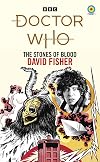
But the 2010s gave us something new:* the renovelisation. As AudioGO released a show more series of audio readings of Target novels, there were a few circumstances where they didn't do readings of the original Target, but commissioned readings of newly written (or edited) texts. The first of these was 2011's The Stones of Blood, where instead of doing a reading of Terrance Dicks's Doctor Who and the Stones of Blood (1980), original tv writer David Fisher was commissioned to produce a wholly new novel for audio. I guess technically this was not a Target novelisation, but in 2022, it became one, when the text of the new reading (edited, apparently, to play to the strengths of the page) was released as part of the Target range by BBC Books.
What is the point of a novelisation? As I read through the fourth Doctor books (as well as some of the new series ones; I did The Church on Ruby Road [2024] a couple weeks back), it's a question I find myself thinking about a lot. In 1980, the answer was obvious: Terrance Dicks, no matter how slim his work, let you experience a tv story you otherwise had basically no way of experiencing. But now we have the story on DVD. So why do we have a novelisation of it... much less two?
The thing Doctor Who fans seem to have glommed onto in novelisations is these little bits of business, moments of backstory that we can get in prose but not on tv without lumpen exposition. Clearly David Fisher was told this when Michael Stevens approached him with the commission. The book opens with a chapter about the history of standing stones at the story's heart, the Nine Travellers, and the mysterious women who always pop up around them; we also get an interlude about the functioning of Justice Machines. On top of this, there are little bits of history for various characters; the ones that popped out to me the most were the ones for very minor characters, Martha Vickers (a member of the cult) and Pat and Zac (the campers who randomly get offed by the Ogri in the middle of the story when they need some blood to recharge). The one about Martha is fun; we learn she joined the British Institute of Druidic Studies because she's tired of singing "Jerusalem" and find that the orgies make it more fun than meetings of the Women's Institute! We even learn that her father was a hunter but also a conscientious objector who refused to sign up during World War II. The one about Pat and Zac is surprisingly detailed; we even learn the names of their pet cat and dog!
Do we need all these bits? Do they make the story "better"? Well, I think that depends on what you mean by "better." If I never had them, would The Stones of Blood be worse? No... but did I find them fun? Well, yes. There are lots of cute little discursive bits built into this, but Fisher manages to not overwhelm the text with them.
Beyond that, how does this work as a novelisation? I don't think I've seen The Stones of Blood since I was in high school (so about two decades ago), when I watched the complete "Key to Time" season, but my main memory of it is finding all the stuff all the stuff with the Justice Machines in hyperspace pretty tedious. Reading the book, I found all this material zippy and charming! I don't know if it was cut down or punched up, or if it's just that the performances and effects of the tv story made their banter ponderous instead of the rapid-fire way it reads on the page. It's still a bit of a weird swerve, to be honest, but the novel gets away with it in a way that's not quite true of the tv version, I think, where the two halves of the story are so different. I don't know how Dicks's effort at this story was (and I never will), but I found this a fun and enjoyable read.
The 2022 BBC Books edition contains a foreword from David Fisher's son, Nick, that's a tribute to his father, who passed away in 2018. (Tragically, Nick—himself a tv writer—passed away from a drug overdose just a month after the book came out.) It's a good read, and I learned a bit about David, a man I otherwise knew nothing about; he found it "strange and a little uncomfortable" that despite a lifelong writing career that included novels and his own tv programmes, he was most famous for Doctor Who. But he must not have been turned off, otherwise he wouldn't have done this, much less come back for a second one! show less
But the 2010s gave us something new:* the renovelisation. As AudioGO released a show more series of audio readings of Target novels, there were a few circumstances where they didn't do readings of the original Target, but commissioned readings of newly written (or edited) texts. The first of these was 2011's The Stones of Blood, where instead of doing a reading of Terrance Dicks's Doctor Who and the Stones of Blood (1980), original tv writer David Fisher was commissioned to produce a wholly new novel for audio. I guess technically this was not a Target novelisation, but in 2022, it became one, when the text of the new reading (edited, apparently, to play to the strengths of the page) was released as part of the Target range by BBC Books.
What is the point of a novelisation? As I read through the fourth Doctor books (as well as some of the new series ones; I did The Church on Ruby Road [2024] a couple weeks back), it's a question I find myself thinking about a lot. In 1980, the answer was obvious: Terrance Dicks, no matter how slim his work, let you experience a tv story you otherwise had basically no way of experiencing. But now we have the story on DVD. So why do we have a novelisation of it... much less two?
The thing Doctor Who fans seem to have glommed onto in novelisations is these little bits of business, moments of backstory that we can get in prose but not on tv without lumpen exposition. Clearly David Fisher was told this when Michael Stevens approached him with the commission. The book opens with a chapter about the history of standing stones at the story's heart, the Nine Travellers, and the mysterious women who always pop up around them; we also get an interlude about the functioning of Justice Machines. On top of this, there are little bits of history for various characters; the ones that popped out to me the most were the ones for very minor characters, Martha Vickers (a member of the cult) and Pat and Zac (the campers who randomly get offed by the Ogri in the middle of the story when they need some blood to recharge). The one about Martha is fun; we learn she joined the British Institute of Druidic Studies because she's tired of singing "Jerusalem" and find that the orgies make it more fun than meetings of the Women's Institute! We even learn that her father was a hunter but also a conscientious objector who refused to sign up during World War II. The one about Pat and Zac is surprisingly detailed; we even learn the names of their pet cat and dog!
Do we need all these bits? Do they make the story "better"? Well, I think that depends on what you mean by "better." If I never had them, would The Stones of Blood be worse? No... but did I find them fun? Well, yes. There are lots of cute little discursive bits built into this, but Fisher manages to not overwhelm the text with them.
Beyond that, how does this work as a novelisation? I don't think I've seen The Stones of Blood since I was in high school (so about two decades ago), when I watched the complete "Key to Time" season, but my main memory of it is finding all the stuff all the stuff with the Justice Machines in hyperspace pretty tedious. Reading the book, I found all this material zippy and charming! I don't know if it was cut down or punched up, or if it's just that the performances and effects of the tv story made their banter ponderous instead of the rapid-fire way it reads on the page. It's still a bit of a weird swerve, to be honest, but the novel gets away with it in a way that's not quite true of the tv version, I think, where the two halves of the story are so different. I don't know how Dicks's effort at this story was (and I never will), but I found this a fun and enjoyable read.
The 2022 BBC Books edition contains a foreword from David Fisher's son, Nick, that's a tribute to his father, who passed away in 2018. (Tragically, Nick—himself a tv writer—passed away from a drug overdose just a month after the book came out.) It's a good read, and I learned a bit about David, a man I otherwise knew nothing about; he found it "strange and a little uncomfortable" that despite a lifelong writing career that included novels and his own tv programmes, he was most famous for Doctor Who. But he must not have been turned off, otherwise he wouldn't have done this, much less come back for a second one! show less

The success of The Stones of Blood (2011) engendered The Androids of Tara, another David Fisher–penned renovelisation of a tv story originally novelised by Terrance Dicks. If you've read The Stones of Blood, you won't be surprised by the approach that Fisher takes here. The story is largely what we saw on screen with bits of backstory expanded and fleshed out, particularly the society on Tara, explaining how they became a feudal world dependent on androids. Like in Stones, many of the show more characters get these added bits of backstory spelling out who they are and where they came from, particularly Madame Lamia and the family of Count Grendel.
It's funny, though—if you'd asked me about the tv stories, I would have said that The Androids of Tara was the funner one, and it's definitely the one I have fonder memories of. Like I said, the swerve into hyperspace in the middle of Stones didn't really work for me, but Androids is one of those tv stories where I feel like writing, direction, and performance are all on the same page, creating a wonderfully coherent vision that delights.
Perhaps because of this, the novel just isn't as fun. It's nice to have the bits of backstory, but there's no Tom Baker, no Mary Tamm, no Peter Jeffrey to make the dialogue sing here. Not to say this is bad, I enjoyed the experience of reading it a lot, but certainly not as much I did the experience of reading Stones. I did really like the ending, though, with the Doctor getting his fishing license finally. (I don't think this bit of business is in the screen version? It has been a long time!) I do see the audio was read by John Leeson; having heard his enthusiastic reading of other stories, I can imagine he turned this into a thumping good time and lifted it off the page.
The Target novel has an afterword by editor Steve Cole, discussing the process of how the novelisation was originally commissioned as an audio and then adapted to the page. I was a bit disappointed by this; Cole discusses how his edits restricted the point-of-view of the narrator, for example taking a reference to a "horse" out of a scene from Romana's point-of-view, as she wouldn't know what a horse was. Cole's argument is that this works on audio—where you are literally being told a story—but not on the page. I don't really see why this should be the case. Why does a novel have to be told in a third-person limited perspective? I think this has increasingly become the convention in the late twentieth and early twenty-first century, but I don't see why we can't have an omniscient narrator who knows what Romana is thinking and what a horse is. As I read these books, I've been listening to some other Targets on audio, most recently Doctor Who and the Giant Robot (1975) and Doctor Who and the Dinosaur Invasion (1976),* and those stories don't seem afraid to slide back and forth between perspectives within a scene as needed. In the latter, we even have scenes from the perspective of dinosaurs, but those scenes also let the dinos know what, for example, a "car" is! Cole's edits go so far as to add a bit explaining why Romana and the Doctor split up, allowing Grendel's men to capture Romana. I'm glad he disclosed all these changes in the afterword, but I feel like overall I'd rather have read the unfiltered David Fisher version; why get the original writer to employ his distinctive voice if you're just going to file those bits away? show less
It's funny, though—if you'd asked me about the tv stories, I would have said that The Androids of Tara was the funner one, and it's definitely the one I have fonder memories of. Like I said, the swerve into hyperspace in the middle of Stones didn't really work for me, but Androids is one of those tv stories where I feel like writing, direction, and performance are all on the same page, creating a wonderfully coherent vision that delights.
Perhaps because of this, the novel just isn't as fun. It's nice to have the bits of backstory, but there's no Tom Baker, no Mary Tamm, no Peter Jeffrey to make the dialogue sing here. Not to say this is bad, I enjoyed the experience of reading it a lot, but certainly not as much I did the experience of reading Stones. I did really like the ending, though, with the Doctor getting his fishing license finally. (I don't think this bit of business is in the screen version? It has been a long time!) I do see the audio was read by John Leeson; having heard his enthusiastic reading of other stories, I can imagine he turned this into a thumping good time and lifted it off the page.
The Target novel has an afterword by editor Steve Cole, discussing the process of how the novelisation was originally commissioned as an audio and then adapted to the page. I was a bit disappointed by this; Cole discusses how his edits restricted the point-of-view of the narrator, for example taking a reference to a "horse" out of a scene from Romana's point-of-view, as she wouldn't know what a horse was. Cole's argument is that this works on audio—where you are literally being told a story—but not on the page. I don't really see why this should be the case. Why does a novel have to be told in a third-person limited perspective? I think this has increasingly become the convention in the late twentieth and early twenty-first century, but I don't see why we can't have an omniscient narrator who knows what Romana is thinking and what a horse is. As I read these books, I've been listening to some other Targets on audio, most recently Doctor Who and the Giant Robot (1975) and Doctor Who and the Dinosaur Invasion (1976),* and those stories don't seem afraid to slide back and forth between perspectives within a scene as needed. In the latter, we even have scenes from the perspective of dinosaurs, but those scenes also let the dinos know what, for example, a "car" is! Cole's edits go so far as to add a bit explaining why Romana and the Doctor split up, allowing Grendel's men to capture Romana. I'm glad he disclosed all these changes in the afterword, but I feel like overall I'd rather have read the unfiltered David Fisher version; why get the original writer to employ his distinctive voice if you're just going to file those bits away? show less
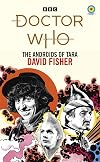
This is a new re-novelization of the classic 1978 Fourth Doctor story "The Androids of Tara" by the script's original author, created initially as an audio book but now available in slightly edited form as a print version. Which is a backstory that might almost convoluted enough to make a good Doctor Who plot!
I have a lot of nostalgic fondness for the old Target Doctor Who novelizations written (mostly) by Terrance Dicks, so it's very cool to see a revival of the idea. Dicks' novelizations show more tended to be pretty simplistic and bare bones (although I haven't read his version of this particular story to compare them specifically). I was hoping to see a bit more depth and fleshing-out of things from this new version, and to some extent it delivers, with some amusing glimpses into the history of the planet Tara and its odd mixture of feudalism and cybernetics. I don't know how much any of it really enhances the story, but it was neat to get a bit more of Fisher's take on the world he'd built, and some of it gave me, if not exactly a laugh, then at least a smile. Although I did miss the elements that you really only get by watching the TV version itself, particularly the Fourth Doctor being... well, Tom Baker. It's a bit hard to capture that kind of personality on on the page.
One thing that really struck me reading this now, without having seen the episode itself in quite some time, is how utterly ridiculous the entire story is. Like, pretty much every single thing about it is silly. But it's ridiculous in a fun way, mostly, and sometimes that's pretty much everything you want and need from Doctor Who.
Anyway. Did this greatly enhance my experience of this particular piece of television? Eh, probably not. Is it a must-read for any fan of this particular era of the show? Probably not. Am I still quite pleased to be able to sit it on the shelf with my collection of old Target novelizations? Absolutely! show less
I have a lot of nostalgic fondness for the old Target Doctor Who novelizations written (mostly) by Terrance Dicks, so it's very cool to see a revival of the idea. Dicks' novelizations show more tended to be pretty simplistic and bare bones (although I haven't read his version of this particular story to compare them specifically). I was hoping to see a bit more depth and fleshing-out of things from this new version, and to some extent it delivers, with some amusing glimpses into the history of the planet Tara and its odd mixture of feudalism and cybernetics. I don't know how much any of it really enhances the story, but it was neat to get a bit more of Fisher's take on the world he'd built, and some of it gave me, if not exactly a laugh, then at least a smile. Although I did miss the elements that you really only get by watching the TV version itself, particularly the Fourth Doctor being... well, Tom Baker. It's a bit hard to capture that kind of personality on on the page.
One thing that really struck me reading this now, without having seen the episode itself in quite some time, is how utterly ridiculous the entire story is. Like, pretty much every single thing about it is silly. But it's ridiculous in a fun way, mostly, and sometimes that's pretty much everything you want and need from Doctor Who.
Anyway. Did this greatly enhance my experience of this particular piece of television? Eh, probably not. Is it a must-read for any fan of this particular era of the show? Probably not. Am I still quite pleased to be able to sit it on the shelf with my collection of old Target novelizations? Absolutely! show less
Lists
You May Also Like


Associated Authors
Statistics
- Works
- 20
- Also by
- 2
- Members
- 1,677
- Popularity
- #15,324
- Rating
- 3.7
- Reviews
- 20
- ISBNs
- 308
- Languages
- 11
- Favorited
- 1
