
Roma Tearne
Author of Brixton Beach
About the Author
Works by Roma Tearne
Brixton Beach 3 copies
Field Study no. 2 1 copy
Associated Works
Tagged
Common Knowledge
- Canonical name
- Tearne, Roma
- Other names
- Chrysostom, Roma (maiden name)
- Birthdate
- 1954
- Gender
- female
- Education
- Ruskin School of Drawing and Fine Art, Oxford
- Occupations
- painter
filmmaker
novelist - Relationships
- Bullen, J. B. (spouse)
- Nationality
- UK
- Birthplace
- Sri Lanka
- Places of residence
- Sri Lanka
Oxford, Oxfordshire, England, UK - Associated Place (for map)
- England, UK
Members
Discussions
The Swimmer by Roma Tearne in Orange January/July (September 2011)
Reviews
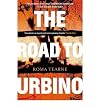
This novel is very different in story and style than Roma Tearne's earlier four novels, and it's exciting to see growth and change in a writer. What she did keep is her wonderful flair for painting word images, her concern for the victims of war, the use of art in healing pain, her explorations of memory, and the settings of Sri Lanka, England, and Italy.
The story follows two protagonists. The first is Ras, a middle aged immigrant from Sri Lanka, as he awaits trial in London for stealing The show more Flagellation, by Italian Renaissance artist Piero della Francesca.
Through his first person narration, we hear about his early childhood in Sri Lanka, where his father disappeared one night and his mother died in a bomb blast. He and his brother spent most of the next years in a Tamil detention centre, until they had a chance to escape to England at the age of 19 and start a new life. Ras marries and has a child, Lola, and then divorces. He ends up working as gallery attendant at the National Gallery, where he is befriended by the charming and kind art curator, Charles.
The second protagonist is Alex, a friend of Charles. Through Alex, we get a fuller picture of the life of Charles and his wife Delia. They, and their circle of friends, spend a lot of fabulous summers in Italy, enjoying la dolce vita--art, food, company, etc. Being a Roma Tearne novel, some sad tragic events occur that change everything.
Everyone in this novel is consumed by an obsession, wherein we find the source of most of the conflict. But all the characters are also scared by war--even though the wars were thousands of miles away, or decades in the past.
It took me about 30 or 40 pages to warm up to it, but then I loved this novel. I actually wasn't ready for it to end, or to leave these characters lives (I especially liked Charles and Delia), which is really unusual for me with any book. show less
The story follows two protagonists. The first is Ras, a middle aged immigrant from Sri Lanka, as he awaits trial in London for stealing The show more Flagellation, by Italian Renaissance artist Piero della Francesca.
Through his first person narration, we hear about his early childhood in Sri Lanka, where his father disappeared one night and his mother died in a bomb blast. He and his brother spent most of the next years in a Tamil detention centre, until they had a chance to escape to England at the age of 19 and start a new life. Ras marries and has a child, Lola, and then divorces. He ends up working as gallery attendant at the National Gallery, where he is befriended by the charming and kind art curator, Charles.
The second protagonist is Alex, a friend of Charles. Through Alex, we get a fuller picture of the life of Charles and his wife Delia. They, and their circle of friends, spend a lot of fabulous summers in Italy, enjoying la dolce vita--art, food, company, etc. Being a Roma Tearne novel, some sad tragic events occur that change everything.
Everyone in this novel is consumed by an obsession, wherein we find the source of most of the conflict. But all the characters are also scared by war--even though the wars were thousands of miles away, or decades in the past.
It took me about 30 or 40 pages to warm up to it, but then I loved this novel. I actually wasn't ready for it to end, or to leave these characters lives (I especially liked Charles and Delia), which is really unusual for me with any book. show less
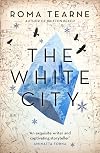
‘The White City’ is an oddly structured novel and, in my opinion, alternately too literal and too allegorical to be considered truly dystopian. (For some arbitrary reason I require consistency in my dystopias.) It largely consists of two extended flashbacks, telling the stories of Hera and Raphael, a young Londoner and the man she loves. After the events of these flashbacks the narrative jumps forward 27 years, during which a long winter nearly depopulates London. I inferred that show more Hera’s survival was thanks to the winter being a blatant allegory for her emotional state. After expecting snowy London to dominate the narrative, I found it barely impinged.
Most characters in ‘The White City’ have names from ancient Greek mythology: Hera, Calypso, Hektor, Achilles, Helen, etc. Fittingly, Hera and Raphael’s lives are filled with Sophoclean tragedy. My favourite part of the novel was the beautifully observed and sharply moving family response to the arrest of Aslam, Hera’s brother. The sense of helpless unravelling was so well done. Subsequently, a hectic cascade of tragedy becomes more than the narrative could really deal with. The weakest element was Hera’s obsession with Raphael, which never quite convinced me. Tucked away in the flashbacks is some excellent, powerful writing on living with state terror, however I don’t think this meshes too well with the long winter framing mechanism. The titular concept felt strangely superfluous, although it was the whole reason I wanted to read the book in the first place. show less
Most characters in ‘The White City’ have names from ancient Greek mythology: Hera, Calypso, Hektor, Achilles, Helen, etc. Fittingly, Hera and Raphael’s lives are filled with Sophoclean tragedy. My favourite part of the novel was the beautifully observed and sharply moving family response to the arrest of Aslam, Hera’s brother. The sense of helpless unravelling was so well done. Subsequently, a hectic cascade of tragedy becomes more than the narrative could really deal with. The weakest element was Hera’s obsession with Raphael, which never quite convinced me. Tucked away in the flashbacks is some excellent, powerful writing on living with state terror, however I don’t think this meshes too well with the long winter framing mechanism. The titular concept felt strangely superfluous, although it was the whole reason I wanted to read the book in the first place. show less
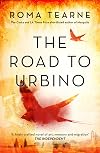
Ras, a Sri Lankan native and refugee, fled his home to England when his mother was killed in one of the bomb raids during civil war, and has lived in England for decades when, seemingly randomly, he steals an Italian Renaissance painting, "The Flagellation of Christ" because it speaks to him of his own history and experiences, of the awful indifference of human beings to horrors perpetrated on others. Ras tells his story to his attorney, who asks him to go back to the beginning of his life show more in order to get the full picture of Ras's motivations and background so she can better defend him.
Ras tells his story, in an attempt to explain why he stole the painting, and his attorney as well as the reader tries to unravel the truth about the theft. In this way the book is set up as a mystery, propelling the reader to read further to get at the ostensible secret that is the key to understanding Ras and his actions. The story has enough to hold the reader's interest, especially because Ras's story is compelling; however, the human interest story is the real focus of the novel, and thus I felt the big "reveal" was anticlimactic. Ras's story is about love, loss, and yearning, for his dead mother, for his estranged daughter, and for meaning in his own life. In that sense his story is also compelling.
However, the book goes sideways midway through it, when the author decides to switch perspectives to a second character who is in no way important to Ras's story, and in fact only meets Ras once (and peripherally at that). Why the author chose Alex Benson to have as prominent a voice in this narrative is a mystery. There is nothing of interest in Alex's story, and as I said, his narrative has nothing to do with Ras's. The only thematic connections I can detect have to do with the characters' yearnings for a girl/woman that is beyond their grasp, daughter and lover respectively. Alex is like Ras in his lifelong pining after a woman who does not return his feelings.
Aside from that their tales are disconnected.
In addition, the reading is made difficult by the narrative perspective. Both Ras and Alex tell their stories from the first person POV, and they are speaking and thinking their thoughts towards Elizabeth, the lawyer. However, because they dip in and out of the past, and other conversations, the reader gets confused as to times, voices and audiences. Ras, for example, might be talking to Elizabeth and in the next sentence be talking to his daughter, then to his ex-wife, then back to Elizabeth in the present. It gets unnecessarily confusing. show less
Ras tells his story, in an attempt to explain why he stole the painting, and his attorney as well as the reader tries to unravel the truth about the theft. In this way the book is set up as a mystery, propelling the reader to read further to get at the ostensible secret that is the key to understanding Ras and his actions. The story has enough to hold the reader's interest, especially because Ras's story is compelling; however, the human interest story is the real focus of the novel, and thus I felt the big "reveal" was anticlimactic. Ras's story is about love, loss, and yearning, for his dead mother, for his estranged daughter, and for meaning in his own life. In that sense his story is also compelling.
However, the book goes sideways midway through it, when the author decides to switch perspectives to a second character who is in no way important to Ras's story, and in fact only meets Ras once (and peripherally at that). Why the author chose Alex Benson to have as prominent a voice in this narrative is a mystery. There is nothing of interest in Alex's story, and as I said, his narrative has nothing to do with Ras's. The only thematic connections I can detect have to do with the characters' yearnings for a girl/woman that is beyond their grasp, daughter and lover respectively. Alex is like Ras in his lifelong pining after a woman who does not return his feelings.
Aside from that their tales are disconnected.
In addition, the reading is made difficult by the narrative perspective. Both Ras and Alex tell their stories from the first person POV, and they are speaking and thinking their thoughts towards Elizabeth, the lawyer. However, because they dip in and out of the past, and other conversations, the reader gets confused as to times, voices and audiences. Ras, for example, might be talking to Elizabeth and in the next sentence be talking to his daughter, then to his ex-wife, then back to Elizabeth in the present. It gets unnecessarily confusing. show less
 This review was written for LibraryThing Early Reviewers.
On the surface, this novel is about the theft of a painting by Piero della Francesca. At its heart, it’s a novel about relationships and trauma. A Sri Lankan refugee awaiting trial for stealing the painting talks to his barrister about his childhood, the trauma of civil war, his British wife and their daughter, the breakdown of his marriage, and the events leading up to the theft. An English author who crossed paths with the refugee in Italy adds more layers to the narrative.
Ras, the show more refugee, tells his story in second person. Perhaps the distance this creates is the reason I was drawn more to Alex’s story and his close friendship with art historian Charles Boyar and his wife, Delia, and the tragedy that befalls them.
While several women are important to the story, the reader only sees them from the perspective of the two men telling their stories to the barrister. Elizabeth, the barrister, is the most inscrutable character of all, as she listens but never speaks.
The characters resonated with me, and they have enough life that I think I’ll still remember them months from now. I cared what happened to them, and I wanted to see how their stories resolved. The technical elements, especially the second person passages, were a distraction from the flow of the novel. If the structure worked as it should, it wouldn’t be so noticeable.
This review is based on an advance reading copy provided by the publisher through LibraryThing’s Early Reviewers program. show less
Ras, the show more refugee, tells his story in second person. Perhaps the distance this creates is the reason I was drawn more to Alex’s story and his close friendship with art historian Charles Boyar and his wife, Delia, and the tragedy that befalls them.
While several women are important to the story, the reader only sees them from the perspective of the two men telling their stories to the barrister. Elizabeth, the barrister, is the most inscrutable character of all, as she listens but never speaks.
The characters resonated with me, and they have enough life that I think I’ll still remember them months from now. I cared what happened to them, and I wanted to see how their stories resolved. The technical elements, especially the second person passages, were a distraction from the flow of the novel. If the structure worked as it should, it wouldn’t be so noticeable.
This review is based on an advance reading copy provided by the publisher through LibraryThing’s Early Reviewers program. show less
This review was written for LibraryThing Early Reviewers.Lists
Awards


You May Also Like


Associated Authors
Statistics
- Works
- 10
- Also by
- 1
- Members
- 750
- Popularity
- #33,912
- Rating
- 3.7
- Reviews
- 79
- ISBNs
- 65
- Languages
- 3
- Favorited
- 5
