
Watty Piper (–1957)
Author of The Little Engine That Could
About the Author
Disambiguation Notice:
Watty Piper never existed; it is a "house" pseudonym for the American publishing house Platt & Munk and was used on numerous other children's books.
Image credit: Arnold Munk / Courtesy of Janet Fenton
Series
Works by Watty Piper
Little Engine That Could 27 copies
The Little Engine That Could: Let's Sing ABC (The Little Engine That Could) (A Lift-the-Flap Alphabet Book) (1993) 25 copies
My Picture Story Book: A Collection of Objects, Mother Goose Rhymes, Animal Stories (1941) 16 copies
Welcome to California: A Little Engine That Could Road Trip (The Little Engine That Could) (2021) 6 copies
All about story book 4 copies
All About Story Book 4 copies
Welcome to Illinois: A Little Engine That Could Road Trip (The Little Engine That Could) (2022) 3 copies
Welcome to New York: A Little Engine That Could Road Trip (The Little Engine That Could) (2021) 3 copies
Welcome to Georgia: A Little Engine That Could Road Trip (The Little Engine That Could) (2022) 2 copies
Little Eng Dlux 12pk 2 copies
Animal Story Book 2 copies
Eight nursery tales, 2 copies
Famous Rhymes Mother Goose 2 copies
Stories Children Love 2 copies
1946 The Bumper Book 1 copy
The Road to Storyland 1 copy
The Little Engine that Could 1 copy
Space Swap 1984-8612 1 copy
Stories Children Love 1 copy
The Gateway to Storyland 1 copy
the title engine that could 1 copy
Famous rhymes, Mother Goose 1 copy
The Litle Engine That Could 1 copy
Eight Nursery Tales 1 copy
Associated Works
Tagged
Common Knowledge
- Legal name
- Munk, Arnold
- Date of death
- 1957
- Gender
- male
- Occupations
- publisher
- Organizations
- Platt & Munk
- Short biography
- Arnold Munk was the owner of the publishing firm Platt & Munk. Arnold Munk was born in Hungary, and as a child, moved with his family to the United States, settling in Chicago. Later he moved to New York. Platt & Munk's offices were at 200 Fifth Avenue until 1957 when Arnold Munk died. Arnold Munk used the name Watty Piper as both an author of children's books and as the editor of many of the books that Platt & Munk published.
- Nationality
- USA
Hungary - Birthplace
- Hungary
- Places of residence
- New York, New York, USA
Chicago, Illinois, USA - Place of death
- New York, New York, USA
- Disambiguation notice
- Watty Piper never existed; it is a "house" pseudonym for the American publishing house Platt & Munk and was used on numerous other children's books.
- Associated Place (for map)
- New York, USA
Members
Reviews

The modern illustrations are fun; I haven't read the book with the original illustrations in a long time, so no way to compare particulars.
A couple of notes on the text: The bad (inconsiderate, rude, tired) engines are all male. The kids' train itself is female, as is the little engine that could. It's rare to find inanimate characterizations that center around a heroic female, so one might be tempted to just let discussion pass, and let this one stand as a corrective to all the "male" show more monster trucks and steamboats and Thomas the Train books. But perhaps that makes talking about this book all the more valuable. Compare this book with one of the other books that characterize inanimate protagonists as male, and one that uses "it" (I'm Dirty! by Kate and Jim McMullan), and discuss why? What does it add to the text? Do the trains / trucks have to be written as male or female?
Also I note that the text repeatedly refers to the toys and breakfast for all the little girls and boys, another example of a slightly dated use that unnecessarily inserts gender. (None of the "good little boys and girls" are ever depicted in the story; so why not just talk about children?) show less
A couple of notes on the text: The bad (inconsiderate, rude, tired) engines are all male. The kids' train itself is female, as is the little engine that could. It's rare to find inanimate characterizations that center around a heroic female, so one might be tempted to just let discussion pass, and let this one stand as a corrective to all the "male" show more monster trucks and steamboats and Thomas the Train books. But perhaps that makes talking about this book all the more valuable. Compare this book with one of the other books that characterize inanimate protagonists as male, and one that uses "it" (I'm Dirty! by Kate and Jim McMullan), and discuss why? What does it add to the text? Do the trains / trucks have to be written as male or female?
Also I note that the text repeatedly refers to the toys and breakfast for all the little girls and boys, another example of a slightly dated use that unnecessarily inserts gender. (None of the "good little boys and girls" are ever depicted in the story; so why not just talk about children?) show less
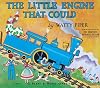
The Little Engine That Could by Watty Piper is a classic children's story whose main theme is determination. This is one of those stories that has a great message for children that no matter how small you may look or feel, you can accomplish big things if you believe in yourself. The little engine repeating “I think I can” reinforces the theme of determination and makes it memorable for young readers. Even though this is a children's book, I have heard adults in life repeat the phrase show more “I think I can, I think I can” in a funny manner when they are going through something, which is a cute, universal experience that shows how memorable and classic this story is for many generations. The steep mountains are an example of the obstacles that life has, but with a positive outlook, it is a great learning experience. Overall, the message of the story is one that encourages young readers to keep trying even when things get hard. show less
Sarah Durkin
Professor Martens
EDUC417
1 March 2016
Reading Log Entry #12: The Little Engine That Could by, Watty Piper
This book does a good job capturing reader’s attentions. First, there are many different emotions that occur throughout this story. Readers are able to relate and predict how the engine will feel next based off of the facial expressions and text in the book. The train was sad when it broke down, but then happy when he was able to deliver all of the toys to the children. show more Second, this book encourages readers to have positive attitudes by saying “I think I can, I think I can.” This is important because whenever you are having a bad day or a hard time, staying positive can motivate you to reach your goal and do the best you can. Others would tell him not to worry about dropping the toys off, but since it was his job and he knew children were waiting, the train persisted to get moving again. Finally, I like how the train took a risk to do what he thought was right. Most people try to avoid risks, but in this story taking a risk could mean happiness for many people. Sometimes it is good to think of others and put others first before yourself. This shows respect and courage, which are good traits to have as a person. The overall message of this book is to never give up. After reading this book, it is clear that anyone who puts in a lot of effort will get a good outcome in return. show less
Professor Martens
EDUC417
1 March 2016
Reading Log Entry #12: The Little Engine That Could by, Watty Piper
This book does a good job capturing reader’s attentions. First, there are many different emotions that occur throughout this story. Readers are able to relate and predict how the engine will feel next based off of the facial expressions and text in the book. The train was sad when it broke down, but then happy when he was able to deliver all of the toys to the children. show more Second, this book encourages readers to have positive attitudes by saying “I think I can, I think I can.” This is important because whenever you are having a bad day or a hard time, staying positive can motivate you to reach your goal and do the best you can. Others would tell him not to worry about dropping the toys off, but since it was his job and he knew children were waiting, the train persisted to get moving again. Finally, I like how the train took a risk to do what he thought was right. Most people try to avoid risks, but in this story taking a risk could mean happiness for many people. Sometimes it is good to think of others and put others first before yourself. This shows respect and courage, which are good traits to have as a person. The overall message of this book is to never give up. After reading this book, it is clear that anyone who puts in a lot of effort will get a good outcome in return. show less
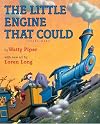
The modern illustrations are fun; I haven't read the book with the original illustrations in a long time, so no way to compare particulars. [return][return]A couple of notes on the text: The bad (inconsiderate, rude, tired) engines are all male. The kids' train itself is female, as is the little engine that could. It's rare to find inanimate characterizations that center around a heroic female, so one might be tempted to just let discussion pass, and let this one stand as a corrective to all show more the "male" monster trucks and steamboats and Thomas the Train books. But perhaps that makes talking about this book all the more valuable. Compare this book with one of the other books that characterize inanimate protagonists as male, and one that uses "it" (I'm Dirty! by Kate and Jim McMullan), and discuss why? What does it add to the text? Do the trains / trucks have to be written as male or female? [return][return]Also I note that the text repeatedly refers to the toys and breakfast for all the little girls and boys, another example of a slightly dated use that unnecessarily inserts gender. (None of the "good little boys and girls" are ever depicted in the story; so why not just talk about children?) show less
Lists
Awards


You May Also Like


Associated Authors
Statistics
- Works
- 130
- Also by
- 4
- Members
- 18,427
- Popularity
- #1,189
- Rating
- 4.0
- Reviews
- 244
- ISBNs
- 222
- Languages
- 5
- Favorited
- 2