
Jed Rasula
Author of Destruction Was My Beatrice: Dada and the Unmaking of the Twentieth Century
About the Author
Jed Rasula is Helen S. Lanier Distinguished Professor of English at the University of Georgia. His books include Syncopations: The Stress of Innovation in Contemporary American Poetry and Modernism and Poetic Inspiration: The Shadow Mouth. Rasula is the coeditor of Imagining Language and Burning show more City: Poems of Metropolitan Modernity. show less
Works by Jed Rasula
Destruction Was My Beatrice: Dada and the Unmaking of the Twentieth Century (2015) 100 copies, 2 reviews
Syncopations: The Stress of Innovation in Contemporary American Poetry (Modern & Contemporary Poetics) (2004) 13 copies
Associated Works
The Legitimacy of the Middle Ages: On the Unwritten History of Theory (2010) — Contributor — 31 copies
Book of Correspondences for Jack Spicer Acts, Number Six — Contributor — 2 copies
Sulfur 6: The Literary Tri-Quarterly of the Whole Art. — Contributor — 2 copies
Sulfur 3 — Contributor — 2 copies
Jimmy & Lucy's House of "K", #2 — Contributor — 1 copy
L=A=N=G=U=A=G=E, Number 9/10, (Vol. 2, No. 3 and 4) — Contributor — 1 copy
Sulfur 9 — Contributor — 1 copy
Open Letter 5.1, L=A=N=G=U=A=G=E Issue — Contributor — 1 copy
Tagged
Common Knowledge
- Gender
- male
Members
Reviews

Part of my ongoing program to clear out or read books that have been hanging fire for years, I really enjoyed this exercise in teasing out the personal connections and conflicts in the creative outburst that was Dada. In particular, though Dada often gets turned into Proto-Surrealism, it could just as easily be linked to artistic trends associated with Constructivism and allied movements.
Perhaps the one salient point that I come away with is that, for all the descriptions of Dada as an show more exercise in nihilism, Rasula notes that the real nihilists in the Great War were the politicians and military leaders seeking victory in a potlach of cultural destruction. The enthusiasts of Dada, on the other hand, were seeking to sweep the table clean and start building anew from the found materials that could be salvaged, which sounds allied to the sense of Zen negation of personal mental illusions (that the author does allude to).
I also take to heart those reviews who note that Rasula doesn't deal as much as he might with the women involved in the movement, particularly since their involvement in performance is not easy to recover from the historical record. Rasula is as much interested in the literary impact of Dada as anything else, when he might easily have written a work about Dada as one of the precursors of performance art.
Anyway, I do regret not getting to this book sooner. show less
Perhaps the one salient point that I come away with is that, for all the descriptions of Dada as an show more exercise in nihilism, Rasula notes that the real nihilists in the Great War were the politicians and military leaders seeking victory in a potlach of cultural destruction. The enthusiasts of Dada, on the other hand, were seeking to sweep the table clean and start building anew from the found materials that could be salvaged, which sounds allied to the sense of Zen negation of personal mental illusions (that the author does allude to).
I also take to heart those reviews who note that Rasula doesn't deal as much as he might with the women involved in the movement, particularly since their involvement in performance is not easy to recover from the historical record. Rasula is as much interested in the literary impact of Dada as anything else, when he might easily have written a work about Dada as one of the precursors of performance art.
Anyway, I do regret not getting to this book sooner. show less
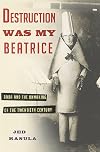
This was an unexpected book. I literally found it on our porch, a gift from Joel. The subject itself was a fuzzy footnote of European history and even that was largely Tzara, who I always imagined in some abstract cafe hectoring the somber Lenin and perhaps buying a drink for James Joyce.
I stepped aside from my Greek Project and plunged within. The initial Dadaist episode in Zurich is remarkable as an event but I am less convinced as a movement. One member quipped in a manifesto, I am show more opposed in principle to manifesto. I am also opposed to principles.
I admit I learned a great deal about figures like Duchamp. I enjoyed the spectacle of Eluard punching Tzara. I did grow weary of the incessant pillow talk. Was Dada a typographical movement rather than a torque of poetry, music and painting? Dada began midway through the Great War in the shrieking silence of Switzerland. There is difficulty in gauging the ultimate effect of these aggregate activities: sound poetry, atonal music, found object collages, image montage. I can always speculate but without much purchase. Surrealism and Constructivism are obviously linked not specifically in a causal way. One can rhapsodize about Borges and predecessors. One can remain anxious about any influence.
While I enjoyed the book, this was largely because of my unfamiliarity with certain figures. I fear the absence of a thesis or metric would’ve been problematic otherwise. show less
I stepped aside from my Greek Project and plunged within. The initial Dadaist episode in Zurich is remarkable as an event but I am less convinced as a movement. One member quipped in a manifesto, I am show more opposed in principle to manifesto. I am also opposed to principles.
I admit I learned a great deal about figures like Duchamp. I enjoyed the spectacle of Eluard punching Tzara. I did grow weary of the incessant pillow talk. Was Dada a typographical movement rather than a torque of poetry, music and painting? Dada began midway through the Great War in the shrieking silence of Switzerland. There is difficulty in gauging the ultimate effect of these aggregate activities: sound poetry, atonal music, found object collages, image montage. I can always speculate but without much purchase. Surrealism and Constructivism are obviously linked not specifically in a causal way. One can rhapsodize about Borges and predecessors. One can remain anxious about any influence.
While I enjoyed the book, this was largely because of my unfamiliarity with certain figures. I fear the absence of a thesis or metric would’ve been problematic otherwise. show less
Awards

You May Also Like


Associated Authors
Statistics
- Works
- 14
- Also by
- 10
- Members
- 271
- Popularity
- #85,375
- Rating
- 3.6
- Reviews
- 2
- ISBNs
- 31
- Languages
- 1