
Travis Thrasher
Author of Solitary
About the Author
Image credit: Travis Thrasher
Series
Works by Travis Thrasher
Tagged
Common Knowledge
- Birthdate
- 1971-04-21
- Gender
- male
- Birthplace
- Knoxville, Tennessee, USA
- Associated Place (for map)
- Tennessee, USA
Members
Reviews

*Spoiler Alert* Having recently seen the first God's Not Dead and not being able to get out to the sequel, I jumped at the chance to read this novelization of God's Not Dead 2: Electric Boogaloo. Considering that this is a novelization of a film I have not seen, and that there is no novelization for the previous film (which was named after the non-fiction text by Rice Brooks God's Not Dead: Evidence for God in an Age of Uncertainty), I will do my best not to compare this to either of the show more God's Not Dead films, and instead treat this as a stand-alone work.
This is a bit more complicated considering that God's Not Dead 2 is a novelization of a film, it's questionable how much blame can be assigned to author Travis Thrasher for the major faults of the book. The weakness of the book lies not within the writing style itself, but rather the plot and characters that pass through it, neither of which Thrasher could have reasonably changed. But, that aside...
God's Not Dead 2 is balanced on the completely implausible premise that a teacher would be threatened with not only being fired, but having her teaching credentials revoked, merely for answering a question from a student about Jesus. It's a straw-man plot device used to support the film's main premise, which is that Christians are constantly being persecuted by angry atheists and the Godless secular state merely for having faith. In this case, the Christian being persecuted for her beliefs is high school history teacher Grace (get it?) Wesley, who is taken to court because she won't apologize and admit to being wrong for mentioning Jesus.
The story is told through the two main characters of book (alternating between first and third person, which I'm not a particular fan of), Grace's lawyer Tom Endler, and blogger Amy Ryan. These characters are going through their own crisis of faith, both having apparently abandoned their belief in God at a young age in rebellion against their religious parents. They're the only likeable non-believers in the book - spoiler alert, they both find God - as anyone associated with the Godless side of society is portrayed with some odious personality flaw. Most of them combine some level of success with a lack of emotion or overwhelming hostility. The principle of the school is a divorced power-hungry CEO, the ACLU lawyer is a manipulative bully hell-bent on removing Christianity from society, and even the parents of the girl who asked the Jesus question are greedy opportunists who hope that their daughter being involved in a constitutional court case will help her get into a good college (I'm not making this up). A Chinese student from God's Not Dead is brought back long enough for us to find out that his father has disowned him for accepting Jesus Christ into his life (The same thing happens to a Muslim girl in the original film). My personal favorite is the classmate responsible for the Jesus story getting out of the classroom in the first place, who spends his interview with Amy staring blankly into the distance and shoveling plates of buffet food into his face, because only a glutton with ADD would complain about religion in school.
None of this is being pointed out because I find it unfair or insulting, but because it's blatant propaganda disguised as a thought-provoking What If scenario. All characters that aren't sympathetic to the book's 'message' are oversimplified caricatures designed specifically to prove the author's point. This is true for the entire court-room drama itself, which spends most of the time 'proving' that Jesus was a real historical figure. This leads to Grace saying at one point: “And every credible historian admits Jesus existed. There’s just too much evidence to say otherwise.” This is a very debatable statement, but you wouldn't think so since the defense is the only side that bothers bringing two historians up to testify, and the crafty ACLU lawyer practically lets slide. But that makes perfect sense, because God's Not Dead 2 isn't interested in any kind of debate. Like all propaganda, it's only aim is to present the other side's argument the way they perceive it, and in a way that is easily refutable by their own logic.
This is exemplified by the ridiculous way in which the trial ends. (Spoiler Alert: Jesus Wins). Realizing that they're going to lose because the jury doesn't care that they've unequivocally proven that Jesus was real, Endler plays reverse-psychology on the jury by turning on his client and demanding that society wipe out all Christians to prevent them from spreading their faith, revealing the true spirit behind separation of church and state laws, which guilts them into returning a not guilty verdict. It would seem like a ludicrous solution if you hadn't already slogged through dialogue like: "It’s the truth that scares so many people. It’s fear of the truth that keeps the name of Christ out of the classroom. The truth that says Jesus is the only way." And: "Do you know how many men and women are threatened by the idea of walking through the doors of a church?" The book builds it's own little reality in which the only reasons not to be Christian are fear and hatred, so by the end the court drama is only following the rules of this propagandized universe.
There are also some peculiarities to the book that defy even a religious explanation, such as how nearly every woman in the book takes the time to mention at least once how they have to be careful with calories so they watch what they eat. Is this something that all god-fearing women mention in casual conversation? And what's with the relentless plugging of Duck Dynasty and The Newsboys? Aren't there any other Christian entertainers out there? And if you're familiar with God's Not Dead, you have to wonder why there's an ongoing fascination with elderly dementia.
In the end, God's Not Dead 2 is nothing more than the pointless kind of simplistic propaganda that is geared towards the already converted, and even then only those incapable of rational thought or nuanced logic. Even if you do believe that God's Not Dead, you probably won't believe this book. show less
This is a bit more complicated considering that God's Not Dead 2 is a novelization of a film, it's questionable how much blame can be assigned to author Travis Thrasher for the major faults of the book. The weakness of the book lies not within the writing style itself, but rather the plot and characters that pass through it, neither of which Thrasher could have reasonably changed. But, that aside...
God's Not Dead 2 is balanced on the completely implausible premise that a teacher would be threatened with not only being fired, but having her teaching credentials revoked, merely for answering a question from a student about Jesus. It's a straw-man plot device used to support the film's main premise, which is that Christians are constantly being persecuted by angry atheists and the Godless secular state merely for having faith. In this case, the Christian being persecuted for her beliefs is high school history teacher Grace (get it?) Wesley, who is taken to court because she won't apologize and admit to being wrong for mentioning Jesus.
The story is told through the two main characters of book (alternating between first and third person, which I'm not a particular fan of), Grace's lawyer Tom Endler, and blogger Amy Ryan. These characters are going through their own crisis of faith, both having apparently abandoned their belief in God at a young age in rebellion against their religious parents. They're the only likeable non-believers in the book - spoiler alert, they both find God - as anyone associated with the Godless side of society is portrayed with some odious personality flaw. Most of them combine some level of success with a lack of emotion or overwhelming hostility. The principle of the school is a divorced power-hungry CEO, the ACLU lawyer is a manipulative bully hell-bent on removing Christianity from society, and even the parents of the girl who asked the Jesus question are greedy opportunists who hope that their daughter being involved in a constitutional court case will help her get into a good college (I'm not making this up). A Chinese student from God's Not Dead is brought back long enough for us to find out that his father has disowned him for accepting Jesus Christ into his life (The same thing happens to a Muslim girl in the original film). My personal favorite is the classmate responsible for the Jesus story getting out of the classroom in the first place, who spends his interview with Amy staring blankly into the distance and shoveling plates of buffet food into his face, because only a glutton with ADD would complain about religion in school.
None of this is being pointed out because I find it unfair or insulting, but because it's blatant propaganda disguised as a thought-provoking What If scenario. All characters that aren't sympathetic to the book's 'message' are oversimplified caricatures designed specifically to prove the author's point. This is true for the entire court-room drama itself, which spends most of the time 'proving' that Jesus was a real historical figure. This leads to Grace saying at one point: “And every credible historian admits Jesus existed. There’s just too much evidence to say otherwise.” This is a very debatable statement, but you wouldn't think so since the defense is the only side that bothers bringing two historians up to testify, and the crafty ACLU lawyer practically lets slide. But that makes perfect sense, because God's Not Dead 2 isn't interested in any kind of debate. Like all propaganda, it's only aim is to present the other side's argument the way they perceive it, and in a way that is easily refutable by their own logic.
This is exemplified by the ridiculous way in which the trial ends. (Spoiler Alert: Jesus Wins). Realizing that they're going to lose because the jury doesn't care that they've unequivocally proven that Jesus was real, Endler plays reverse-psychology on the jury by turning on his client and demanding that society wipe out all Christians to prevent them from spreading their faith, revealing the true spirit behind separation of church and state laws, which guilts them into returning a not guilty verdict. It would seem like a ludicrous solution if you hadn't already slogged through dialogue like: "It’s the truth that scares so many people. It’s fear of the truth that keeps the name of Christ out of the classroom. The truth that says Jesus is the only way." And: "Do you know how many men and women are threatened by the idea of walking through the doors of a church?" The book builds it's own little reality in which the only reasons not to be Christian are fear and hatred, so by the end the court drama is only following the rules of this propagandized universe.
There are also some peculiarities to the book that defy even a religious explanation, such as how nearly every woman in the book takes the time to mention at least once how they have to be careful with calories so they watch what they eat. Is this something that all god-fearing women mention in casual conversation? And what's with the relentless plugging of Duck Dynasty and The Newsboys? Aren't there any other Christian entertainers out there? And if you're familiar with God's Not Dead, you have to wonder why there's an ongoing fascination with elderly dementia.
In the end, God's Not Dead 2 is nothing more than the pointless kind of simplistic propaganda that is geared towards the already converted, and even then only those incapable of rational thought or nuanced logic. Even if you do believe that God's Not Dead, you probably won't believe this book. show less
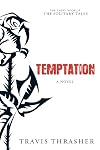
In the third book in the Solitary Tales, Chris Buckley is on a mission. Not a mission to protect people he cares about. Not a mission to discover who took some of those people or how to expose and stop them. No, Chris's new mission is to ignore, to enjoy life and be free. Model-gorgeous new girl Lily shows up just in time to aid this mission. Chris doesn't get why she's into him, but he's no longer asking questions like "why."
[b:Solitary|7140387|Solitary (Solitary Tales, #1)|Travis show more Thrasher|https://d202m5krfqbpi5.cloudfront.net/books/1348596847s/7140387.jpg|7404309] is the cliff's edge. [b:Gravestone|8835902|Gravestone (Solitary Tales, #2)|Travis Thrasher|https://d202m5krfqbpi5.cloudfront.net/books/1328763012s/8835902.jpg|19028339] is the shove over into freefall. TEMPTATION is the plummet, but Chris doesn't get to plummet the way he wants to, arms outstretched to embrace an unhindered descent. Inconvenient tree branches keep smacking him on the way down, breaking his fall--branches like answers to questions he stopped asking. People (one particular person) refusing to give up on him though he shuts them out. A crisis with his mom that he can't ignore. And revelations that shatter his apathy and rekindle the anger and prod him at last to start asking questions about truth itself.
In fact, this entire book is a flood of revelations and answers. The reader is rewarded with scene after scene of, oh, that's who he is! and oh, that's what happened! and I was right, I knew it! Plenty of questions remain going into Book Four (as it should be), but I'm now fully trusting this author. I'll know everything I need to by the end. And I anticipate agreeing with Travis Thrasher's story decisions. I have so far.
At one point in TEMPTATION, I nearly didn't. Without spoiling anything, I can only say I thought the author was recycling a Shocking Plot Element from Book One--oh, no way, this does not work twice, I can't believe he expects me to accept this TWICE!--but Chris's reflections on the two events showed me that both were necessary. The contrasting aspect is what matters, not the comparison. (And the vagueness of that sentence sounds almost ridiculous. Sorry. If you've read the books, I think you'll know what I'm referring to.)
Chris is not admirable throughout much of this book. Many of his decisions are selfish and/or dangerous. He sometimes treats people badly, and he sometimes knows he's doing it. Constantly admirable characters annoy me, so I'm okay with this. But the real reason the book works (and could be used for an advanced fiction Character Motivation class) is this: his actions are plausible given who he is and what's gone before. He is a traumatized teenager with no adult direction in his life. He tried making a difference before, and look how that turned out. He tried trusting people before, and look how that turned out. He's witnessed things that shouldn't be physically possible, and he has no way to predict or explain them. Add to all this a persistent assault from spiritual forces of evil, and I can believe Chris would make every ignoble or ill-advised choice he makes.
That said, the change germinating in him at the close of this book is a relief. As a reader, I am ready and eager for Chris to take steps down the right road.
For the first time with this series, I did the smart thing: I ordered and received HURT before finishing this one. What I expect from the final book: final answers. Wrap-up of dangling plot threads (a few of which go all the way back to book 1). Complete exposure of the evil (defeat of it would be even more satisfying, but we'll see). Return of a few characters. Salvation for Chris (on all levels). Hope and light.
Unreasonable expectations, you say? Only if you haven't read these books. show less
[b:Solitary|7140387|Solitary (Solitary Tales, #1)|Travis show more Thrasher|https://d202m5krfqbpi5.cloudfront.net/books/1348596847s/7140387.jpg|7404309] is the cliff's edge. [b:Gravestone|8835902|Gravestone (Solitary Tales, #2)|Travis Thrasher|https://d202m5krfqbpi5.cloudfront.net/books/1328763012s/8835902.jpg|19028339] is the shove over into freefall. TEMPTATION is the plummet, but Chris doesn't get to plummet the way he wants to, arms outstretched to embrace an unhindered descent. Inconvenient tree branches keep smacking him on the way down, breaking his fall--branches like answers to questions he stopped asking. People (one particular person) refusing to give up on him though he shuts them out. A crisis with his mom that he can't ignore. And revelations that shatter his apathy and rekindle the anger and prod him at last to start asking questions about truth itself.
In fact, this entire book is a flood of revelations and answers. The reader is rewarded with scene after scene of, oh, that's who he is! and oh, that's what happened! and I was right, I knew it! Plenty of questions remain going into Book Four (as it should be), but I'm now fully trusting this author. I'll know everything I need to by the end. And I anticipate agreeing with Travis Thrasher's story decisions. I have so far.
At one point in TEMPTATION, I nearly didn't. Without spoiling anything, I can only say I thought the author was recycling a Shocking Plot Element from Book One--oh, no way, this does not work twice, I can't believe he expects me to accept this TWICE!--but Chris's reflections on the two events showed me that both were necessary. The contrasting aspect is what matters, not the comparison. (And the vagueness of that sentence sounds almost ridiculous. Sorry. If you've read the books, I think you'll know what I'm referring to.)
Chris is not admirable throughout much of this book. Many of his decisions are selfish and/or dangerous. He sometimes treats people badly, and he sometimes knows he's doing it. Constantly admirable characters annoy me, so I'm okay with this. But the real reason the book works (and could be used for an advanced fiction Character Motivation class) is this: his actions are plausible given who he is and what's gone before. He is a traumatized teenager with no adult direction in his life. He tried making a difference before, and look how that turned out. He tried trusting people before, and look how that turned out. He's witnessed things that shouldn't be physically possible, and he has no way to predict or explain them. Add to all this a persistent assault from spiritual forces of evil, and I can believe Chris would make every ignoble or ill-advised choice he makes.
That said, the change germinating in him at the close of this book is a relief. As a reader, I am ready and eager for Chris to take steps down the right road.
For the first time with this series, I did the smart thing: I ordered and received HURT before finishing this one. What I expect from the final book: final answers. Wrap-up of dangling plot threads (a few of which go all the way back to book 1). Complete exposure of the evil (defeat of it would be even more satisfying, but we'll see). Return of a few characters. Salvation for Chris (on all levels). Hope and light.
Unreasonable expectations, you say? Only if you haven't read these books. show less
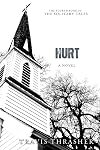
Well, Chris Buckley, I guess this is goodbye.
Part of me does want to write this review to the protagonist. It's that kind of series: one in which you lose track of pages because you're not really reading; you're listening to this kid tell you his story. The plot could go almost anywhere and you'd have to stay with it because it's Chris and you're going to worry about him until he's out of danger. His questionable choices tick you off and his wise choices make you cheer and the question of show more his eternal soul won't let you go. This series took not only my head but also my heart for quite a ride.
In this last novel, Mr. Thrasher has a lot to live up to. He's spent the first three books evolving his craft, adding intricacy to the story he unfolded in [b:Solitary|7140387|Solitary (Solitary Tales, #1)|Travis Thrasher|https://d202m5krfqbpi5.cloudfront.net/books/1348596847s/7140387.jpg|7404309], introducing new, deep characters without sacrificing the depth of the old ones. And I confess it: I'm a skeptical reader. I love series, but they make me skittish. That first book, however great, is tainted if the author can't keep his promises.
Well. This author kept them. All. I'd love to fill this review with spoilers about every satisfying detail. (I'm recommending this series to friends partially out of selfishness, so I'll have people to discuss it with.)
First, the plot (sans spoilers). Do we get answers? Mostly. There are a few things I'm still wondering, but Chris wouldn't realistically know all the details, either, so I can't complain? Much. (The mannequin of Marsh ... what the ...?)
Did I believe the answers? Other than a couple minor elements that felt a bit over-the-top (character in costume? the bluebird is what?!), yes. Especially given the genre blend of supernatural suspense and magical realism. Readers who want a Peretti-esque take on angels and demons will be annoyed by the "spaces between" and other elements that feel more fantastical than Biblical. My advice: it's fiction. And since it doesn't claim otherwise, go with it.
Did I believe the characterization? Oh, always. Characters and dialogue are the strongest points of the Solitary Tales. Which brings me to the girls. All Chris's girls ... after [b:Gravestone|8835902|Gravestone (Solitary Tales, #2)|Travis Thrasher|https://d202m5krfqbpi5.cloudfront.net/books/1328763012s/8835902.jpg|19028339], I mentioned he might have too many. I was wrong. Each of them are completely different, serve a different purpose in the narrative and in his character arc. (True, maybe Poe's more-than-a-friend interest isn't strictly necessary for Chris's arc, but it is for Kelsey's.) I didn't see this until the final book, but Jocelyn, Lily, and Kelsey each play an indispensable part in Chris's journey to God.
Speaking of Chris's spiritual journey. Just, wow. I knew this had to be his ultimate destination, yet his steps even in this final book kept surprising me. The climax in particular was a jolt, because I had unknowingly charted it out before I got there, and ... let's just say Travis Thrasher did what few authors do. He turned my initial disappointment (which I was supposed to feel, I think) into an illumination of my own human nature and the necessity of grace.
In fact, that's what this whole series is: an illumination of evil, of human rebellion, of brokenness--and then of God. Told in the sarcastic, dramatic, resilient, vulnerable, searching voice of a character I won't forget. show less
Part of me does want to write this review to the protagonist. It's that kind of series: one in which you lose track of pages because you're not really reading; you're listening to this kid tell you his story. The plot could go almost anywhere and you'd have to stay with it because it's Chris and you're going to worry about him until he's out of danger. His questionable choices tick you off and his wise choices make you cheer and the question of show more his eternal soul won't let you go. This series took not only my head but also my heart for quite a ride.
In this last novel, Mr. Thrasher has a lot to live up to. He's spent the first three books evolving his craft, adding intricacy to the story he unfolded in [b:Solitary|7140387|Solitary (Solitary Tales, #1)|Travis Thrasher|https://d202m5krfqbpi5.cloudfront.net/books/1348596847s/7140387.jpg|7404309], introducing new, deep characters without sacrificing the depth of the old ones. And I confess it: I'm a skeptical reader. I love series, but they make me skittish. That first book, however great, is tainted if the author can't keep his promises.
Well. This author kept them. All. I'd love to fill this review with spoilers about every satisfying detail. (I'm recommending this series to friends partially out of selfishness, so I'll have people to discuss it with.)
First, the plot (sans spoilers). Do we get answers? Mostly. There are a few things I'm still wondering, but Chris wouldn't realistically know all the details, either, so I can't complain? Much. (The mannequin of Marsh ... what the ...?)
Did I believe the answers? Other than a couple minor elements that felt a bit over-the-top (character in costume? the bluebird is what?!), yes. Especially given the genre blend of supernatural suspense and magical realism. Readers who want a Peretti-esque take on angels and demons will be annoyed by the "spaces between" and other elements that feel more fantastical than Biblical. My advice: it's fiction. And since it doesn't claim otherwise, go with it.
Did I believe the characterization? Oh, always. Characters and dialogue are the strongest points of the Solitary Tales. Which brings me to the girls. All Chris's girls ... after [b:Gravestone|8835902|Gravestone (Solitary Tales, #2)|Travis Thrasher|https://d202m5krfqbpi5.cloudfront.net/books/1328763012s/8835902.jpg|19028339], I mentioned he might have too many. I was wrong. Each of them are completely different, serve a different purpose in the narrative and in his character arc. (True, maybe Poe's more-than-a-friend interest isn't strictly necessary for Chris's arc, but it is for Kelsey's.) I didn't see this until the final book, but Jocelyn, Lily, and Kelsey each play an indispensable part in Chris's journey to God.
Speaking of Chris's spiritual journey. Just, wow. I knew this had to be his ultimate destination, yet his steps even in this final book kept surprising me. The climax in particular was a jolt, because I had unknowingly charted it out before I got there, and ... let's just say Travis Thrasher did what few authors do. He turned my initial disappointment (which I was supposed to feel, I think) into an illumination of my own human nature and the necessity of grace.
In fact, that's what this whole series is: an illumination of evil, of human rebellion, of brokenness--and then of God. Told in the sarcastic, dramatic, resilient, vulnerable, searching voice of a character I won't forget. show less

SOLITARY is basically a Christian horror story, except it isn't. The scariest aspect of this novel lies in its lack of fantasy. Huge contrast to most horror stories, in which the villain has superhuman strength and eighty-seven lives, but the "heroes" could still maybe survive if they used a fleck of common sense. In SOLITARY, the villain is ... a town? A religion? A group of people following that religion? The group leader? Demons themselves? All of the above, apparently (at the end, the show more reader still isn't sure). And the hero, Chris Buckley, is an achingly average seventeen-year-old (with above average courage, though he doesn't know it) who wants what everybody wants in high school: an identity.
I really don't know what Travis Thrasher is doing here. The conclusion of this book is utterly unsatisfying; in fact, I kind of want to give it three stars. But I can't, because it's unsatisfying in all the right ways. Answers? None. I mentally skimmed through my list of questions compiled while reading, and I still have all of them. All. A lot of readers won't accept this and might even shrug the rest of the series off. I'm not sure it was a wise author choice, and it certainly wasn't a safe author (or publisher) choice, and the latter is why I have to applaud it. This is disturbing, unsafe, Christian (not spiritual, Christian) fiction. I wish more of it got written today.
As for literary merit, the book could be tighter. Repetition could have been cut. And oy, the one-sentence paragraphs.
Everywhere.
Constantly.
Until they lost their punch.
Early in, I thought maybe this was an attempt at a free verse style.
Now, I think it was just an overzealous attempt to emphasize too many things.
We also have here yet another trend-embracing first person POV written in present tense. I will never be a fan of present tense, but this author makes it work. The voice isn't overwritten and feels like a high-schooler's head, yet Chris is a kid who appreciates music, is self-aware and thoughtful, and this characterization makes for some appropriately poetic sentences.
And here is the reason I just ordered GRAVESTONE (Solitary Tales, Book 2). The author leaves Chris on a perilous ledge. We don't get a resolution here; instead, we get a turning point. No going back. Everything must change, including our trapped, powerless, confused and broken hero. I want to see the change happen. I want to see Chris grow. I want justice. I want answers.
Good thing I used two-day shipping. show less
I really don't know what Travis Thrasher is doing here. The conclusion of this book is utterly unsatisfying; in fact, I kind of want to give it three stars. But I can't, because it's unsatisfying in all the right ways. Answers? None. I mentally skimmed through my list of questions compiled while reading, and I still have all of them. All. A lot of readers won't accept this and might even shrug the rest of the series off. I'm not sure it was a wise author choice, and it certainly wasn't a safe author (or publisher) choice, and the latter is why I have to applaud it. This is disturbing, unsafe, Christian (not spiritual, Christian) fiction. I wish more of it got written today.
As for literary merit, the book could be tighter. Repetition could have been cut. And oy, the one-sentence paragraphs.
Everywhere.
Constantly.
Until they lost their punch.
Early in, I thought maybe this was an attempt at a free verse style.
Now, I think it was just an overzealous attempt to emphasize too many things.
We also have here yet another trend-embracing first person POV written in present tense. I will never be a fan of present tense, but this author makes it work. The voice isn't overwritten and feels like a high-schooler's head, yet Chris is a kid who appreciates music, is self-aware and thoughtful, and this characterization makes for some appropriately poetic sentences.
And here is the reason I just ordered GRAVESTONE (Solitary Tales, Book 2). The author leaves Chris on a perilous ledge. We don't get a resolution here; instead, we get a turning point. No going back. Everything must change, including our trapped, powerless, confused and broken hero. I want to see the change happen. I want to see Chris grow. I want justice. I want answers.
Good thing I used two-day shipping. show less
You May Also Like


Statistics
- Works
- 38
- Members
- 1,718
- Popularity
- #14,951
- Rating
- 3.7
- Reviews
- 96
- ISBNs
- 109
- Languages
- 1