
Léonard Wibberley (1915–1983)
Author of The Mouse that Roared
About the Author
Image credit: Leonard Wibberley, 9 April 1915- 22 November 1983.
Series
Works by Léonard Wibberley
The trouble with the Irish (or the English, depending on your point of view) (1956) 12 copies, 1 review
Body of Proof: The Investigation by Theophilus into the Resurrection of Jesus Christ (2017) 3 copies, 1 review
Yesterday's land 3 copies
The road from Toomi. / 3 copies
Mark Toyman's inheritance 2 copies
Useless Activity: Work, Leisure and British Avant-Garde Fiction, 1960-1975 (Liverpool English Texts and Studies) (2022) 2 copies
Kevin O'Connor and the Light Brigade 2 copies
Pact With Satan 1 copy
Matt Tyler's Chronicle 1 copy
KÜKREYEN FARE 1 copy
Maliënkolders op Broadway 1 copy
Best-in-Books: The Numbered Account / The Listener / Annie's Captain / The Hands of Cormac Joyce (1961) 1 copy
Invasion i New York 1 copy
Island of the Angels 1 copy
The Heavenly Quarterback 1 copy
South Swell 1 copy
Associated Works
Reader's Digest Condensed Books 1972 v03: A Falcon for a Queen / Meeting with a Great Beast / Blockbuster / The Shape of Illusion / Duel in the Snow (1972) — Author — 31 copies
Reader's Digest Auswahlbücher 91 - Harlekin. Mrs. Pollifax macht weiter. Mystische Jagd. Der Engel mit der Posaune (1975) 4 copies
The Saturday Evening Post Stories 1962 — Contributor — 3 copies
Het Beste Boek 130: Een erekwestie / En de muren vielen om / De beslissing / De laatste safari (1987) 2 copies, 1 review
RICHARD RAYNAL, SOLITARY / ISLAND OF THE ANGELS / BROTHER DANTE / SAINT CATHERINE OF SIENA (1965) 1 copy
Reader's Digest Condensed Books: The Camerons; Because I Loved Him; Rendezvous-South Atlantic; Meeting With a Great Beast — Author — 1 copy
Tagged
Common Knowledge
- Canonical name
- Wibberley, Leonard
- Legal name
- Wibberley, Leonard Patrick O'Connor
- Other names
- Holton, Leonard
O'Connor, Patrick
Webb, Christopher - Birthdate
- 1915-04-09
- Date of death
- 1983-11-22
- Gender
- male
- Education
- Ring College, Waterford, Ireland
Abbey House, Romsey, Hampshire, England, UK
Cardinal Vaughan Memorial School - Occupations
- journalist
novelist
editor
playwright - Organizations
- Los Angeles Times
- Relationships
- Wibberley, Cormac (son)
Wibberley, T. (father)
Maynard, Patrick (son)
Wibberley, Anna (sister)
Wibberley, Tom (brother)
Maynard, Olga (first wife) - Short biography
- Leonard Patrick O'Connor Wibberley (1915-1983) was born in Ireland and raised in England by his Irish mother, Sinead O'Connor, and botanist English father, Thomas Wibberley. He began a career in journalism in London's Fleet Street at age 15 shortly after his father's death. Leonard moved to Trinidad in his 20s and started a newspaper. Later he became a foreign correspondent for English newspapers in New York during World War II and subsequently moved to California. Wibberley had seven children in his lifetime: one with his first wife Olga while in Trinidad and six others with Hazel in California. Over the course of his life Wibberley published 120 novels under his name and three pen names: Patrick O'Connor, Leonard Holton and Christopher Webb. He celebrated life every day; he was a world traveler, scuba diver, ocean sailor, mountain climber and surfer, and he loved music and studied the violin. An avid reader of nonfiction, his novels reflect his views of the world: his most famous work, the cold-war satirical novel The Mouse That Roared remains a popular stage production today. A forward-thinking Renaissance man, Leonard Wibberley was ultimately a lover of nature and people.
- Nationality
- Ireland (birth)
USA - Birthplace
- Dublin, Ireland
- Places of residence
- Dublin, Ireland
New York, New York, USA
Hermosa Beach, California, USA
British West Indies - Place of death
- Santa Monica, California, USA
- Associated Place (for map)
- USA
Members
Reviews
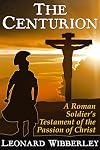
This is a novel told largely from the point of view of Longinus, the centurion who is ordered to administer the crucifixion of Jesus of Nazareth. This is a tough assignment for him as he has developed some sympathy for Christ, who had saved his Celtic servant Ruafocus from a fatal disease. The story is told in quite a straightforward but quite gripping way, from the first rumours of Jesus preaching, at which time he is just one among many Jewish preachers, to his becoming more and more show more popular, as stories of his miracles attract more and more witnesses, who cannot all just be dismissed as credulous. It is easy to see how Jesus was increasingly perceived as a threat to the Roman authorities, preaching what sounded like sedition but in a completely non-violent way, and to the local Jewish leadership, especially the Pharisees, performing miracles but acting unofficially outside the limits of Jewish authority. As the author says: "First, he did not preach only in the Temple but more often in the open whenever a crowd had gathered around him. Second, he never dealt with the Law, but talked about their daily lives and their Father in Heaven who looked after them so that they could feel his presence in the mountains and fields and valleys. Again he used no subtleties, but spoke directly so that there was no hidden meaning in his words. And finally he made up little stories, about planting seeds or harvesting grain or going on a journey, or losing a coin, or lighting a lamp, or building a house, all of which applied directly to their own lives." Yet, strangely, after he is condemned to crucifixion, the crowds overwhelmingly mock and deride him. A moving novel, whatever one's religious views - not for no reason has the story of Jesus been called the greatest story ever told. show less
Body of Proof: The Investigation by Theophilus into the Resurrection of Jesus Christ by Léonard Wibberley
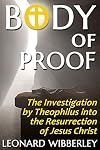
This is effectively a sequel to the author's The Centurion: A Roman Soldier's Testament of the Passion of Christ. In the New Testament, Theophilus was the dedicatee of the Gospel according to Luke and the Acts of the Apostles, but his real identity is contested. Here he is a grain merchant who witnesses Jesus Christ's confrontation with Pontius Pilate and, moved to pity, offers him a cup of wine. After the crucifixion, Pilate commissions him to investigate rumours of Christ's resurrection, show more talking to a wide variety of different people. What this novel puts across well is how contemporaries, Jewish, Roman, Greek, or whatever, would have viewed the existence and teaching of a man who initially seemed to be just another of the many Jewish messiahs who had emerged from time to time. Over time Theophilus's bafflement and hostility to the Christian doctrines is worn down, but this is not a smooth process and the story is not at all "preachy". I enjoyed this, though I thought there were too many digressions into the general history of the Roman Empire of this time, unconnected to the subject of the book's subtitle, sometimes seemingly just to give the story a salacious feel by the inclusion of incidents lifted from Suetonius's Twelve Caesars. show less

Read it as slap-stick humour. Read it as political satire. Read it as a commentary on post-WWII ethical philosophy. But read it!
I was first introduced to this as a theatrical production at my school in the sixties. I still love to reread it, now with the personal history of having a husband who worked at the International Atomic Energy Agency - supporting those who inspect nuclear facilities worldwide. The issues haven't gone away.
I was first introduced to this as a theatrical production at my school in the sixties. I still love to reread it, now with the personal history of having a husband who worked at the International Atomic Energy Agency - supporting those who inspect nuclear facilities worldwide. The issues haven't gone away.

Better than the previous one. Emotions are still more told than shown, but it gets deeper into the people involved (not just what they did). Again, interesting sidelights on the American Revolution.
Lists
Best Satire (3)
Elevenses (1)
Awards


You May Also Like


Associated Authors
Statistics
- Works
- 117
- Also by
- 16
- Members
- 3,125
- Popularity
- #8,178
- Rating
- 3.7
- Reviews
- 78
- ISBNs
- 137
- Languages
- 6
- Favorited
- 2

