
Allan V. Horwitz
Author of The Loss of Sadness: How Psychiatry Transformed Normal Sorrow into Depressive Disorder
About the Author
Allan V. Horwitz is a Board of Governors and Distinguished Professor of Sociology at Rutgers University. He is the author of several books, including Anxiety: A Short History.
Works by Allan V. Horwitz
The Loss of Sadness: How Psychiatry Transformed Normal Sorrow into Depressive Disorder (2007) 119 copies, 5 reviews
All We Have to Fear: Psychiatry's Transformation of Natural Anxieties into Mental Disorders (2012) 21 copies, 1 review
Personality Disorders: A Short History of Narcissistic, Borderline, Antisocial, and Other Types (2023) 15 copies, 1 review
Tagged
Common Knowledge
- Birthdate
- 1948-08-22
- Gender
- male
- Nationality
- USA
- Associated Place (for map)
- USA
Members
Reviews
Personality Disorders: A Short History of Narcissistic, Borderline, Antisocial, and Other Types by Allan V. Horwitz
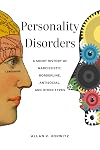
Personality Disorders, written by Allan V Horwitz and narrated by Jonathan Yen, is a comprehensive look at what we now call personality disorders.
While the text is detailed I don't think it is exhaustive (no doubt there is even more to say) but it is comprehensive in that it uses the history of mental health approaches along with where we stand now to give a very good picture of what these disorders are. I found the writing to be engaging but still almost academic in nature, which makes it show more accessible for those who are interested enough to put in the effort while still offering enough detail to be of value to those in the field, or any periphery field.
I listened to the audiobook version and found Yen to be a good narrator, just enough inflection to keep my attention but not to the point of being distracting. For me, someone with only a few courses in the general area and no practical experience, the audiobook worked very well. I didn't get bogged down, as I often do, in words I would have stumbled over which allowed the big picture to come through. I wouldn't mind having a physical copy to examine in more detail, but as a book to read/listen to primarily to understand the ideas, the version I have was great.
I would recommend this to those who want a deeper understanding of personality disorders than we often get in popular science books but don't want to grapple with a textbook, though I think this would make a great textbook. I also think those in the field will enjoy getting a bit more history in their understanding of personality disorders to help them see just how dynamic the diagnoses still are.
Reviewed from a copy made available by the publisher via NetGalley. show less
While the text is detailed I don't think it is exhaustive (no doubt there is even more to say) but it is comprehensive in that it uses the history of mental health approaches along with where we stand now to give a very good picture of what these disorders are. I found the writing to be engaging but still almost academic in nature, which makes it show more accessible for those who are interested enough to put in the effort while still offering enough detail to be of value to those in the field, or any periphery field.
I listened to the audiobook version and found Yen to be a good narrator, just enough inflection to keep my attention but not to the point of being distracting. For me, someone with only a few courses in the general area and no practical experience, the audiobook worked very well. I didn't get bogged down, as I often do, in words I would have stumbled over which allowed the big picture to come through. I wouldn't mind having a physical copy to examine in more detail, but as a book to read/listen to primarily to understand the ideas, the version I have was great.
I would recommend this to those who want a deeper understanding of personality disorders than we often get in popular science books but don't want to grapple with a textbook, though I think this would make a great textbook. I also think those in the field will enjoy getting a bit more history in their understanding of personality disorders to help them see just how dynamic the diagnoses still are.
Reviewed from a copy made available by the publisher via NetGalley. show less
The Loss of Sadness: How Psychiatry Transformed Normal Sorrow into Depressive Disorder by Allan V. Horwitz

It's been quite a while since I tackled an academic monograph, and I forgot how repetitive they can be. What I would greatly appreciate as a researcher becomes bogged down as a general reader. I would have been satisfied with a 100-page discussion. That being said, the topic is timely and the execution was perfect for its milieu. The authors' basic tenet is that the current methods of diagnosing depression are too broad, leading to a tremendous amount of false positive diagnoses and skewing show more the view of major depressive disorder. They argue that the next set of criteria for diagnosing major depression should include criteria that better allows for context.
The current diagnostic criteria are found in the fourth edition of the Diagnostic and Statistical Manual of Mental Disorders (DSM-IV). While these criteria are helpful for mapping out symptoms of depression, they only include bereavement as a contextual element that would explain the state of the depressed individual. The authors argue that there are many more life events that could provoke a depressive episode and depressive disorder. They posit that these life events do cause depression, but that this type of depression does not constitute disorder. The duration of the depression matched with the severity of the life event and other contextual clues about the individual's life need to be taken into account when diagnosing depression.
In addition, the authors delve into the history of depression, or melancholia as it was once referred to. The 2500-year history of this mood state has included contexts for depression, differentiating depression caused by life events and depression that is seemingly caused by nothing. Throughout these historical writings, severity and duration were measured against the context of the onset and the severity of the loss that caused depression. However, in the twentieth century physicians and researchers began to focus more on the symptoms than the context in an effort to enhance reliability.
While Horowitz and Wakefield do not go so far as to offer their own system of diagnosis for depression, they do offer numerous reasons why the current system is invalid and unreliable. Not only do the current diagnostic criteria lead to a significant amount of false positives and unnecessary medicalization, it also leads the culture to view normal sadness as disordered. They contend that the evolutionary and biological underpinnings for sadness should not be overlooked and that life events within context that cause sadness should not be treated as a disorder. If psychiatry is to remain relevant as a profession, clinicians and researchers need to be working with the right definitions, which they currently lack.
I tend to agree with Horowitz and Wakefield on most of their points, however weighted down I became in the nuances. It does seem like the surge in depression cases coincides with the new definitions and diagnostic symptoms provided in the DSM-III and the DSM-IV. I hope that the professional psychiatric community heeds the authors' call to create a more inclusive, grounded, and contextual basis for diagnosing depression, especially major depressive disorder. The background and discussion regarding biology, history, anthropology, and sociology provides excellent talking points in the fields of medicine and social science. show less
The current diagnostic criteria are found in the fourth edition of the Diagnostic and Statistical Manual of Mental Disorders (DSM-IV). While these criteria are helpful for mapping out symptoms of depression, they only include bereavement as a contextual element that would explain the state of the depressed individual. The authors argue that there are many more life events that could provoke a depressive episode and depressive disorder. They posit that these life events do cause depression, but that this type of depression does not constitute disorder. The duration of the depression matched with the severity of the life event and other contextual clues about the individual's life need to be taken into account when diagnosing depression.
In addition, the authors delve into the history of depression, or melancholia as it was once referred to. The 2500-year history of this mood state has included contexts for depression, differentiating depression caused by life events and depression that is seemingly caused by nothing. Throughout these historical writings, severity and duration were measured against the context of the onset and the severity of the loss that caused depression. However, in the twentieth century physicians and researchers began to focus more on the symptoms than the context in an effort to enhance reliability.
While Horowitz and Wakefield do not go so far as to offer their own system of diagnosis for depression, they do offer numerous reasons why the current system is invalid and unreliable. Not only do the current diagnostic criteria lead to a significant amount of false positives and unnecessary medicalization, it also leads the culture to view normal sadness as disordered. They contend that the evolutionary and biological underpinnings for sadness should not be overlooked and that life events within context that cause sadness should not be treated as a disorder. If psychiatry is to remain relevant as a profession, clinicians and researchers need to be working with the right definitions, which they currently lack.
I tend to agree with Horowitz and Wakefield on most of their points, however weighted down I became in the nuances. It does seem like the surge in depression cases coincides with the new definitions and diagnostic symptoms provided in the DSM-III and the DSM-IV. I hope that the professional psychiatric community heeds the authors' call to create a more inclusive, grounded, and contextual basis for diagnosing depression, especially major depressive disorder. The background and discussion regarding biology, history, anthropology, and sociology provides excellent talking points in the fields of medicine and social science. show less

Outstanding book on the "history of anxiety", but even more as the history of psychiatry in the U.S. and the degree to which psychiatry (and medicine in general) is subject to changing fads and pressures from economic, political, and social forces.
The Loss of Sadness: How Psychiatry Transformed Normal Sorrow into Depressive Disorder by Allan V. Horwitz
An essential look at the current state of psychiatric diagnosis and treatment. Provides a history of DSM I through DSM-5, and documents how normal emotional ups-and-downs have become diagnoses which require specific treatment. A key point: DSM-III resulted in the loss of context for psychiatric diagnoses, so that all sadness has now become depression, which requires medical treatment, resulting in significant profits for both the pharmaceutical industry and physicians (more primary care show more physicians than psychiatrists).
An important and disturbing book. show less
An important and disturbing book. show less
Lists
Awards

You May Also Like


Statistics
- Works
- 11
- Members
- 335
- Popularity
- #71,018
- Rating
- 3.9
- Reviews
- 8
- ISBNs
- 37
- Languages
- 2