
Peter D. Kramer
Author of Listening to Prozac
About the Author
Peter D. Kramer is a clinical professor of psychiatry at Brown University.
Works by Peter D. Kramer
Should You Leave?: A Psychiatrist Explores Intimacy and Autonomy--and the Nature of Advice (1997) 157 copies, 3 reviews
Associated Works
Better Than Well: American Medicine Meets the American Dream (2003) — Introduction, some editions — 106 copies, 2 reviews
Tagged
Common Knowledge
- Legal name
- Kramer, Peter David
- Birthdate
- 1948-10-22
- Gender
- male
- Education
- Harvard College (AB|1970)
University College, London
Harvard Medical School (MD|1976) - Occupations
- psychiatrist
novelist
radio host
editor
columnist - Organizations
- Brown University
American Psychiatric Association
Rhode Island Psychiatric Society
National Book Critics Circle - Awards and honors
- Harry Stack Sullivan Award
Milton Rosenbaum Memorial Award
National Mental Health Association Media Award - Agent
- Andrew Wylie (The Wylie Agency)
- Short biography
- Peter D. Kramer is a psychiatrist, writer, and Brown Medical School professor. His articles and book reviews have appeared in The New York Times, The Washington Post, Slate, and elsewhere. [[adapted from Ordinarily Well (2016)]
- Nationality
- USA
- Birthplace
- New York, New York, USA
- Places of residence
- Providence, Rhode Island, USA
- Associated Place (for map)
- USA
Members
Reviews
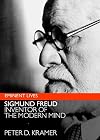
An elegant assassination. Kramer dismantles the myth of Freud without malice or exaggeration - only calm, verifiable information. Going in, I had imagined Freud as a pioneer who had fallen out of favor, due for a pendulum swing. Kramer's (convincing) thesis is that Freud generalized and exaggerated known theories of the mind until they were false, claiming they were original. Worthy of the Eminent Lives Series.

I like the overall thesis of this book: that depression isn't something glamorous or romantic or necessary for artistic creation. It's a disease and it's terrible and if we could eradicate it, we should. I just don't like all of the stuff that's stuffed into the other 300+ pages. It's just one of those books that's so obviously written by an older white guy. So much philosophical rambling about dead white male philosophers. So much artistic rambling about dead white male artists. So much show more pontificating about dead white male authors. He couldn't think of a single woman to write about? Plath? Dickinson? Really?
Anyway. There's also the annoying (to me) insistence on some biological models of depression that are far from being medically proven. The author even says things like (and I'm paraphrasing here) "despite conflicting studies" and then goes on to talk about how depression causes holes in the hippocampus as though it's something the entire medical community has agreed upon. (It's not.) There's also some evo-psych in here. And about two paragraphs after he won me over saying (again, I'm paraphrasing) "I really dislike evo-psych, because how on earth can anybody know what our paleolithic ancestors were really doing". He then goes on to use evo-psych arguments about how men are attracted to depressed women, and about how depression could be argued to be either useful in an evolutionary perspective or a spandrel. OR IT COULD BE NEITHER OF THOSE. JUST SAYING.
Great thesis, could have been rephrased to be less pretentious-white-male-rambling and filled up about 100 pages, and then I would have liked it much more. show less
Anyway. There's also the annoying (to me) insistence on some biological models of depression that are far from being medically proven. The author even says things like (and I'm paraphrasing here) "despite conflicting studies" and then goes on to talk about how depression causes holes in the hippocampus as though it's something the entire medical community has agreed upon. (It's not.) There's also some evo-psych in here. And about two paragraphs after he won me over saying (again, I'm paraphrasing) "I really dislike evo-psych, because how on earth can anybody know what our paleolithic ancestors were really doing". He then goes on to use evo-psych arguments about how men are attracted to depressed women, and about how depression could be argued to be either useful in an evolutionary perspective or a spandrel. OR IT COULD BE NEITHER OF THOSE. JUST SAYING.
Great thesis, could have been rephrased to be less pretentious-white-male-rambling and filled up about 100 pages, and then I would have liked it much more. show less
Listening to Prozac: The Landmark Book About Antidepressants and the Remaking of the Self by Peter D. Kramer
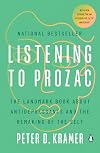
Kramer is fascinated with the possibilities of better living through chemistry. Others have done a better job of delivering the cautions needed in dealing with psychiatric drugs, but none have done a better job of documenting the most intriguing research projects that contribute to our knowledge of brain chemistry. I found of particular interest the study which sought to create leadership in a monkey tribe. A male monkey fed serotonin and placed in a leaderless tribe would instantly become show more the leader. But the serotonin-enhanced monkey placed in a tribe that already had a leader just couldn't make it past first lieutenant. Kramer also posed a number of ethical questions, such as, Should a doctor prescribe Prozac to a patient who wants it to stop biting her fingernails or to be more suitable for a sales job if he wants to give up being a librarian? Where does the clinician's responsibility lie? Interesting stuff. show less
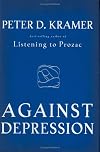
This is a magnificent book, definitely required reading for those who have suffered from major depression or anyone who has ever been close to a depressive. Kramer (the author of the also-excellent Listening to Prozac) makes it clear from the start that he believes that depression is an insidious disease that does not deserve the romanticization that has long surrounded it. He compares depression and the culture of melancholy to the way people used to romanticize tuberculosis, which used to show more be seen as a romantic disease that indicated refinement and tragic beauty. He offers up a lot of evidence to back up his beliefs, both from his own practice and from scientific studies that illustrate the physical effects (and possible causes) of depression. Even so, he is not unsympathetic to the impulses that lead us to romanticize depression and feel uncomfortable about the idea of eradicating it completely, and this book never edges into polemic. Reading it is sort of like having a series of dinner table talks with a very intelligent friend. show less
Lists
Awards


You May Also Like


Associated Authors
Statistics
- Works
- 13
- Also by
- 2
- Members
- 1,734
- Popularity
- #14,822
- Rating
- 3.8
- Reviews
- 23
- ISBNs
- 62
- Languages
- 8