
Alexander Rosenberg
Author of The Girl from Krakow: A Novel
About the Author
Alexander Rosenberg is R. Taylor Cole Professor of Philosophy at Duke University. He is the author of many books and papers in the philosophy of science, including The Philosophy of Science: A Contemporary Approach, The Philosophy of Biology: A Contemporary Approach, and Economics-Mathematical show more Politics or Science of Diminishing Returns? (winner of the prestigious Lakatos Prize). In 2007, he was the national Phi Beta Kappa Romanell lecturer in philosophy. show less
Works by Alexander Rosenberg
How History Gets Things Wrong: The Neuroscience of Our Addiction to Stories (The MIT Press) (2018) 92 copies, 2 reviews
Darwinian Reductionism: Or, How to Stop Worrying and Love Molecular Biology (2006) 21 copies, 1 review
Tagged
Common Knowledge
- Birthdate
- 1946
- Gender
- male
- Education
- City College of New York
Johns Hopkins University (Ph.D., Philosophy) - Occupations
- professor of philosophy
- Organizations
- Duke University
- Awards and honors
- Lakatos Award (1993)
- Nationality
- USA
- Places of residence
- New York, New York, USA
- Associated Place (for map)
- New York, USA
Members
Reviews
How history gets things wrong : the neuroscience of our addiction to stories / Alex Rosenberg by Alex Rosenberg
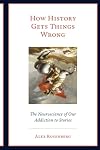
The American philosopher of science Alex Rosenberg (b. 1946) has a very black and white view of reality: anything that is not based on scientific ground is no good. His ‘faith’ (pun intended) is scientism, pure and simple. In this book, Rosenberg focuses on narratives, and historical narratives in particular. In this review, I’m going to focus on his critique of narratives in general.
Since the postmodern wave in the second half of the twentieth century, we know that narratives are show more ubiquitous; we use the frame of stories to interpret and express both the banal reality of everyday as well as fundamental issues; “everything is a story” has become a very inflationary expression. Well, says Rosenberg, these narratives just are bullshit, and what's more, they're harmful: “all narratives are wrong – wrong in the same way and for the same reason”.
To prove his point, he elaborates on the ‘Theory of Mind’-technique, that is the instrument we use to imagine how other people function, what their motives and desires are. It’s a method that homo sapiens has developed throughout its evolutionary history, and that allowed it to survive. It was such a success that we have completely internalized, and still use it throughout the day.
According to Rosenberg this development has come with a vengeance. Through a very detailed and technical overview of neuro-cognitive studies, he shows that this Theory of Mind constantly misleads us; because there’s no way we can be sure we’re on the right track of motives and desires of others, and that’s why we constantly make bad choices. If we have to believe Rosenberg, neurosciences even have proven that this instrument makes no sense, it even has no neurological basis at all.
The only remedy according to Rosenberg is to renounce our addiction to narratives, and resolutely turn to science, through the simple registration of events and actions, sticking to factual information and expressing that in tables, graphs, etc. It’s no wonder Rosenberg ventures into a rehabilitation of the long-discredited behaviorism.
Look, I could demonstrate extensively how fundamentally wrong Rosenberg is. But I’m going to limit myself to two points of criticism. To begin with, Rosenberg is purely misleading: if you read carefully, his critique of (historical) narratives focuses almost exclusively on the process of attributing motives and desires to others (hence his focus on the Theory of Mind); that is a serious limitation of the concept of narrative. Isn’t it strange that an intelligent person like Rosenberg does not even notice that he is constantly using narratives (in the broader sense of the word) himself, almost constantly throughout this book. How could it be different: they’re ubiquitous, remember?
And secondly, his scientism is so out of line (“science and nothing but science”) that he simply ignores entire chunks of (human) reality. Try this exercise: replace the ‘Theory of Mind’-method with "friendship" or "love", two other forms of human relating; it is quite simple to show that friendship and love in many cases are just illusions, are neuro-cognitive based on nothing, and very often are rather harmful. This critique can easily be justified with logical and rational arguments. But does this mean we just have to throw them overboard, and deny that they are fundamental to the possibility of a ‘good life’?
Well, I know it sounds derogatory, but I actually feel very sorry for Rosenberg: he is clearly someone who can only think in binary (scientific or non-scientific) terms, and as a result simply wishes to ignore fundamental parts of human reality. I’m not saying this book isn’t interesting (it absolutely is thought provoking), and I’m not saying Rosenberg is wrong all the time, but his central message just is wrong.
In my historical account on Goodreads, I explore more in depth the (ir)relevance of this book for historians: https://www.goodreads.com/review/show/4988720518 show less
Since the postmodern wave in the second half of the twentieth century, we know that narratives are show more ubiquitous; we use the frame of stories to interpret and express both the banal reality of everyday as well as fundamental issues; “everything is a story” has become a very inflationary expression. Well, says Rosenberg, these narratives just are bullshit, and what's more, they're harmful: “all narratives are wrong – wrong in the same way and for the same reason”.
To prove his point, he elaborates on the ‘Theory of Mind’-technique, that is the instrument we use to imagine how other people function, what their motives and desires are. It’s a method that homo sapiens has developed throughout its evolutionary history, and that allowed it to survive. It was such a success that we have completely internalized, and still use it throughout the day.
According to Rosenberg this development has come with a vengeance. Through a very detailed and technical overview of neuro-cognitive studies, he shows that this Theory of Mind constantly misleads us; because there’s no way we can be sure we’re on the right track of motives and desires of others, and that’s why we constantly make bad choices. If we have to believe Rosenberg, neurosciences even have proven that this instrument makes no sense, it even has no neurological basis at all.
The only remedy according to Rosenberg is to renounce our addiction to narratives, and resolutely turn to science, through the simple registration of events and actions, sticking to factual information and expressing that in tables, graphs, etc. It’s no wonder Rosenberg ventures into a rehabilitation of the long-discredited behaviorism.
Look, I could demonstrate extensively how fundamentally wrong Rosenberg is. But I’m going to limit myself to two points of criticism. To begin with, Rosenberg is purely misleading: if you read carefully, his critique of (historical) narratives focuses almost exclusively on the process of attributing motives and desires to others (hence his focus on the Theory of Mind); that is a serious limitation of the concept of narrative. Isn’t it strange that an intelligent person like Rosenberg does not even notice that he is constantly using narratives (in the broader sense of the word) himself, almost constantly throughout this book. How could it be different: they’re ubiquitous, remember?
And secondly, his scientism is so out of line (“science and nothing but science”) that he simply ignores entire chunks of (human) reality. Try this exercise: replace the ‘Theory of Mind’-method with "friendship" or "love", two other forms of human relating; it is quite simple to show that friendship and love in many cases are just illusions, are neuro-cognitive based on nothing, and very often are rather harmful. This critique can easily be justified with logical and rational arguments. But does this mean we just have to throw them overboard, and deny that they are fundamental to the possibility of a ‘good life’?
Well, I know it sounds derogatory, but I actually feel very sorry for Rosenberg: he is clearly someone who can only think in binary (scientific or non-scientific) terms, and as a result simply wishes to ignore fundamental parts of human reality. I’m not saying this book isn’t interesting (it absolutely is thought provoking), and I’m not saying Rosenberg is wrong all the time, but his central message just is wrong.
In my historical account on Goodreads, I explore more in depth the (ir)relevance of this book for historians: https://www.goodreads.com/review/show/4988720518 show less
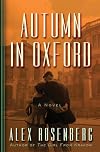
Normally if there's a murder in a book, I'm out. And if someone is framed for said murder, well I'm double out. But I guess if you couch it in enough fascinating historical detail (and describe the actual act of murder as little as possible), I'm willing to go along for the ride. This was very much the case for Alex Rosenberg's thrilling new novel, Autumn in Oxford.
Tom Wrought is a Pulitzer Prize winning academic at Oxford. He joined the Communist party when he was a very young man and show more despite having left the party long ago, faced enough problems in a US in the grips of McCarthyism to have decamped for Britain before his passport could be confiscated and his livelihood closed off to him. While in England, despite both of them being married, he falls in love with his neighbor, Liz Spencer, and they embark on an affair. They might just be the love of each other's lives. When Liz's husband is pushed in front of a Tube train, Tom is accused of his murder. What looks like a simple case of a love triangle ending in murder turns into something much more far reaching and politically disturbing once Tom's background as an OSS and then CIA spy comes to light. It is up to Liz, Alice, the lawyer she hires, and Tom himself, to find out the truth about who framed Tom for the murder and why before it's too late.
Told from several different perspectives, Tom's, Liz's, and Alice, as well as several of the more minor characters, the novel covers a lot of political ground. Set in the late 1950s, when McCarthyism was at its height in the US, J. Edgar Hoover was in charge of the FBI, several high profile Brits had defected to the Soviet Union, espionage was rampant, and race relations in the US were incredibly volatile, the novel weaves a hypnotic story of the intertwining all of these varying facts and more. Rosenberg takes some little known or mostly forgotten historical happenings and ties them all together through his character of Tom Wrought. Choosing to have Tom write out his back story in a journal from prison as a way to help his lawyer try to uncover who might have a stake in framing Tom is an ingenious way to give the reader a lot of information that might not otherwise fit well in the framework of the story. The Cold War politics vital to the plot and Tom's relationship to them is revealed slowly and deliberately as the tension ratchets up. Liz and Alice, as the two main investigators in the race to clear Tom, are both written as strong and intelligent female character although there were times when Liz, in particular, seemed to act out of character as the mother of young children to whom she was devoted but perhaps her cloak and dagger investigation demanded this small anachronism. Over all, this was a riveting mystery/thriller. It will certainly appeal to anyone fascinated by the Cold War era and its spies, those who appreciate eminently plausible conspiracy theories, and those who enjoy a twisting, turning plot that keeps the reader guessing both where the plot is going and how much of the background is based on truth. History buffs will certainly leave this entertaining book looking for primary sources on at least a few things with which they aren't familiar. show less
Tom Wrought is a Pulitzer Prize winning academic at Oxford. He joined the Communist party when he was a very young man and show more despite having left the party long ago, faced enough problems in a US in the grips of McCarthyism to have decamped for Britain before his passport could be confiscated and his livelihood closed off to him. While in England, despite both of them being married, he falls in love with his neighbor, Liz Spencer, and they embark on an affair. They might just be the love of each other's lives. When Liz's husband is pushed in front of a Tube train, Tom is accused of his murder. What looks like a simple case of a love triangle ending in murder turns into something much more far reaching and politically disturbing once Tom's background as an OSS and then CIA spy comes to light. It is up to Liz, Alice, the lawyer she hires, and Tom himself, to find out the truth about who framed Tom for the murder and why before it's too late.
Told from several different perspectives, Tom's, Liz's, and Alice, as well as several of the more minor characters, the novel covers a lot of political ground. Set in the late 1950s, when McCarthyism was at its height in the US, J. Edgar Hoover was in charge of the FBI, several high profile Brits had defected to the Soviet Union, espionage was rampant, and race relations in the US were incredibly volatile, the novel weaves a hypnotic story of the intertwining all of these varying facts and more. Rosenberg takes some little known or mostly forgotten historical happenings and ties them all together through his character of Tom Wrought. Choosing to have Tom write out his back story in a journal from prison as a way to help his lawyer try to uncover who might have a stake in framing Tom is an ingenious way to give the reader a lot of information that might not otherwise fit well in the framework of the story. The Cold War politics vital to the plot and Tom's relationship to them is revealed slowly and deliberately as the tension ratchets up. Liz and Alice, as the two main investigators in the race to clear Tom, are both written as strong and intelligent female character although there were times when Liz, in particular, seemed to act out of character as the mother of young children to whom she was devoted but perhaps her cloak and dagger investigation demanded this small anachronism. Over all, this was a riveting mystery/thriller. It will certainly appeal to anyone fascinated by the Cold War era and its spies, those who appreciate eminently plausible conspiracy theories, and those who enjoy a twisting, turning plot that keeps the reader guessing both where the plot is going and how much of the background is based on truth. History buffs will certainly leave this entertaining book looking for primary sources on at least a few things with which they aren't familiar. show less
(...) when I learned Rosenberg had written a book about our addiction to stories, I couldn’t resist and bought it. This book is a very different read than Darwinian Reductionism: a whole lot more accessible, written for a somewhat larger audience – although this is still no pop science book. While not without problems, it is very much worth your time if you have a serious, academic interest in human behavior, theory of mind, and narrative – Rosenberg’s scope is both broad and show more deep.
How History Gets Things Wrong: The Neuroscience of Our Addiction to Stories biggest shortcoming is its title. It’s great from a marketing point of view, but it is a bit misleading. Yes, history features, as do stories, but in the end, they are a sideshow. Rosenberg uses the fallacies of narrative history to frame his central argument, which is a refutation of the most commonly held (folk) ‘theory of mind‘. He does so mainly with recent findings from neuroscience.
(...)
One more remark before the jump, maybe a crucial one, I don’t know. Neural circuits in the brain do not have content or represent something indeed, but it is obvious that their material output (our speech, our writing, to a certain extent maybe our conscious thoughts as well, …) does. The brain lacks content, sure, but it forms content. I would think that you cannot treat the brain as a closed system, and that we need to take its extensions so to say into account as well.
I’m not sure what this means for Rosenberg’s overall theory. Maybe it is not much more than a matter of sharper definitions. Rosenberg talks about cell circuitry that does not ‘represent’ or ‘interpret’ etc. – but again, what about their output? Is that part of the brain as well? Or part of its representation/interpretation/aboutness?
Or maybe his main beef shouldn’t be with narrative history and theory of mind, but narrative history and the folk theory of mind that presupposes rational, non-causally determined agency of human actors. The neuroscience and other points raised could easily support that.
(...)
Full review on Weighing A Pig show less
How History Gets Things Wrong: The Neuroscience of Our Addiction to Stories biggest shortcoming is its title. It’s great from a marketing point of view, but it is a bit misleading. Yes, history features, as do stories, but in the end, they are a sideshow. Rosenberg uses the fallacies of narrative history to frame his central argument, which is a refutation of the most commonly held (folk) ‘theory of mind‘. He does so mainly with recent findings from neuroscience.
(...)
One more remark before the jump, maybe a crucial one, I don’t know. Neural circuits in the brain do not have content or represent something indeed, but it is obvious that their material output (our speech, our writing, to a certain extent maybe our conscious thoughts as well, …) does. The brain lacks content, sure, but it forms content. I would think that you cannot treat the brain as a closed system, and that we need to take its extensions so to say into account as well.
I’m not sure what this means for Rosenberg’s overall theory. Maybe it is not much more than a matter of sharper definitions. Rosenberg talks about cell circuitry that does not ‘represent’ or ‘interpret’ etc. – but again, what about their output? Is that part of the brain as well? Or part of its representation/interpretation/aboutness?
Or maybe his main beef shouldn’t be with narrative history and theory of mind, but narrative history and the folk theory of mind that presupposes rational, non-causally determined agency of human actors. The neuroscience and other points raised could easily support that.
(...)
Full review on Weighing A Pig show less
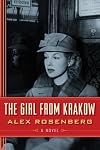
I thought this book was excellent. Rosenberg has a terrific grasp of the historical and human realities of the borderlands between Soviet Russia and Nazi Germany before, during and after the War. The book is well written, the suspense well maintained, and the characters artfully developed. Well worth the read.
Lists
Awards

You May Also Like


Associated Authors
Statistics
- Works
- 21
- Members
- 1,077
- Popularity
- #23,870
- Rating
- 3.6
- Reviews
- 19
- ISBNs
- 89
- Languages
- 4