

Robert Snedden
Author of Explor-A-Maze
About the Author
Robert Snedden has 30 years of experience in publishing as a writer and editor. He has written more than 70 non-fiction books for children.
Series
Works by Robert Snedden
A Brief Illustrated History of Space Exploration (Fact Finders: A Brief Illustrated History) (2017) 8 copies
Great Breakthroughs in Mathematics: From Counting to Chaos Theory - How Numbers Changed the World (2020) 3 copies
Plants & Fungi: Multicelled Life 2 copies
Great Breakthroughs in Physics: How the Story of Matter and its Motion Changed the World (Great Breakthroughs, 1) (2020) 2 copies
The World of the Cell 1 copy
Great Breakthroughs in Technology: The Scientific and Industrial Innovations that Changed the World (2021) 1 copy
Dünya'yı Uzaydan Haritalamak 1 copy
Az idő 1 copy
Mengasingkan Bahan 1 copy
The 15-min Einstein 1 copy
Associated Works
Tagged
Common Knowledge
- Gender
- male
Members
Reviews
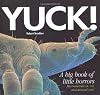
This book has fabulous color photos of everyday organisms and objects. The photos really show the power of microscopes and how they help you to see the microscopic world around you. From dust mites on floors to parasites on your toothbrush, this book covers all of the microscopic world around us. This is a great read aloud book for any science class. The interactive pages will keep students guessing about what they are seeing in the photographs. I would use this to introduce microscopes to show more younger students, but it would also be a great book to use with older students who may not have access to using microscopes. show less

This slender (48-pg.) book about the different groups of cells that make up animals, and how those groups work together, is a must-have for high school libraries. The text is brief, clear, and to the point. Every page has a large, colorful and fascinating photo or illustration that makes the cellular world pop. The graphics and graphic organizers are consistent from page to page, making the text easy to follow. This is NOT a book for an in-depth study of cells (for example, information on show more the organelles is very scant and limited), but it IS a book that a struggling/reluctant reader could get into if s/he had to do a report on animal cells. The brilliantly-colored pictures alone might even be appealing enough to get them to read the text even if they didn't need to write a report. The book feels very reader-friendly and accessible. show less
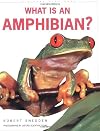
This book covers the different characteristics of amphibians. What I really liked about this book are the real life photos. There is a photo of a frog carrying its eggs, and it is so cool how it is the male frog that carries them, not the female frogs. When learning about amphibians, I would pull out this book. I might want to read some pages during story time. I would then have the students write in their journals what they have learned about amphibians. I could also create a cross word show more puzzle on the different vocabulary words on amphibians. show less
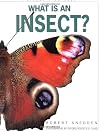
This book has everything you need to know about insects. It discusses their unique body parts, digestive patterns, and different types. I liked how it covered words that are covered in the textbooks, like exoskeleton and chitin. This makes it easier to connect it to the lessons. I would use this in a 3rd grade class, when covering animal classifications.I feel it does a great job in covering the main points of insects.
Lists
Awards


You May Also Like


Associated Authors
Statistics
- Works
- 177
- Also by
- 1
- Members
- 2,111
- Popularity
- #12,194
- Rating
- 3.7
- Reviews
- 13
- ISBNs
- 539
- Languages
- 12