
Michael Lacapa
Author of The Flute Player
About the Author
Works by Michael Lacapa
Associated Works
Tagged
Common Knowledge
There is no Common Knowledge data for this author yet. You can help.
Members
Reviews

In this original story from Acoma Pueblo poet and scholar Simon J. Ortiz, a southwestern village called Haapaahnitse (the "Oak Place") is suffering from a terrible drought. Hungry, feeling hopeless and unhappy, the people take to blaming one another. Then an old woman steps forward to remind them that they haven't yet sought help - help from the Shiwana, the rain and snow spirits who live in the west - and suggests that two young men be sent on a quest. And so it is that two brothers, show more Tsaiyah-dzehshi ("First One") and Hamahshu-dzehshi ("Next One") are dispatched on the long journey to the Shiwana, crossing blistering deserts and cold mountains. When they confront the fiery chasm of a volcano, the younger brother, Hamahshu-dzehshi, is afraid to continue, until a blind old woman happens along to show him the way...
A trilingual picture-book - the main text, in English and Keres (the language of Ortiz's Acoma Pueblo), is accompanied by Hopi/Tewa/Apache artist Michael Lacapa's illustrations, while a Spanish translation by Mayan author Victor Montejo is included at the rear - The Good Rainbow Road is not a traditional folktale, something Ortiz makes very clear in his afterword, but an original work of fantasy that is grounded in the folk tradition. As such, I think it is what we would call a "fairy-tale," and I have shelved it as such. The story itself is engrossing - readers will be rooting for Tsaiyah-dzehshi and Hamahshu-dzehshi - and the artwork, which looks to be done in colored marker or pencil, and which incorporates many folk motif borders, is colorful and attention-grabbing. I liked the fact that, while the two main questers here are male, women play such a decisive role in moving the action forward, both in suggesting the quest, and (in the form of Spider Woman) aiding the young men. I also liked the fact that the story ends, not with the granting of the young men's request, but with their reaching of their object. It's an interesting conclusion, and will leave readers wanting more. Always a good thing, when it comes to storytelling!
All in all, a wonderful book, one I would recommend to young readers who enjoy adventure stories - although a picture-book, the text is long and extensive, and is probably best suited for upper elementary school students and above - and to anyone looking for texts (although I understand that there is some controversy connected to writing them down) in any of the Keresan languages. show less
A trilingual picture-book - the main text, in English and Keres (the language of Ortiz's Acoma Pueblo), is accompanied by Hopi/Tewa/Apache artist Michael Lacapa's illustrations, while a Spanish translation by Mayan author Victor Montejo is included at the rear - The Good Rainbow Road is not a traditional folktale, something Ortiz makes very clear in his afterword, but an original work of fantasy that is grounded in the folk tradition. As such, I think it is what we would call a "fairy-tale," and I have shelved it as such. The story itself is engrossing - readers will be rooting for Tsaiyah-dzehshi and Hamahshu-dzehshi - and the artwork, which looks to be done in colored marker or pencil, and which incorporates many folk motif borders, is colorful and attention-grabbing. I liked the fact that, while the two main questers here are male, women play such a decisive role in moving the action forward, both in suggesting the quest, and (in the form of Spider Woman) aiding the young men. I also liked the fact that the story ends, not with the granting of the young men's request, but with their reaching of their object. It's an interesting conclusion, and will leave readers wanting more. Always a good thing, when it comes to storytelling!
All in all, a wonderful book, one I would recommend to young readers who enjoy adventure stories - although a picture-book, the text is long and extensive, and is probably best suited for upper elementary school students and above - and to anyone looking for texts (although I understand that there is some controversy connected to writing them down) in any of the Keresan languages. show less
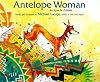
A beautifully illustrated picturebook that follows an older Apache man as he recounts the tale of how the Apache learned their fieldcraft. According to the legend, a man came who taught the tribe ways of crafting and hunting, but also taught them to honor nature. The man fell in love with a woman from the tribe, but the tribe would not accept their children, so he left the tribe with his wife and children, and they all transformed into antelope. The old man explains that this is why the show more Apache do not hunt the antelope, and why they must honor nature. The art in the story is very southwestern in flavor, with lots of vivid reds and greens interspersed between the earth tones, but the people and animals are drawn very realistically. Sometimes Native American stories fall prey to the desire to make everything look like a crude representation, as though that lends some air of authenticity to the story, but not here. show less
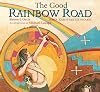
The Good Rainbow is NOT based on a traditional tale but it is written very well in a Native American storytelling style. The artwork is stunning. What was most fascinating is the the book is presented in English with a side-by-side translation in Keres, the native Acoma Puebloan language, followed by a translation into Spanish. The story is about two boys that are sent by their people to the west to visit the Shiwana, the spirits of rain and snow, and bring back rain to relieve a drought.
A beautifully illustrated, and wonderfully written story about the Apache legend about how men learned their trades, and how the people learned to respect nature from a man who could shape-shift into an antelope. This antelope man falls in love with a women of great integrity, and strength. They marry and have children, but choose to live with their antelope brethren when the Apache would not accept their children. The Apache watch them as they go, and they vow never to hunt the antelope, show more which is a tradition honored to this day. show less
Lists
Awards


You May Also Like


Associated Authors
Statistics
- Works
- 4
- Also by
- 3
- Members
- 346
- Popularity
- #69,042
- Rating
- 4.3
- Reviews
- 20
- ISBNs
- 8