

David Barsamian
Author of Imperial Ambitions: Conversations on the Post-9/11 World
About the Author
David Barsamian is a broadcast journalist and director of Alternative Radio. He is well known for his interviews of Noam Chomsky, which have been collected in several volumes. These include Chronicles of Dissent, Keeping the Rabble in Line: Interviews with David Barsamian, and Class Warfare: show more Interviews with David Barsamian. His interviews with Edward Said have also been collected, in The Pen and the Sword: Conversations with David Barsamian. (Bowker Author Biography) show less
Disambiguation Notice:
David Barsamian has authored a number of books of interviews and conversations with leading political thinkers including Noam Chomsky, Howard Zinn, Arundhati Roy, Edward Said, Eqbal Ahmad, and Tariq Ali. These books can mostly be found listed with those authors rather than on this page.
Works by David Barsamian
Power Systems: Conversations on Global Democratic Uprisings and the New Challenges to U.S. Empire (2013) — Author — 293 copies, 13 reviews
Eqbal Ahmad, confronting empire : interviews with David Barsamian ; foreword by Edward W. Said (2000) 105 copies, 1 review
گفتگو با نوام چامسکی 1 copy
Associated Works
Z Media Institute Reader — Contributor — 1 copy
Tagged
Common Knowledge
- Birthdate
- 1945
- Gender
- male
- Occupations
- Radio broadcaster
- Nationality
- USA
- Birthplace
- New York, New York, USA
- Places of residence
- Boulder, Colorado, USA
- Disambiguation notice
- David Barsamian has authored a number of books of interviews and conversations with leading political thinkers including Noam Chomsky, Howard Zinn, Arundhati Roy, Edward Said, Eqbal Ahmad, and Tariq Ali. These books can mostly be found listed with those authors rather than on this page.
- Associated Place (for map)
- USA
Members
Reviews
Power systems : conversations on global democratic uprisings and the new challenges to U.S. empire by Noam Chomsky
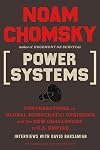
This is a great collection of conversations where Noam Chomsky delivers his thoughts on different global uprisings, from the Occupy movement to the peoples' uprising in Syria and Egypt, to how the US has dealt with its domestic and international politics, from the murder of Osama Bin Ladin to how Barack Obama really isn't that much better than Bush 2.
And, of course, it's Chomsky:
Simple words to explain complex and sometimes complicated things. Make no mistake, Chomsky breaks things down easily.
Insights on 9/11 is handed out:
Apart from bringing up the reason for basic internal problems and recent difficulties and wars, Chomsky explains the basis for keeping the population docile:
Also, he focuses on the then-recent republican up-and-comers:
...and Ron Paul:
Oh, as if we didn't know about Paul's motives:
And should people all over the world share the same rights? Oh hell yes:
And speaking of the Magna Carta and its ramifications:
Chomsky often looks to solutions as well as focusing on problems. An example:
And on terrorism, who's a terrorist according to the US government, up till approximately five years ago?
Chomsky speaks a lot of language and learning in the book, quote exciting stuff. And on learning, full stop:
And, to finish, on democracy:
All in all: highly recommendable to clarify and simplify what is going on among us, in modern society, and perhaps mainly, a brilliant set of goggles to make us see that it's time to fight. Remember, your anger is a gift. show less
And, of course, it's Chomsky:
Part of the doctrinal system in the United States is the pretense that we’re all a happy family, there are noshow more
class divisions, and everybody is working together in harmony. But that’s radically false.
Simple words to explain complex and sometimes complicated things. Make no mistake, Chomsky breaks things down easily.
Insights on 9/11 is handed out:
The United States didn’t invade Afghanistan because we were viciously attacked. It’s true that there was an attack on 9/11, but the government didn’t know who did it. In fact, eight months later, after the most intensive international investigation in history, the head of the Federal Bureau of Investigation informed the press that they still didn’t know who did it. He said they had suspicions. The suspicions were that the plot was hatched in Afghanistan but implemented in Germany and the United Arab Emirates, and, of course, in the United States. After 9/11, Bush II essentially ordered the Taliban to hand over Osama bin Laden, and they temporized. They might have handed him over, actually. They asked for evidence that he was involved in the attacks of 9/11. And, of course, the government, first of all, couldn’t give them any evidence because they didn’t have any. But, secondly, they reacted with total contempt. How can you ask us for evidence if we want you to hand somebody over? What lèse-majesté is this? So Bush simply informed the people of Afghanistan that we’re going to bomb you until the Taliban hand over Osama bin Laden. He said nothing about overthrowing the Taliban. That came three weeks later, when British admiral Michael Boyce, the head of the British Defense Staff, announced to the Afghans that we’re going to continue bombing you until you overthrow your government. This fits the definition of terrorism exactly, but it’s much worse. It’s aggression.
Apart from bringing up the reason for basic internal problems and recent difficulties and wars, Chomsky explains the basis for keeping the population docile:
To what extent does the propaganda system induce docility and passivity in the citizenry in the United States? That’s its point. But that has been its point from time immemorial. It’s part of the function of the reverence for kings, priests, submission to religious authorities. These are doctrinal characteristics of power systems that seek to induce passivity. The major propaganda systems that we face now, mostly growing out of the huge public relations industry, were developed quite consciously about a century ago in the freest countries in the world, in Britain and the United States, because of a very clear and articulated recognition that people had gained so many rights that it was hard to suppress them by force. So you had to try to control their attitudes and beliefs or divert them somehow. As the economist Paul Nystrom argued, you have to try to fabricate consumers and create wants so people will be trapped. It’s a common method.
Also, he focuses on the then-recent republican up-and-comers:
Today, if you read, say, foreign policy journals or, in a farcical form, listen to the Republican debates, they’re asking, “How do we prevent further losses?” If you listen to Mitt Romney, the likely Republican presidential candidate, the way you prevent further losses is by just killing everybody who is in your way. If we don’t like them, we’ll kill them. In fact, that’s just what he said last night. That’s one version. But it’s the same concern: we have to maintain our control of the world.
...and Ron Paul:
Some of the candidates have remarkable positions on climate change. Take Ron Paul. He appeals to a lot of progressives. He said on Fox, “The greatest hoax I think that has been around for many, many years if not hundreds of years has been this hoax on the environment and global warming.” He doesn’t provide any argument or evidence as to why he disregards the scientific consensus—just, I say so, period. With that attitude, you really are approaching the edge.
Oh, as if we didn't know about Paul's motives:
Ron Paul was asked at a Republican presidential debate what if “something terrible happens” to some guy who has no health insurance? What do you do? He said, “That’s what freedom is all about: taking your own risks.”21 Actually, when the moderator pushed back on this, he backed off and he said that people without health insurance would be taken care of by their families or their church. Then Rand Paul—this is more interesting—said national health insurance is slavery.22 He said, I’m a physician, and if there’s national health insurance, the government is forcing me to take care of somebody who is ill. Why should I be a slave to the state? Here we’re getting capitalist pathology in its most extreme, lunatic form. It is the opposite of solidarity, mutual support, mutual help.
And should people all over the world share the same rights? Oh hell yes:
Right after the assassination of Osama bin Laden, amid all the cheers and applause, there were a few critical comments questioning the legality of the act. Centuries ago, there used to be something called presumption of innocence. If you apprehend a suspect, he’s a suspect until proven guilty. He should be brought to trial. It’s a core part of American law. You can trace it back to Magna Carta. So there were a couple of voices saying maybe we shouldn’t throw out the whole basis of Anglo-American law. That led to a lot of very angry and infuriated reactions, but the most interesting ones were, as usual, on the left liberal end of the spectrum. Matthew Yglesias, a well-known and highly respected left liberal commentator, wrote an article in which he ridiculed these views. He said they’re “amazingly naive,” silly. Then he expressed the reason. He said that “one of the main functions of the international institutional order is precisely to legitimate the use of deadly military force by western powers.” Of course, he didn’t mean Norway. He meant the United States. So the principle on which the international system is based is that the United States is entitled to use force at will. To talk about the United States violating international law or something like that is amazingly naive, completely silly. Incidentally, I was the target of those remarks, and I’m happy to confess my guilt. I do think that Magna Carta and international law are worth paying some attention to.
And speaking of the Magna Carta and its ramifications:
We’re soon going to be commemorating the eighth century of Magna Carta. Magna Carta was a huge step forward. It established the right of any freeman—later extended to every person—to be free from arbitrary persecution. It established the presumption of innocence, the right to be free from state persecution, and the right to a free and fair speedy trial. That later was expanded into the doctrine of habeas corpus and became part of the U.S. Constitution. This is the foundation of Anglo-American law and one of its highest achievements, but it’s now being cast to the winds. One of the most remarkable examples is of Omar Khadr, the first Guantánamo case to come to a military commission—not a court—under Obama. The charge was that he had tried to resist an attack on his village by American soldiers when he was a fifteen-year-old boy. That’s the crime. A fifteen-year-old tries to defend his village from an invading army. So he’s a terrorist. Khadr had been kept in Guantánamo and, before that, Bagram in Afghanistan for eight years. I don’t have to tell you what Guantánamo is like. He finally came to a military commission, where he was given a choice: either plead not guilty and stay here forever or plead guilty and just spend another eight years in detention. This violates every international convention that you can think of, including laws on treatment of juveniles. Of course, it grossly violates any principle. He was fifteen. But there was no public outcry. In fact, particularly striking in some ways is that Khadr is a Canadian citizen. Canada could extradite him and free him if it wanted to, but they didn’t want to step on the master’s toes.
Chomsky often looks to solutions as well as focusing on problems. An example:
But as with any movement, you have to keep thinking through what you’re doing. The Occupy tactic has been extremely successful. It was a brilliant tactic, not just for raising issues but also for creating communities—something very important in a society like ours, which is so atomized. People are alone. They sit alone in front of their TV set. You don’t “consult your neighbor,” to use the old Wobbly phrase. That atomization is a technique of control and marginalization. One of the real achievements of Occupy has been to bring people together to form functioning, supportive, free, democratic communities—everything from kitchens to libraries to health centers to free general assemblies, where people talk freely and debate. It’s created bonds and associations that, if they last and if they expand, could make a big difference.
And on terrorism, who's a terrorist according to the US government, up till approximately five years ago?
If you look at the record of who is designated a terrorist, it’s shocking. Maybe the most extreme case is Nelson Mandela, who just got off the terrorist list about four years ago. The Reagan administration, which supported the apartheid regime in South Africa right to the end, condemned the African National Congress as one of “the more notorious terrorist groups” in the world. So Mandela is a terrorist because they say so. He’s only now for the first time free to come to the United States without special authorization. Saddam Hussein was taken off the terrorist list in 1982 so the United States could provide him with agricultural and other support that he needed. The whole record is grotesque.
Chomsky speaks a lot of language and learning in the book, quote exciting stuff. And on learning, full stop:
In other words, giving a general structure in which the learner—whether it’s a child or an adult—will explore the world in their own creative, individual, independent fashion. Developing, not only acquiring knowledge. Learning how to learn. That’s the model you do find in a good scientific university. So if you’re at MIT, a physics course is not a matter of pouring water into a bucket. This was described nicely by one of the great modern physicists, Victor Weisskopf, who died some years ago. When students would ask him what his course would cover, he would say, “It doesn’t matter what we cover. It matters what you discover.” In other words, if you can learn how to discover, then it doesn’t matter what the subject matter is. You will use that talent elsewhere. That’s essentially Humboldt’s conception of education.
And, to finish, on democracy:
April 15, the day when you pay your taxes, gives you a good index of how democracy is functioning. If democracy were functioning effectively, April 15 would be a day of celebration. That’s a day on which we get together to contribute to implementing the policies that we’ve decided on. That’s what April 15 ought to be. Here it’s a day of mourning. This alien force is coming to steal your hard-earned money from you. That indicates an extreme contempt for democracy. And it’s natural that a business-run society and doctrinal system should try to inculcate that belief.
All in all: highly recommendable to clarify and simplify what is going on among us, in modern society, and perhaps mainly, a brilliant set of goggles to make us see that it's time to fight. Remember, your anger is a gift. show less

Ich habe das erste Mal Gedanken von Arundhati Roy gelesen und bin sehr angetan von ihr.
Ihre intellektuellen Freunde sind Noam Chomsky, Howard Zinn, Edward Said.
Kapitel 1: Wissen und Macht
Natur und Umwelt werden systematisch durch Firmen wie Birla in Indien zerstört. Weltbank hält Verträge mit Enron und der Regierung geheim, obwohl es um 60% des indischen Budget für Landwirtschaftsentwicklung geht. (S.25) Die Weltbank wurde allerdings durch Proteste in Indien aus den Vertärgen show more verdrängt.
Weltbank besitzt Macht - aber sie hat niemand gewählt. Wie kann das sein? (S.27)
Indien will viele Dämme bauen. Für die Bevölkerung bedeutet das aber Zwangsumsiedlung. Die Zahlen sind erschreckend - 56 Millionen Vertriebene ohne wirklichen Plan, wo alle hingehen können. (S.37) Sogar deutsche Firmen wie Siemens und die HypoVereinsbank waren interessiert an der Förderung des Maheshwar-Damms. (S.45)
Kapitel 2: Terror und Wahnsinn
Eine Methode, "mit denen der Staat die Leute kontrolliert. Dass man einen Anwalt bezahlen muss oder es ein Verfahren gegen einen gibt, ohne dass man jemals genau weißt, was vor sich geht." (S.51) Siehe aktuellen Fall: Natahalie Yamb.
"Die Frauen trifft die Zwangsumsiedlung wesentlich härter als die Männer. Bei den Adivasi besitzen nicht nur Männern Land, sondern auch Frauen. Aber wenn die Adivasi vom Land ihrer Vorfahren vertrieben werden, zahlt die Regierung die ohnedies schon lächerliche Ausgleichssumme den Männern aus." (S.54)
Katastrophe von Bhopal.
Zitat von Winston Churchill: "Ich bin nicht der Meinung, dass der Hund am Futtertrog das unwiederrufliche Recht auf den Futtertog hat, nur weil er dort schon sehr lange liegt. Ich räume auch nicht ein, dass den nordamerikanischen Indianern oder den Schwarzen in Australien großes Unrecht widerfahren ist. Ich räume nicht ein, dass diesen Menschen Unrecht widerfahren ist, weil eine stärkere Rasse, eine höhere Rasse, eine weltgewandtere Rasse [...] an ihre Stelle getreten ist." (S.63)
"Die Länder, die Atomwaffen, chemische Waffen, die Apartheid, moderne Sklaverei und den Rassismus erfunden haben - Länder, die die hohe Kunst des Genozids perfektioniert und andere Menschen jahrhundertelang kolonialisiert haben - verlangen von uns, dass wir ihnen wieder vertrauen, weil sie behaupten, dass sie an die Voraussetzung für einen fairen Wettbewerb und die gerechte Verteilung von Ressourcen und an eine bessere Welt glauben." (S.64) Wie soll man ihnen vertrauen?
Kapitel 3: Privatisierung und Polarisierung
Armut und Protest wird mit Terrorismus in einen Topf geworfen. (S.69, S.79)
Aufgabe der Journalisten sollte sein, "sich um die Bedrängten zu sorgen und die Sorglosen zu bedrängen." (S.74) Heute passiert eher das Gegenteil...
"Dabei wird der durch den Neoliberalismus ausgelöste Wirtschaftsterrorismus vernachlässigt, der das Leben von Millionen Menschen zerstört, weil er verhindert, dass sie genug Wasser, Lebensmittel und Strom haben." S.96
"Wenn die Leute versuchen, diejenigen, die die relevanten Fragen stellen, also emotional abzutun: dann ist das lediglich eine Taktik, um sich von einer Diskussion zu drücken. Warum sollten wir Ansgt davor haben, uns über etwas zu ärgern? Warum sollten wir vor unseren Gefühlen Angst haben, wenn sie auf Tatsachen beruhen? Die ganze Diskussion um die Vernunft gegen die Leidenschaft ist völlig lächerlich, weil die Leidenschaft häufig auf der Vernunft basiert." (S.106f)
Kapitel 4: Die Globalisierung des Dissens
Müll des World Trade Centers wird in Gujarat, Indien, abgeladen und verpestet die Umwelt.
Moderne Regierung sind Dissens gewöhnt und sitzen Proteste aus. Es muss mehr als nur Protest geben. Man muss das Machtgeflecht im Inneren treffen. Man muss handeln.
Roy spricht 2003 schon vom amerikanischen Interesse an Venezula. Wenn das Attentat der USA auf Venezuela einen heute überrascht, hat man nicht aufgepasst. Die USA folgt leidiglich seinem gewohnten Muster (mehr dazu bei Noam Chomsky).
"Die National Security Strategy of the United States of America, in der formal die Doktrin der präventiven Kriegsführung verankert ist, beinhaltet sogar die Feststellung die Ereignisse des 11. September böten den Vereinigten Staaten "zahlreiche neue Gelegenheiten". (S.153)
"Sobald man den Prozess der Konzernglobalisierung versteht, muss man erkennen, dass das, was sich in Argentinien abgespielt hat - die Zerstörung Argentiniens durch den Internationalen Währungsfonds - Teil derselben Maschinerie ist, die auch den Irak kaputt macht. Sie wollen Zugang zu den Märkten, zur Wirtschaft erglangen und diese kontrollieren. Deshalb wird Argentinien vom Scheckbuch zerstört und der Irak von der Cruise Missile. Wenn das Scheckbuch nicht funktioniert, tut es die Rakete ganz bestimmt." (S.155) show less
Ihre intellektuellen Freunde sind Noam Chomsky, Howard Zinn, Edward Said.
Kapitel 1: Wissen und Macht
Natur und Umwelt werden systematisch durch Firmen wie Birla in Indien zerstört. Weltbank hält Verträge mit Enron und der Regierung geheim, obwohl es um 60% des indischen Budget für Landwirtschaftsentwicklung geht. (S.25) Die Weltbank wurde allerdings durch Proteste in Indien aus den Vertärgen show more verdrängt.
Weltbank besitzt Macht - aber sie hat niemand gewählt. Wie kann das sein? (S.27)
Indien will viele Dämme bauen. Für die Bevölkerung bedeutet das aber Zwangsumsiedlung. Die Zahlen sind erschreckend - 56 Millionen Vertriebene ohne wirklichen Plan, wo alle hingehen können. (S.37) Sogar deutsche Firmen wie Siemens und die HypoVereinsbank waren interessiert an der Förderung des Maheshwar-Damms. (S.45)
Kapitel 2: Terror und Wahnsinn
Eine Methode, "mit denen der Staat die Leute kontrolliert. Dass man einen Anwalt bezahlen muss oder es ein Verfahren gegen einen gibt, ohne dass man jemals genau weißt, was vor sich geht." (S.51) Siehe aktuellen Fall: Natahalie Yamb.
"Die Frauen trifft die Zwangsumsiedlung wesentlich härter als die Männer. Bei den Adivasi besitzen nicht nur Männern Land, sondern auch Frauen. Aber wenn die Adivasi vom Land ihrer Vorfahren vertrieben werden, zahlt die Regierung die ohnedies schon lächerliche Ausgleichssumme den Männern aus." (S.54)
Katastrophe von Bhopal.
Zitat von Winston Churchill: "Ich bin nicht der Meinung, dass der Hund am Futtertrog das unwiederrufliche Recht auf den Futtertog hat, nur weil er dort schon sehr lange liegt. Ich räume auch nicht ein, dass den nordamerikanischen Indianern oder den Schwarzen in Australien großes Unrecht widerfahren ist. Ich räume nicht ein, dass diesen Menschen Unrecht widerfahren ist, weil eine stärkere Rasse, eine höhere Rasse, eine weltgewandtere Rasse [...] an ihre Stelle getreten ist." (S.63)
"Die Länder, die Atomwaffen, chemische Waffen, die Apartheid, moderne Sklaverei und den Rassismus erfunden haben - Länder, die die hohe Kunst des Genozids perfektioniert und andere Menschen jahrhundertelang kolonialisiert haben - verlangen von uns, dass wir ihnen wieder vertrauen, weil sie behaupten, dass sie an die Voraussetzung für einen fairen Wettbewerb und die gerechte Verteilung von Ressourcen und an eine bessere Welt glauben." (S.64) Wie soll man ihnen vertrauen?
Kapitel 3: Privatisierung und Polarisierung
Armut und Protest wird mit Terrorismus in einen Topf geworfen. (S.69, S.79)
Aufgabe der Journalisten sollte sein, "sich um die Bedrängten zu sorgen und die Sorglosen zu bedrängen." (S.74) Heute passiert eher das Gegenteil...
"Dabei wird der durch den Neoliberalismus ausgelöste Wirtschaftsterrorismus vernachlässigt, der das Leben von Millionen Menschen zerstört, weil er verhindert, dass sie genug Wasser, Lebensmittel und Strom haben." S.96
"Wenn die Leute versuchen, diejenigen, die die relevanten Fragen stellen, also emotional abzutun: dann ist das lediglich eine Taktik, um sich von einer Diskussion zu drücken. Warum sollten wir Ansgt davor haben, uns über etwas zu ärgern? Warum sollten wir vor unseren Gefühlen Angst haben, wenn sie auf Tatsachen beruhen? Die ganze Diskussion um die Vernunft gegen die Leidenschaft ist völlig lächerlich, weil die Leidenschaft häufig auf der Vernunft basiert." (S.106f)
Kapitel 4: Die Globalisierung des Dissens
Müll des World Trade Centers wird in Gujarat, Indien, abgeladen und verpestet die Umwelt.
Moderne Regierung sind Dissens gewöhnt und sitzen Proteste aus. Es muss mehr als nur Protest geben. Man muss das Machtgeflecht im Inneren treffen. Man muss handeln.
Roy spricht 2003 schon vom amerikanischen Interesse an Venezula. Wenn das Attentat der USA auf Venezuela einen heute überrascht, hat man nicht aufgepasst. Die USA folgt leidiglich seinem gewohnten Muster (mehr dazu bei Noam Chomsky).
"Die National Security Strategy of the United States of America, in der formal die Doktrin der präventiven Kriegsführung verankert ist, beinhaltet sogar die Feststellung die Ereignisse des 11. September böten den Vereinigten Staaten "zahlreiche neue Gelegenheiten". (S.153)
"Sobald man den Prozess der Konzernglobalisierung versteht, muss man erkennen, dass das, was sich in Argentinien abgespielt hat - die Zerstörung Argentiniens durch den Internationalen Währungsfonds - Teil derselben Maschinerie ist, die auch den Irak kaputt macht. Sie wollen Zugang zu den Märkten, zur Wirtschaft erglangen und diese kontrollieren. Deshalb wird Argentinien vom Scheckbuch zerstört und der Irak von der Cruise Missile. Wenn das Scheckbuch nicht funktioniert, tut es die Rakete ganz bestimmt." (S.155) show less
Power Systems: Conversations on Global Democratic Uprisings and the New Challenges to U.S. Empire by Noam Chomsky
Having read quite a few books by Chomsky, I'm already familiar with his style and perspective. Most of the material in these interviews can be found in other published works or on video--many of his public appearances and interviews are filmed and archived by such Internet news sources as Democracy Now! I always appreciate reading or listening to Chomsky, and this book, like many of his more recent ones (primarily transcribed speeches or interviews) reads remarkably quickly. The content was show more loosely categorized by themes that were given as chapter headings, and overall it is a fairly digestible example of much of Chomsky's political assessments. I highlighted a few passages, however, that grabbed my attention--mostly in connection with my profession (educator) or ideas I've mulled around myself to which Chomsky's similar thoughts give credibility.
"There's no point in having a lot of data available [via the Internet] unless you can make some sense out of it. And that takes thought, reflection, inquiry. I think these capacities are being degraded to an extent." (105)
I see this myself as a high school educator. Students (and even teachers) are so enamored with the Internet and its vastness that they unconsciously presume that it can "do" the work of thinking for them. They want "the right answer" and believe that the Internet will somehow intuit what they want and find it for them. The data might be there, but it is meaningless without thought and reflection. Students do not INQUIRE. They do not have CURIOSITY. They just want to "get 'er done!" and turn in the assignment for the next one. Teachers cannot be completely blamed for this. They must maneuver through a system that demands that students perform well on state standardized tests, much to the detriment of creative teaching or learning. Chomsky criticizes this as well.
In response to a question about linguistics: "There's this commonsense idea: when I talk, I don't think about any of those things linguists are talking about. I don't have any of these structures in my head. So how can they be real? This kind of anti-intellectualism, an insistence on ignorance, runs through a large part of the culture." (141)
This critique can be generalized to nearly any topic, not just linguistics, when it comes to describing the average American, and in my world, especially the political right. This notion that an intellectual "elite" is a "bad" thing while the economic elite are elevated to the realm of aristocracy is not just mind-bogglingly hypocritical, but downright frightening. One can be an intellectual elite without arrogance, just as one can be one of the 1% and be a criminal. Yet, this aside, without an intellectual elite, this nation is suffering from a shortage of creativity, imagination and innovation. We are already bringing in educated people from other nations to do our thinking for us--because we have anti-intellectualized ourselves into a mental dark age. This has been a pervasive problem for the better part of 150 years. Alexis de Toqueville noticed it in the mid-19th century and it persists even more pervasively today.
Back to education: "If you look at the percentage of our gross domestic product that would be required to provide free higher education, it's very slight. So it's very hard to argue that there are any fundamental economic reasons for rising tuition costs. But it does have the effect of control and indoctrination. Look at K-to-12 education, kindergarten through high school. Policies like No Child Left Behind under Bush and Race to the Top under Obama, despite what they may claim, basically require schools to teach to the test. They control teachers and make sure that they don't move in independent directions. Anyone who has experience with the K-to-12 system knows how this works. Students are required to conform, to memorize to pass the next test. And there are punitive measures to keep teachers in line. If students don't get a high-enough grade on the test--which could mean they're too creative and independent--then the teacher is in trouble. So they are forced to conform to this system." (153)
To take this another step further--by enforcing such "drill and kill" expectations on teachers and students, they undermine real learning. And because these tests can only measure set quantifiable aspects of specific skill sets, students can actually graduated with LESS understanding of and preparedness of the world than simply not going to school to begin with! Of course, this is just ammo in the pockets of private corporations who see the only "fix" is to privatized all schools. This is also a big mistake, but inevitable since it is the private sphere that has been demanding said "reforms" to public education for several decades now. These reforms are exactly the various standardized measures that are killing public education and pushing communities to vote for charters schools and voucher systems as "fixes" for the "problem". We're being led right were the corporate elite want us and we're mooing the whole way.
Here's one for those who think ridding ourselves of government is beneficial: "There's a lot of commitment to what in the United States are called libertarian ideas. Libertarian in the United States is pretty close to totalitarian. If you really think through what are called libertarian concepts, they basically say that we're going to hand over decision-making to concentrations of private power and then everybody will be free. I'm not saying the people who advocate it intend that, but if you think it through, that's the consequence, plus the breaking down of social bonds."
One of the things I really do appreciate about Chomsky is his ability to see to the core of an issue and to follow it through to its logical ends. I'm astounded by people (like some in my own family) who can advocate with vehemence bordering on zealotry the destruction of the government, yet truly believe that turning over the reins of political control to "the market" would be a lovely thing. We are already so steeped in corporate control that it may be that we cannot escape it. Corporations have invaded our lives--they keep us in debt with their credit cards and student loans, and they keep us that way with their advertising/propaganda campaigns to keep us ever consuming their products in order to "gain fulfillment". We are nothing more than consuming mouths to the corporate industry--and we are only useful as long as we continue to buy, buy, buy. Once we no longer can keep the corporate beast satisfied, it will either abandon or destroy us just has it has in so many other "third world" countries. show less
"There's no point in having a lot of data available [via the Internet] unless you can make some sense out of it. And that takes thought, reflection, inquiry. I think these capacities are being degraded to an extent." (105)
I see this myself as a high school educator. Students (and even teachers) are so enamored with the Internet and its vastness that they unconsciously presume that it can "do" the work of thinking for them. They want "the right answer" and believe that the Internet will somehow intuit what they want and find it for them. The data might be there, but it is meaningless without thought and reflection. Students do not INQUIRE. They do not have CURIOSITY. They just want to "get 'er done!" and turn in the assignment for the next one. Teachers cannot be completely blamed for this. They must maneuver through a system that demands that students perform well on state standardized tests, much to the detriment of creative teaching or learning. Chomsky criticizes this as well.
In response to a question about linguistics: "There's this commonsense idea: when I talk, I don't think about any of those things linguists are talking about. I don't have any of these structures in my head. So how can they be real? This kind of anti-intellectualism, an insistence on ignorance, runs through a large part of the culture." (141)
This critique can be generalized to nearly any topic, not just linguistics, when it comes to describing the average American, and in my world, especially the political right. This notion that an intellectual "elite" is a "bad" thing while the economic elite are elevated to the realm of aristocracy is not just mind-bogglingly hypocritical, but downright frightening. One can be an intellectual elite without arrogance, just as one can be one of the 1% and be a criminal. Yet, this aside, without an intellectual elite, this nation is suffering from a shortage of creativity, imagination and innovation. We are already bringing in educated people from other nations to do our thinking for us--because we have anti-intellectualized ourselves into a mental dark age. This has been a pervasive problem for the better part of 150 years. Alexis de Toqueville noticed it in the mid-19th century and it persists even more pervasively today.
Back to education: "If you look at the percentage of our gross domestic product that would be required to provide free higher education, it's very slight. So it's very hard to argue that there are any fundamental economic reasons for rising tuition costs. But it does have the effect of control and indoctrination. Look at K-to-12 education, kindergarten through high school. Policies like No Child Left Behind under Bush and Race to the Top under Obama, despite what they may claim, basically require schools to teach to the test. They control teachers and make sure that they don't move in independent directions. Anyone who has experience with the K-to-12 system knows how this works. Students are required to conform, to memorize to pass the next test. And there are punitive measures to keep teachers in line. If students don't get a high-enough grade on the test--which could mean they're too creative and independent--then the teacher is in trouble. So they are forced to conform to this system." (153)
To take this another step further--by enforcing such "drill and kill" expectations on teachers and students, they undermine real learning. And because these tests can only measure set quantifiable aspects of specific skill sets, students can actually graduated with LESS understanding of and preparedness of the world than simply not going to school to begin with! Of course, this is just ammo in the pockets of private corporations who see the only "fix" is to privatized all schools. This is also a big mistake, but inevitable since it is the private sphere that has been demanding said "reforms" to public education for several decades now. These reforms are exactly the various standardized measures that are killing public education and pushing communities to vote for charters schools and voucher systems as "fixes" for the "problem". We're being led right were the corporate elite want us and we're mooing the whole way.
Here's one for those who think ridding ourselves of government is beneficial: "There's a lot of commitment to what in the United States are called libertarian ideas. Libertarian in the United States is pretty close to totalitarian. If you really think through what are called libertarian concepts, they basically say that we're going to hand over decision-making to concentrations of private power and then everybody will be free. I'm not saying the people who advocate it intend that, but if you think it through, that's the consequence, plus the breaking down of social bonds."
One of the things I really do appreciate about Chomsky is his ability to see to the core of an issue and to follow it through to its logical ends. I'm astounded by people (like some in my own family) who can advocate with vehemence bordering on zealotry the destruction of the government, yet truly believe that turning over the reins of political control to "the market" would be a lovely thing. We are already so steeped in corporate control that it may be that we cannot escape it. Corporations have invaded our lives--they keep us in debt with their credit cards and student loans, and they keep us that way with their advertising/propaganda campaigns to keep us ever consuming their products in order to "gain fulfillment". We are nothing more than consuming mouths to the corporate industry--and we are only useful as long as we continue to buy, buy, buy. Once we no longer can keep the corporate beast satisfied, it will either abandon or destroy us just has it has in so many other "third world" countries. show less
 This review was written for LibraryThing Early Reviewers.
Power Systems: Conversations on Global Democratic Uprisings and the New Challenges to U.S. Empire by Noam Chomsky
This is a remarkably concise and accessible introduction to Chomsky's life and work. Although this volume, like much of his output over the past decade, has come under fire for serving as an easy out far from the scholarship of his more rigorous early publication period, I think it's actually precisely this kind of work that helps distribute his thinking and, in some way, allow new connections between different bodies of work. This is one of the few places, for instance, where Chomsky show more ventures in plain language to build a relationship between his political and linguistic research.
Most importantly, these interviews help build an extremely timely case for understanding the Arab spring, Occupy Wall Street, and other democratic movements of the past several years against the broader background of the recession and other accrued contradictions in global imperialist capitalism. Chomsky is not the most tolerant when it comes to dissenting views, even from similarly minded scholars like Wallerstein, but as a position paper this book does lay it all out quite neatly. show less
Most importantly, these interviews help build an extremely timely case for understanding the Arab spring, Occupy Wall Street, and other democratic movements of the past several years against the broader background of the recession and other accrued contradictions in global imperialist capitalism. Chomsky is not the most tolerant when it comes to dissenting views, even from similarly minded scholars like Wallerstein, but as a position paper this book does lay it all out quite neatly. show less
This review was written for LibraryThing Early Reviewers.Lists
You May Also Like


Associated Authors
Statistics
- Works
- 20
- Also by
- 3
- Members
- 2,692
- Popularity
- #9,542
- Rating
- 3.8
- Reviews
- 43
- ISBNs
- 110
- Languages
- 11

