
Robert W. McChesney (1952–2025)
Author of Rich Media, Poor Democracy: Communication Politics in Dubious Times
About the Author
Robert W. McChesney is the Gutgsell Endowed Professor in the Department of Communication at the University of Illinois at Urbana-Champaign
Image credit: UCTV
Works by Robert W. McChesney
The Problem of the Media: U.S. Communication Politics in the Twenty-First Century (2004) 218 copies, 1 review
Digital Disconnect: How Capitalism is Turning the Internet Against Democracy (2013) 142 copies, 2 reviews
The Death and Life of American Journalism: The Media Revolution that Will Begin the World Again (2010) 107 copies
Dollarocracy: How the Money and Media Election Complex is Destroying America (2013) — Joint Author — 77 copies
Tragedy and Farce: How the American Media Sell Wars, Spin Elections, and Destroy Democracy (2005) 68 copies, 1 review
Will the Last Reporter Please Turn Out the Lights: The Collapse of Journalism and What Can Be Done to Fix It (2010) — Editor; Contributor — 62 copies
Telecommunications, Mass Media, and Democracy: The Battle for the Control of U.S. Broadcasting, 1928-1935 (1993) 39 copies
Associated Works
Into the Buzzsaw: Leading Journalists Expose the Myth of a Free Press (2002) — Contributor — 189 copies, 3 reviews
Tagged
Common Knowledge
- Legal name
- McChesney, Robert Waterman
- Other names
- McChesney, Bob
Enchilada, Elrod (pseudonym for basketball writing) - Birthdate
- 1952-12-22
- Date of death
- 2025-03-25
- Gender
- male
- Education
- Evergreen State College (BA|Economics and history)
University of Washington (MA|Communications)
University of Washington (PhD|Communications) - Occupations
- journalist
media scholar
professor
radio host - Organizations
- The Rocket (founding publisher)
sports writer
International Communication Association
Association for Education in Journalism and Mass Communication
University of Wisconsin, Madison
University of Illinois, Urbana-Champaign (show all 8)
Illinois Initiative on Global Information and Communication Policy (cofounder)
Free Press (cofounder, president) - Awards and honors
- Herbert Block Freedom Award (2010)
- Relationships
- Ames, William E (graduate committee chair)
Pember, Don R. (PhD committee co-chair) - Nationality
- USA
- Birthplace
- Cleveland, Ohio, USA
- Place of death
- Madison, Wisconsin, USA
- Associated Place (for map)
- USA
Members
Reviews
Digital disconnect : how capitalism is turning the Internet against democracy by Robert W. McChesney
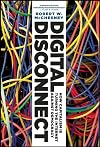
"The grand irony of the internet," McChesney writes on page 191, "is that what was once regarded as an agent of diversity, choice and competition has become an agent of monopoly."
In such moments, the author subverts the typical assumptions about the connection between media and democracy in contemporary American society. But unlike the many dour newspaper reporters forced into an early retirement or policy wonks dismayed by the monopolization of America's communications sector, McChesney show more avoids romanticizing eras which did not exist or placing too much faith in half-baked solutions. Instead, he offers a sober and wonkish analysis as well as concrete proposals for radically changing the media which prioritize democracy and diversity — two facets of the free press too often overlooked in our contemporary discourse. show less
In such moments, the author subverts the typical assumptions about the connection between media and democracy in contemporary American society. But unlike the many dour newspaper reporters forced into an early retirement or policy wonks dismayed by the monopolization of America's communications sector, McChesney show more avoids romanticizing eras which did not exist or placing too much faith in half-baked solutions. Instead, he offers a sober and wonkish analysis as well as concrete proposals for radically changing the media which prioritize democracy and diversity — two facets of the free press too often overlooked in our contemporary discourse. show less
Preface: The author started out with a leftist leaning - giving the impression that he changed his viewpoint, but from the rest of the book, I learned that he still has the same orientation.
Chapter 1 says that the two sides talking about whether the Internet is a positive influence, or a negative influence are talking past each other. In the preface and in chapter 1, he cites lots of other books which presumably have similar concerns. In Goodreads, the other books this author has written show more all look like they are all on a similar topic.
But, rather than belabor each of the chapters, the point of the book is that Capitalism took over the Internet when advertisers moved in. And as a consequence, professional journalism is going, going, and almost gone. He is especially concerned with the loss of investigative journalism, and of local news reporting.
It's enough to make me itch to support the old style of Journalism by subscribing to two publications that definitely do not see eye-to-eye: The Wall Street Journal, and the New York Times. show less
Chapter 1 says that the two sides talking about whether the Internet is a positive influence, or a negative influence are talking past each other. In the preface and in chapter 1, he cites lots of other books which presumably have similar concerns. In Goodreads, the other books this author has written show more all look like they are all on a similar topic.
But, rather than belabor each of the chapters, the point of the book is that Capitalism took over the Internet when advertisers moved in. And as a consequence, professional journalism is going, going, and almost gone. He is especially concerned with the loss of investigative journalism, and of local news reporting.
It's enough to make me itch to support the old style of Journalism by subscribing to two publications that definitely do not see eye-to-eye: The Wall Street Journal, and the New York Times. show less
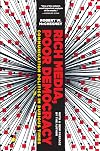
The book to read if you want to know about how and why corporate media consolidation happened, and what deleterious effects this process has had on democracy and public discourse here and abroad. This is solid left-centrist scholarship with no radical Chomsky-esque tendendtiousness or axes to grind.
Tragedy and Farce: How the American Media Sell Wars, Spin Elections, and Destroy Democracy by John Nichols
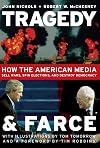
Accessible and readable, focuses on the media's role in the build up to the Iraq invasion and the 2004 presidential election and presents a framework for the emerging media reform movement in the US.
Awards


You May Also Like


Associated Authors
Statistics
- Works
- 21
- Also by
- 4
- Members
- 1,639
- Popularity
- #15,675
- Rating
- 3.9
- Reviews
- 6
- ISBNs
- 62
- Languages
- 5
- Favorited
- 2