
John Nichols (3) (1959–)
Author of The S Word
For other authors named John Nichols, see the disambiguation page.
John Nichols (3) has been aliased into John Harrison Nichols.
About the Author
John Nichols is the Washington correspondent for The Nation magazine, a contributing writer for The Progressive and In These Times, and the associate editor of Madison, Wisconsin's Capital Times. He is the author of several books, including The Death and Life of American Journalism and The Genius show more of Impeachment. show less
Image credit: from The Nation
Works by John Nichols
Works have been aliased into John Harrison Nichols.
The Death and Life of American Journalism: The Media Revolution that Will Begin the World Again (2010) 107 copies
Tragedy and Farce: How the American Media Sell Wars, Spin Elections, and Destroy Democracy (2005) 68 copies, 1 review
Uprising: How Wisconsin Renewed the Politics of Protest, from Madison to Wall Street (2012) 60 copies, 1 review
Coronavirus Criminals and Pandemic Profiteers: Accountability for Those Who Caused the Crisis (2022) 50 copies
Jews for Buchanan: Did You Hear the One About the Theft of the American Presidency? (2001) 46 copies, 1 review
The Fight for the Soul of the Democratic Party: The Enduring Legacy of Henry Wallace's Anti-Fascist, Anti-Racist Politics (2020) 46 copies
Horsemen of the Trumpocalypse: A Field Guide to the Most Dangerous People in America (2017) 33 copies, 1 review
Associated Works
Works have been aliased into John Harrison Nichols.
These United States: Original Essays by Leading American Writers on Their State within the Union by John Leonard (1995) — Contributor — 101 copies, 1 review
Tagged
Common Knowledge
- Legal name
- Nichols, John Harrison
- Birthdate
- 1959-02-03
- Gender
- male
- Education
- Columbia University Graduate School of Journalism (MA)
University of Wisconsin, Parkside (BA) - Occupations
- journalist
political commentator
author
national-affairs correspondent, The Nation - Organizations
- The Nation
The Capital Times - Awards and honors
- Herbert Block Freedom Award (2010)
- Nationality
- USA
- Birthplace
- Union Grove, Wisconsin, USA
- Places of residence
- Madison, Wisconsin, USA
- Map Location
- USA
Members
Reviews

John Nichols’ “The “S” Word: A short History of an American Tradition … Socialism” gives a quick outline of socialist thinking in American political life. He begins with Thomas Payne a radically democratic Founding Father who was quickly ostracized by his fellow revolutionaries, like John Adams, who were seduced into the plutocracy. Payne’s ideas, which can be boiled down to the simple statement people matter more than property, caused Adams to dismiss him as “a mongrel show more between pig and puppy, begotten by a wild boar on a bitch wolf”. Only Jefferson remained on friendly terms with the man that wrote “Common Sense” and energized the American Revolution. Nichols leads us through American history and the domestic development of socialist ideals. From Payne and Jefferson to Fannie Wright, an activist who as a young woman was friends with the elderly Jefferson, to Abraham Lincoln, and on to a young Michael Harrington working with the elderly A. Philip Randolph on anti-poverty programs in the 1970s.
I found Nichols’ book to be fascinating. His writing is engaging and I learned a great deal about a subject I thought I knew. Even about people I thought I knew, Payne, Lincoln, Marx, and Randolph. Much of the book, Fannie Wright, Walt Whitman, Victor Berger and Milwaukee’s Socialist mayors were entirely new to me. However Nichols book has one weakness. In addressing the red baiting surrounding Obama’s election and the push for health care reform Nichols manages to sound shrill and bitter, feelings that I can identify with and understand given the topic and what has recently passed as political discourse, but it seemed misplaced, an emotional outburst in an otherwise factual and objective examination of one aspect of American history. I am afraid that the few pages of this so early in the book will put off some people who would otherwise read the book.
The book’s afterword is much less emotional. Nichols examines the Democratic Party’s drift back to its pre-FDR values, property over people. And the Republican Party’s continued drift, rush, away from the values of the Party of Lincoln and toward property trumping people. The profound way that this book discredits the most recent round of political red baiting was surprising but the most surprising revelation is that the anti-socialist rants have, according to several recent polls, caused more Americans, especially young Americans, to view Socialism less negatively and capitalism less favorably. After a series of stock market crashes going back to 1987, years of high unemployment, decades of wage stagnation, and corporate welfare bankrupting our social safety net why wouldn’t they? show less
I found Nichols’ book to be fascinating. His writing is engaging and I learned a great deal about a subject I thought I knew. Even about people I thought I knew, Payne, Lincoln, Marx, and Randolph. Much of the book, Fannie Wright, Walt Whitman, Victor Berger and Milwaukee’s Socialist mayors were entirely new to me. However Nichols book has one weakness. In addressing the red baiting surrounding Obama’s election and the push for health care reform Nichols manages to sound shrill and bitter, feelings that I can identify with and understand given the topic and what has recently passed as political discourse, but it seemed misplaced, an emotional outburst in an otherwise factual and objective examination of one aspect of American history. I am afraid that the few pages of this so early in the book will put off some people who would otherwise read the book.
The book’s afterword is much less emotional. Nichols examines the Democratic Party’s drift back to its pre-FDR values, property over people. And the Republican Party’s continued drift, rush, away from the values of the Party of Lincoln and toward property trumping people. The profound way that this book discredits the most recent round of political red baiting was surprising but the most surprising revelation is that the anti-socialist rants have, according to several recent polls, caused more Americans, especially young Americans, to view Socialism less negatively and capitalism less favorably. After a series of stock market crashes going back to 1987, years of high unemployment, decades of wage stagnation, and corporate welfare bankrupting our social safety net why wouldn’t they? show less
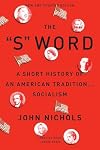
Important corrective to 20th Century US History, the link from the Railroad Porters Union fight to MLK especially so - I had no idea. The chapters tend to run on, as the author seems to cram every bit instead of allowing the narrative to flow.
Horsemen of the Trumpocalypse: A Field Guide to the Most Dangerous People in America by John Nichols
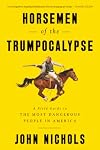
This reads like a gallery of wanted posters in your local postoffice. It is hard-hitting, almost inflammatory until you read the source material that justifies the rhetoric and portrayal of men and women who surround President Trump. It is truly alarming to have so many ill suited to ensure that our government doesn’t stay within constitutional boundaries and can operate with impunity . The rallying cry is “Chaos”, shoot from the hip (twitter) and the art of the deal. A good but show more disturbing read. Some of those horsemen have already left the OK corral but it doesn’t make it any better.
I was provided with an electronic copy in return for an honest review. show less
I was provided with an electronic copy in return for an honest review. show less

Nichols, a journalist who has written for The Nation and The Wisconsin State Journal as well as for other progressive publications, has several goals in writing The "S" Word. One is to blow off some steam regarding his frustration with the state of public discourse in the US (which he describes as being at its lowest point ever), with right-wing commentators who have used their bully pulpit to drag the term "socialist" through the mud and with the left-wing politicians and media who have let show more them, as well as with Obama and the other high-profile Democrats who continued to move the party further and further to the right over the past few decades. As a reader who shares many of the same points of frustration, I was not turned off by Nichols' goal. He doesn't purport to be unbiased.
On the other hand, Nichols' main goal in writing The "S" Word is to present a counter history of the US, one which shines a light on the myriad ways that American writers (Thomas Paine and Walt Whitman), US Presidents (particularly Lincoln and FDR, but also JFK and others), and local politicians, especially in Milwaukee, presaged or incorporated some of the tenets of socialism in their writings, platforms, and political initiatives. Nichols' main argument and frustration with 21st-century politicians is that, by buying into the idea that socialism is an evil, un-American ideology, these political leaders have weakened their effectiveness by limiting the political stances from which they could draw solutions for current problems.
The book read as a series of long articles in The Nation. Nichols has done his research, providing supporting passages from letters, speeches, newspaper columns, and interviews, some of which he conducted himself. Academics and others wanting to delve deep into political history should view this book as a platform for further research.
My rating is probably closer to a 3.5, but I bumped it up to a 4 largely on the strength of new-to-me information that Nichols presented in a few chapters: the chapter on Abraham Lincoln, Horace Greeley, and Marx; the chapter on free speech fights conducted by newspaper editor and elected Congressman Victor Berger during the Red Scare of 1917 and after; and the chapter on the sewer socialists in Milwaukee and other municipalities in the US. I also found interesting Nichols' discussion of the role of socialism in fighting segregation in trade unions, and in helping to lay the groundwork for the March on Washington for Jobs and Freedom in 1963. At times, I got frustrated by some of Nichols' digressions, and I wanted more detailed information about some particularly interesting events and people. However, Nichols has shone a light on aspects of American history that are not taught in high school history classes or referenced in our public discourse. For this reason, reading The "S" Word seems like a small but significant contribution to trying to effect change in the current state of US politics. show less
On the other hand, Nichols' main goal in writing The "S" Word is to present a counter history of the US, one which shines a light on the myriad ways that American writers (Thomas Paine and Walt Whitman), US Presidents (particularly Lincoln and FDR, but also JFK and others), and local politicians, especially in Milwaukee, presaged or incorporated some of the tenets of socialism in their writings, platforms, and political initiatives. Nichols' main argument and frustration with 21st-century politicians is that, by buying into the idea that socialism is an evil, un-American ideology, these political leaders have weakened their effectiveness by limiting the political stances from which they could draw solutions for current problems.
The book read as a series of long articles in The Nation. Nichols has done his research, providing supporting passages from letters, speeches, newspaper columns, and interviews, some of which he conducted himself. Academics and others wanting to delve deep into political history should view this book as a platform for further research.
My rating is probably closer to a 3.5, but I bumped it up to a 4 largely on the strength of new-to-me information that Nichols presented in a few chapters: the chapter on Abraham Lincoln, Horace Greeley, and Marx; the chapter on free speech fights conducted by newspaper editor and elected Congressman Victor Berger during the Red Scare of 1917 and after; and the chapter on the sewer socialists in Milwaukee and other municipalities in the US. I also found interesting Nichols' discussion of the role of socialism in fighting segregation in trade unions, and in helping to lay the groundwork for the March on Washington for Jobs and Freedom in 1963. At times, I got frustrated by some of Nichols' digressions, and I wanted more detailed information about some particularly interesting events and people. However, Nichols has shone a light on aspects of American history that are not taught in high school history classes or referenced in our public discourse. For this reason, reading The "S" Word seems like a small but significant contribution to trying to effect change in the current state of US politics. show less
Awards


You May Also Like


Associated Authors
Statistics
- Works
- 16
- Also by
- 2
- Members
- 974
- Popularity
- #26,440
- Rating
- 3.9
- Reviews
- 11
- ISBNs
- 256
- Languages
- 7