
Nick Davies (1) (1953–)
Author of Flat Earth News: An Award-Winning Reporter Exposes Falsehood, Distortion and Propaganda in the Global Media
For other authors named Nick Davies, see the disambiguation page.
About the Author
Nicholas Davies was born on March 28, 1953. He is a British investigative journalist, writer and documentary maker. He has written extensively as a freelancer, as well as for The Guardian and The Observer, and been named Reporter of the Year, Journalist of the Year and Feature Writer of the Year at show more the British Press Awards. Davies has made documentaries for ITV's World in Action and written numerous books on the subject of politics and journalism, including Flat Earth News, which attracted considerable controversy as an exposé of journalistic malpractice in the UK and around the globe. As a reporter for The Guardian, Davies was responsible for uncovering the News of the World phone hacking affair, including the July 2011 revelations of hacking into the mobile phone voicemail of the murdered schoolgirl Milly Dowler.He will be at the WORD Christchurch Writers & Readers Festival in 2015. His title Hack Attack: How the Truth Caught up with Rupert Murdoch made the New Zealand Best Seller List. (Bowker Author Biography) show less
Works by Nick Davies
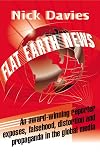
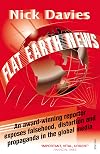
Flat Earth News: An Award-Winning Reporter Exposes Falsehood, Distortion and Propaganda in the Global Media (2008) 565 copies, 16 reviews
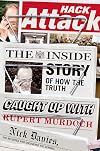
Hack Attack: The Inside Story of How the Truth Caught Up with Rupert Murdoch (2014) 161 copies, 4 reviews
Associated Works
Tagged
Common Knowledge
- Canonical name
- Davies, Nick
- Birthdate
- 1953-03-28
- Gender
- male
- Education
- University of Oxford (PPE)
- Occupations
- journalist
- Organizations
- The Guardian
- Awards and honors
- Martha Gellhorn Prize for Journalism (1999)
Paul Foot Award (2011)
British Press Awards (Reporter of the Year, 2000) - Nationality
- UK
- Associated Place (for map)
- UK
Members
Reviews
Flat Earth News: An Award-winning Reporter Exposes Falsehood, Distortion and Propaganda in the Global Media by Nick Davies
I'm an immigrant, married to a Muslim woman, working in the health and social care sector, and with a personal interest in (among many other things) gendered related issues and especially domestic violence, parental alienation, and fathers' rights. Needless to say, the mass media in Britain (where I live) have always appalled, angered, even, disgusted me at times when it comes to their 'reporting' on immigration, Islam, mental health issues, and gendered claptraps and fearmongering. What on show more Earth is wrong with the British press!?
Nick Davies, a journalist by profession (he describes himself as a Guardian man) presses here fingers where it hurts, by showing how the mass medias have, over the past few decades, descended into malpractices, feeding nothing but the spread of mass ignorance and moral panic of all sorts. The examples, of course, abound. We had the MMR vaccine scare. We had the Millennium bug scare. We had the official narrative feeding us that Saddam Hussein had weapons of mass destruction. And, to this day, we still have ideological mumbo-jumbo being peddled carelessly, from toxic demagogueries having gone mainstream to pseudo-science of all kinds being irresponsibly tossed out to the general public.
This, though, is neither new nor a surprise. After all, from some spin doctors' diaries (Alastair Campbell had revealed enough about how the media can be easily manipulated for political gains...) to the Leveson inquiry (which had outlined unethical malpractices by the plenty, yet with nothing having changed since then...) if there's anything that any basically informed citizen should be aware of is that, when it comes to transparency, accuracy, moral, and, above all, accountability, then the British media as an institution are among the least to be trusted -ever. But then, what happened? Have journalists become completely incompetent?
Nick Davies, brilliantly, shows that the issue is not about objectivity. The media, in fact, from the topics they have always selected to report upon or not, and the angles and language they always have chosen to adopt or not (let alone the editorial lines they always had to abide to somehow) have never been objective. The issue, also, is not about mistakes being made, making for misinformation to creep into the public narrative. Mistakes, after all, always happened and journalists aren't perfect. The issues run in fact deeper, to reflect a whole new culture which has completely eroded both ethics and approach to truth. The issue, in other word, is what has been dubbed 'churnalism' that is, the lack of critical thinking and proper investigative approach to parrot instead what wire agencies and the PR departments of whatever lobby can afford it are feeding the press.
How did we reach such a low point makes for a concerning history. From the taking over of major newspapers by corporate moguls to the cutting down of staff and resources, and from the increasing demand for more and more output -with speed being hailed as a virtue- to the rise of spin and PR culture, 'Flat Earth News' is a chilling account of how reality gets distorted, critical thinking tossed aside, irresponsible headlines and contents catering to prejudices deliberately spread around, and, all in all, ethics and accuracy having, as a result, made way for ignorance and misinformation passing off as news and reporting. If you thought that what the Leveson inquiry had revealed was bad, then brace yourself: the sheer depth of the problem and how such profession has become corrupted from within, besides being completely unaccountable (most complaints are simply ignored, so business can go as usual) is absolutely gobsmacking.
This book, of course, is not perfect. Again, Nick Davies might outline the systemic culture which has taken over the mediatic landscape as a whole, yet being mainly a Guardian man he obviously chose to expose, in the last few chapters, the malpractices pertaining mostly to otherwise Right-wing, Conservative papers. It's fair enough (and, personally, I agree with his points here...) yet we shouldn't be fooled: such malpractices, as a culture, pertain of course and also to papers on the Left-side of the political spectrum (personally again, I'm always astounded by the amount of ignorant rubbish being peddled by the Guardian, which, to me personally, is but the Daily Mail of the Left...). But, that's cherry-picking. Churnalism has indeed become a serious concern in our democracies, and anyone worried about how spin doctors and PR have profited of a profession having been seriously weaken in its core values and ways of working ought to read this book. It goes beyond politics, science, obnoxious language and media scares. It touches at the core of the key values we should all be holding as being sacred: transparency, accountability, and, above all, rationalism and accuracy. show less
Nick Davies, a journalist by profession (he describes himself as a Guardian man) presses here fingers where it hurts, by showing how the mass medias have, over the past few decades, descended into malpractices, feeding nothing but the spread of mass ignorance and moral panic of all sorts. The examples, of course, abound. We had the MMR vaccine scare. We had the Millennium bug scare. We had the official narrative feeding us that Saddam Hussein had weapons of mass destruction. And, to this day, we still have ideological mumbo-jumbo being peddled carelessly, from toxic demagogueries having gone mainstream to pseudo-science of all kinds being irresponsibly tossed out to the general public.
This, though, is neither new nor a surprise. After all, from some spin doctors' diaries (Alastair Campbell had revealed enough about how the media can be easily manipulated for political gains...) to the Leveson inquiry (which had outlined unethical malpractices by the plenty, yet with nothing having changed since then...) if there's anything that any basically informed citizen should be aware of is that, when it comes to transparency, accuracy, moral, and, above all, accountability, then the British media as an institution are among the least to be trusted -ever. But then, what happened? Have journalists become completely incompetent?
Nick Davies, brilliantly, shows that the issue is not about objectivity. The media, in fact, from the topics they have always selected to report upon or not, and the angles and language they always have chosen to adopt or not (let alone the editorial lines they always had to abide to somehow) have never been objective. The issue, also, is not about mistakes being made, making for misinformation to creep into the public narrative. Mistakes, after all, always happened and journalists aren't perfect. The issues run in fact deeper, to reflect a whole new culture which has completely eroded both ethics and approach to truth. The issue, in other word, is what has been dubbed 'churnalism' that is, the lack of critical thinking and proper investigative approach to parrot instead what wire agencies and the PR departments of whatever lobby can afford it are feeding the press.
How did we reach such a low point makes for a concerning history. From the taking over of major newspapers by corporate moguls to the cutting down of staff and resources, and from the increasing demand for more and more output -with speed being hailed as a virtue- to the rise of spin and PR culture, 'Flat Earth News' is a chilling account of how reality gets distorted, critical thinking tossed aside, irresponsible headlines and contents catering to prejudices deliberately spread around, and, all in all, ethics and accuracy having, as a result, made way for ignorance and misinformation passing off as news and reporting. If you thought that what the Leveson inquiry had revealed was bad, then brace yourself: the sheer depth of the problem and how such profession has become corrupted from within, besides being completely unaccountable (most complaints are simply ignored, so business can go as usual) is absolutely gobsmacking.
This book, of course, is not perfect. Again, Nick Davies might outline the systemic culture which has taken over the mediatic landscape as a whole, yet being mainly a Guardian man he obviously chose to expose, in the last few chapters, the malpractices pertaining mostly to otherwise Right-wing, Conservative papers. It's fair enough (and, personally, I agree with his points here...) yet we shouldn't be fooled: such malpractices, as a culture, pertain of course and also to papers on the Left-side of the political spectrum (personally again, I'm always astounded by the amount of ignorant rubbish being peddled by the Guardian, which, to me personally, is but the Daily Mail of the Left...). But, that's cherry-picking. Churnalism has indeed become a serious concern in our democracies, and anyone worried about how spin doctors and PR have profited of a profession having been seriously weaken in its core values and ways of working ought to read this book. It goes beyond politics, science, obnoxious language and media scares. It touches at the core of the key values we should all be holding as being sacred: transparency, accountability, and, above all, rationalism and accuracy. show less
Flat Earth News: An Award-Winning Reporter Exposes Falsehood, Distortion and Propaganda in the Global Media by Nick Davies
Well, this is cheerful stuff. Nick Davies, respected journalist, gives the lie to the notion that the biggest threat to journalism is the interference of owners or the threats of advertisers. His thesis is that the drive for profits has driven journalism to the brink of destruction. Staff cuts and spending cuts have resulted in fewer journalists working with fewer resources on more stories. Unfortunately those stories are provided by the booming new sector that is the Public Relations show more industry, which is not above manufacturing news and events and whipping up fear and disinformation. Meanwhile, the network of reporters who used to cover all sorts of stories from all over the world has shriveled to nothing. Which leaves us with the interesting question of how true the picture of the world presented to us daily in the media actually is.
Davies traces the decline of old-fashioned journalistic practices and values and the rise of the new 'churnalism,' which reproduces and rewrites PR copy without much in the way of checking or exploring or context. Not everything you read on your newspapers or see on your television is churnalism. But a lot of it is. He also touches on the campaign of lies, distortions and misinformation that was part of the build-up to the invasion of Iraq, shocking in its scope and in the utter capitulation of the media in the face of the official line.
Just when you thought you were outraged out, Davies saves the most appalling for last: The Daily Mail and the Press Complaints Commission. One routinely lies and distorts and attacks innocent targets with unmitigated ferocity. The other turns down more than 90% of the complaints it receives without even considering their content.
It ends on a note of pessimism. The only real solution, unstated by Davies, is for a widespread return to the proper funding of proper journalism. The trend at the moment, however, is for less reporters, more stories, higher profits, and so long as that continues truth will suffer and so will we. show less
Davies traces the decline of old-fashioned journalistic practices and values and the rise of the new 'churnalism,' which reproduces and rewrites PR copy without much in the way of checking or exploring or context. Not everything you read on your newspapers or see on your television is churnalism. But a lot of it is. He also touches on the campaign of lies, distortions and misinformation that was part of the build-up to the invasion of Iraq, shocking in its scope and in the utter capitulation of the media in the face of the official line.
Just when you thought you were outraged out, Davies saves the most appalling for last: The Daily Mail and the Press Complaints Commission. One routinely lies and distorts and attacks innocent targets with unmitigated ferocity. The other turns down more than 90% of the complaints it receives without even considering their content.
It ends on a note of pessimism. The only real solution, unstated by Davies, is for a widespread return to the proper funding of proper journalism. The trend at the moment, however, is for less reporters, more stories, higher profits, and so long as that continues truth will suffer and so will we. show less
Flat Earth News: An Award-winning Reporter Exposes Falsehood, Distortion and Propaganda in the Global Media by Nick Davies
People have faces, organisations don't have faces - they have masks. A face reflects what is inside the person but a mask is a construct. What is behind the mask can be entirely different to what is portrayed at the front.
The media is not the face of the world. It's not the face of anything. It is a bunch of masks that are produced to sell. You wouldn't trust an entertaining anecdote on the back of a pack of chips to tell you the truth about reality so why would you trust the media? You show more trust the media because it has a beautiful mask of truthfullness and trustworthiness. But it is still a mask.
Before reading this book i had several beliefs about the media:
1. The media industry is vast so there must be some value to it, otherwise it would collapse. If they say they provide a service of investigating the truth then there is a high chance that that is where their value lies.
2. There are checks and balances around the media. If they tell a lie then somebody will point it out and the lie will be corrected and i will know about it.
3. The media is neutral and covers most aspects of life uniformly. If there is a gap then eventually another media outlet will fill it.
4. The commercial PR is somehow separated from the main content of the media or made clear that it is PR.
5. Personal blogs and forums are trustworthy because they are written by individuals who are not subject to the pressures of a media company.
After reading the book i now believe that:
1. The media often don't know the truth, don't like the truth, don't care about the truth, don't have time and resources to get to the truth. What is packaged as news and truth often has nothing to do with the truth. It's fiction. Fiction might be good when you know it's fiction.
2. There are checks and balances but they are not enough. The scale of the lies and propaganda overwhelms the available institutions that protect the reader. Sometimes there are no institutions at all, or just fake institutions created by the media itself.
3. The media doesn't cover everything and is not neutral. It covers what it will be paid for. It will blatantly lie to you to push an agenda or to grab your attention. Many important aspects of life are not covered at all because they are hard to exploit for money.
4. There is a lot of manipulation embedded in the media products which is not made clear at all. Some of it is very hard to notice but it nevertheless makes an impact on your opinions.
5. Uncovering truth is hard work. The individuals often don't have the resources, the skills, the will to do it. Some bloggers share their own experience which can be valuable but not necessarily true on a larger scale. Others just regurgitate the same lies but filtered only to those they personally enjoy.
My heart is bleeding now. Digesting the detail after excrutiating detail of how this person lied and this group people deceived and this agency betrayed and these guys stole and this newspaper threw their ideals and humanity out the window and on and on until my head hurts - well, it's painful and sad. I don't remember being as sad reading any other book. With every story i felt like a piece of my idealism fell off and withered. It's revolting to drink such concentrated essence of the dark side of humanity. I desperately need to watch kitties playing with cotton balls now.
Besides the numerous examples of the workings of the media the book also provided glimpses into workspace environments in agencies, newspapers and even governments. It was enlightening to see how human interactions in toxic environments play a role in the production of lies. Some journalists hate their jobs and their bosses, they hate to tell lies, they didn't sign up for it, they came into the industry to deal with truth and facts - but now they are stuck because they enjoy the pay and can't leave.
The media is in constant conflict between telling the truth and earning a profit. I wish i could proclaim that from now on and until they figure their shit out i will not trust anybody, i will not derive any of my opinions based on speculative fiction dressed as news, i will discover the world for myself and check everything important. But i realise that it's just a dream. Just like the media i don't have the resources to find the truth and i most certainly have to rely on other people. The question is how do i do that without getting bamboozled. I guess reading this book and learning about the production of news is a good start. show less
The media is not the face of the world. It's not the face of anything. It is a bunch of masks that are produced to sell. You wouldn't trust an entertaining anecdote on the back of a pack of chips to tell you the truth about reality so why would you trust the media? You show more trust the media because it has a beautiful mask of truthfullness and trustworthiness. But it is still a mask.
Before reading this book i had several beliefs about the media:
1. The media industry is vast so there must be some value to it, otherwise it would collapse. If they say they provide a service of investigating the truth then there is a high chance that that is where their value lies.
2. There are checks and balances around the media. If they tell a lie then somebody will point it out and the lie will be corrected and i will know about it.
3. The media is neutral and covers most aspects of life uniformly. If there is a gap then eventually another media outlet will fill it.
4. The commercial PR is somehow separated from the main content of the media or made clear that it is PR.
5. Personal blogs and forums are trustworthy because they are written by individuals who are not subject to the pressures of a media company.
After reading the book i now believe that:
1. The media often don't know the truth, don't like the truth, don't care about the truth, don't have time and resources to get to the truth. What is packaged as news and truth often has nothing to do with the truth. It's fiction. Fiction might be good when you know it's fiction.
2. There are checks and balances but they are not enough. The scale of the lies and propaganda overwhelms the available institutions that protect the reader. Sometimes there are no institutions at all, or just fake institutions created by the media itself.
3. The media doesn't cover everything and is not neutral. It covers what it will be paid for. It will blatantly lie to you to push an agenda or to grab your attention. Many important aspects of life are not covered at all because they are hard to exploit for money.
4. There is a lot of manipulation embedded in the media products which is not made clear at all. Some of it is very hard to notice but it nevertheless makes an impact on your opinions.
5. Uncovering truth is hard work. The individuals often don't have the resources, the skills, the will to do it. Some bloggers share their own experience which can be valuable but not necessarily true on a larger scale. Others just regurgitate the same lies but filtered only to those they personally enjoy.
My heart is bleeding now. Digesting the detail after excrutiating detail of how this person lied and this group people deceived and this agency betrayed and these guys stole and this newspaper threw their ideals and humanity out the window and on and on until my head hurts - well, it's painful and sad. I don't remember being as sad reading any other book. With every story i felt like a piece of my idealism fell off and withered. It's revolting to drink such concentrated essence of the dark side of humanity. I desperately need to watch kitties playing with cotton balls now.
Besides the numerous examples of the workings of the media the book also provided glimpses into workspace environments in agencies, newspapers and even governments. It was enlightening to see how human interactions in toxic environments play a role in the production of lies. Some journalists hate their jobs and their bosses, they hate to tell lies, they didn't sign up for it, they came into the industry to deal with truth and facts - but now they are stuck because they enjoy the pay and can't leave.
The media is in constant conflict between telling the truth and earning a profit. I wish i could proclaim that from now on and until they figure their shit out i will not trust anybody, i will not derive any of my opinions based on speculative fiction dressed as news, i will discover the world for myself and check everything important. But i realise that it's just a dream. Just like the media i don't have the resources to find the truth and i most certainly have to rely on other people. The question is how do i do that without getting bamboozled. I guess reading this book and learning about the production of news is a good start. show less
I always hated Rupert Murdoch and his evil empire (Fox "News", etc), and nothing in this book makes me doubt myself. This is a loooong, detailed, painful dissection of the News of the World phone hacking scandal and all the lying liars who perpetrated, funded, and encouraged it.
The worst, however, is not the staff of the newspaper. It's the Brit government and Scotland Yard kowtowing to these disgusting Murdoch "journalists" who give the profession the blackest of eyes. Also eye-opening is show more the reluctance of other newspapers to support the Guardian in its effort to reveal the scummy underside of the conspiratorial complicity. All praise to Nick Davies, the reporter who did most of the work. This is not an easy read - it's so detailed - but Davies proves himself to be a great investigative reporter and a decent writer. show less
The worst, however, is not the staff of the newspaper. It's the Brit government and Scotland Yard kowtowing to these disgusting Murdoch "journalists" who give the profession the blackest of eyes. Also eye-opening is show more the reluctance of other newspapers to support the Guardian in its effort to reveal the scummy underside of the conspiratorial complicity. All praise to Nick Davies, the reporter who did most of the work. This is not an easy read - it's so detailed - but Davies proves himself to be a great investigative reporter and a decent writer. show less
Lists
Awards


You May Also Like


Associated Authors
Statistics
- Works
- 8
- Also by
- 3
- Members
- 858
- Popularity
- #29,813
- Rating
- 4.2
- Reviews
- 20
- ISBNs
- 43
- Languages
- 4
- Favorited
- 3