
Craig Clevenger
Author of The Contortionist's Handbook
About the Author
Image credit: flavorwire.com
Works by Craig Clevenger
Dermaphoria 1 copy
Associated Works
Tagged
Common Knowledge
- Birthdate
- 1964
- Gender
- male
- Education
- California State University, Long Beach
- Occupations
- writer
bartender - Nationality
- USA
- Places of residence
- Santa Barbara, California, USA
San Francisco, California, USA - Associated Place (for map)
- California, USA
Members
Reviews
(Reprinted from the Chicago Center for Literature and Photography [cclapcenter.com].)
Okay, I confess: that of all the different types of underground artists out there, I have a particular affinity for the weird quiet ones on the edge of every scene, who frequently engage in cutting-edge experiments just for the sake of engaging in them. For example, when I was involved with the performance-poetry community of the 1990s, I tended to spend a lot of time with the people who would drag weird show more abstract "musical instruments" on stage with them; who would slip the cadences of formal poetry into their work and then not tell anyone, just to see if anyone would notice anyway. And even better, of course, when that artist is quirkily attractive, always jittery in a way that could be innocent or guilty (depending on what substances they've ingested earlier in the evening, I suppose), a literal walking example of what many of us think when we hear the phrase "Life In The Big City."
I just got done with a new book by such an artist, in fact, the profoundly dense and sometimes outright perplexing dermaphoria by San Franciscan Craig Clevenger, whose first novel The Contortionist's Handbook became an accidental sleeper hit in 2003. It is a book along the same vein as Memento, Me and Kev, The Prestige and others, where a dark tale is told in a puzzling manner, slowly releasing bits and pieces of information until the entire story is finally revealed by the end; and this is a type of book I love, to be honest, for the same reason I love hyperfiction and the like, although acknowledge as well that it's not everyone's cup of tea. And similarly, Clevenger wields a personal writing style here that is deliberately over-the-top self-conscious, deliberately showy and obtuse; and again, you're either going to like it like I did, or detest it and have it get in the way of you enjoying the novel whatsoever. That's the whole point of being wildly experimental, after all; to throw off the shackles of popularity, to know in advance that the project will appeal to only a slim amount of people, but that they'll be profoundly moved by it instead of a zillion people shrugging their shoulders and going, "Meh."
Much like Memento (and several other high-profile stories that have come out this year), dermaphoria's tale is centered around a character with amnesia; Eric Ashworth is his name, who awakes to a harsh vision of the future, where evil corporations have perfected robots that are completely biological in nature, and where Eric is recovering from a massive back wound he doesn't remember getting. Or wait a minute, is it that they are actually humans around him instead of biologically perfect replicant robots, and that Eric is simply suffering from massive drug-induced hallucinations instead? The answer isn't very clear during the first 50 pages of the novel, and things aren't helped by Clevenger referring to this world's slang before explaining what the slang means. This is of course a regularly occurring device among cutting-edge trippy literature, of referring to slang without explaining it -- see Neuromancer, for example, or Dune -- and leads in this case to explosively visual mental images throughout; for example, how Eric describes at the beginning of the book plucking fireflies out of the air and swallowing them, watching their glowing rears dimly illuminate bits of his digestive tract from the inside out, just to later understand that he was actually doing a designer drug called "Fireflies" and that the biological-firefly hallucination is a common side-effect (hence its name).
As you can start to see from that example, dermaphoria is very much a Philip K. Dick kind of story, a William Burroughs kind of one, so I don't want to give away too much of the plot; but needless to say, as the story continues, one thing we definitely learn is what a profoundly unreliable narrator Eric is, that all these cutting-edge psychedelics he's been gobbling down like candy (and maybe he was actually the creator of?) have permanently fried his brain, so that any memories he has or indeed sensations from present-day events have an equal chance of being "real" in the objective sense, or "fake" in the brain-synapse-misfiring sense. Clevenger keeps us on our toes throughout the entirety of the novel, in fact, letting us start to believe certain theories until casually dropping in facts that utterly disprove them; and then he further confuses things by writing in the style of an abstract prose-poet at times, getting so minimalist and arty at points that you're no longer sure of what's even going on.
LIke I said, this is the gamble you always take on highly experimental work; that its jarringly unique nature is either going to immediately appeal to you or immediately rub you the wrong way, and there's not much to do about it besides simply like it or hate it. I, for example, personally really enjoyed the ongoing literary tricks regarding the idea of humans taking on the God/Creator role of the universe; of the police accusing Eric, for example, of "creating" the "firefly" designer drug, and the amnesia-suffering Eric mistakenly thinking at first that they're accusing him of literally being God and literally creating biological fireflies. But I also understand that such witty and attention-causing tricks -- the odd pun here, the poetic verse there -- will grate on some people's nerves, and that these readers are no more wrong or right for reacting to the book in that way than I am for reacting in my way. Again, that's the nature of experimental work; such work takes big chances simply for the sake of taking big chances, and has equal odds of being either a big hit with the general public or a huge failure.
Now, all that said, there are of course parts of dermaphoria as well that can objectively be called clunky and in need of repair, no matter who you are; for example, like many trippy sci-fi writers, Clevenger can't write realistic romantic dialogue to save his life, which puts a crimp in the supposed intense love affair in the middle of this mind-twisting storyline. And this of course is also a natural danger of experimental artists, and something else that turns some people off experimental work in general; that in their rush to break all the rules, many of these artists never master the rules in the first place, which makes breaking them not nearly as impressive. This is one of the first things I mention, after all, anytime someone young asks me for writing advice, which in turn was taught to me in college by my mentor Karen Kleinfelder (who ironically now teaches at the University of California Long Beach, where Clevenger himself went to school); that if you want to be the creator of great cutting-edge projects, you can have an even bigger impact by first becoming great at traditional skills, showing off in subtle ways in one's mature work that one actually knows these skills, and is deliberately messing with them for the sake of getting one's point across.
That said, as mentioned, I did end up liking dermaphoria quite a bit, and can confidently state that the book will appeal to anyone who's a fan of such projects as Richard Kelly's Donnie Darko, TS Eliot's The Waste Land, and other envelope-pushing stories along those lines. It is a book for those who love taking chances -- a book you might put down for good a quarter of the way through, or perhaps read again every couple of years for the rest of your life. It definitely gets a recommendation from me, and I'm now looking forward to going back and reading Clevenger's first novel as well.
Out of 10:
Story: 9.4
Characters: 7.3
Style: 8.5
Overall: 8.6 show less
Okay, I confess: that of all the different types of underground artists out there, I have a particular affinity for the weird quiet ones on the edge of every scene, who frequently engage in cutting-edge experiments just for the sake of engaging in them. For example, when I was involved with the performance-poetry community of the 1990s, I tended to spend a lot of time with the people who would drag weird show more abstract "musical instruments" on stage with them; who would slip the cadences of formal poetry into their work and then not tell anyone, just to see if anyone would notice anyway. And even better, of course, when that artist is quirkily attractive, always jittery in a way that could be innocent or guilty (depending on what substances they've ingested earlier in the evening, I suppose), a literal walking example of what many of us think when we hear the phrase "Life In The Big City."
I just got done with a new book by such an artist, in fact, the profoundly dense and sometimes outright perplexing dermaphoria by San Franciscan Craig Clevenger, whose first novel The Contortionist's Handbook became an accidental sleeper hit in 2003. It is a book along the same vein as Memento, Me and Kev, The Prestige and others, where a dark tale is told in a puzzling manner, slowly releasing bits and pieces of information until the entire story is finally revealed by the end; and this is a type of book I love, to be honest, for the same reason I love hyperfiction and the like, although acknowledge as well that it's not everyone's cup of tea. And similarly, Clevenger wields a personal writing style here that is deliberately over-the-top self-conscious, deliberately showy and obtuse; and again, you're either going to like it like I did, or detest it and have it get in the way of you enjoying the novel whatsoever. That's the whole point of being wildly experimental, after all; to throw off the shackles of popularity, to know in advance that the project will appeal to only a slim amount of people, but that they'll be profoundly moved by it instead of a zillion people shrugging their shoulders and going, "Meh."
Much like Memento (and several other high-profile stories that have come out this year), dermaphoria's tale is centered around a character with amnesia; Eric Ashworth is his name, who awakes to a harsh vision of the future, where evil corporations have perfected robots that are completely biological in nature, and where Eric is recovering from a massive back wound he doesn't remember getting. Or wait a minute, is it that they are actually humans around him instead of biologically perfect replicant robots, and that Eric is simply suffering from massive drug-induced hallucinations instead? The answer isn't very clear during the first 50 pages of the novel, and things aren't helped by Clevenger referring to this world's slang before explaining what the slang means. This is of course a regularly occurring device among cutting-edge trippy literature, of referring to slang without explaining it -- see Neuromancer, for example, or Dune -- and leads in this case to explosively visual mental images throughout; for example, how Eric describes at the beginning of the book plucking fireflies out of the air and swallowing them, watching their glowing rears dimly illuminate bits of his digestive tract from the inside out, just to later understand that he was actually doing a designer drug called "Fireflies" and that the biological-firefly hallucination is a common side-effect (hence its name).
As you can start to see from that example, dermaphoria is very much a Philip K. Dick kind of story, a William Burroughs kind of one, so I don't want to give away too much of the plot; but needless to say, as the story continues, one thing we definitely learn is what a profoundly unreliable narrator Eric is, that all these cutting-edge psychedelics he's been gobbling down like candy (and maybe he was actually the creator of?) have permanently fried his brain, so that any memories he has or indeed sensations from present-day events have an equal chance of being "real" in the objective sense, or "fake" in the brain-synapse-misfiring sense. Clevenger keeps us on our toes throughout the entirety of the novel, in fact, letting us start to believe certain theories until casually dropping in facts that utterly disprove them; and then he further confuses things by writing in the style of an abstract prose-poet at times, getting so minimalist and arty at points that you're no longer sure of what's even going on.
LIke I said, this is the gamble you always take on highly experimental work; that its jarringly unique nature is either going to immediately appeal to you or immediately rub you the wrong way, and there's not much to do about it besides simply like it or hate it. I, for example, personally really enjoyed the ongoing literary tricks regarding the idea of humans taking on the God/Creator role of the universe; of the police accusing Eric, for example, of "creating" the "firefly" designer drug, and the amnesia-suffering Eric mistakenly thinking at first that they're accusing him of literally being God and literally creating biological fireflies. But I also understand that such witty and attention-causing tricks -- the odd pun here, the poetic verse there -- will grate on some people's nerves, and that these readers are no more wrong or right for reacting to the book in that way than I am for reacting in my way. Again, that's the nature of experimental work; such work takes big chances simply for the sake of taking big chances, and has equal odds of being either a big hit with the general public or a huge failure.
Now, all that said, there are of course parts of dermaphoria as well that can objectively be called clunky and in need of repair, no matter who you are; for example, like many trippy sci-fi writers, Clevenger can't write realistic romantic dialogue to save his life, which puts a crimp in the supposed intense love affair in the middle of this mind-twisting storyline. And this of course is also a natural danger of experimental artists, and something else that turns some people off experimental work in general; that in their rush to break all the rules, many of these artists never master the rules in the first place, which makes breaking them not nearly as impressive. This is one of the first things I mention, after all, anytime someone young asks me for writing advice, which in turn was taught to me in college by my mentor Karen Kleinfelder (who ironically now teaches at the University of California Long Beach, where Clevenger himself went to school); that if you want to be the creator of great cutting-edge projects, you can have an even bigger impact by first becoming great at traditional skills, showing off in subtle ways in one's mature work that one actually knows these skills, and is deliberately messing with them for the sake of getting one's point across.
That said, as mentioned, I did end up liking dermaphoria quite a bit, and can confidently state that the book will appeal to anyone who's a fan of such projects as Richard Kelly's Donnie Darko, TS Eliot's The Waste Land, and other envelope-pushing stories along those lines. It is a book for those who love taking chances -- a book you might put down for good a quarter of the way through, or perhaps read again every couple of years for the rest of your life. It definitely gets a recommendation from me, and I'm now looking forward to going back and reading Clevenger's first novel as well.
Out of 10:
Story: 9.4
Characters: 7.3
Style: 8.5
Overall: 8.6 show less
Modern noir with some stylistic nods to both Fight Club & The Usual Suspects.
It's tightly written & well-told. The story never flags & you weave in & out of the main character's life, or really lives, as he has created & lived under numerous aliases. The central plot is that the main character (as Daniel Fletcher, one of his many aliases) is being assessed by a mental health professional to determine if he's a suicide risk after being admitted to the hospital for a barbiturate overdose. show more Fletcher claims he mistakenly took too many pills because of a migraine. (This is not the first time it has happened to our main character, but the doctor doesn't know that because previous times have occurred under different aliases.) The doctor assessing him doesn't realize that this 20-something-year-old is a master forger (who happens to have eleven fingers), has a photographic memory, & has spent years memorizing psychology books & others on how to "act normal", among other things. During the interview, it's really the assessor being assessed. A cat & mouse game. In the meantime, the book reveals Fletcher's real background, interwoven with different aliases & "lives" he's lived. The book is broken into sections titled with some of his different identities.
Tight, crisp, & fascinating. High praise & a recommendation from me. show less
It's tightly written & well-told. The story never flags & you weave in & out of the main character's life, or really lives, as he has created & lived under numerous aliases. The central plot is that the main character (as Daniel Fletcher, one of his many aliases) is being assessed by a mental health professional to determine if he's a suicide risk after being admitted to the hospital for a barbiturate overdose. show more Fletcher claims he mistakenly took too many pills because of a migraine. (This is not the first time it has happened to our main character, but the doctor doesn't know that because previous times have occurred under different aliases.) The doctor assessing him doesn't realize that this 20-something-year-old is a master forger (who happens to have eleven fingers), has a photographic memory, & has spent years memorizing psychology books & others on how to "act normal", among other things. During the interview, it's really the assessor being assessed. A cat & mouse game. In the meantime, the book reveals Fletcher's real background, interwoven with different aliases & "lives" he's lived. The book is broken into sections titled with some of his different identities.
Tight, crisp, & fascinating. High praise & a recommendation from me. show less
Solid 5 stars for this one.
The main character, John Vincent Dolan, is the most clever character I ever had the pleasure of meeting. I relished in his journey, quickly hopping from one predicament to the next, I sat on pins and needles waiting for him to get out of the crazy situation he kept putting himself in.
This is basically an intricately written version of the movie Catch Me If You Can.
I enjoyed the hell out of this story and tried my best to relish it slowly, as I know it will stick show more out in my mind as one of my most favorite novels. It went so quick, Now I wish we had a sequel! show less
The main character, John Vincent Dolan, is the most clever character I ever had the pleasure of meeting. I relished in his journey, quickly hopping from one predicament to the next, I sat on pins and needles waiting for him to get out of the crazy situation he kept putting himself in.
This is basically an intricately written version of the movie Catch Me If You Can.
I enjoyed the hell out of this story and tried my best to relish it slowly, as I know it will stick show more out in my mind as one of my most favorite novels. It went so quick, Now I wish we had a sequel! show less
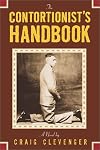
When I was first recommended this book, I had no idea what to expect. For whatever reason, I was mainly going by the cover art and relying on that to tell me what this book was mainly about. A contortionist. Wrong. Never judge a book by it's cover folks.
The book is about John Vincent. John is a man who suffers from such severe headaches that he usually ends up overdosing on painkillers and various prescription pills in an effort to stop the torture. When this happens, nine times out of ten, show more he gets picked up by paramedics and brought to the hospital in an effort to save his life. Once revived, it's mandatory that he meets with a psychiatrist to determine whether or not the OD was accidental or an attempt to end his life. Knowing that this will most certainly happen again (as this is the only way he knows how to deal with the headaches), he's forced to create an entirely new identity so that if he is picked up again by medics, he's not tossed in a mental institution.
The narrative jumps all over the place from the present (a conversation with an evaluator due to his most recent overdose) to the various identities he's stolen in the past. Usually, I can be a little thrown off by this but with the trend I've been taking with authors lately, it seems to be the status quo.
As good as this book was, I had this feeling that Vincent was never really in any sort of danger of being caught. The man is just so good at what he does, he seems like he's leaps and bounds ahead of any potential threat. However, I guess that's not really what the book is about as Clevenger seems to spend more time with his relationship with his father and the women in his life. Don't get me wrong, I'm not complaining, I was pretty much glued to these pages throughout. It's just, I can't really figure out why I was.
Clevenger is an excellent writer, the man really has some talent. I'm genuinely surprised that this hasn't been picked up by someone in Hollywood yet. It seems like the perfect movie for someone like David Fincher. I guess with the ending being some anti-climatic, it may create some problems. show less
The book is about John Vincent. John is a man who suffers from such severe headaches that he usually ends up overdosing on painkillers and various prescription pills in an effort to stop the torture. When this happens, nine times out of ten, show more he gets picked up by paramedics and brought to the hospital in an effort to save his life. Once revived, it's mandatory that he meets with a psychiatrist to determine whether or not the OD was accidental or an attempt to end his life. Knowing that this will most certainly happen again (as this is the only way he knows how to deal with the headaches), he's forced to create an entirely new identity so that if he is picked up again by medics, he's not tossed in a mental institution.
The narrative jumps all over the place from the present (a conversation with an evaluator due to his most recent overdose) to the various identities he's stolen in the past. Usually, I can be a little thrown off by this but with the trend I've been taking with authors lately, it seems to be the status quo.
As good as this book was, I had this feeling that Vincent was never really in any sort of danger of being caught. The man is just so good at what he does, he seems like he's leaps and bounds ahead of any potential threat. However, I guess that's not really what the book is about as Clevenger seems to spend more time with his relationship with his father and the women in his life. Don't get me wrong, I'm not complaining, I was pretty much glued to these pages throughout. It's just, I can't really figure out why I was.
Clevenger is an excellent writer, the man really has some talent. I'm genuinely surprised that this hasn't been picked up by someone in Hollywood yet. It seems like the perfect movie for someone like David Fincher. I guess with the ending being some anti-climatic, it may create some problems. show less
Lists
Awards

You May Also Like


Associated Authors
Statistics
- Works
- 5
- Also by
- 2
- Members
- 1,479
- Popularity
- #17,373
- Rating
- 3.9
- Reviews
- 25
- ISBNs
- 38
- Languages
- 6
- Favorited
- 10