
Sarah Ash
Author of Lord of Snow and Shadows
About the Author
Series
Works by Sarah Ash
Associated Works
Tagged
Common Knowledge
- Canonical name
- Ash, Sarah
- Birthdate
- 1950
- Gender
- female
- Education
- University of Cambridge
- Occupations
- librarian
- Nationality
- UK
- Places of residence
- Beckenham, Kent, England, UK
- Associated Place (for map)
- England, UK
Members
Discussions
Found: Series where some people are bonded to Dragon souls? in Name that Book (July 2023)
Fantasy book in Name that Book (April 2013)
Reviews
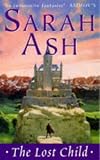
I’ve loved Sarah Ash’s books, her writing, and her creativity since I was in grade school and first read her Tears of Artamon trilogy, which is still my favorite. Unofficially, I have kind of made it a goal to read all of Sarah Ash’s books since then, but they’re a bit hard to find! At long last I’ve got my hands on The Lost Child.
Book content warnings:
- drugging
- child abuse
- abortion
- antisemitism
Representation:
- many main and secondary characters are Jewish (called “Tsiyon” show more in the book’s world)
When a non-Tsiyonim child is found dead on a Tsiyonim doorstep, all of Arcassanne seeks to blame the tailor’s apprentice, Rahab. Rahab escapes the city with the help of a girl named Lia and makes for the secluded community of Tsiyonim scholars deep in the mountains. But Arcassanne’s prejudice and hatred of the Tsiyon has reached a boiling point, and Rahab may have brought danger right to the mountain community’s door while leaving his own community to fend for themselves back home.
The plot of The Lost Child seems to be based on old Christian and Jewish conflicts, going by the (not-so-subtle) hints from the text. It also seems to be a fantasy version of a city in Italy (?), but it kind of has a 1:1 ratio world building, where words are just slightly changed from their real-world counterparts, or the book concept/fantasy item/etc. is the same thing and simply given a fantasy name (making this historical fantasy? alternate fantasy? I’m actually not sure … if someone does know, can you comment please?). However, Ash’s worlds are still incredibly detailed and realized whether they’re closely based on the real world or not, and it’s very easy to get lost in them.
The story starts out a bit slow--or, at least, it takes a little while for me to get into it--but once Rahab and Lia get to the hidden community of Tifereth it starts to pick up. If not by the actual pacing then by way of heightened emotion, character depth, and tension. Wonderful, wonderful reading experience in the second half!
I also love the way that Ash creates the contrast between the scholars of Tifereth and the tradesmen/people from the Arcassanne ghettos … and the ways that contrast then creates drama between them, who are meant to be allies in this fight. For example, when discussing the Holy text, the scholars call Rahab nearly illiterate, that his opinions don’t matter, and that his opinions aren’t as important as the Tifereth elders who have studied their entire lives. It’s things like this that really add depth to a world and story.
I am a little disappointed at how Jaufre almost became a bad anime villain near the end, though (“‘Well, well well,’ came a dry, mocking voice from the shadows”). I don’t, and am not sure I ever really did, understand his motivations, either. I know the amulets had a big hold over him, but I think I need a little more.
Surprisingly, my favorite character is Beregar, Lia’s fiance! I didn’t expect that. He’s a lot more complex and well rounded, especially considering the page time he was given. Although, with that reasoning, Zallaïs, Lia’s mother who hides her heritage and buries her religion so that Lia can have a better life, comes close. For every flaw this book has there are two or three more blazing-bright positives.
The writing also can be a little bit stilted at times. And though Ash’s vocabulary is and always has been delicious, it might not actually help those moments; some words almost seem out of place when considering the sentences and paragraphs around them. However … I have learned so many words from this book alone. Great, great words (escutcheon, oubliette, catarrh, frowst, etc.).
This book also has an older style of prose that I adore (which makes sense, as it was published in the 90’s), one that I’ve sorely missed and have only noticed now after realizing I’ve only been reading contemporary writers for a while. I forgot how lovely older fantasy books can sound.
And strangely enough, I love how and when the PoVs change. Sometimes a PoV will last for an entire chapter, and sometimes they’ll change several times in a single chapter--or a single page!--so that a single night or event shares all the PoV characters seemingly at once. This highlights that event’s importance and creates that sort of breathless quality similar to shortening the length of sentences in action scenes. I’d never seen that done before! Taking note of it for sure.
Speaking of notes: I can’t really be a voice on this, because I’m not Jewish--honestly I’m not sure if Sarah Ash is, either--but I’m not actually sure how respectful all elements of this are toward Jewish people. There are magic talismans and actual magic tied to the religion, things I think I remember seeing people list as “what to avoid when writing Jewish characters.” But again … this was written a while back, and I’m not sure of Sarah Ash’s beliefs. I’ll wait for more people to read.
The book wrapped up a bit too neatly and sweetly for my personal liking, and I felt like so much emotional tension was just rationalized away. It seemed that, almost magically, most of Rahab’s issues with a character he had trouble getting along with in Tifereth were resolved in just a few exchanges. However, I did like Rahab’s personal sacrifice so that the ending did become slightly bittersweet for him--mostly because I’m a sucker for bittersweet endings.
A great book from Sarah Ash, and I’m so glad I managed to get my hands on it! Now to find the next one …
(note no.2: take a look at that gorgeous cover art!) show less
Book content warnings:
- drugging
- child abuse
- abortion
- antisemitism
Representation:
- many main and secondary characters are Jewish (called “Tsiyon” show more in the book’s world)
When a non-Tsiyonim child is found dead on a Tsiyonim doorstep, all of Arcassanne seeks to blame the tailor’s apprentice, Rahab. Rahab escapes the city with the help of a girl named Lia and makes for the secluded community of Tsiyonim scholars deep in the mountains. But Arcassanne’s prejudice and hatred of the Tsiyon has reached a boiling point, and Rahab may have brought danger right to the mountain community’s door while leaving his own community to fend for themselves back home.
The plot of The Lost Child seems to be based on old Christian and Jewish conflicts, going by the (not-so-subtle) hints from the text. It also seems to be a fantasy version of a city in Italy (?), but it kind of has a 1:1 ratio world building, where words are just slightly changed from their real-world counterparts, or the book concept/fantasy item/etc. is the same thing and simply given a fantasy name (making this historical fantasy? alternate fantasy? I’m actually not sure … if someone does know, can you comment please?). However, Ash’s worlds are still incredibly detailed and realized whether they’re closely based on the real world or not, and it’s very easy to get lost in them.
The story starts out a bit slow--or, at least, it takes a little while for me to get into it--but once Rahab and Lia get to the hidden community of Tifereth it starts to pick up. If not by the actual pacing then by way of heightened emotion, character depth, and tension. Wonderful, wonderful reading experience in the second half!
I also love the way that Ash creates the contrast between the scholars of Tifereth and the tradesmen/people from the Arcassanne ghettos … and the ways that contrast then creates drama between them, who are meant to be allies in this fight. For example, when discussing the Holy text, the scholars call Rahab nearly illiterate, that his opinions don’t matter, and that his opinions aren’t as important as the Tifereth elders who have studied their entire lives. It’s things like this that really add depth to a world and story.
I am a little disappointed at how Jaufre almost became a bad anime villain near the end, though (“‘Well, well well,’ came a dry, mocking voice from the shadows”). I don’t, and am not sure I ever really did, understand his motivations, either. I know the amulets had a big hold over him, but I think I need a little more.
Surprisingly, my favorite character is Beregar, Lia’s fiance! I didn’t expect that. He’s a lot more complex and well rounded, especially considering the page time he was given. Although, with that reasoning, Zallaïs, Lia’s mother who hides her heritage and buries her religion so that Lia can have a better life, comes close. For every flaw this book has there are two or three more blazing-bright positives.
The writing also can be a little bit stilted at times. And though Ash’s vocabulary is and always has been delicious, it might not actually help those moments; some words almost seem out of place when considering the sentences and paragraphs around them. However … I have learned so many words from this book alone. Great, great words (escutcheon, oubliette, catarrh, frowst, etc.).
This book also has an older style of prose that I adore (which makes sense, as it was published in the 90’s), one that I’ve sorely missed and have only noticed now after realizing I’ve only been reading contemporary writers for a while. I forgot how lovely older fantasy books can sound.
And strangely enough, I love how and when the PoVs change. Sometimes a PoV will last for an entire chapter, and sometimes they’ll change several times in a single chapter--or a single page!--so that a single night or event shares all the PoV characters seemingly at once. This highlights that event’s importance and creates that sort of breathless quality similar to shortening the length of sentences in action scenes. I’d never seen that done before! Taking note of it for sure.
Speaking of notes: I can’t really be a voice on this, because I’m not Jewish--honestly I’m not sure if Sarah Ash is, either--but I’m not actually sure how respectful all elements of this are toward Jewish people. There are magic talismans and actual magic tied to the religion, things I think I remember seeing people list as “what to avoid when writing Jewish characters.” But again … this was written a while back, and I’m not sure of Sarah Ash’s beliefs. I’ll wait for more people to read.
The book wrapped up a bit too neatly and sweetly for my personal liking, and I felt like so much emotional tension was just rationalized away. It seemed that, almost magically, most of Rahab’s issues with a character he had trouble getting along with in Tifereth were resolved in just a few exchanges. However, I did like Rahab’s personal sacrifice so that the ending did become slightly bittersweet for him--mostly because I’m a sucker for bittersweet endings.
A great book from Sarah Ash, and I’m so glad I managed to get my hands on it! Now to find the next one …
(note no.2: take a look at that gorgeous cover art!) show less
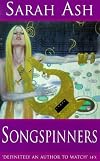
Wow, 45 ratings and 5 reviews. That's just offensive for a book this good (and an author this skilled).
This is the sixth work from Sarah Ash that I've read, and it's probably--no, definitely!--my favorite. It's an epic read in a fairly slim novel of 325 pages about religious corruption, finding oneself amid chaos and revolution, grief, dealing with depression from a disability (as someone who experiences the same, let me tell you it's no easy matter), and other important and relevant show more themes.
Book content warnings:
suicide attempt cw
sexual harassment cw
At the core of Songspinners there are three characters: Orial Magelonne, daughter of the sanatorium's doctor with a musical gift both powerful and deadly; Amaru Khassian, the famous composer and "outlaw" who lost the use of his hands in a fire; and Acir Korentan, a Guerrior of the Rose, dedicating his life to the vision of the poet-prophet Mhir--a vision that also caused the fire in Khassian's opera house.
These three well-crafted and vastly different characters are brought together through events that at first seem unlinked but then swell together in a climax where all their stories mesh in a satisfying and bittersweet way. In the beginning, young Orial Magelonne's existence seems confined to the sanatorium and pleasing her father, though she disobeys his most important rule: avoid music at all cost. Music is in her blood, an urge she can't escape. Amaru Khassian escaped the opera house fire and turns up in Orial's city seeking refuge and medical aid. He meets Orial, and then Orial can't avoid music anymore even if she tried. She becomes Khassian's amanuensis, transcribing his "heretical" opera--and bringing her closer to the madness that killed her mother (the musical gift bestowed upon the Magelonne women shines bright, but only for a short time). Finally, Acir Korentan is sent from the neighboring country to persuade Khassian back, either as a convert to his faith . . . or as a prisoner.
This setup begins the incredibly intricate epic of Songspinners.
Its world is built well and filled with a cast both well-rounded and colorful (from passionate and cranky Antiquarians who refuse to retire to Divas who hide their real feelings under a constant mask of theatrics). It has a mythology that feels vast and ancient and religions that seem genuine and inspire real passion. Scenes leap off the page, and images have stayed with me long after reading the last line.
If I had to make some sort of critique, it'd be about the character Fiammis, the lady assassin. I wish her character had more page time to be given the same care as the other secondary characters. Without that expanded scene time, her character seemed flatter than some of the rest of the cast and I was often told what I should feel toward her rather than experiencing it organically.
A second critique: I wish it was longer! I would have adored this book with 300+ more pages. If only because I love it so much. show less
This is the sixth work from Sarah Ash that I've read, and it's probably--no, definitely!--my favorite. It's an epic read in a fairly slim novel of 325 pages about religious corruption, finding oneself amid chaos and revolution, grief, dealing with depression from a disability (as someone who experiences the same, let me tell you it's no easy matter), and other important and relevant show more themes.
Book content warnings:
suicide attempt cw
sexual harassment cw
At the core of Songspinners there are three characters: Orial Magelonne, daughter of the sanatorium's doctor with a musical gift both powerful and deadly; Amaru Khassian, the famous composer and "outlaw" who lost the use of his hands in a fire; and Acir Korentan, a Guerrior of the Rose, dedicating his life to the vision of the poet-prophet Mhir--a vision that also caused the fire in Khassian's opera house.
These three well-crafted and vastly different characters are brought together through events that at first seem unlinked but then swell together in a climax where all their stories mesh in a satisfying and bittersweet way. In the beginning, young Orial Magelonne's existence seems confined to the sanatorium and pleasing her father, though she disobeys his most important rule: avoid music at all cost. Music is in her blood, an urge she can't escape. Amaru Khassian escaped the opera house fire and turns up in Orial's city seeking refuge and medical aid. He meets Orial, and then Orial can't avoid music anymore even if she tried. She becomes Khassian's amanuensis, transcribing his "heretical" opera--and bringing her closer to the madness that killed her mother (the musical gift bestowed upon the Magelonne women shines bright, but only for a short time). Finally, Acir Korentan is sent from the neighboring country to persuade Khassian back, either as a convert to his faith . . . or as a prisoner.
This setup begins the incredibly intricate epic of Songspinners.
Its world is built well and filled with a cast both well-rounded and colorful (from passionate and cranky Antiquarians who refuse to retire to Divas who hide their real feelings under a constant mask of theatrics). It has a mythology that feels vast and ancient and religions that seem genuine and inspire real passion. Scenes leap off the page, and images have stayed with me long after reading the last line.
If I had to make some sort of critique, it'd be about the character Fiammis, the lady assassin. I wish her character had more page time to be given the same care as the other secondary characters. Without that expanded scene time, her character seemed flatter than some of the rest of the cast and I was often told what I should feel toward her rather than experiencing it organically.
A second critique: I wish it was longer! I would have adored this book with 300+ more pages. If only because I love it so much. show less
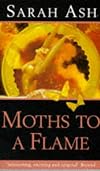
(3.5)
I love Sarah Ash. Her books always have this great atmosphere and plots you can really sink your teeth into. I think if I read Moths to a Flame before most of her other books instead of after them, I would have loved it more. As it is, I can't stop comparing it to her other works (such a bad habit, I know)!
Book content warnings:
pretty horrific decaying/insect scenes? (almost horror)
Moths to a Flame follows the twins Laili and Lai stolen from their island of Ael Lahi and sold to the city show more of Myn-Dhiel as slaves. Lai is sent to fight for his freedom while Laili becomes the new mistress of the Arkhan (the ruler of Myn-Dhiel). But Laili and Lai aren't the only ones who have come over to the city from Ael Lahi. Moonmoths, sacred to their island's Goddess, swarm the city and bring a highly addictive new drug with them--literally in the dust on their wings.
The very last line on the book's back haunts me: "This is the fall of the House of Memizhon." (the Arkhan's dynasty) Don't go in expecting some lighthearted fantasy or easy-to-follow adventure plot; this book is dark, and Sarah Ash doesn't shy away from any gory details. It also has the same readability as her other stuff--aka, it's nearly impossible to put down.
I do wish her characters (especially the women) were developed a bit more. The book is packed full of characters, and the book might not be large enough to give them all the attention they need, but overall male characters get a lot more development than the women do (and especially on-page development). I'm also a bit upset that again, the LGBT romance gets cut off and an unhappy ending due to death. Please, Sarah Ash, write a happy ending for LGBT characters, I beg you! As a wlw, I beg you. ;___;
If I hadn't read this book after I read most of Sarah Ash's others, I most likely would have loved it more. But her other books are so strong that this fell a little flat for me. show less
I love Sarah Ash. Her books always have this great atmosphere and plots you can really sink your teeth into. I think if I read Moths to a Flame before most of her other books instead of after them, I would have loved it more. As it is, I can't stop comparing it to her other works (such a bad habit, I know)!
Book content warnings:
pretty horrific decaying/insect scenes? (almost horror)
Moths to a Flame follows the twins Laili and Lai stolen from their island of Ael Lahi and sold to the city show more of Myn-Dhiel as slaves. Lai is sent to fight for his freedom while Laili becomes the new mistress of the Arkhan (the ruler of Myn-Dhiel). But Laili and Lai aren't the only ones who have come over to the city from Ael Lahi. Moonmoths, sacred to their island's Goddess, swarm the city and bring a highly addictive new drug with them--literally in the dust on their wings.
The very last line on the book's back haunts me: "This is the fall of the House of Memizhon." (the Arkhan's dynasty) Don't go in expecting some lighthearted fantasy or easy-to-follow adventure plot; this book is dark, and Sarah Ash doesn't shy away from any gory details. It also has the same readability as her other stuff--aka, it's nearly impossible to put down.
I do wish her characters (especially the women) were developed a bit more. The book is packed full of characters, and the book might not be large enough to give them all the attention they need, but overall male characters get a lot more development than the women do (and especially on-page development). I'm also a bit upset that
If I hadn't read this book after I read most of Sarah Ash's others, I most likely would have loved it more. But her other books are so strong that this fell a little flat for me. show less

This is an early Sarah Ash book and it shows, as it's quite immature compared to her later work - here we have too many well-used fantasy tropes, at times overly-lush prose, and fairly simple characterisation. However, all the seeds for her later writing are there: there's some haunting imagery, the setting is intriguing, and she refuses to allow her characters' paths to run too smoothly. Plus, the cover is rather gorgeous :-).
Lists
Awards

You May Also Like


Associated Authors
Statistics
- Works
- 18
- Also by
- 7
- Members
- 2,374
- Popularity
- #10,807
- Rating
- 3.7
- Reviews
- 48
- ISBNs
- 63
- Languages
- 4
- Favorited
- 4