

Freda Warrington
Author of Elfland
About the Author
Image credit: Danie Ware
Series
Works by Freda Warrington
The Raven Bound 1 copy
Persephone's Chamber 1 copy
Associated Works
Tagged
Common Knowledge
- Birthdate
- 1956
- Gender
- female
- Occupations
- graphic designer
medical illustrator
novelist
horror writer - Agent
- John Berlyne (Zeno Agency)
- Nationality
- England
UK - Birthplace
- Leicester, Leicestershire, England, UK
- Associated Place (for map)
- England, UK
Members
Discussions
Sequal to Bram Stoker's Dracula in Name that Book (July 2010)
Reviews
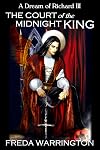
Oh, how I wish The Court of the Midnight King had existed back when I was a teenager obsessed with The Sunne in Splendour and all things Richard III-related; I probably would have read it ten times. As it is, I hope to re-read it again sometime in the future. It is a magnificent book, the perfect blend of historical and fantasy romance, as well as a psychological exploration into why certain historical figures grow to fascinate us so much.
I loved that a story with which I was already show more familiar managed to nonetheless keep me guessing right up until the end, thanks to the original twists Warrington wove into it. I found myself wanting to rush along to see how it would all wrap up, while at the same time wishing the book would go on forever because it was so, so good and so fun to read.
If you are at all into (i.e. fixated on) the story of Richard III, then you have to give this version of it a try. I doubt you’ll regret it. A solid and easy five stars. show less
I loved that a story with which I was already show more familiar managed to nonetheless keep me guessing right up until the end, thanks to the original twists Warrington wove into it. I found myself wanting to rush along to see how it would all wrap up, while at the same time wishing the book would go on forever because it was so, so good and so fun to read.
If you are at all into (i.e. fixated on) the story of Richard III, then you have to give this version of it a try. I doubt you’ll regret it. A solid and easy five stars. show less
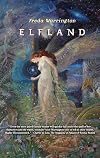
Elfland by Freda Warrington examines the lives of Aetherials (that would be fairies to us humans) living on Earth. As keeper of the gates, Lawrence Wilder is responsible for opening them up every seven years so that the earthly faeries can return home. Instead, he has closed them off due to a great and terrible threat from within. Cut off from the magic of their home the Aetherials begin to slowly go mad while Auberon Fox tries to keep the piece. and his family together. Tensions build among show more the Aetherial community over the gates and eventually everything must come to a head regardless of the outcome.
It’s taken me a while to actually write this blog post even though I finished the book some time ago because I really wasn’t sure how I felt about the book. And frankly, I’m still not sure whether or not I liked it or if I would recommend it to others.
First we’ll look at the positives. Freda Warrington has an amazing talent for imagery. From the first page I was in her world and could see it clearly. You don’t have to wonder how things look or how the characters are feeling because you’re right there along with them. There aren’t any passages that are so beautiful they stopped my breath, but the scenes are vivid and rich. Her characters are also distinct and real. If you’ve been reading my blog for any length of time you know I love great characterization, and this book is full of it. There are no issues of characters blending together, or being archetypes for any one ideal. It’s lovely seeing them interact together.
Now the negatives. Everything drags on for far too long. The plot, at its heart, is an interesting one, but it gets mired down in the soap opera that is the lives of the Wilder and Fox clans. Some of this was instrumental in developing the world for what would ultimately happen. I get that. But it just drug on and on. Instead of making me love the main character, Rosie, it made me want to smack her. Once the plot actually started rolling I couldn’t put the book down, but for the first two thirds of the book I kept wondering when things would start to happen rather than tuning into the next episode of “As the Fairies Fight”. This may be a little too critical. It wasn’t a waste of time exactly; I just wish it would have moved faster.
I won’t be rereading Elfland again, and I’m still not sure if I would recommend it. If a supernatural melodrama is up your alley than by all means, but if not you might want to pass. Creativity: 4 out of 5, readability 3 out of 5, originality 2 out of 5 for a total score of 9 out of 15. show less
It’s taken me a while to actually write this blog post even though I finished the book some time ago because I really wasn’t sure how I felt about the book. And frankly, I’m still not sure whether or not I liked it or if I would recommend it to others.
First we’ll look at the positives. Freda Warrington has an amazing talent for imagery. From the first page I was in her world and could see it clearly. You don’t have to wonder how things look or how the characters are feeling because you’re right there along with them. There aren’t any passages that are so beautiful they stopped my breath, but the scenes are vivid and rich. Her characters are also distinct and real. If you’ve been reading my blog for any length of time you know I love great characterization, and this book is full of it. There are no issues of characters blending together, or being archetypes for any one ideal. It’s lovely seeing them interact together.
Now the negatives. Everything drags on for far too long. The plot, at its heart, is an interesting one, but it gets mired down in the soap opera that is the lives of the Wilder and Fox clans. Some of this was instrumental in developing the world for what would ultimately happen. I get that. But it just drug on and on. Instead of making me love the main character, Rosie, it made me want to smack her. Once the plot actually started rolling I couldn’t put the book down, but for the first two thirds of the book I kept wondering when things would start to happen rather than tuning into the next episode of “As the Fairies Fight”. This may be a little too critical. It wasn’t a waste of time exactly; I just wish it would have moved faster.
I won’t be rereading Elfland again, and I’m still not sure if I would recommend it. If a supernatural melodrama is up your alley than by all means, but if not you might want to pass. Creativity: 4 out of 5, readability 3 out of 5, originality 2 out of 5 for a total score of 9 out of 15. show less
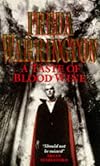
Well written, but slightly overlong, novel about a parallel universe of vampires. Karl von Wultendorf gatecrashes Madeleine Neville's eighteenth birthday party, keen to learn the meaning of his unnatural existence from her scientist father. Instead, he meets and falls in love with Madeleine's reserved but intelligent sister, Charlotte.
Overall, I enjoyed Freda Warrington's novel, though less so than her sequel to Dracula. There is a strong fantasy element in Blood Wine, replacing familiar show more devices of the traditional vampire mythology with a sort of mystical otherworld - the Crystal Ring - where vampires can enter a spiritual realm and exist apart from people, that was a bit too hallucinogenic for my taste, but the vampires themselves are suitably cruel and cynical. Karl's sarcastic friend Pierre is my favourite, but Ilona, Stefan and religious nut Kristian are all wickedly gothic.
The Neville family are also well crafted as distinct, sympathetic personalities, and I associated with pre-Karl Charlotte more than I would care to admit to! She is a strong, smart woman, frustrated by her father's emotional dependence and her sisters' popularity, and her sense of isolation is almost palpable. Yet her grand, all-conquering love for Karl comes across as wholly unconvincing and deeply disturbing. Desire for him supposedly brings her personal and physical freedom, but all she really does is replace her family's control over her life with a besotted infatuation for her lover. Granted, the story is set in the early 1920s, but for all Charlotte's suffragist posturing, her obsession with Karl is rather ironic. Without the central love story between Karl and Charlotte, the novel would have been about 300 pages shorter - much of the narrative is taken up with repetitive dialogue about how Karl must leave Charlotte for her own good, and how Charlotte cannot live without him - and far more effective. I prefer vampires who are truly evil, and not haunted creatures looking for love.
So, Karl and 'Charli' (her ridiculous pet name) - and the cliched Hammer House of Horrors cover - aside, I'm glad I tasted Blood Wine, but won't bother with the rest of the trilogy. show less
Overall, I enjoyed Freda Warrington's novel, though less so than her sequel to Dracula. There is a strong fantasy element in Blood Wine, replacing familiar show more devices of the traditional vampire mythology with a sort of mystical otherworld - the Crystal Ring - where vampires can enter a spiritual realm and exist apart from people, that was a bit too hallucinogenic for my taste, but the vampires themselves are suitably cruel and cynical. Karl's sarcastic friend Pierre is my favourite, but Ilona, Stefan and religious nut Kristian are all wickedly gothic.
The Neville family are also well crafted as distinct, sympathetic personalities, and I associated with pre-Karl Charlotte more than I would care to admit to! She is a strong, smart woman, frustrated by her father's emotional dependence and her sisters' popularity, and her sense of isolation is almost palpable. Yet her grand, all-conquering love for Karl comes across as wholly unconvincing and deeply disturbing. Desire for him supposedly brings her personal and physical freedom, but all she really does is replace her family's control over her life with a besotted infatuation for her lover. Granted, the story is set in the early 1920s, but for all Charlotte's suffragist posturing, her obsession with Karl is rather ironic. Without the central love story between Karl and Charlotte, the novel would have been about 300 pages shorter - much of the narrative is taken up with repetitive dialogue about how Karl must leave Charlotte for her own good, and how Charlotte cannot live without him - and far more effective. I prefer vampires who are truly evil, and not haunted creatures looking for love.
So, Karl and 'Charli' (her ridiculous pet name) - and the cliched Hammer House of Horrors cover - aside, I'm glad I tasted Blood Wine, but won't bother with the rest of the trilogy. show less
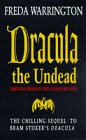
Freda Warrington is a lesser known and underrated author of vampire novels. Her trilogy of 'blood' books, commencing with A Taste of Blood Wine, is hard to find, and I only managed to acquire a copy of her sequel to Dracula by chance! For all the effort, however, I would definitely recommend Dracula the Undead to fans of the original - authentic, dark, sensual, and scary in places, Warrington respects the narrative, characters and reputation of Stoker's work, while creating a worthy show more successor of her own. In fact, I would go so far as to say that this sequel is actually better than the original, with more depth and balance. Warrington doesn't ridicule any of the characters, or insert her own modern agenda, like some authors who take on the classics, but builds on what made Mina Harker and the Count so fascinating in Stoker's novel.
Seven years after the events of Dracula, Jonathan and Mina Harker are content with each other, and dote on their son, little Quincey. In fact, everything in life is running far too smoothly, so in a truly gothic plan to tempt fate, the Harkers accompany their old friend and ally Abraham Van Helsing to Transylvania, just to 'reassure themselves that the evil was destroyed'. Or not. Mina's presence on Dracula's native soil awakens the spirit of the evil vampire, who refuses to let an insignificant obstacle like incorporeality distract him from getting revenge on the stuffed shirts who plotted to kill him. Dracula manipulates a passionate and frustrated young girl, Elena, to stalk Mina back to England, there to do his evil bidding. Meanwhile, Elena's uncle Andre Kovacs, a good friend of Van Helsing, sets off into the Carpathian mountains to locate the fabled 'Scholomance', or school of the devil, where Dracula sold his soul to learn the dark arts. The keeper of the Scholomance, Beherit, has been imprisoned in the mountain for four hundred years, paying the price of Dracula's deception, and enlists Kovacs to help him send his immortal enemy back where he belongs - into the flames of hell. The living and undead come together to face an epic battle of good versus evil in the underground academy, but first Mina must decide between her own soul and the life of her son.
Yes, it's gothic, and fantastic, and melodramatic - Dracula wouldn't be the same without dialogue like 'I am so cold. So very cold' and 'You wish to make me a vampire!' - but there is also a thoughtful debate behind the rollicking good story. The diary format is stretched to the very limit, but then, Stoker himself took that particular narrative device to an omniscient level. Mina, Jonathan, Elena and Kovacs all write down their every thought and word, managing to find a scrap of paper and a pen, even when they break an arm or are trapped in the middle of nowhere. Yet the voices - and the intimacy - given to the main characters by allowing them to tell the story personally means that the reader shares the same fears and motives, and can empathise with the Harkers both. Jonathan comes across as a bit wet in Stoker's novel, but Freda Warrington portrays him as a loving husband and father who must fight not only a supernatural, external enemy, but also his own suspicion and jealousy. Even though Dracula is supremely clever as always, I found myself in support of Team Harker, simply because the diaries brought both Jonathan and Mina to life.
Mina is strong, practical - 'She has been my strength,' Jonathan writes, 'even when she so nearly fell prey to that foul monster, her spirit never faltered' - and yet still susceptible. Dracula's blood is in her veins, and she shares a connection with him that runs deeper than religious belief or social behaviour. Up until the fiery conclusion of the novel, I admired how Warrington developed Mina's character, maintaining the sense of unity and dependability established by Stoker, but also hinting at darker passions. She loves Jonathan, but behaves like a Victorian wife would. Elena, younger and unattached, is free to rant against marriage and domesticity, but Mina is happy with her role in life, and that is the impression I had of her character in the original novel, too.
Freda Warrington has done Dracula justice with this tense, atmospheric and (nearly) faithful sequel - the Scholomance is a claustrophobic nightmare, Dracula is a force to be reckoned with, and only Satan can stop him this time! show less
Seven years after the events of Dracula, Jonathan and Mina Harker are content with each other, and dote on their son, little Quincey. In fact, everything in life is running far too smoothly, so in a truly gothic plan to tempt fate, the Harkers accompany their old friend and ally Abraham Van Helsing to Transylvania, just to 'reassure themselves that the evil was destroyed'. Or not. Mina's presence on Dracula's native soil awakens the spirit of the evil vampire, who refuses to let an insignificant obstacle like incorporeality distract him from getting revenge on the stuffed shirts who plotted to kill him. Dracula manipulates a passionate and frustrated young girl, Elena, to stalk Mina back to England, there to do his evil bidding. Meanwhile, Elena's uncle Andre Kovacs, a good friend of Van Helsing, sets off into the Carpathian mountains to locate the fabled 'Scholomance', or school of the devil, where Dracula sold his soul to learn the dark arts. The keeper of the Scholomance, Beherit, has been imprisoned in the mountain for four hundred years, paying the price of Dracula's deception, and enlists Kovacs to help him send his immortal enemy back where he belongs - into the flames of hell. The living and undead come together to face an epic battle of good versus evil in the underground academy, but first Mina must decide between her own soul and the life of her son.
Yes, it's gothic, and fantastic, and melodramatic - Dracula wouldn't be the same without dialogue like 'I am so cold. So very cold' and 'You wish to make me a vampire!' - but there is also a thoughtful debate behind the rollicking good story. The diary format is stretched to the very limit, but then, Stoker himself took that particular narrative device to an omniscient level. Mina, Jonathan, Elena and Kovacs all write down their every thought and word, managing to find a scrap of paper and a pen, even when they break an arm or are trapped in the middle of nowhere. Yet the voices - and the intimacy - given to the main characters by allowing them to tell the story personally means that the reader shares the same fears and motives, and can empathise with the Harkers both. Jonathan comes across as a bit wet in Stoker's novel, but Freda Warrington portrays him as a loving husband and father who must fight not only a supernatural, external enemy, but also his own suspicion and jealousy. Even though Dracula is supremely clever as always, I found myself in support of Team Harker, simply because the diaries brought both Jonathan and Mina to life.
Mina is strong, practical - 'She has been my strength,' Jonathan writes, 'even when she so nearly fell prey to that foul monster, her spirit never faltered' - and yet still susceptible. Dracula's blood is in her veins, and she shares a connection with him that runs deeper than religious belief or social behaviour. Up until the fiery conclusion of the novel, I admired how Warrington developed Mina's character, maintaining the sense of unity and dependability established by Stoker, but also hinting at darker passions. She loves Jonathan, but behaves like a Victorian wife would. Elena, younger and unattached, is free to rant against marriage and domesticity, but Mina is happy with her role in life, and that is the impression I had of her character in the original novel, too.
Freda Warrington has done Dracula justice with this tense, atmospheric and (nearly) faithful sequel - the Scholomance is a claustrophobic nightmare, Dracula is a force to be reckoned with, and only Satan can stop him this time! show less
Lists
Awards


You May Also Like


Associated Authors
Statistics
- Works
- 31
- Also by
- 12
- Members
- 2,029
- Popularity
- #12,665
- Rating
- 3.8
- Reviews
- 50
- ISBNs
- 93
- Languages
- 3
- Favorited
- 2
