
Hope Vestergaard
Author of Hello, Snow!
About the Author
Image credit: Hope Vestergaard
Works by Hope Vestergaard
Tagged
Common Knowledge
- Birthdate
- 20th Century
- Gender
- female
- Occupations
- children's book author
- Nationality
- USA
- Places of residence
- Ann Arbor, Michigan, USA
- Associated Place (for map)
- Michigan, USA
Members
Reviews
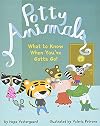
Congratulations, you’ve successfully potty-trained your child! They can run to the potty, pull down their pants and do their thing. However, just maybe, there is some fine-tuning that needs to take place. Maybe your child is afraid to flush, doesn't wipe or wash heir hands, leaves the door open, or a multitude of other pottying misdemeanors. What to do? Your shelves hold the standard potty-training books, but where's the sequel; the follow-up title that leads to mastering all the finer show more points of using the toilet? Welcome to Potty Animals: What to Know When You've Gotta Go!
Written in rhyme punctuated by emphatic statements, author Hope Vestergaard sneakily invites young children to correct the potty mistakes that a group of preschool or early elementary aged animals make in their toileting habits. Freddie the rabbit is afraid to flush, Helga the duck lallygags, Georgie won't wipe, and Farley won't close the door! Not only that, but there's an entire crew of tiny critters who exhibit a wide range of potentially embarrassing and unhealthy habits that must be curbed!
Illustrator Valeria Petrone's comical, clothed critters are caught in the act - barging Benji is suddenly surprised when someone barges in on him for a change, Stanley is spotted tinkling on his shoe as he pees outside behind a tree, and Ziggy's zipper is left embarrassingly open. There's no doubt what these critters are up to, with pants pulled down and perched on the potty, however Petrone does use tactful positioning of books and other elements to avoid embarrassment for young readers and their parents.
When I flipped open Potty Animals with my children I wasn't really sure what to expect. I hadn't pre-read this title, and just dove in. I can't honestly remember a time that I've laughed so hard reading a picture book. This is such a funny, frank, and age-appropriate way to delve into these issues. Just thinking about Benji the barger cracks me up every time - you really need to check this title out for yourself!
Reviewed at quiverfullfamily.com show less
Written in rhyme punctuated by emphatic statements, author Hope Vestergaard sneakily invites young children to correct the potty mistakes that a group of preschool or early elementary aged animals make in their toileting habits. Freddie the rabbit is afraid to flush, Helga the duck lallygags, Georgie won't wipe, and Farley won't close the door! Not only that, but there's an entire crew of tiny critters who exhibit a wide range of potentially embarrassing and unhealthy habits that must be curbed!
Illustrator Valeria Petrone's comical, clothed critters are caught in the act - barging Benji is suddenly surprised when someone barges in on him for a change, Stanley is spotted tinkling on his shoe as he pees outside behind a tree, and Ziggy's zipper is left embarrassingly open. There's no doubt what these critters are up to, with pants pulled down and perched on the potty, however Petrone does use tactful positioning of books and other elements to avoid embarrassment for young readers and their parents.
When I flipped open Potty Animals with my children I wasn't really sure what to expect. I hadn't pre-read this title, and just dove in. I can't honestly remember a time that I've laughed so hard reading a picture book. This is such a funny, frank, and age-appropriate way to delve into these issues. Just thinking about Benji the barger cracks me up every time - you really need to check this title out for yourself!
Reviewed at quiverfullfamily.com show less

American author Hope Vestergaard and Italian illustrator Valeria Petrone team up in this entertaining picture-book examination of bathroom etiquette. The rhyming text profiles a number of animal pupils at Sycamore Preschool, describing the various bad habits they have, from not flushing the toilet to not wiping themselves properly. Each two-page spread features a funny rhyme describing the situation, and an admonition to the pupil in question, suggesting what they can do to improve the show more situation...
Potty Animals: What to Know When You've Gotta Go! isn't really a book to teach young children how to go the the bathroom. That task falls to titles such as Once Upon a Potty and the like. Rather, it attempts to teach some of the habits, whether of hygiene or good manners, that should accompany going to the bathroom. Things like flushing the toilet or shutting the door while one uses the toilet, or washing one's hands and not waiting to go until the last moment. There's so much more to 'going' than just learning how to go, and Vestergaard presents some of that information in a fun and friendly way here. Her text would make an excellent read-aloud, with its entertaining, rhyming structure, while Petrone's accompanying artwork captures and accentuates the humor of each situation. Recommended to anyone looking for children's books addressing the subject of good manners and hygiene, when using the toilet. show less
Potty Animals: What to Know When You've Gotta Go! isn't really a book to teach young children how to go the the bathroom. That task falls to titles such as Once Upon a Potty and the like. Rather, it attempts to teach some of the habits, whether of hygiene or good manners, that should accompany going to the bathroom. Things like flushing the toilet or shutting the door while one uses the toilet, or washing one's hands and not waiting to go until the last moment. There's so much more to 'going' than just learning how to go, and Vestergaard presents some of that information in a fun and friendly way here. Her text would make an excellent read-aloud, with its entertaining, rhyming structure, while Petrone's accompanying artwork captures and accentuates the humor of each situation. Recommended to anyone looking for children's books addressing the subject of good manners and hygiene, when using the toilet. show less
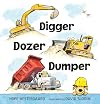
I have read many many books with to my 3 year old entirely on the basis of them having a truck on the cover, and this is the best of them.
Each page has a poem about some type of truck or industrial machine. The illustrations are nicely detailed, and the poems are cute, fun-to-read, and not overlong.
Highly recommended for little kids who love trucks.
Each page has a poem about some type of truck or industrial machine. The illustrations are nicely detailed, and the poems are cute, fun-to-read, and not overlong.
Highly recommended for little kids who love trucks.
“Potty Animals” was a cute book that I enjoyed very much. First, I really liked how the book gave each character their own individual story to depict various bathroom problems and etiquette. An example of this would be, “Stanley had a secret trick so he could stay outside. When he was out and had to go, Stanley liked to hide. He’d find a tree and just go pee! EWW! It wasn’t an emergency and no one even knew until the day that Wilma saw him tinkle on his shoe.” The book then went show more on to describe other characters and their own problems with going to the bathroom. I think this book needed to be written with a storyline because people could get bored very easily reading about a topic such as bathroom etiquette. If “Potty Animals” was written like a list of rules, it would have seemed more like a manual rather than a book. Because the book was written in a rhythmic and silly way and had multiple story lines, it was very fun to read and really held my attention. Secondly, I liked, “Potty Animals” because after every character’s story it has what they should have learned from their bathroom mistake written in bold. Using Stanley’s story from above as an example, written at the bottom of his page were the words, “Stanley, use the toilet!” Since the book was written with storylines it is possible that kids could get caught up in the funny rhymes and miss the meaning of what they should be learning. I think this is an extremely good idea to make sure that readers really grab the solution to each character’s bathroom dilemma. The big idea of “Potty Animals” is very simple. It is to inform children that their problems in the bathroom are not uncommon and to teach them proper bathroom etiquette to fix their problems. show less
Lists
Things that GO (1)
Awards


You May Also Like


Associated Authors
Statistics
- Works
- 10
- Members
- 1,434
- Popularity
- #17,941
- Rating
- 3.8
- Reviews
- 30
- ISBNs
- 29
- Languages
- 1