
Helena Goscilo
Author of Glasnost: An Anthology of Russian Literature Under Gorbachev
About the Author
Helena Goscilo is Professor and Chair of the Department of Slavic and East European Languages and Cultures at The Ohio State University in Columbus, Ohio.
Works by Helena Goscilo
Politicizing magic: an anthology of Russian and Soviet fairy tales (2005) — Editor — 49 copies, 1 review
Lives in Transit: A Collection of Recent Russian Women's Writing (Ardis Russian Literature Series) (1995) 4 copies
Associated Works
Tagged
Common Knowledge
- Legal name
- Goscilo, Helena Irena
- Birthdate
- 1945
- Gender
- female
- Education
- Indiana University (PhD | 1976)
- Organizations
- Ohio State University
Members
Reviews
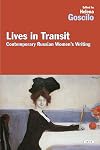
I was lent this collection of Russian women's writing from the late 1980s and 1990s five years ago. I've only just got round to reading it as it seemed likely to be depressing. Lo and behold, it really was. The volume consists largely of short stories, with some brief poetry at the end, for the most part depicting bleak vignettes of women's daily struggles. The decades before and during the collapse of the USSR were clearly not a great time to be a woman in Russia. Given the recurrent themes show more of work, romance, family, ageing, illness, and the trauma of all five in quite similar contexts, not many of the stories stood out despite being well written and translated.
The main exception to this was 'After Goat Antelopes' by Svetlana Vasilenko, which included by far the most striking writing and was my favourite in the collection. Although the setting and incidents aren't strikingly different to those of other stories, the lyrical and digressive way it is told really stands out:
'The Loser's Division' by Marina Palei was another distinctive story, as it included horribly brutal and memorable images and happenings in the gynaecological and obstetrics wards of a rural hospital. It reminded me that in the latter half of the twentieth century abortion was the most popular and easily available form of contraception in Russia. Women and babies get no gentle treatment whatsoever in this story and die arbitrarily due to lack of care. The title is indicative of the attitude towards anyone, doctor or patient, unlucky enough to end up in these wards. However the most chilling story has to be 'A Bus Driver Named Astrap' by Tatiana Nabatnikova, which depicts the psychology of rape unflinchingly and dispassionately.
In short, there is lots of insight into the daily experiences of women at all ages in Soviet and immediately post-Soviet Russia in this collection, but nothing light or fun. A couple of stories have slight fantastical touches, although the vast majority are written in a realist style. One, 'Albinos' by Bella Ulanovskaia, is extremely fragmentary and full of nature imagery that I wanted to like more than I did. Literary references and plays on words that don't come through in translation are helpfully footnoted. It isn't a great idea to include the word 'contemporary' on your book cover, though, as times will always move on. 28 years after [b:Lives in Transit: Recent Russian Women's Writing|15809509|Lives in Transit Recent Russian Women's Writing|Helena Goscilo|https://i.gr-assets.com/images/S/compressed.photo.goodreads.com/books/1363585317l/15809509._SY75_.jpg|21534189] was first published Russia, and doubtless its literature, have changed considerably. I cannot say I enjoyed this collection, although it includes a few striking stories and gives a powerful overall impression, as the experience is so bleak. show less
The main exception to this was 'After Goat Antelopes' by Svetlana Vasilenko, which included by far the most striking writing and was my favourite in the collection. Although the setting and incidents aren't strikingly different to those of other stories, the lyrical and digressive way it is told really stands out:
My body grew conscious of itself and, because it did not believe what was happening, it observed intently and with difficulty the desire forming within - a desire that you could touch and smell, that was sweet, tormenting, and obscure. The body dimly remembered that this was precisely how it had felt billions of years earlier when it was a cell that had only just emerged from inanimate matter, in precisely this way the cell had felt exhausted from solitude, and, prepared simultaneously for death and for happiness, it had torn itself in half, remembering that instant forever and making a gift of this memory to my body.
'The Loser's Division' by Marina Palei was another distinctive story, as it included horribly brutal and memorable images and happenings in the gynaecological and obstetrics wards of a rural hospital. It reminded me that in the latter half of the twentieth century abortion was the most popular and easily available form of contraception in Russia. Women and babies get no gentle treatment whatsoever in this story and die arbitrarily due to lack of care. The title is indicative of the attitude towards anyone, doctor or patient, unlucky enough to end up in these wards. However the most chilling story has to be 'A Bus Driver Named Astrap' by Tatiana Nabatnikova, which depicts the psychology of rape unflinchingly and dispassionately.
In short, there is lots of insight into the daily experiences of women at all ages in Soviet and immediately post-Soviet Russia in this collection, but nothing light or fun. A couple of stories have slight fantastical touches, although the vast majority are written in a realist style. One, 'Albinos' by Bella Ulanovskaia, is extremely fragmentary and full of nature imagery that I wanted to like more than I did. Literary references and plays on words that don't come through in translation are helpfully footnoted. It isn't a great idea to include the word 'contemporary' on your book cover, though, as times will always move on. 28 years after [b:Lives in Transit: Recent Russian Women's Writing|15809509|Lives in Transit Recent Russian Women's Writing|Helena Goscilo|https://i.gr-assets.com/images/S/compressed.photo.goodreads.com/books/1363585317l/15809509._SY75_.jpg|21534189] was first published Russia, and doubtless its literature, have changed considerably. I cannot say I enjoyed this collection, although it includes a few striking stories and gives a powerful overall impression, as the experience is so bleak. show less
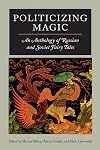
The foreword and introduction to each three parts was what most interested me. The bulk of the book is actual folk and fairy tales which act as support to the critical perspective provided by the authors of this book. While I appreciated that all of these tales were included, it sometimes slogged along. These tales are meant to be shared orally after all. Overall, a fascinating read.
Awards

You May Also Like


Associated Authors
Statistics
- Works
- 19
- Also by
- 1
- Members
- 211
- Popularity
- #105,255
- Rating
- 3.6
- Reviews
- 2
- ISBNs
- 50
- Languages
- 1