
Luli Gray
Author of Falcon's Egg
Series
Works by Luli Gray
Tagged
Common Knowledge
- Gender
- female
Members
Reviews

The classic Aesopian fable about the ant and the grasshopper is retold in a different way in this lovely picture book from America author Luli Gray and Italian illustrator Giuliano Ferri. While Ant collects and counts his foodstuffs, carefully preparing his stores for the winter ahead, Grasshopper sings, plays the fiddle and dances. When the snows arrive, Ant is warm and provided for in his cozy home, while Grasshopper is homeless and starving. It is then that Ant, who has always criticized show more Grasshopper for his careless ways, has a change of heart, taking his fellow creature in and caring for him...
Although I have encountered revisionist presentations of this fable before, in which the Grasshopper isn't punished for his "laziness," this Ant and Grasshopper might be my favorite of such retellings. I appreciated the fact that Ant isn't depicted as simply being compassionate or merciful, but rather, that he comes to have an appreciations for Grasshopper's contribution—for the joy and pleasure provided by his music. After all, being an artist has also a job for many people, down through the centuries. I also greatly enjoyed the adaptation of the classic carol, Here We Come A-wassailing, that Ant and Grasshopper sing together at the end:
"Here we come a waffle-ing / With syrup and with jam, / Here we come to dance a jog, / And eat a lot of ham. / Pizza joy come to you, / Made of pickles, mice and glue, / And we wish you and squish you a happy New Year / And we wish you a happy New Year!"
Just hilarious! The accompanying artwork from Ferri, created in watercolor and colored pencil, is absolutely charming, with an appealing color palette, and expressive characters. Recommended to anyone looking for revisionist retellings of Aesopian fables, or fun stories to tell at New Years. show less
Although I have encountered revisionist presentations of this fable before, in which the Grasshopper isn't punished for his "laziness," this Ant and Grasshopper might be my favorite of such retellings. I appreciated the fact that Ant isn't depicted as simply being compassionate or merciful, but rather, that he comes to have an appreciations for Grasshopper's contribution—for the joy and pleasure provided by his music. After all, being an artist has also a job for many people, down through the centuries. I also greatly enjoyed the adaptation of the classic carol, Here We Come A-wassailing, that Ant and Grasshopper sing together at the end:
"Here we come a waffle-ing / With syrup and with jam, / Here we come to dance a jog, / And eat a lot of ham. / Pizza joy come to you, / Made of pickles, mice and glue, / And we wish you and squish you a happy New Year / And we wish you a happy New Year!"
Just hilarious! The accompanying artwork from Ferri, created in watercolor and colored pencil, is absolutely charming, with an appealing color palette, and expressive characters. Recommended to anyone looking for revisionist retellings of Aesopian fables, or fun stories to tell at New Years. show less

When Esperanza gives her last pear to feed a stranger, she is rewarded with a bumper crop of the juicy fruit, and the ability to trap anyone who climbs her tree. This latter proves quite useful when Senor Death comes to call, and she doesn't want to die. Unfortunately, Esperanza's decision to strand him in her pear tree has unexpected consequences. Now nothing can die, leading to more suffering than can be imagined. Relenting when she learns that her old friend is terminally ill, in pain, show more and longing for the end to come, Esperanza is given a further gift: she will only die when she herself chooses. And so it is that hope - "Esperanza" in Spanish - remains in the world...
Published posthumously, The Pear Tree is a book that author Luli Gray, perhaps best known for the middle-grade fantasy series that began with Falcon's Egg, was working on as her own death approached. It is a significantly edited version of a traditional folktale found in Spain and throughout Latin America, originally known as "Tia Miseria y la Muerte" (Aunt Misery and Death). In this traditional version, Aunt Misery traps Death in order to bargain for her own immortality, and is not concerned with the welfare of others. I can certainly understand why Gray, approaching her own demise, wanted to emphasize the immortality of hope rather than misery, and I appreciated the afterword here, that spelled out the changes made. The story itself, as it appears here, is engaging, and the artwork from Madelyn Goodnight is quite beautiful. Recommended to all young folklore enthusiasts, and to anyone looking for children's stories about death. show less
Published posthumously, The Pear Tree is a book that author Luli Gray, perhaps best known for the middle-grade fantasy series that began with Falcon's Egg, was working on as her own death approached. It is a significantly edited version of a traditional folktale found in Spain and throughout Latin America, originally known as "Tia Miseria y la Muerte" (Aunt Misery and Death). In this traditional version, Aunt Misery traps Death in order to bargain for her own immortality, and is not concerned with the welfare of others. I can certainly understand why Gray, approaching her own demise, wanted to emphasize the immortality of hope rather than misery, and I appreciated the afterword here, that spelled out the changes made. The story itself, as it appears here, is engaging, and the artwork from Madelyn Goodnight is quite beautiful. Recommended to all young folklore enthusiasts, and to anyone looking for children's stories about death. show less
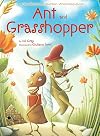
In the traditional tale, ant works hard all spring and summer gathering food for the winter months, while grasshopper lazies about, goofing off and failing to prepare for the winter ahead. In this story, those elements hold true, yet this story ends quite differently, with the ant seeing the value of play and music, and grasshopper seeing the value of counting and working hard. The silly song at the end had me in stitches. This would be a good book for teaching the value of differences--how show more each student in the classroom brings unique talents and gift to the community. It is appropriate for all elementary grades. show less
This common tale of the ant and the grasshopper brings with it a surprise ending that endears the reader to the ant. All summer and fall, ant is saving and gathering food for the winter. While he works and counts his food stores each day, grasshopper begins to play his fiddle just outside ant's door. Ant is frustrated by grasshopper's lack of preparation for winter, and when winter comes, and grasshopper is cold and hungry, ant turns him away, reminding him that he shouldn't have been show more playing. As the winter wears on, ant is confronted by a nightmare that brings about a change of heart and a new-found appreciation for grasshopper. show less
Awards


You May Also Like


Associated Authors
Statistics
- Works
- 7
- Members
- 425
- Popularity
- #57,428
- Rating
- 3.8
- Reviews
- 44
- ISBNs
- 12
- Languages
- 1