
Ulf Hannerz
Author of On Being Included: Racism and Diversity in Institutional Life
About the Author
Ulf Hannerz is Professor of Social Anthropology at Stockholm University and a former Chair of the European Association of Social Anthropologists. His books include Soulside (1969), Cultural Complexity (1992), Transnational Connections (1996) and Foreign New (2004).
Works by Ulf Hannerz
Foreign News: Exploring the World of Foreign Correspondents (Lewis Henry Morgan Lecture Series) (2004) 22 copies
Culture, Cities and the World — Author — 1 copy
Associated Works
Tagged
Common Knowledge
- Gender
- male
Members
Reviews
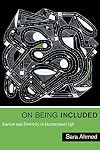
A thorough and detailed examination of how diversity work is done in an academic institution. Moreover, it focuses on how diversity work is conceptualized and experienced by those who do it. The research centers around interviews of diversity professionals. Damningly, they speak of their own work as repeatedly beating their heads against a brick wall.
The book delves deep into the Kafkaesque maze of justifications and rationalizations that make up the meat of this labor. The first job of a show more diversity officer is to create a diversity policy. Once the policy is created, it needs to be reviewed, approved, and disseminated. Naturally, after that, it will have to be frequently revised. The job then quickly becomes a matter of creating and moving papers around. If the papers are publicly lauded, then the institution is considered "good at diversity".
It's not long before complaints of racism or bias can be refuted simply by pointing to this paper which clearly states the institution's commitment to diversity. "We can't be racist" or "You can't have experienced racist behavior" because that would violate the institutional policy. The work of the diversity officer in many ways becomes to prove that the institution is not racist, rather than correcting the racist structure of the institution.
Despite the necessarily superficial and ineffectual nature of this work, diversity practitioners still face tremendous hurdles to accomplishing even this much. Blame is shifted easily from the one who has committed an offense to the one who witnesses it. Despite having a top notch diversity policy, academic institutions continue to be remarkably white and male. And naturally, the racism that pervades the institution remains unchecked and frequently unremarked upon.
This is not an uplifting or optimistic book, but it is an extremely clarifying look into the belly of the beast. I found it extremely enlightening and it helped me put into words issues I've sensed but been unable to fully grasp. show less
The book delves deep into the Kafkaesque maze of justifications and rationalizations that make up the meat of this labor. The first job of a show more diversity officer is to create a diversity policy. Once the policy is created, it needs to be reviewed, approved, and disseminated. Naturally, after that, it will have to be frequently revised. The job then quickly becomes a matter of creating and moving papers around. If the papers are publicly lauded, then the institution is considered "good at diversity".
It's not long before complaints of racism or bias can be refuted simply by pointing to this paper which clearly states the institution's commitment to diversity. "We can't be racist" or "You can't have experienced racist behavior" because that would violate the institutional policy. The work of the diversity officer in many ways becomes to prove that the institution is not racist, rather than correcting the racist structure of the institution.
Despite the necessarily superficial and ineffectual nature of this work, diversity practitioners still face tremendous hurdles to accomplishing even this much. Blame is shifted easily from the one who has committed an offense to the one who witnesses it. Despite having a top notch diversity policy, academic institutions continue to be remarkably white and male. And naturally, the racism that pervades the institution remains unchecked and frequently unremarked upon.
This is not an uplifting or optimistic book, but it is an extremely clarifying look into the belly of the beast. I found it extremely enlightening and it helped me put into words issues I've sensed but been unable to fully grasp. show less
This is an academic (but very readable) look at the act of doing and being diversity in an institutional context. The foundation of Ahmed's book is a series of interviews with diversity professionals at universities in the UK and Australia, as well as her personal experience as a woman of color in the institutions where she's worked. Ahmed doesn't give the reader any easy steps to take, but instead brings us a clear look at how institutions work and what that means for the people or groups show more who are trying to change an institutional culture that reproduces and favors whiteness.
Much of what she talks about reflects concerns and experiences I've heard from friends and colleagues of color. Other topics shone a light on things I'd never thought about, but that I recognized as an obvious part of the institutional foundations I've experienced. Ahmed's narrative includes looking at the language we use to describe this work (including why "diversity" is such a beloved term), how whiteness as the norm impacts workers and students of color, what actually goes on in committee meetings, the way an institution can be personified, how documents can help and hinder communication, and she ultimately explores some philosophical approaches to thinking through these efforts in a fresh way.
Although there are aspects of the interviews and assertions that are unique to a UK context, most of what Ahmed discusses is just as applicable to institutions in the United States. And while her philosophy and academic background can sometimes make this a dense book, her clear writing style makes it an easy read (and one that made me want to underline every spot-on sentence). I'd really recommend this book for anyone interested in picking apart the successes and failures of institutional diversity efforts (particularly in higher education). show less
Much of what she talks about reflects concerns and experiences I've heard from friends and colleagues of color. Other topics shone a light on things I'd never thought about, but that I recognized as an obvious part of the institutional foundations I've experienced. Ahmed's narrative includes looking at the language we use to describe this work (including why "diversity" is such a beloved term), how whiteness as the norm impacts workers and students of color, what actually goes on in committee meetings, the way an institution can be personified, how documents can help and hinder communication, and she ultimately explores some philosophical approaches to thinking through these efforts in a fresh way.
Although there are aspects of the interviews and assertions that are unique to a UK context, most of what Ahmed discusses is just as applicable to institutions in the United States. And while her philosophy and academic background can sometimes make this a dense book, her clear writing style makes it an easy read (and one that made me want to underline every spot-on sentence). I'd really recommend this book for anyone interested in picking apart the successes and failures of institutional diversity efforts (particularly in higher education). show less

Testo profondo e mai banale, ricco di riflessione sulle stesse, molteplici, attitudini antropologiche rispetto ai temi della differenza e molteplicità culturale. Molto interessanti le riflessioni sull'adesione a culture e il capitolo su cosmopolitismo/turismo.
Don't look over it, if you can't get over it
You May Also Like


Associated Authors
Statistics
- Works
- 20
- Also by
- 1
- Members
- 462
- Popularity
- #53,211
- Rating
- 3.2
- Reviews
- 4
- ISBNs
- 51
- Languages
- 5
- Favorited
- 1