
George Galloway (1) (1954–)
Author of I'm Not the Only One
For other authors named George Galloway, see the disambiguation page.
About the Author
Image credit: Photo credit: Matthew Emirzian, Sept. 16, 2005
Works by George Galloway
Tagged
Common Knowledge
- Legal name
- Galloway, George
- Birthdate
- 1954-08-16
- Gender
- male
- Nationality
- UK
- Associated Place (for map)
- UK
Members
Discussions
Just for fun. in Pro and Con (April 2016)
Reviews
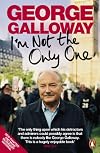
'Not the Only One' is part biographical, part campaigning and part self-justificatory from a man who may not always get it right but whose passion for social justice and commitment to taking risks no one else dare take are undeniable. It is a snapshot of a great radical at the turn of the century.
A disclaimer. I know George Galloway personally and even worked on his behalf briefly when the 'deep state' (yes, it exists) tried to destroy him politically and personally because he had become a show more thorn in its side over Middle Eastern policies.
I will also admit to some sympathy for his abortive RESPECT Party (relevant to this book) and to the latest iteration of his politics, the Workers Party of Britain. Although never a member of the first and not a member of the second at the time of writing, they are both worthy of our interest.
However, intellectual integrity requires an honest review and that is what you will get. The first point to make is a simple one - it is well written, easy to read and, above all, authentic. This is the voice of the man himself, one prepared to admit errors as well as to assert positions.
Most political memoires are, I am afraid, dull self-congratulatory affairs written (or ghost-written) by men (or women) proud of climbing up the greasy pole of politics and keen both to add to their pension and claim their place in history with their own interpretation of events.
Galloway's is better than this. It was written in 2004 in the wake of the Iraq imbroglio that made his name. It exudes then-current political passions and an honesty about his drives and interests that often worked against him as far as conventional politics were concerned.
British politics is structured to allow great democratic Leftists to rise to public awareness but also to destroy them before they can change anything - George Lansbury, Tony Benn (who at least rose to Secretary of State), Michael Foot, George Galloway, Jeremy Corbyn. This is how it works.
Any time a radical Left alternative appears, the 'Deep State' can tend to rely on the Labour Right to ensure that the challenge is eliminated. The fact that the forces of darkness had to get directly involved in doing over 'Gorgeous George' shows what a challenge he had become.
More than the others, Galloway challenged and still challenges the very core of the British State and its symbiotic relationship with the political class and the media. His thrilling performance at the US Senate in 2005 was a major challenge to the order of things at the very beating heart of the beast.
Let us be honest and talk about both his weaknesses and his strengths. I identify two weaknesses that emerge out of this book. The first is that he has two mistresses - the UK and the Middle East - and the second (which might be said to apply to the WPB) is that he has no economic theory.
The first is an extension of his passion. His love for the Arab world is absolute and honest but it makes him MP for Jenin as much as the dreadful Boris Johnson became MP for Kiev. Unfortunately the vicious British media decided also to make him MP for Baghdad as well.
There is nothing wrong with this passion. He is, in fact, totally right about imperialism and the way that Arab peoples have been treated by the West but it has added to the idea that the UK is a cockpit for struggles between faraway peoples while the ruling caste at home goes unchallenged.
The British State rules in part through misdirection and by allowing cultural conflicts and foreign adventures to fascinate the intellectual lightweights in the media and stop voters thinking about the (now collapsing) national infrastructures of the homeland.
The truth is that it was only a matter of time before the non-West would throw off any remaining shackles off its own accord. Leftist politicians should always have been there to help them (as Attlee walked away from India) but with priority of energy to the interests of their own people.
The lack of an economic strategy is thus a corollary of the first weakness. The propensity of the passionate campaigning Leftist to concentrate on what is morally right rather than the brutal realities of resource competition and the struggles for power and status inherent in the human condition.
In short, Galloway is no Marxist and certainly no Lenin. His democracy is a commitment based on his passion for rhetoric (he is one of the great orators of our age) and persuasion in a world where the means of information and communication are wholly owned subsidiaries of the ruling caste.
But let us look at the strengths. It was not Saddam who was 'indefatigable' (referring here to Galloway's honest PR error) but Galloway himself. Galloway is a human dynamo of enormous core integrity who puts the weasels who inhabit most of politics to absolute shame.
Even that weakness of redirecting the Left's energies to struggles in faraway countries hides the strength of a profound moral purpose and a passion for the underdog that is the true mark of a democratic Leftist hero.
His analyses of our situation stack up brilliantly against the intellectual laziness of our self-satisfied elite. I have no hesitation in counting him, for all his flaws, as a good man in a bad world. Of course, you will hate him if you have a stake in a corrupt system but most do not, in fact, have that stake.
In the public arena, thanks to some of his own misjudgements, he has tended to be positioned as an eccentric outlier but get him in front of a working class audience and he has them in the palm of his hand. He speaks directly to their concerns.
His critique of the functioning of liberal democracy was way ahead of its time. Only now are we beginning to see that we are trapped in an embarrassing farce ruled by second-rate minds who cannot grasp the complexity of the world they created by throwing the economic dice as they did.
The book is two decades old. He is now at the end rather than at the beginning of his career. He was thrown out of the terminally corrupt Labour Party against his will. It will now be an uphill struggle to create an alternative Left politics that is not a pale reflection of American progressivism.
He still sticks to the values of socialism so that, even at this late day, he has a role to play as the Leader, albeit a more passive one to encourage a new generation of working class activists, of the small but developing Workers Party of Britain which has learned its lessons from the past.
My own view is that Labour is very likely to have some sort of majority in 2024/2025 but that it will be unfitted to the solve the profound structural problems of a nation run by the wrong people for far too long within an inept political and administrative structure.
Socialists (and national populists) may have little impact for a while yet but the logic of the situation is an eventual collapse of the old order and either liberal centrists attempting to retain power as ineffectual authoritarians (merely delaying the crisis) or entirely new forces emerging.
The AI revolution, in this context, is far more important than the manufactured and costly 'Green Transition' while the last eighteen months have confirmed that Western hegemony is in terminal decline (although the old dinosaur will thrash around for a fair more decades yet).
Lansbury, Benn, Foot, Galloway, Corbyn may not always have been right and all had or have flaws but their vision of what the nation could be remains as an alternative to the consumer debt-driven fantasy land of British centrism. On the Right, Farage and others also have worthwhile critiques.
By the time the final transformation happens, the process will be in the hands of younger people operating under entirely new conditions but the core moral values that existed, even in debased form, in the Britain of the past are always revivable.
From this perspective, Galloway's Left-populism, his passion and his ability to mobilise opinion may become a useful model to reflect on as the old ruling order starts to collapse on its own ineptitude and its propensity to eat itself as its control of resources weakens.
That is why the book is worth retaining in the library - it is a reference text on sound values, on campaigning dynamics and on mistakes and how to deal with them. Above all, this man survived all that the low lifes of the system could throw at him. If he could, so can we! show less
A disclaimer. I know George Galloway personally and even worked on his behalf briefly when the 'deep state' (yes, it exists) tried to destroy him politically and personally because he had become a show more thorn in its side over Middle Eastern policies.
I will also admit to some sympathy for his abortive RESPECT Party (relevant to this book) and to the latest iteration of his politics, the Workers Party of Britain. Although never a member of the first and not a member of the second at the time of writing, they are both worthy of our interest.
However, intellectual integrity requires an honest review and that is what you will get. The first point to make is a simple one - it is well written, easy to read and, above all, authentic. This is the voice of the man himself, one prepared to admit errors as well as to assert positions.
Most political memoires are, I am afraid, dull self-congratulatory affairs written (or ghost-written) by men (or women) proud of climbing up the greasy pole of politics and keen both to add to their pension and claim their place in history with their own interpretation of events.
Galloway's is better than this. It was written in 2004 in the wake of the Iraq imbroglio that made his name. It exudes then-current political passions and an honesty about his drives and interests that often worked against him as far as conventional politics were concerned.
British politics is structured to allow great democratic Leftists to rise to public awareness but also to destroy them before they can change anything - George Lansbury, Tony Benn (who at least rose to Secretary of State), Michael Foot, George Galloway, Jeremy Corbyn. This is how it works.
Any time a radical Left alternative appears, the 'Deep State' can tend to rely on the Labour Right to ensure that the challenge is eliminated. The fact that the forces of darkness had to get directly involved in doing over 'Gorgeous George' shows what a challenge he had become.
More than the others, Galloway challenged and still challenges the very core of the British State and its symbiotic relationship with the political class and the media. His thrilling performance at the US Senate in 2005 was a major challenge to the order of things at the very beating heart of the beast.
Let us be honest and talk about both his weaknesses and his strengths. I identify two weaknesses that emerge out of this book. The first is that he has two mistresses - the UK and the Middle East - and the second (which might be said to apply to the WPB) is that he has no economic theory.
The first is an extension of his passion. His love for the Arab world is absolute and honest but it makes him MP for Jenin as much as the dreadful Boris Johnson became MP for Kiev. Unfortunately the vicious British media decided also to make him MP for Baghdad as well.
There is nothing wrong with this passion. He is, in fact, totally right about imperialism and the way that Arab peoples have been treated by the West but it has added to the idea that the UK is a cockpit for struggles between faraway peoples while the ruling caste at home goes unchallenged.
The British State rules in part through misdirection and by allowing cultural conflicts and foreign adventures to fascinate the intellectual lightweights in the media and stop voters thinking about the (now collapsing) national infrastructures of the homeland.
The truth is that it was only a matter of time before the non-West would throw off any remaining shackles off its own accord. Leftist politicians should always have been there to help them (as Attlee walked away from India) but with priority of energy to the interests of their own people.
The lack of an economic strategy is thus a corollary of the first weakness. The propensity of the passionate campaigning Leftist to concentrate on what is morally right rather than the brutal realities of resource competition and the struggles for power and status inherent in the human condition.
In short, Galloway is no Marxist and certainly no Lenin. His democracy is a commitment based on his passion for rhetoric (he is one of the great orators of our age) and persuasion in a world where the means of information and communication are wholly owned subsidiaries of the ruling caste.
But let us look at the strengths. It was not Saddam who was 'indefatigable' (referring here to Galloway's honest PR error) but Galloway himself. Galloway is a human dynamo of enormous core integrity who puts the weasels who inhabit most of politics to absolute shame.
Even that weakness of redirecting the Left's energies to struggles in faraway countries hides the strength of a profound moral purpose and a passion for the underdog that is the true mark of a democratic Leftist hero.
His analyses of our situation stack up brilliantly against the intellectual laziness of our self-satisfied elite. I have no hesitation in counting him, for all his flaws, as a good man in a bad world. Of course, you will hate him if you have a stake in a corrupt system but most do not, in fact, have that stake.
In the public arena, thanks to some of his own misjudgements, he has tended to be positioned as an eccentric outlier but get him in front of a working class audience and he has them in the palm of his hand. He speaks directly to their concerns.
His critique of the functioning of liberal democracy was way ahead of its time. Only now are we beginning to see that we are trapped in an embarrassing farce ruled by second-rate minds who cannot grasp the complexity of the world they created by throwing the economic dice as they did.
The book is two decades old. He is now at the end rather than at the beginning of his career. He was thrown out of the terminally corrupt Labour Party against his will. It will now be an uphill struggle to create an alternative Left politics that is not a pale reflection of American progressivism.
He still sticks to the values of socialism so that, even at this late day, he has a role to play as the Leader, albeit a more passive one to encourage a new generation of working class activists, of the small but developing Workers Party of Britain which has learned its lessons from the past.
My own view is that Labour is very likely to have some sort of majority in 2024/2025 but that it will be unfitted to the solve the profound structural problems of a nation run by the wrong people for far too long within an inept political and administrative structure.
Socialists (and national populists) may have little impact for a while yet but the logic of the situation is an eventual collapse of the old order and either liberal centrists attempting to retain power as ineffectual authoritarians (merely delaying the crisis) or entirely new forces emerging.
The AI revolution, in this context, is far more important than the manufactured and costly 'Green Transition' while the last eighteen months have confirmed that Western hegemony is in terminal decline (although the old dinosaur will thrash around for a fair more decades yet).
Lansbury, Benn, Foot, Galloway, Corbyn may not always have been right and all had or have flaws but their vision of what the nation could be remains as an alternative to the consumer debt-driven fantasy land of British centrism. On the Right, Farage and others also have worthwhile critiques.
By the time the final transformation happens, the process will be in the hands of younger people operating under entirely new conditions but the core moral values that existed, even in debased form, in the Britain of the past are always revivable.
From this perspective, Galloway's Left-populism, his passion and his ability to mobilise opinion may become a useful model to reflect on as the old ruling order starts to collapse on its own ineptitude and its propensity to eat itself as its control of resources weakens.
That is why the book is worth retaining in the library - it is a reference text on sound values, on campaigning dynamics and on mistakes and how to deal with them. Above all, this man survived all that the low lifes of the system could throw at him. If he could, so can we! show less
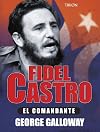
Het verhaal over Fidel Castro en het isolement waarin Cuba gedurende het bewind onder hem is moeten gebukt gaan is bekend. Het boek is afgesloten met de woorden van één van Fidel Castro grootste voorbeelden, José Marti : "Mannen van de daad, vooral diegenen wier daden worden geleid door liefde, leven voor altijd. Andere beroemde mannen, diegenen die veel praten en weinig doen vervluchtigen al snel. Actie is de waardigheid van grootheid."
De gezondheidszorg in Cuba is gelijkwaardig show more aan die in Noord-Europa, terwijl in de VS (het land dat al decennia lang een embargo tegen Cuba handhaaft) 25 tot 35 miljoen mensen geen ziektekostenverzekering hebben. In Havanna is de levensverwachting hoger dan in de VS en de kindersterfte lager. Op een Cubaanse poster staat te lezen dat 100 miljoen kinderen jonger dan 13 gaan niet naar school maar werken - en geen van hen woont in Cuba. De schrijver eindigt zijn boek met het volgende : In een wereld waar elke dag 16000 kinderen van de honger sterven en waar geld wordt ontfutseld aan mensen in de armste landen door bankiers in de rijkste landen, is het niet vreemd dat Cuba en zijn leider zo'n belangrijke rol spelen op het wereldtoneel. Een eiland dat ooit het bordeel van de Cariben was, is nu wereldwijd de medische bron van tientallen miljoenen mensen. show less
De gezondheidszorg in Cuba is gelijkwaardig show more aan die in Noord-Europa, terwijl in de VS (het land dat al decennia lang een embargo tegen Cuba handhaaft) 25 tot 35 miljoen mensen geen ziektekostenverzekering hebben. In Havanna is de levensverwachting hoger dan in de VS en de kindersterfte lager. Op een Cubaanse poster staat te lezen dat 100 miljoen kinderen jonger dan 13 gaan niet naar school maar werken - en geen van hen woont in Cuba. De schrijver eindigt zijn boek met het volgende : In een wereld waar elke dag 16000 kinderen van de honger sterven en waar geld wordt ontfutseld aan mensen in de armste landen door bankiers in de rijkste landen, is het niet vreemd dat Cuba en zijn leider zo'n belangrijke rol spelen op het wereldtoneel. Een eiland dat ooit het bordeel van de Cariben was, is nu wereldwijd de medische bron van tientallen miljoenen mensen. show less
Jan 8, 2026Dutch
Statistics
- Works
- 5
- Members
- 110
- Popularity
- #176,728
- Rating
- 3.6
- Reviews
- 2
- ISBNs
- 17
- Languages
- 4

