
Belinda Hurmence
Author of My Folks Don't Want Me to Talk About Slavery
About the Author
Image credit: nclaonline.org 2003 Biennial Conference Speaker
Works by Belinda Hurmence
Tagged
Common Knowledge
- Birthdate
- 1921
- Gender
- female
- Nationality
- USA
- Birthplace
- Oklahoma, USA
- Places of residence
- Statesville, North Carolina, USA
Texas, USA
Raleigh, North Carolina, USA - Associated Place (for map)
- USA
Members
Reviews
My Folks Don't Want Me To Talk About Slavery: Personal Accounts of Slavery in North Carolina by Belinda Hurmence
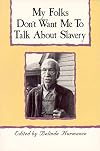
Culled from the myriad pages of the Federal Writers' Project Slave Narratives, this slim volume focuses on oral history from ex-slaves interviewed in North Carolina. Done at the time of the Depression, some found speaking to the young, white government workers a time to recall slavery as days better or at least no worst than there then current suffering. One thing consistent when mentioned was how Wheeler's Cavalry, though Confederate, were rapacious, horse-borne criminals. Overall, this is show more a moving, very human recollection of life-long tragedy and travail and I am certain any sampling from that rich trove of oral history would be, so the No. Carolina connection is merely incidental.
Speaking of "incidental", while reading this book, I also listened to the Andre Williams tune "Pass The Biscuits Please". Andre "Mr. Rhythm" Williams started his recording career in Detroit, Michigan on the small but prolific Fortune Records label. Williams recorded upon, or has writing credits upon, in excess of 200 songs - including: "Bacon Fat", "Pig Snoots", "JailBait", "Pass The Biscuits", "Rib Tips" and "The Greasy Chicken". One of the recollections here, of the many about poor food conditions under slavery, declaimed the fact that "Marse" never shared biscuits with the slaves. Thinking of the novelty song and the dialect preserved here, it feels to easy and even possibly stereotypic if not racist humor to unit the two. Thinking more deeply on it, it recalls to mind
Of those interviewed here, few suffered whippings or witnessed them firsthand while most could speak to knowledge of such acute, episodic violent tragedies as corporal punishment, family-separating public sale, etc. But, what emerges is the weight of the small, day-to-day injustices, just like the constant nuisances that may emerge in a novelty song. show less
Speaking of "incidental", while reading this book, I also listened to the Andre Williams tune "Pass The Biscuits Please". Andre "Mr. Rhythm" Williams started his recording career in Detroit, Michigan on the small but prolific Fortune Records label. Williams recorded upon, or has writing credits upon, in excess of 200 songs - including: "Bacon Fat", "Pig Snoots", "JailBait", "Pass The Biscuits", "Rib Tips" and "The Greasy Chicken". One of the recollections here, of the many about poor food conditions under slavery, declaimed the fact that "Marse" never shared biscuits with the slaves. Thinking of the novelty song and the dialect preserved here, it feels to easy and even possibly stereotypic if not racist humor to unit the two. Thinking more deeply on it, it recalls to mind
“Man is a creature that can get accustomed to anything, and I think that is the best definition of him.”
― Fyodor Dostoevsky, The House of the Dead
Of those interviewed here, few suffered whippings or witnessed them firsthand while most could speak to knowledge of such acute, episodic violent tragedies as corporal punishment, family-separating public sale, etc. But, what emerges is the weight of the small, day-to-day injustices, just like the constant nuisances that may emerge in a novelty song. show less
My Folks Don't Want Me To Talk About Slavery: Personal Accounts of Slavery in North Carolina by Belinda Hurmence
As with Hurmence's previous collection (We Lived in a Little Cabin in the Yard), this is a troubling and mind-opening collection of narratives by slaves. Collected as part of the Federal Writer's Project, these stories languished in dusty archives until Hurmence pulled them into the light. This particular collection is from slaves in North Carolina. It is broad-ranging, meaning not all narrators hated slavery and whites. It is an interesting thing to find. One would assume that given the show more horrors of slavery, there would be much vitriol and bitterness. You do find this, but not as much as I expected. Hurmence does mention that the collectors of the stories were white and this may have skewed the narratives (meaning that even in 1924, blacks would not be comfortable criticizing whites to a white person). It is important to remember this when reading these narratives.
This book, and the others in the series, are must-reads for anyone who wants to learn about the history of slavery and racism in the US. They are particularly suited for classroom use, either public or homeschool, and would be okay for children in later elementary and up. show less
This book, and the others in the series, are must-reads for anyone who wants to learn about the history of slavery and racism in the US. They are particularly suited for classroom use, either public or homeschool, and would be okay for children in later elementary and up. show less
We Lived in a Little Cabin in the Yard: Personal Accounts of Slavery in Virginia by Belinda Hurmence
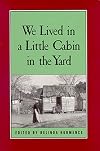
This is a slender volume whose simplicity belies the nature of the narrative within. Hurmence presents a carefully curated collection of the some 600 plus tales gathered during this Project. The only words that are her own is the introduction where she explains her criteria and editing choices. For the most part, she has maintained the voice of the speaker, keeping vernacular, vocabulary, exclamations, and descriptions. By doing this, she has preserved the authenticity of the voices, giving show more the reader a true glimpse into the life of these people.
One thing that surprised me what how well most of the narrators spoke about their masters. Given the horrors of slavery, I would have expected more to depict this travesty. And yet many did not. One speaker noted that owners in Virginia tended to treat slaves better become freedom was so close – merely a few hundred miles away. I wonder if this is accurate or if this is a product of the fact the people collecting the stories were white and sought out “white people aren’t so bad” stories. Perhaps reading this authors other works (collections from North and South Carolina) would help solve this question.
The language is simple enough for younger readers, but the subject matter may require adult guidance to process. Still, I would highly recommend for educational purposes. show less
One thing that surprised me what how well most of the narrators spoke about their masters. Given the horrors of slavery, I would have expected more to depict this travesty. And yet many did not. One speaker noted that owners in Virginia tended to treat slaves better become freedom was so close – merely a few hundred miles away. I wonder if this is accurate or if this is a product of the fact the people collecting the stories were white and sought out “white people aren’t so bad” stories. Perhaps reading this authors other works (collections from North and South Carolina) would help solve this question.
The language is simple enough for younger readers, but the subject matter may require adult guidance to process. Still, I would highly recommend for educational purposes. show less
Before Freedom, When I Just Can Remember: Twenty-Seven Oral Histories of Former South Carolina Slaves by Belinda Hurmence
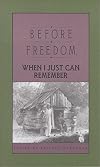
This little book brings together 27 oral histories collected by the Federal Writer's Project in the 1930s. All of the interviewees were in their 80s or older at the time, and were at least 10 years of age at the end of the Civil War. The editor includes a thoughtful introduction in which she considers possible reasons the ex-slaves, almost to a person, remembered their days in servitude as "the good old days", when they were happier and certainly more secure than at any time since.
Each show more person talks randomly about his or her memories, rather than being guided by a list of questions. The stories are, individually and collectively, incredibly depressing in their solicitude for ex-owners and their matter-of-fact descriptions of treatment and living standards. There is little outrage, almost a lassitude regarding slavery vs. freedom as a concept, perhaps a result of these people having been raised in slavery and being ill-prepared to make their own way during Reconstruction and after. Yankees, the KKK, and slave patrollers are viewed with equal negativity.
An interesting and disturbing detour around the intervening 80 years of political correctness. show less
Each show more person talks randomly about his or her memories, rather than being guided by a list of questions. The stories are, individually and collectively, incredibly depressing in their solicitude for ex-owners and their matter-of-fact descriptions of treatment and living standards. There is little outrage, almost a lassitude regarding slavery vs. freedom as a concept, perhaps a result of these people having been raised in slavery and being ill-prepared to make their own way during Reconstruction and after. Yankees, the KKK, and slave patrollers are viewed with equal negativity.
An interesting and disturbing detour around the intervening 80 years of political correctness. show less
Lists
Awards


You May Also Like


Statistics
- Works
- 13
- Members
- 974
- Popularity
- #26,440
- Rating
- 4.2
- Reviews
- 21
- ISBNs
- 24