
Ronald Takaki (1939–2009)
Author of A Different Mirror: A History of Multicultural America
About the Author
Ronald Takaki is a Fellow of the Society of American Historians & a professor of Ethnic Studies at the University of California, Berkeley. His books include "Strangers from a Different Shore" & "A Different Mirror" &, most recently, "A Larger Memory". (Bowker Author Biography)
Works by Ronald Takaki
Strangers from a Different Shore: A History of Asian Americans, Updated and Revised Edition (1989) 678 copies, 4 reviews
A different mirror for young people : a young people's history of multicultural America (2012) 270 copies, 2 reviews
Ethnic Islands: The Emergence of Urban Chinese America (The Asian American Experience) (1994) 12 copies
Spacious Dreams: The First Wave of Asian Immigration (The Asian American Experience) (1994) 10 copies
In the Heart of Filipino America: Immigrants from the Pacific Isles (Asian American Experience) (1994) 10 copies
From Exiles to Immigrants: The Refugees from Southeast Asia (The Asian American Experience) (1995) 9 copies
Strangers at the Gates Again: Asian American Immigration After 1965 (The Asian American Experience) (1995) 8 copies
Associated Works
Tagged
Common Knowledge
- Legal name
- Takaki, Ronald Toshiyuki
- Birthdate
- 1939-04-12
- Date of death
- 2009-05-26
- Gender
- male
- Education
- College of Wooster
University of California, Berkeley (PhD, American History) - Occupations
- professor
historian
ethnographer
author - Organizations
- University of California, Los Angeles
University of California, Berkeley - Short biography
- Ronald Takaki was a distinguished scholar of race and ethnicity. Born to a Japanese father and a Japanese American mother, Takaki studied at the College of Wooster, Ohio, and received his Ph.D. in American History from the University of California, Berkeley. He taught UCLA's first Black History course before joining UC Berkeley's Department of Ethnic Studies in 1972, which had been recently created in response to student demand for course offerings that better reflected the diversity of the American experience. Takaki became one of its key members, developing the Ethnic Studies major and helping to make coursework in racial and ethnic diversity a requirement for graduation. He was a vocal proponent of multicultural education in the country at large, regularly appearing on programs such as NBC's Today and PBS's NewsHour to discuss issues of race and ethnicity in the United States. [adapted from A Different Mirror for Young People: A History of Multicultural America (2012)]
My grandfather emigrated from Japan to work on the cane fields of Hawaii in 1886, and my mother was born on the Hawi Plantation. As a teenager growing up on Oahu, I was not academically inclined but was actually a surfer. During my senior year, I took a religion course taught by Dr. Shunji Nishi, a Japanese American with a Ph.D. I remember going home and asking my mother, who only had an eighth-grade education: "Mom, what's a Ph.D.?" She answered: "I don't know but he must be very smart." Dr. Nishi became a role model for me, and he arranged for me to attend the College of Wooster. There my fellow white students asked me questions like: "How long have you been in this county? Where did you learn to speak English?" They did not see me as a fellow American. I did not look white or European in ancestry. As a scholar, I have been seeking to write a more inclusive and hence more accurate history of Americans, Chicanos, Native Americans as well as certain European immigrant groups like the Irish and Jews. My scholarship seeks not to separate our diverse groups but to show how our experiences were different but they were not disparate. Multicultural history, as I write and present it, leads not to what Schlesinger calls the "disuniting of America" but rather to the re-uniting of America. [retrieved from Amazon.com, 11/29/2012] - Nationality
- USA
- Birthplace
- Oahu, Hawaii, USA
- Places of residence
- Honolulu, Hawaii, USA
Berkeley, California, USA - Place of death
- Berkeley, California, USA
- Map Location
- Hawaii, USA
Members
Reviews
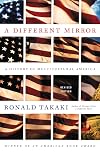
This is the revised addition, with extra chapters added in 2008 to more fully reflect the history of various groups in America including Afghan immigrants and the post-9/11 world. A solid introduction to American history and the parallels between various groups as they immigrated, were forcibly brought here, or were invaded. I'm a bit loathe to say this is the "hidden" part of American history, but if you think back to your schooling, how much space is given to immigration, and how often is show more it a paragraph about Ellis Island?
The most striking aspect to me was how much of American's immigration waves are due to labor, in a very cyclical way: "oh hey, we need cheap labor so let's import as many of these folks as we can; oh no there's too many of them we don't want to be taken over so let's ban them/send them home; oh wait we need cheap labor where's another place we can exploit", rinse and repeat. I'm a fourth generation Chinese American so it's a familiar story to me (familial, even), and I am quick to remind my social feeds of how the Chinese Exclusion Act set the blueprint for restrictive immigration police in the United States. The frustrating aspect to my more organized-labor minded friends is how often solidarity would've bonded the working class immigrants together, if not for the easy division tactic of xenophobia.
Strongly recommend this to supplement or educate yourself about the history of this country, and certainly for the reading lists y'all made in 2020 that you're definitely going to get around to reading in 2021, right? show less
The most striking aspect to me was how much of American's immigration waves are due to labor, in a very cyclical way: "oh hey, we need cheap labor so let's import as many of these folks as we can; oh no there's too many of them we don't want to be taken over so let's ban them/send them home; oh wait we need cheap labor where's another place we can exploit", rinse and repeat. I'm a fourth generation Chinese American so it's a familiar story to me (familial, even), and I am quick to remind my social feeds of how the Chinese Exclusion Act set the blueprint for restrictive immigration police in the United States. The frustrating aspect to my more organized-labor minded friends is how often solidarity would've bonded the working class immigrants together, if not for the easy division tactic of xenophobia.
Strongly recommend this to supplement or educate yourself about the history of this country, and certainly for the reading lists y'all made in 2020 that you're definitely going to get around to reading in 2021, right? show less

I found this book a profoundly moving, profoundly sobering look at the history of our country. It is also a book I couldn't recommend more enthusiastically. In my opinion it is a "must read." I first came across the title on a book table set up by two women who came to NCF to talk about Reba Place's experience with racial reconciliation. I carried the title around with me for a year or two and finally checked it out at the public library. I don't know if I've ever been impacted so strongly show more by a book before. Takaki, a third-generation American (as is my mother) covers American history from the perspective of some of the various minorities that have made America their home, and one that is indigenous. He covers African Americans, Irish Americans, Mexican Americans, Chinese Americans, Native Americans, Japanese Americans, and Jewish Americans from the beginnings of our country to the early 1990s. He evenhandedly paints a picture of the reality of American experience for these different groups. He describes the difficulties they had both on a societal level and on an official government policy level. For those who shudder at the thought of reading through a dry history, never fear. This book is most readable. In fact it is downright engaging. Even eloquent. It is heart-changing. Read it.
(Carolyn Vance) show less
(Carolyn Vance) show less
Takaki's sweeping text is an excellent introduction to the history of people in the United States who have been oppressed and exploited by the dominant White culture. Really, what he writes in this book is a robust, and concentrated narrative of history that does not shy away from real hurt, violence and affords the reader many opportunities to reflect on how racist and fearful policies of the past are recapitulated in a modern context. While Takaki goes into the violent and painful legacy show more of violence in the United States he also offers his own story, and a tangible vision of hope for a pluralistic multi-cultural society where all people are treated with dignity and respect. show less
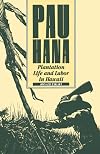
Pau Hana is a scholarly, well-cited work that is as readable as a novel. It explores the rise of sugar plantations in Hawaii and the various waves of migrants brought over to labor in the cane fields. Other Hawaii history books have barely touched on this subject--that the migrants existed, that they carried on strikes, and that the sugar magnates were the power behind the 1893 revolution. It was enlightening to find out about the oft-ignored men, women, and children who endured lives of show more drudgery and hardship, snared in terrible contracts that compelled them to work for years with little profit or respite. I especially enjoyed finding out more about the diverse nationalities of immigrants--such as many already-Christian Koreans who traveled to Hawaii after Japan took over Korea, and how they hoped to preserve their national spirit in their new home.
I highly recommend this book. show less
I highly recommend this book. show less
Lists
Awards


You May Also Like


Associated Authors
Statistics
- Works
- 28
- Also by
- 2
- Members
- 3,365
- Popularity
- #7,582
- Rating
- 3.9
- Reviews
- 24
- ISBNs
- 62
- Favorited
- 2