

Catherine E. McKinley
Author of Indigo: In Search of the Color That Seduced the World
About the Author
Image credit: Catherine McKinley
Works by Catherine E. McKinley
Associated Works
Go the Way Your Blood Beats: An Anthology of Lesbian and Gay Fiction by African-American Writers (1996) — Contributor — 91 copies
Shaking the Tree: A Collection of Fiction and Memoir by Black Women (2003) — Contributor — 54 copies
Tagged
Common Knowledge
- Birthdate
- 20th Century
- Gender
- female
- Education
- Sarah Lawrence College
- Nationality
- USA
- Associated Place (for map)
- USA
Members
Reviews
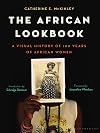
The African Lookbook - A Visual History of 100 Years of African Women is a sampling of the photographs author Catherine E. McKinley has managed to collect from all around the world and includes some of the earliest photographs ever taken of African women.
However this isn't just a book of photographs to peruse. McKinley educates the reader along the way on the styles of photographs and portraits, the importance of the sitter's dress and fashion, the interest in African women and some of the show more undesirable attitudes of the intended recipients of many of the photographs featured.
"In European studios spanning the 1860s to 1970s, images of African women existed as a preponderance of exotica in 'women's work' - women nursing children, pounding food with mortar and pestle, selling on the street, carrying water, or posing in front of the 'primitive' home. Cameras fixated on breasts and hair, on body cicatrization, and the suggestive and even pornographic possibilities of rites of puberty, polygamy, and lightly disguised prostitution.
Many African photographers working at the same time would engage these tropes, as would later eras of African photographers (1950s - present), revisiting the images of a woman's back or skin or hairstyle but in a way that, however much a male gaze still mediated, the colonial gaze was removed." Page 31
"That gaze - that moment when the sitter meets the lens with the intent to author, or perhaps where coercion, or capitulation, or shyness or some other feeling is revealed - is what we look to for a countering narrative to the photographer's, or for assurance that the sitter still has the last word." Page 32
I'll admit to wanting to see that in the eyes of many of the women photographed, a sense of power or pride and a sense the sitter wouldn't be exploited. A refusal to be dominated, their spirit free and intact. Unfortunately, I think I'm projecting a resoluteness that might not be there in order to make myself feel better about the vulnerability or poverty the sitter might have experienced. It's interesting to ponder though. Is the viewer projecting, or is the sitter really communicating something of their spirit and their inner most thoughts to us through the lens of the camera and down the decades?
I wasn't expecting the focus and accompanying commentary on fashion and what the women were wearing in the photographs and it took me by surprise.
"The history preserved in fashion can be more resilient and revealing than what is stored or memorialized in other kinds of repositories." Page 86
Fashion throughout the decades encompassed the combination of traditional dress with styles that indicated a woman's background or religious beliefs and was invariably captured in the portraits (many unknown) obtained by the author and preserved in her collection.
I had little idea about the prominence of cloth and wrappers to African women, but learned that wrappers - referred to in the book as the 'foundation of African womanhood' on page 96 - are used for multiple purposes, including clothing, to carry a child, as currency, as a dowry, a shroud and sometimes even joined together to celebrate, protest or mourn. Some cloth designs are given a name and women or families might wear the same pattern to make a statement.
"Cloth that is beloved, that is named, is considered fine enough to be a dowry item, to be worn at weddings and funerals and baby-naming ceremonies, to become a 'heritage' item in a woman's cloth box and therefore a costly commodity for the ages, historically stored and respected like money, never devaluing over a woman's life-time." Page 92
Already upset by the popularity of fast fashion in the 21st Century, this certainly gave me something to think about. If women from cultures around the world could aspire to this level of value and respect for cloth and quality made garments again (I'm thinking of 1500s here), imagine the impact around the world.
The African Lookbook by Catherine E. McKinley isn't what I expected. Yes, it's a Visual History of 100 Years of African Women, but I was disappointed not to see any of the photography of African women I observed as a child growing up in Australia in the 1970s-1980s. Stunning photographs of African women featured in National Geographic magazine, adorned in body paint, or wearing lip discs or gold neck rings and arm bands. An exotic beauty unmatched anywhere in the world gave rise to the fear of colonisation and a sorrow for the ruination of small tribes and villages still practising their way of life largely oblivious to the Western world.
I understand this book to be based on the author's painstaking collection of rare and precious photographs that otherwise might have been lost to time, but surely this era of colour photography shaped the worldwide view of African women and deserved to be included or commented on here. Looking at the blurb while writing this review, I note that the 100 year arc spans from 1870-1970 but I dearly wish it had been expanded to incorporate 150 years. It'd be hard to do so if the author's expertise and interest doesn't extend to the last 50 years, but the average reader has likely been exposed to this photography and it has influenced our views, rightly or wrongly.
While I didn't get what I was expecting, I certainly walked away with more than I bargained for. An introduction to the trade and importance of indigo - one of the most financially and culturally valuable commodities, used in makeup, hair dye, body paint, tattooing and more - for one.
The African Lookbook by Catherine E. McKinley is an informative read, and I longed to speak to the women featured in each of the photographs as I looked into their eyes and wondered about their lives; just as I imagine the author does.
* Copy courtesy of Bloomsbury * show less
However this isn't just a book of photographs to peruse. McKinley educates the reader along the way on the styles of photographs and portraits, the importance of the sitter's dress and fashion, the interest in African women and some of the show more undesirable attitudes of the intended recipients of many of the photographs featured.
"In European studios spanning the 1860s to 1970s, images of African women existed as a preponderance of exotica in 'women's work' - women nursing children, pounding food with mortar and pestle, selling on the street, carrying water, or posing in front of the 'primitive' home. Cameras fixated on breasts and hair, on body cicatrization, and the suggestive and even pornographic possibilities of rites of puberty, polygamy, and lightly disguised prostitution.
Many African photographers working at the same time would engage these tropes, as would later eras of African photographers (1950s - present), revisiting the images of a woman's back or skin or hairstyle but in a way that, however much a male gaze still mediated, the colonial gaze was removed." Page 31
"That gaze - that moment when the sitter meets the lens with the intent to author, or perhaps where coercion, or capitulation, or shyness or some other feeling is revealed - is what we look to for a countering narrative to the photographer's, or for assurance that the sitter still has the last word." Page 32
I'll admit to wanting to see that in the eyes of many of the women photographed, a sense of power or pride and a sense the sitter wouldn't be exploited. A refusal to be dominated, their spirit free and intact. Unfortunately, I think I'm projecting a resoluteness that might not be there in order to make myself feel better about the vulnerability or poverty the sitter might have experienced. It's interesting to ponder though. Is the viewer projecting, or is the sitter really communicating something of their spirit and their inner most thoughts to us through the lens of the camera and down the decades?
I wasn't expecting the focus and accompanying commentary on fashion and what the women were wearing in the photographs and it took me by surprise.
"The history preserved in fashion can be more resilient and revealing than what is stored or memorialized in other kinds of repositories." Page 86
Fashion throughout the decades encompassed the combination of traditional dress with styles that indicated a woman's background or religious beliefs and was invariably captured in the portraits (many unknown) obtained by the author and preserved in her collection.
I had little idea about the prominence of cloth and wrappers to African women, but learned that wrappers - referred to in the book as the 'foundation of African womanhood' on page 96 - are used for multiple purposes, including clothing, to carry a child, as currency, as a dowry, a shroud and sometimes even joined together to celebrate, protest or mourn. Some cloth designs are given a name and women or families might wear the same pattern to make a statement.
"Cloth that is beloved, that is named, is considered fine enough to be a dowry item, to be worn at weddings and funerals and baby-naming ceremonies, to become a 'heritage' item in a woman's cloth box and therefore a costly commodity for the ages, historically stored and respected like money, never devaluing over a woman's life-time." Page 92
Already upset by the popularity of fast fashion in the 21st Century, this certainly gave me something to think about. If women from cultures around the world could aspire to this level of value and respect for cloth and quality made garments again (I'm thinking of 1500s here), imagine the impact around the world.
The African Lookbook by Catherine E. McKinley isn't what I expected. Yes, it's a Visual History of 100 Years of African Women, but I was disappointed not to see any of the photography of African women I observed as a child growing up in Australia in the 1970s-1980s. Stunning photographs of African women featured in National Geographic magazine, adorned in body paint, or wearing lip discs or gold neck rings and arm bands. An exotic beauty unmatched anywhere in the world gave rise to the fear of colonisation and a sorrow for the ruination of small tribes and villages still practising their way of life largely oblivious to the Western world.
I understand this book to be based on the author's painstaking collection of rare and precious photographs that otherwise might have been lost to time, but surely this era of colour photography shaped the worldwide view of African women and deserved to be included or commented on here. Looking at the blurb while writing this review, I note that the 100 year arc spans from 1870-1970 but I dearly wish it had been expanded to incorporate 150 years. It'd be hard to do so if the author's expertise and interest doesn't extend to the last 50 years, but the average reader has likely been exposed to this photography and it has influenced our views, rightly or wrongly.
While I didn't get what I was expecting, I certainly walked away with more than I bargained for. An introduction to the trade and importance of indigo - one of the most financially and culturally valuable commodities, used in makeup, hair dye, body paint, tattooing and more - for one.
The African Lookbook by Catherine E. McKinley is an informative read, and I longed to speak to the women featured in each of the photographs as I looked into their eyes and wondered about their lives; just as I imagine the author does.
* Copy courtesy of Bloomsbury * show less

As many other reviewers have noted, it's extremely important to pay attention to the subtitle, especially the In search of part. This is not, in fact, a history of indigo (and, though the publicity material claimed otherwise, the book itself does not); you will not find a discussion of the botany of the indigo plant itself, the earliest known uses of the dye, its spread throughout Africa, its importance in the slave trade, or other factual material here.
What you will find is a memoir of the show more author's time in West Africa on a Fulbright scholarship, researching a particular type of indigo-dyed cloth. Her research, like the book itself, is somewhat aimless; she meets and befriends a family in Ghana, and the book devotes as much time to their personal lives as to her quest for the fabric; if you're looking for a memoir of personal discovery with a backdrop of West Africa, you're likely to enjoy Indigo, but if you're looking for a microhistory, keep looking. show less
What you will find is a memoir of the show more author's time in West Africa on a Fulbright scholarship, researching a particular type of indigo-dyed cloth. Her research, like the book itself, is somewhat aimless; she meets and befriends a family in Ghana, and the book devotes as much time to their personal lives as to her quest for the fabric; if you're looking for a memoir of personal discovery with a backdrop of West Africa, you're likely to enjoy Indigo, but if you're looking for a microhistory, keep looking. show less
 This review was written for LibraryThing Early Reviewers.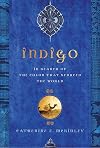
This is the story of the author’s two-fold quest: to understand the cultural roots of a dye and the cloth it colored, and to understand her own roots in Africa. Her narrative weaves the threads of history and the threads of her life as she pursued this knowledge in the modern world through Ghana, Nigeria, Burkina Faso, Senegal, Benin, Niger, and Ivory Coast.
The cloth trade, and especially cloth dyed with indigo, was then a source of women’s economic power. It also had a role in the show more slave trade – a length of cloth was the price of a human life. Even now, cloth is a powerful part of cultural life in Ghana. I am in awe of the power of this dye in influencing history and shaping our modern world.
But the native indigo-dyed cloth is now harder to find, replaced by cheaper European and Asian imports. Much of the real indigo cloth the author found was old cloth, cloth with a personal history for the owner of births, weddings, and deaths; cloth that recalled celebrations and sometimes mourning.
Cloth designs have names like “Death spoils a house”, “Fine beads don’t make noise,” “Capable husband”, “Your foot, my foot” or “Money flies like a bird”. An old pattern is “Nothing in my hand I bring”, which during national independence times signified that “It takes the whole hand and not single fingers to build a nation,” but now recalls the widespread poverty of the people. A design called “Good woman” was created in honor of Queen Elizabeth’s visit in the 1960s, and “Nkrumah’s pencil” looks like the pen their first Black president used to sign the British away. A finely detailed indigo cloth was called “No more velvet” from the Nigerian sumptuary imports ban. Another is “Holding up the sun,” celebrating the strands of tiny beads women wear at the waist. The cloths, and their names, recall national history and personal histories in a nation largely without literacy.
The Touareg people wear cloth so deeply indigo-dyed that their skin takes on a bluish hue. It is so much a part of them that they are called the Blue People. They are also nomads, and parts of their history are as entwined with the slave trade as with their trade for cloth and color. They are still nomadic, and the author sees them only briefly, in passing.
This is a lyrical, beautifully told story of the author’s quest for indigo cloth in an exotic local. She brings the sights, smells, and dust of Africa into her words, and the warmth and concern of her “Auntie Eurama” into the heart of her narrative.
This is a book for those who dye – it made me want to return to dye pots I have played with in the past, and learn some of the techniques she alludes to. This is not a book of recipes, it is a book of inspiration. I am inspired. show less
The cloth trade, and especially cloth dyed with indigo, was then a source of women’s economic power. It also had a role in the show more slave trade – a length of cloth was the price of a human life. Even now, cloth is a powerful part of cultural life in Ghana. I am in awe of the power of this dye in influencing history and shaping our modern world.
But the native indigo-dyed cloth is now harder to find, replaced by cheaper European and Asian imports. Much of the real indigo cloth the author found was old cloth, cloth with a personal history for the owner of births, weddings, and deaths; cloth that recalled celebrations and sometimes mourning.
Cloth designs have names like “Death spoils a house”, “Fine beads don’t make noise,” “Capable husband”, “Your foot, my foot” or “Money flies like a bird”. An old pattern is “Nothing in my hand I bring”, which during national independence times signified that “It takes the whole hand and not single fingers to build a nation,” but now recalls the widespread poverty of the people. A design called “Good woman” was created in honor of Queen Elizabeth’s visit in the 1960s, and “Nkrumah’s pencil” looks like the pen their first Black president used to sign the British away. A finely detailed indigo cloth was called “No more velvet” from the Nigerian sumptuary imports ban. Another is “Holding up the sun,” celebrating the strands of tiny beads women wear at the waist. The cloths, and their names, recall national history and personal histories in a nation largely without literacy.
The Touareg people wear cloth so deeply indigo-dyed that their skin takes on a bluish hue. It is so much a part of them that they are called the Blue People. They are also nomads, and parts of their history are as entwined with the slave trade as with their trade for cloth and color. They are still nomadic, and the author sees them only briefly, in passing.
This is a lyrical, beautifully told story of the author’s quest for indigo cloth in an exotic local. She brings the sights, smells, and dust of Africa into her words, and the warmth and concern of her “Auntie Eurama” into the heart of her narrative.
This is a book for those who dye – it made me want to return to dye pots I have played with in the past, and learn some of the techniques she alludes to. This is not a book of recipes, it is a book of inspiration. I am inspired. show less
This review was written for LibraryThing Early Reviewers.In Indigo, Catherine McKinley – a half-black, half-white American girl adopted and raised by upper middle class Jewish parents – goes in search of herself and her African heritage and, improbably, her obsession with indigo, the ancient dye that once commanded wealth and prestige in textiles. Part travelogue, part memoir, part whimsy, the author writes of her peripatetic journey to West Africa in search of the fabled indigo and all it represents – to her. More than two hundred pages show more later, the reader is still left wondering what point she is trying to make and where the narrative was supposed to go. With the exception of a marvelous piece about the juxtaposition of the modern and the traditional in the bizarre funeral rites still extant in Ghana, much of the book is a meandering tale of the author’s wide-eyed-wonder of how beautiful indigo garments are. I forced myself to read the entire book because I had agreed to review it. At first, I thought it did not hold my interest because it was simply a “chick book,” and although I am no misogynist I could simply not relate to it. Later, I convinced myself that it had to be going somewhere. It wasn’t until the final anti-climactic pages that it occurred to me that even the author didn’t know where she was going and missed the sad fact that she never got there. With all the books to read and the little time we have, I would skip this one. show less
This review was written for LibraryThing Early Reviewers.Lists
Awards

You May Also Like


Associated Authors
Statistics
- Works
- 5
- Also by
- 2
- Members
- 510
- Popularity
- #48,630
- Rating
- 3.1
- Reviews
- 30
- ISBNs
- 18
