
Carmen Gimenez Smith
Author of My Mother She Killed Me, My Father He Ate Me: Forty New Fairy Tales
About the Author
Image credit: Carmen Giménez Smith at 2012 Fall for the Book
Wikimedia contributor Slowking4
Wikimedia contributor Slowking4
Works by Carmen Gimenez Smith
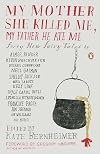
My Mother She Killed Me, My Father He Ate Me: Forty New Fairy Tales (2010) — Editor — 1,110 copies, 27 reviews
Bring Down the Little Birds: On Mothering, Art, Work, and Everything Else (Camino del Sol) (2010) 21 copies, 1 review
Associated Works
Tagged
Common Knowledge
- Legal name
- Smith, Carmen Giménez
- Other names
- Rosello, Carmen Gimenez
- Birthdate
- 1971-02-20
- Gender
- female
- Occupations
- dichter
- Nationality
- USA
- Birthplace
- New York, New York, USA
- Associated Place (for map)
- New York, USA
Members
Reviews

Dedicated to Angela Carter, My Mother She Killed Me, My Father He Ate Me is a collection of forty fairy tales written by an impressively wide array of authors, from Neil Gaiman and Jim Shepard to Aimee Bender and Ludmilla Petrushevskaya, and adapting, reimagining or loosely basing stories on everything from our most traditional fairy tales to mythology to fairy tales from Asia and Japan. Will it surprise you to find out that Joyce Carol Oates chose Bluebeard? Or that John Updike picked the show more same tale, but told it from Bluebeard's point of view and set it in modern Ireland?
In any collection this diverse, some stories are amazing, a few fall flat and a handful are fantastically bizarre. It took me quite a while to read all forty tales, they not being the kind of thing to read one after another. I liked that the editor, Kate Bernheimer, chose several stories by new authors, some of whom have not yet written a full-length novel and others who are not well known. She also included several non-Western authors, who adapted stories from their own countries and made the collection a bit unexpected; without the easy handle of a familiar plot to anchor the reader they demanded a little more of me. My only complaint has to do with the book's organization; with the fairy tale each story is based on found only in the table of contents and information about each author stuck in the back, I was constantly flipping around before and after each story. show less
In any collection this diverse, some stories are amazing, a few fall flat and a handful are fantastically bizarre. It took me quite a while to read all forty tales, they not being the kind of thing to read one after another. I liked that the editor, Kate Bernheimer, chose several stories by new authors, some of whom have not yet written a full-length novel and others who are not well known. She also included several non-Western authors, who adapted stories from their own countries and made the collection a bit unexpected; without the easy handle of a familiar plot to anchor the reader they demanded a little more of me. My only complaint has to do with the book's organization; with the fairy tale each story is based on found only in the table of contents and information about each author stuck in the back, I was constantly flipping around before and after each story. show less
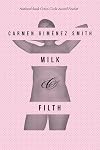
I read this book in one breathless sitting, and I felt like a changed person after reading it. The lines and perspectives, and the honesty, worm their way into one's mind, and I felt the way I used to feel as an undergraduate, reading works that I wanted to keep near me and slip into my backpack. I'm not a poet, and I don't know what forms she's working in, but it didn't matter; the language was vivid and challenging, but never felt as though she was writing to impress with wordplay. I have show more so many favorites here, including the extended numbered list, "Parts of an Autobiography." She takes on our deepest fears: "I'm a Shitty Parent" and "I'm the Shitty Friend writing valentines. I modify everything." This is gripping, creating the kind of reading experience that danced just beyond my grasp but still spoke to me with honesty and searing intellect. show less
Gah, I hate rating anthologies. How are you supposed to do that? Do you just begin at the top and start substracting half a star for every lame story you find? It seems unfair. So I'm giving this 5 stars because I absolutely love the idea and because there were a more than a few stories in it that were great, either in concept or execution.
It was interesting that the ones I liked the most weren't always the ones inspired in tales I already knew (incidentally, how did I not know about show more target="_top">Catskin? Its retelling is one of the best stories in the book, if only because it's the one that best brings back that dreamlike, suspended feeling of reading classic fairy tales).
Most of the The Wild Swans spinoffs were awesome, but not all of the Bluebeard references were. And I was only meh about both the Snow Queen and The Little Match Girl references, which sucked, seeing as those are probably my favoritest storiestest ever.
I didn't really care though, because half the fun of reading this book comes from working at reaching those conclusions. Tracing back the stories to their sources, pondering where exactly the twist is, carefully sampling the tone and whining at the result? That's what reading metafiction is all about.
Seriously though, there are far more great stories here than I dared to hope. And it also brought back a few tales I didn't even know I remembered, which was a nice bonus. Great fun. show less
It was interesting that the ones I liked the most weren't always the ones inspired in tales I already knew (incidentally, how did I not know about show more target="_top">Catskin? Its retelling is one of the best stories in the book, if only because it's the one that best brings back that dreamlike, suspended feeling of reading classic fairy tales).
Most of the The Wild Swans spinoffs were awesome, but not all of the Bluebeard references were. And I was only meh about both the Snow Queen and The Little Match Girl references, which sucked, seeing as those are probably my favoritest storiestest ever.
I didn't really care though, because half the fun of reading this book comes from working at reaching those conclusions. Tracing back the stories to their sources, pondering where exactly the twist is, carefully sampling the tone and whining at the result? That's what reading metafiction is all about.
Seriously though, there are far more great stories here than I dared to hope. And it also brought back a few tales I didn't even know I remembered, which was a nice bonus. Great fun. show less
“All great novels are great fairy tales,” editor Kate Bernheimer quotes Vladimir Nabokov in her introduction to My Mother She Killed Me, My Father, He Ate Me: Forty New Fairy Tales. A compilation of retold, re-invented, and re-imagined fairy tales by contemporary writers, the stories in this collection spring from many sources and many fertile, vivid, and strange imaginations. Some of the contributors use an old tale as a spring board to create a story that is only vaguely reminiscent of show more the original. Some retell the story altogether, give mythic characters mortal motivations with all the accompanying modern constraints. Some writers prefer to stay in the fairy tale’s familiar setting, but proceed to invite and modern things into its ancient magical forests. And some writers take the original story and just run with it, far, far, farther than Icarus flying towards the sun. Yet their wings don’t seem to melt.
How does one even read such a book?
Not from beginning to end. The stories are grouped loosely by the country of the original fairy tale from which they draw their inspiration, and the table of contents teasingly provides the first line of each story to serve as the familiar call to “…come, gather around while I tell you a tale”—the traditional sing-song call of the storyteller. But if there is any order beyond this, I wasn’t able to divine it by the haphazard, back-and-forth way I went through the book. I started casually, in the spirit of exploration and invitation that has always been evoked by the words “once upon a time,” looking first for the stories based on the fairy tales I knew best. This turned out to be like following one of those story characters who falls down a hole into a different world, because the first story I picked to read—based on Homer’s Odyssey—was Neil Gaiman’s “Orange.” I didn’t recognize it at all.
Perhaps it was the strange way the story is told, the narrator answering a series of questions (for some kind of police report? Or insurance claim against the tanning cream company?) that the reader can intuit, but never actually hears. Perhaps it was the unexpected transformation of a self-centered teenage girl into a self-centered glowing orange being called Her Imminence. Perhaps it was the appearance of aliens. What did happen, however, is what happens to anyone who reads (or finds themselves in) a fairy tale. In very short order I stopped looking for reasons, for internal consistency, for mythic parallels and narrative structure and all the things I usually look for when I am reading. I stopped asking “but why?” or “is that supposed to be Odysseus?” and just let myself be borne along the current of the story.
And perhaps this was a good way to start the book, by reading a story that was based on another story that was an interpretation of an ancient myth. Because what Gaiman proves with almost obnoxious dexterity in “Orange” is that there is no predetermined, set “form” for a fairy tale. It does not need to begin “Once upon a time. . .” and it certainly does not need to end “. . .and they lived happily ever after.” A fairy tale is not a fairy tale because there are fairies or princesses in need of rescuing in it. It is a fairy tale because it is telling, or retelling, what Gaiman in his comment at the end of “Orange” calls “. . . a very old, very simple story.” “It’s a mistake story,” he says, “a little-magic-shop story, a things-we-were-not-meant-to-know story.”
Bernheimer writes that when she was first collecting submissions for the book she approached writers “whose work suggested ‘fairy tales’ to me” and asked them to pick a fairy tale as a starting point, and then to write a new one. She was sometimes asked what a fairy tale was, to which her answer was “You already know. A fairy tale is a story with a fairy-tale feel.” For many readers, a “fairy-tale feel” means certain elements, like witches and captive princesses or magic forests that hide treasurers guarded by talking animals and recovered by the dutiful youngest sons of greedy kings. But Gaiman’s notion—that fairy tales are “things-we-were-not-meant-to-know” stories—served me best as a guide through the book. “It is the mystery that lingers,” he notes, “and not the explanation.” full review here show less
How does one even read such a book?
Not from beginning to end. The stories are grouped loosely by the country of the original fairy tale from which they draw their inspiration, and the table of contents teasingly provides the first line of each story to serve as the familiar call to “…come, gather around while I tell you a tale”—the traditional sing-song call of the storyteller. But if there is any order beyond this, I wasn’t able to divine it by the haphazard, back-and-forth way I went through the book. I started casually, in the spirit of exploration and invitation that has always been evoked by the words “once upon a time,” looking first for the stories based on the fairy tales I knew best. This turned out to be like following one of those story characters who falls down a hole into a different world, because the first story I picked to read—based on Homer’s Odyssey—was Neil Gaiman’s “Orange.” I didn’t recognize it at all.
Perhaps it was the strange way the story is told, the narrator answering a series of questions (for some kind of police report? Or insurance claim against the tanning cream company?) that the reader can intuit, but never actually hears. Perhaps it was the unexpected transformation of a self-centered teenage girl into a self-centered glowing orange being called Her Imminence. Perhaps it was the appearance of aliens. What did happen, however, is what happens to anyone who reads (or finds themselves in) a fairy tale. In very short order I stopped looking for reasons, for internal consistency, for mythic parallels and narrative structure and all the things I usually look for when I am reading. I stopped asking “but why?” or “is that supposed to be Odysseus?” and just let myself be borne along the current of the story.
And perhaps this was a good way to start the book, by reading a story that was based on another story that was an interpretation of an ancient myth. Because what Gaiman proves with almost obnoxious dexterity in “Orange” is that there is no predetermined, set “form” for a fairy tale. It does not need to begin “Once upon a time. . .” and it certainly does not need to end “. . .and they lived happily ever after.” A fairy tale is not a fairy tale because there are fairies or princesses in need of rescuing in it. It is a fairy tale because it is telling, or retelling, what Gaiman in his comment at the end of “Orange” calls “. . . a very old, very simple story.” “It’s a mistake story,” he says, “a little-magic-shop story, a things-we-were-not-meant-to-know story.”
Bernheimer writes that when she was first collecting submissions for the book she approached writers “whose work suggested ‘fairy tales’ to me” and asked them to pick a fairy tale as a starting point, and then to write a new one. She was sometimes asked what a fairy tale was, to which her answer was “You already know. A fairy tale is a story with a fairy-tale feel.” For many readers, a “fairy-tale feel” means certain elements, like witches and captive princesses or magic forests that hide treasurers guarded by talking animals and recovered by the dutiful youngest sons of greedy kings. But Gaiman’s notion—that fairy tales are “things-we-were-not-meant-to-know” stories—served me best as a guide through the book. “It is the mystery that lingers,” he notes, “and not the explanation.” full review here show less
Lists
Awards


You May Also Like
Associated Authors
Statistics
- Works
- 11
- Also by
- 5
- Members
- 1,325
- Popularity
- #19,399
- Rating
- 3.6
- Reviews
- 32
- ISBNs
- 20
- Languages
- 1