
Walter de la Mare (1873–1956)
Author of Peacock Pie: A Book of Rhymes
About the Author
Born in a Kent village, Walter de la Mare was born on April 25, 1873. He was an English poet, short story writer and novelist. He is probably best remembered for his works for children and for his poem "The Listeners". His 1921 novel Memoirs of a Midget won the James Tait Black Memorial Prize for show more fiction and his post-war Collected Stories for Children won the 1947 Carnegie Medal for British children's books. De la Mare's first book, Songs of Childhood, was published under the name Walter Ramal. He worked in the statistics department of the London office of Standard Oil for eighteen years to support his family, but nevertheless found time to write. De la Mare suffered from a coronary thrombosis in 1947 and died of another in 1956. His ashes are buried in the crypt of St Paul's Cathedral, where he had once been a choirboy. (Bowker Author Biography) Walter de la Mare (1873-1956) was a poet, novelist, & anthologist. The recipient of numerous awards, he held honorary degrees from Oxford, Cambridge, & several other universities. (Publisher Provided) show less
Image credit: From Owen Barfield Website
Series
Works by Walter de la Mare
Selected Poems of Walter De La Mare (Poet to Poet: An Essential Choice of Classic Verse) (2006) 20 copies
Before dawn 4 copies
Time Passes and Other Poems 3 copies
5 others. 3 copies
Two poems 3 copies
A ballad of Christmas 3 copies
The Scarecrow, and other stories 3 copies
Bad Company 3 copies
The sunken garden 2 copies
The Connoisseur 2 copies
A froward child 2 copies
Linden broadsheet. No. 4, Haunted 2 copies
Out of the Deep 2 copies
A Recluse 2 copies
Miss Duveen et autres contes étranges /Walter de la Mare, Laurence Riviale, Leslie Poles Hartley 1 copy
Choristers' journal 1 copy
De La Mare Poetry 1 copy
The Tree 1 copy
Stories Essays & Poems 1 copy
Heidi 1 copy
Tales of the supernatural 1 copy
The old men 1 copy
The hostage 1 copy
The morrow 1 copy
Thus her tale : a poem 1 copy
O Lovely England 1 copy
Arthur Thompson : a memoir 1 copy
Some thoughts on reading 1 copy
AO - Poetry - Year 2 1 copy
Crystal healing 1 copy
The Listeners 1 copy
The Looking Glass 1 copy
The Quincunx 1 copy
Thus Her Tale: A Poem 1 copy
The Riddle 1 copy
The connoisseur 1 copy
Ognissanti 1 copy
Pesnia sna 1 copy
F.P 1 copy
The problem of grammar 1 copy
SPE tracts 1 copy
Songs of praise 1 copy
W.P. Ker, 1855-1923 1 copy
Essays and studies 1 copy
Walter John de la Mare 1 copy
Disillusioned 1 copy
The Nap 1 copy
Pretty Poll 1 copy
The Wharf 1 copy
A Song of Enchantment {poem} 1 copy
Missing {Short Story} 1 copy
The best poems of 1923 1 copy
131 others. 1 copy
Čudežni jopič 1 copy
The captive and other poems 1 copy
Two tales 1 copy
The printing of poetry 1 copy
Old Joe 1 copy
Lispet, Lispett and Vaine 1 copy
An introduction to Everyman 1 copy
The first De la Mare book 1 copy
23 others. 1 copy
A collection of poetry books, many educational, nearly all with a contribution by Walter de la Mare. 1 copy
12 others. 1 copy
8 others. 1 copy
16 others. 1 copy
21 others. 1 copy
25 others. 1 copy
19 others. 1 copy
43 others. 1 copy
Associated Works
The Making of a Poem: A Norton Anthology of Poetic Forms (2000) — Contributor — 1,467 copies, 9 reviews
Literature: An Introduction to Fiction, Poetry, and Drama (1995) — Contributor, some editions — 1,012 copies, 7 reviews
The Illustrated Treasury of Children's Literature, Volumes 1-2 (1955) — Contributor — 523 copies, 4 reviews
World Poetry: An Anthology of Verse from Antiquity to Our Time (1998) — Contributor — 497 copies, 2 reviews
75 Short Masterpieces: Stories from the World's Literature (1961) — Contributor — 316 copies, 2 reviews
Aspects of Alice: Lewis Carroll's Dream Child as Seen Through the Critics' Looking-glasses, 1865-1971 (1971) — Contributor — 124 copies, 3 reviews
Answering Back: Living Poets Reply to the Poetry of the Past (2007) — Contributor — 118 copies, 1 review
The Sophisticated Cat: A Gathering of Stories, Poems, and Miscellaneous Writings About Cats (1992) — Contributor — 112 copies, 1 review
The Colour Out of Space: Tales of Cosmic Horror by Lovecraft, Blackwood, Machen, Poe, and Other Masters of the Weird (-0001) — Contributor, some editions — 109 copies, 1 review
There Is a Graveyard That Dwells in Man: More Strange Fiction and Hallucinatory Tales (2020) — Contributor — 64 copies
Buzz Words: Poems About Insects (Everyman's Library Pocket Poets Series) (2021) — Contributor — 56 copies
Fifty Years: Being a Retrospective Collection of Novels, Novellas, Tales, Drama, Poetry, and Reportage and Essays: All Drawn from Volumes Issued during the Last Half-Century by… (1965) — Contributor — 56 copies
The House of the Nightmare and Other Eerie Tales (1967) — Author, some editions; Contributor — 54 copies, 2 reviews
English Short Stories from the Fifteenth Century to the Twentieth Century; #743 (1921) — Contributor — 29 copies
Clever Cooks: A Concoction of Stories, Charms, Recipes & Riddles (1973) — Contributor — 22 copies, 1 review
The Dead of Summer: Strange Tales of May Eve and Midsummer: 19 (British Library Gilded Nightmares) (2025) — Contributor — 18 copies, 1 review
The Haunted and the Haunters: Tales of Ghosts and Other Apparitions (1975) — Contributor — 12 copies
Masters of Shades and Shadows: An Anthology of Great Ghost Stories (1978) — Contributor — 12 copies, 1 review
A Treasury of Great Short Stories — Contributor — 7 copies
Cricket Magazine, Vol. 1, No. 4, December 1973 — Contributor — 5 copies
Cubwood — Introduction — 3 copies
Rosemary — Contributor — 1 copy
The uncharted coast — Preface, some editions — 1 copy
The Uncertain Element: An Anthology of Fantastic Conceptions — Contributor — 1 copy
Stories for girls — Contributor — 1 copy
Emil and the Detectives and The 35th of May — Introduction, some editions — 1 copy
Cricket Magazine, Vol. 6, No. 4, December 1978 — Contributor — 1 copy
Tagged
Common Knowledge
- Canonical name
- de la Mare, Walter
- Legal name
- de la Mare, Walter John
- Other names
- Ramal, Walter (pseudonym)
- Birthdate
- 1873-04-25
- Date of death
- 1956-06-22
- Gender
- male
- Education
- St Paul's Cathedral Choir School, London
- Occupations
- poet
novelist
short story writer
oil industry - Organizations
- Standard Oil (London office|statistics department|1890-1908)
American Academy of Arts and Letters (Foreign Honorary|Literature|1955) - Awards and honors
- civil list pension (1908)
Royal Society of Literature Prize (1911)
Order of the Companions of Honour (1948)
Order of Merit (1953)
Foyle Poetry Prize (1954)
Polignac Prize - Relationships
- Reid, Forrest (friend)
- Cause of death
- coronary thrombosis
- Nationality
- UK
- Birthplace
- Charlton, Kent, England, UK
- Places of residence
- Twickenham, London, England, UK
- Place of death
- Twickenham, Middlesex, England, UK
- Burial location
- St Paul's Cathedral, London, England, UK
- Map Location
- England, UK
Members
Discussions
THE DEEP ONES: "Mr. Kempe" by Walter de la Mare in The Weird Tradition (July 2023)
THE DEEP ONES: "All Hallows" by Walter de la Mare in The Weird Tradition (June 2023)
THE DEEP ONES: "Seaton's Aunt" by Walter de la Mare in The Weird Tradition (February 2018)
THE DEEP ONES: "Missing" by Walter de la Mare in The Weird Tradition (February 2016)
Reviews
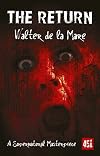
"Melancholic Arthur Lawford meanders through a graveyard, recovering from a bout of the flu, until he falls asleep against the tomb of Nicholas Sabathier. Feeling invigorated, he hurries home only to find out his face is that of Sabathier! Lawford then spirals and begins to question who he is and who he might become."
As the victim, Lawford's inner monologue has some of the most insightful and heart-rending lines in the book: "And depression, always lying in ambush of the novelty of his show more freedom, began like mist to rise above his restless thoughts." His sensitive wife is not emotionally equipped to handle this sudden change. Their friend Mr. Bethany, is sympathetic to Lawford's plight but offers little advice beyond powering through it. Thankfully he meets the bookish Herbert and his sister Grisel. Herbert tackles it clinically, which is a step in the right direction but not what Lawford needs. His cure, his exorcism, comes from Grisel. Above all else she listens: "Don't we all change as we grow to know one another?" She offers him true empathy. He begs, "Think of me as that poor wandering ghost of yours; how easily I could hide away in your memory!" Nevertheless, she smartly refuses to be a crutch, and he recovers.
With such a simple plot and no action, this one should have been a short story. De La Mare really drags out the initial confrontation within his household, especially with his wife Sheila and their daughter Ana. It leads the reader to believe that she will have a bigger role as the story progresses, but halfway through Sheila takes their daughter and leaves him to "fight it out, alone!" I was ready to write her off as completely insufferable, but the longer I stayed in Lawford's head, I came to realize that each character was a demonstration of how people react to depression. It's not thrilling or supernatural by any stretch of the imagination. Sabathier could've been any name, from any era, and died in any violent fashion. Still, it's beautifully written, and it kept me engaged, but the ghostly elements are disappointingly weak in comparison to the overall drama. show less
As the victim, Lawford's inner monologue has some of the most insightful and heart-rending lines in the book: "And depression, always lying in ambush of the novelty of his show more freedom, began like mist to rise above his restless thoughts." His sensitive wife is not emotionally equipped to handle this sudden change. Their friend Mr. Bethany, is sympathetic to Lawford's plight but offers little advice beyond powering through it. Thankfully he meets the bookish Herbert and his sister Grisel. Herbert tackles it clinically, which is a step in the right direction but not what Lawford needs. His cure, his exorcism, comes from Grisel. Above all else she listens: "Don't we all change as we grow to know one another?" She offers him true empathy. He begs, "Think of me as that poor wandering ghost of yours; how easily I could hide away in your memory!" Nevertheless, she smartly refuses to be a crutch, and he recovers.
With such a simple plot and no action, this one should have been a short story. De La Mare really drags out the initial confrontation within his household, especially with his wife Sheila and their daughter Ana. It leads the reader to believe that she will have a bigger role as the story progresses, but halfway through Sheila takes their daughter and leaves him to "fight it out, alone!" I was ready to write her off as completely insufferable, but the longer I stayed in Lawford's head, I came to realize that each character was a demonstration of how people react to depression. It's not thrilling or supernatural by any stretch of the imagination. Sabathier could've been any name, from any era, and died in any violent fashion. Still, it's beautifully written, and it kept me engaged, but the ghostly elements are disappointingly weak in comparison to the overall drama. show less

This is a fairly traditional creepy story, set mostly in a big house, where even Beethoven’s Moonlight Sonata becomes menacing. However, the gratuitous nastiness of the first few paragraphs nearly made me put it aside: “distastefully foreign” compared with “us true-blue Englishmen” and more besides. I'm glad I persisted, though. The narrator’s desire to be “deliberately aloof” from the “sallow” Seaton is part of the point, and sadly common in his class at the time.
The show more narrator is at boarding school and spends an uneasy night at a fellow pupil’s home:
“We stood leaning over the staircase. It was like leaning over a well, so still and chill the air was all around us. But presently, as I suppose happens in most old houses, began to echo and answer in my ears a medley of infinite small stirrings and whisperings.”
Years later, he visits again, and I thought of Great Expectations, though they’re not much alike.
Eyes and ears
I first encountered de la Mare as a young child, via his poem, The Listeners. The plot seems to be about listening, but really, it's more about the eyes:
“She sees everything. And what she doesn’t see she knows without.”
There are 37 mentions in 15 pages, including:
• “slow chocolate−coloured eyes”
• “sluggish eyes fixed for the most part on my face”
• “her eyes regarded me with such leaden penetration beneath their thick lids that I doubt if my face concealed the least thought from her.”
• “There's hundreds of eyes like that in this house; and even if God does see you, He takes precious good care you don't see Him. And it's just the same with them.”
• “I saw his face change, saw his eyes suddenly drop like shot birds and fix themselves on the cranny of the door he had just left ajar.”
• “his eyes gleamed darkly, watching me”
• “those flat, slow, vigilant eyes.”
• “their eyes met in a kind of instantaneous understanding”
• “her eyes groped, as it were, over my vacant, disconcerted face”
Image: An eye, surrounded by the words, “Thou God seest ME”, hangs in the room where Withers, the narrator, stays (Source)
Also:
“I could scarcely see her little glittering eyes under their penthouse lids.”
I was surprised to read "penthouse" as a metaphor based on its current meaning in a story from 1922. I know multi-storey apartment buildings existed by then, but I had assumed it was a relatively recent coinage. Etymology online attests it in that meaning to 1921, HERE.
What’s it all about? - no spoilers
I like the ambiguity, even after I spotted foreshadowing when I immediately reread it. Is Seaton mad? Is his aunt mad? Is Withers making it all up? Are there supernatural forces at play? To what extent was the “chance” meeting chance?
The closing metaphor chills without supernatural force. It echoes what’s happened and firmly underlines Seaton’s isolation and Withers’ wilful blindness to it. I don’t think de la Mare is espousing Withers’ prejudice.
Quotes
• “Seaton was about the only fellow at Gummidge’s who ever had the ostentation to use bad language.”
• "She's in league... She just sucks you dry."
• “The breakfast−room was sweet with flowers and fruit and honey. Seaton's aunt was standing in the garden beside the open French windows, feeding a great flutter of birds.” [Such a contrast to the disturbing night.]
• “A pale haze of cloud muffled the sun; the garden lay in a grey shimmer—its old trees, its snap−dragoned faintly glittering walls. But now there was an air of slovenliness where before all had been neat and methodical… The goddess of neglect brooded in secret.”
• “We are nothing better than interlopers on the earth, disfiguring and staining wherever we go.”
• “The meal was tremendous. I have never seen such a monstrous salad.”
• “The flashing blooming of the covered-in jeweller’s shop.”
Short story club
I read this in Black Water: The Anthology of Fantastic Literature, by Alberto Manguel, from which I’m reading one story a week with The Short Story Club, starting 4 September 2023.
You can read this story HERE.
You can join the group here. show less
The show more narrator is at boarding school and spends an uneasy night at a fellow pupil’s home:
“We stood leaning over the staircase. It was like leaning over a well, so still and chill the air was all around us. But presently, as I suppose happens in most old houses, began to echo and answer in my ears a medley of infinite small stirrings and whisperings.”
Years later, he visits again, and I thought of Great Expectations, though they’re not much alike.
Eyes and ears
I first encountered de la Mare as a young child, via his poem, The Listeners. The plot seems to be about listening, but really, it's more about the eyes:
“She sees everything. And what she doesn’t see she knows without.”
There are 37 mentions in 15 pages, including:
• “slow chocolate−coloured eyes”
• “sluggish eyes fixed for the most part on my face”
• “her eyes regarded me with such leaden penetration beneath their thick lids that I doubt if my face concealed the least thought from her.”
• “There's hundreds of eyes like that in this house; and even if God does see you, He takes precious good care you don't see Him. And it's just the same with them.”
• “I saw his face change, saw his eyes suddenly drop like shot birds and fix themselves on the cranny of the door he had just left ajar.”
• “his eyes gleamed darkly, watching me”
• “those flat, slow, vigilant eyes.”
• “their eyes met in a kind of instantaneous understanding”
• “her eyes groped, as it were, over my vacant, disconcerted face”
Image: An eye, surrounded by the words, “Thou God seest ME”, hangs in the room where Withers, the narrator, stays (Source)
Also:
“I could scarcely see her little glittering eyes under their penthouse lids.”
I was surprised to read "penthouse" as a metaphor based on its current meaning in a story from 1922. I know multi-storey apartment buildings existed by then, but I had assumed it was a relatively recent coinage. Etymology online attests it in that meaning to 1921, HERE.
What’s it all about? - no spoilers
I like the ambiguity, even after I spotted foreshadowing when I immediately reread it. Is Seaton mad? Is his aunt mad? Is Withers making it all up? Are there supernatural forces at play? To what extent was the “chance” meeting chance?
The closing metaphor chills without supernatural force. It echoes what’s happened and firmly underlines Seaton’s isolation and Withers’ wilful blindness to it. I don’t think de la Mare is espousing Withers’ prejudice.
Quotes
• “Seaton was about the only fellow at Gummidge’s who ever had the ostentation to use bad language.”
• "She's in league... She just sucks you dry."
• “The breakfast−room was sweet with flowers and fruit and honey. Seaton's aunt was standing in the garden beside the open French windows, feeding a great flutter of birds.” [Such a contrast to the disturbing night.]
• “A pale haze of cloud muffled the sun; the garden lay in a grey shimmer—its old trees, its snap−dragoned faintly glittering walls. But now there was an air of slovenliness where before all had been neat and methodical… The goddess of neglect brooded in secret.”
• “We are nothing better than interlopers on the earth, disfiguring and staining wherever we go.”
• “The meal was tremendous. I have never seen such a monstrous salad.”
• “The flashing blooming of the covered-in jeweller’s shop.”
Short story club
I read this in Black Water: The Anthology of Fantastic Literature, by Alberto Manguel, from which I’m reading one story a week with The Short Story Club, starting 4 September 2023.
You can read this story HERE.
You can join the group here. show less

A book of poems for children? Perhaps, if written by Uncle Edgar Allen Poe to niece and nephew Wednesday and Pugsley Addams 💀
While not overtly horrific, the overall atmosphere is of melancholy, loss, death, night and febrile passion.
The opening poem, The Horseman, initially reads as a bit of nonsense nursery rhyme, but then, surely, the pale rider on his ivory horse coming over the moonlit hill can be none other than Death stalking the fitfully sleeping child.
There is an excellent show more illustration by Emett of the gangling Thief at Robin's Castle, who steals not only Robin's silverware, but his children, whose hands imploringly poke out of his swag bag. Raised as his own, the children "never really loved him" despite his stolen riches.
I initially thought this would be a slight set of childish rhymes, but they're ageless, dark, macabre and fey, the cumulative effect being greater than the individual poems. I loved them 🖤
Sibelius's "Valse Triste" (Sad Waltz) from his score to the drama "Kuolema" (Death) catches something of the mood:
https://youtu.be/5Ls8-pk4IS4?si=isJZxdiecsifeir_ show less
While not overtly horrific, the overall atmosphere is of melancholy, loss, death, night and febrile passion.
The opening poem, The Horseman, initially reads as a bit of nonsense nursery rhyme, but then, surely, the pale rider on his ivory horse coming over the moonlit hill can be none other than Death stalking the fitfully sleeping child.
There is an excellent show more illustration by Emett of the gangling Thief at Robin's Castle, who steals not only Robin's silverware, but his children, whose hands imploringly poke out of his swag bag. Raised as his own, the children "never really loved him" despite his stolen riches.
I initially thought this would be a slight set of childish rhymes, but they're ageless, dark, macabre and fey, the cumulative effect being greater than the individual poems. I loved them 🖤
Sibelius's "Valse Triste" (Sad Waltz) from his score to the drama "Kuolema" (Death) catches something of the mood:
https://youtu.be/5Ls8-pk4IS4?si=isJZxdiecsifeir_ show less

"Up on their brooms the witches stream, / Crooked and black in the crescent's gleam; / One foot high, and one foot low, / Bearded, cloaked and cowled they go..." And so begins Walter de la Mare's wonderful poem, The Ride-by-Nights, which supplies the text for this lovely Halloween picture-book, illustrated by Moldovan artist Carolina Rabei. As the witches fly through the night sky, under and over all of the constellations, a group of children is depicted trick-or-treating in the accompanying show more artwork. The two groups are mostly separate - the witches above, the children below - although the witches sometimes do appear on earth, as when one mischievously steals some candy for herself and compatriots. At the end of the night both witches and children return to their homes...
Originally included in Walter de la Mare's 1913 poetry collection, Peacock Pie, this poem is a witchy delight! Simple but descriptive, it captures the wonder, the mystery, the enchantment of the night sky, and the extraordinary celestial flight of the eponymous witchy "ride-by-nights." Carolina Rabei's choice to pair this text with artwork depicting both the witches' flight and children trick-or-treating through a rural and small town setting, is inspired, opening up parallel narratives - one in which the witches explore the cosmos, and one in which the children explore their own world. The artwork itself is lovely, utilizing a deep color palette dominated by purples, blacks and reddish-oranges, and it beautifully depicts many of the constellations mentioned in the text. Speaking of which, I was tickled by the mention here of "Charlie's Wain," an old-fashioned term for the "plow" or "cart" said to be contained in the Ursa Major constellation.
All in all, a wonderful Halloween picture-book, one which presents a classic poem, and uses it to tell a fuller story, one about witches, constellations, and children trick-or-treating. show less
Originally included in Walter de la Mare's 1913 poetry collection, Peacock Pie, this poem is a witchy delight! Simple but descriptive, it captures the wonder, the mystery, the enchantment of the night sky, and the extraordinary celestial flight of the eponymous witchy "ride-by-nights." Carolina Rabei's choice to pair this text with artwork depicting both the witches' flight and children trick-or-treating through a rural and small town setting, is inspired, opening up parallel narratives - one in which the witches explore the cosmos, and one in which the children explore their own world. The artwork itself is lovely, utilizing a deep color palette dominated by purples, blacks and reddish-oranges, and it beautifully depicts many of the constellations mentioned in the text. Speaking of which, I was tickled by the mention here of "Charlie's Wain," an old-fashioned term for the "plow" or "cart" said to be contained in the Ursa Major constellation.
All in all, a wonderful Halloween picture-book, one which presents a classic poem, and uses it to tell a fuller story, one about witches, constellations, and children trick-or-treating. show less
Lists
Witchy Fiction (1)
Awards


You May Also Like


Associated Authors
Statistics
- Works
- 264
- Also by
- 158
- Members
- 4,407
- Popularity
- #5,685
- Rating
- 4.0
- Reviews
- 56
- ISBNs
- 333
- Languages
- 9
- Favorited
- 15
