
Eshkol Nevo
Author of Three Floors Up
About the Author
Image credit: Moti Kikayon
Works by Eshkol Nevo
משאלה אחת ימינה 2 copies
La sigmetria dei desideri 1 copy
לב רעב 1 copy
Nevo Eshkol 1 copy
לב רעב 1 copy
Associated Works
Tagged
Common Knowledge
- Legal name
- אשכול נבו
- Birthdate
- 1971
- Gender
- male
- Awards and honors
- Book Publishers Association`s Gold Book Prize (2005)
Book Publishers Association`s Platinum Book Prize (2008)
FFI Raymond Wallier Prize (Paris ∙ 2008) - Short biography
- Eshkol Nevo was born in Jerusalem in 1971. He studied copywriting at the Tirza Granot School and psychology at Tel Aviv University. Nevo teaches creative writing and thinking at the Sam Spiegel Film & Television School, Tel Aviv University, Sapir College and the Open University. He has published a collection of short stories, a nonfiction book and two novels, both of which have been top bestsellers.
Nevo, whose novels are very successful abroad, has received the Book Publishers Associations Gold and Platinum Prizes (2005; 2008) and the FFI-Raymond Wallier Prize (Paris, 2008). Homesick was also a finalist for the prestigious Independent Foreign Fiction Prize (UK, 2009). - Nationality
- Israel
- Birthplace
- Jerusalem, Israel
- Associated Place (for map)
- Jerusalem, Israel
Members
Reviews

To pun off the title: Gooooal! Nevo's novel about friendship and life ponders the choices and plans we make, thinking that we're right about what we want and about who we are. The four friends make their wishes for the future, based on what they know that particular day, but of course life doesn't work quite that way and they all end up walking in someone else's shoes and changing, with or against their own volition.
I read Nevo's first novel, Homesick, last year and was impressed with the show more way he uses the multi-voiced narrative to present different viewpoints. However, in Homesick it caused some confusion as to who was speaking, but here, in World Cup Wishes, he has lets each person's voice through with one - and sometimes two - narrators; Churchill lets us know in the first few pages that Yuval's story isn't exactly "true" and so the reader is forced to read between the lines for the others' viewpoints.
The characters are so human, so vulnerable, that I'm almost have to remind myself a few times that these are fictional characters - to me, that's a feat and I love Nevo for letting me get to know his friends, real or not. show less
I read Nevo's first novel, Homesick, last year and was impressed with the show more way he uses the multi-voiced narrative to present different viewpoints. However, in Homesick it caused some confusion as to who was speaking, but here, in World Cup Wishes, he has lets each person's voice through with one - and sometimes two - narrators; Churchill lets us know in the first few pages that Yuval's story isn't exactly "true" and so the reader is forced to read between the lines for the others' viewpoints.
The characters are so human, so vulnerable, that I'm almost have to remind myself a few times that these are fictional characters - to me, that's a feat and I love Nevo for letting me get to know his friends, real or not. show less

In 1902, Theodor Benjamin Herzl, the founder of Zionism, published his utopian novel Altneuland (Old New Land). The book described his vision of Israel, half a century before the establishment of the State of Israel. Herzl’s vision is one of a liberal society living in a welfare state, where public ownership of land and resources co-exists with private entrepreneurship.
In 2006, Meni Peleg, the sixty year old fictional character in Nevo’s “Neuland” (New Land), decides to fulfil show more Herzl’s dream. But in Argentina.
Peleg is a successful business consultant whose wife’s death reawakens the post-traumatic disorder he’s been living with since the Yom Kippur war. He travels to South America and disappears. Dori, his son, goes on a rescue mission and meets Inbar, a woman who decided, on a whim, to go to South America after a traumatic visit to her mother in Berlin. The married middle-aged Dori and the single young Inbar are the main characters of this novel. Their life stories intertwine in more ways than one, two lost souls brought together by fate.
The book is very Israeli, in that it touches on many Israeli subjects. The memory of the Holocaust and how second- and third-generation Israelis deal with it. The problematic current day relationship with Germany. Israel’s wars: Meni’s Yom Kippur trauma, Inbar brother’s suicide in the army, and the second Lebanon war that brings Dori and Inbar back to Israel. And the novel being set in South America, there are the inevitable young Israeli mochileors traipsing the continent in their almost obligatory post-military service trip.
Nevo writes well, and the story flows smoothly between the characters. But at times I felt as if Nevo writes a little “too well”. Some of the characters are simply too perfect, as if Nevo wanted them to fit a certain role. Dori is the perfect husband; he won’t even fantasise about another woman. Inbar is the conscientious news editor, resigning from a lucrative radio job when she feels certain principles have been betrayed. Her mother, Hanna, is the imposing know-it-all academic. Alfredo, the local who helps Dori track down his father, is the typical care-free latino who seduces a different woman every night. And so on. It is as if Nevo created these characters in order to fulfill our expectations, not wanting to surprise us by having his heroes do something out of character. I don’t think it will be a big spoiler if I divulge that Dori and Inbar reach a happy ending of sorts.
Even the eponymous Neuland, which we reach towards the end of the novel, is blandly familiar. A sect of wide-eyed believers led by a visionary guru, building a utopian society where everybody works hard, everybody has a say, everything is built from scratch, blah blah blah. If Nevo had wanted to really say something about how Israel has turned out compared with Herzl’s vision, he could have come up with something a little more intellectually challenging than a bunch of lost mochileros who have had it with the “source country” and a “guru” that spends hours a day “thinking” and can’t even be bothered by news about a war affecting his family back home.
Over all, the book is well researched and the description of landscapes and places in South American sound genuine enough. It’s a shame the story itself is so banal. Nevo has proven in the past he can write a good story about ordinary people going about their own lives. Perhaps he aimed too high this time, with a vision to replace Herzl’s (no less!). The result is not somewhat disappointing. show less
In 2006, Meni Peleg, the sixty year old fictional character in Nevo’s “Neuland” (New Land), decides to fulfil show more Herzl’s dream. But in Argentina.
Peleg is a successful business consultant whose wife’s death reawakens the post-traumatic disorder he’s been living with since the Yom Kippur war. He travels to South America and disappears. Dori, his son, goes on a rescue mission and meets Inbar, a woman who decided, on a whim, to go to South America after a traumatic visit to her mother in Berlin. The married middle-aged Dori and the single young Inbar are the main characters of this novel. Their life stories intertwine in more ways than one, two lost souls brought together by fate.
The book is very Israeli, in that it touches on many Israeli subjects. The memory of the Holocaust and how second- and third-generation Israelis deal with it. The problematic current day relationship with Germany. Israel’s wars: Meni’s Yom Kippur trauma, Inbar brother’s suicide in the army, and the second Lebanon war that brings Dori and Inbar back to Israel. And the novel being set in South America, there are the inevitable young Israeli mochileors traipsing the continent in their almost obligatory post-military service trip.
Nevo writes well, and the story flows smoothly between the characters. But at times I felt as if Nevo writes a little “too well”. Some of the characters are simply too perfect, as if Nevo wanted them to fit a certain role. Dori is the perfect husband; he won’t even fantasise about another woman. Inbar is the conscientious news editor, resigning from a lucrative radio job when she feels certain principles have been betrayed. Her mother, Hanna, is the imposing know-it-all academic. Alfredo, the local who helps Dori track down his father, is the typical care-free latino who seduces a different woman every night. And so on. It is as if Nevo created these characters in order to fulfill our expectations, not wanting to surprise us by having his heroes do something out of character. I don’t think it will be a big spoiler if I divulge that Dori and Inbar reach a happy ending of sorts.
Even the eponymous Neuland, which we reach towards the end of the novel, is blandly familiar. A sect of wide-eyed believers led by a visionary guru, building a utopian society where everybody works hard, everybody has a say, everything is built from scratch, blah blah blah. If Nevo had wanted to really say something about how Israel has turned out compared with Herzl’s vision, he could have come up with something a little more intellectually challenging than a bunch of lost mochileros who have had it with the “source country” and a “guru” that spends hours a day “thinking” and can’t even be bothered by news about a war affecting his family back home.
Over all, the book is well researched and the description of landscapes and places in South American sound genuine enough. It’s a shame the story itself is so banal. Nevo has proven in the past he can write a good story about ordinary people going about their own lives. Perhaps he aimed too high this time, with a vision to replace Herzl’s (no less!). The result is not somewhat disappointing. show less

Brilliant! Great plot, great ideas, wonderful writing, and brilliant structure. Three stories in a building, three people needing desperately to talk to someone who knows them intimately, and three parts of the psyche according to our old friend, Sigmund Freud. Set in Israel, this novel contains three riveting sets of human circumstance. Ultimately, it is revealed that "the three floors of the psyche do not exist inside us at all!Absolutely not! They exist in the air between us and someone show more else, in the space between our mouths and the ears we are telling our story to. "
What matters is that we talk to someone! Thirty years as a counselor, honored to be the ears hearing many, many human stories confirms this belief. There is something very powerful in the experience of being heard! I know it as I know my name. This book illuminates the reality of the deeply felt desire to be heard! Great read! show less
What matters is that we talk to someone! Thirty years as a counselor, honored to be the ears hearing many, many human stories confirms this belief. There is something very powerful in the experience of being heard! I know it as I know my name. This book illuminates the reality of the deeply felt desire to be heard! Great read! show less
Recensione presente anche su World of Interests
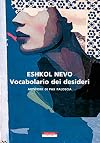
Vocabolario dei desideri è una serie di racconti brevi (due paginette ognuno) dalla A alla Z, che vanno da “A come Amore” a “F come Ferita” fino a “Z come Zehu”, che in ebraico vuol dire “basta”. Il tutto è accompagnato da opere in mixed media di Pax Paloscia, una per ogni storia. L’immagine di copertina è quella per “C come Confessione”.
Non so mai come recensire le raccolte di racconti, ma continuo a provarci.
Dunque, i show more racconti… Pur essendo brevissimi, affrontano temi molto importanti quali l’amore, il desiderio, il razzismo, l’empatia; Eshkol Nevo riesce a renderli molto forti in poche parole e riesce a coinvolgere il lettore, tanto che l’ho letto praticamente tutto in una volta e, anche a voler fare delle pause, volevo riprendere in mando il libro.
È difficile scegliere il mio preferito, perché credo che tutti mi abbiano lasciato, a modo loro, qualcosa. Scegliero “F come Ferita”, perché credo sia quello che mi è rimasto più impresso, anche dopo giorni.
Lo stile di scrittura è molto scorrevole, almeno secondo me, e riesce a farti immedesimare nei personaggi, pur con la brevità che caratterizza questi racconti e che ci fa conoscere i protagonisti per pochi istanti soltanto.
Ammetto che le opere di Pax Paloscia non mi sono piaciute tantissimo, ma avevano un loro perché nel contesto e nel confronto con le storie dell’autore.
Nel complesso, è stata una buona introduzione a questo autore che ho scoperto grazie alla Biblioteca Cabral di Bologna. Non vedo l’ora di leggere gli altri romanzi che ho preso a prestito! show less
Vocabolario dei desideri è una serie di racconti brevi (due paginette ognuno) dalla A alla Z, che vanno da “A come Amore” a “F come Ferita” fino a “Z come Zehu”, che in ebraico vuol dire “basta”. Il tutto è accompagnato da opere in mixed media di Pax Paloscia, una per ogni storia. L’immagine di copertina è quella per “C come Confessione”.
Non so mai come recensire le raccolte di racconti, ma continuo a provarci.
Dunque, i show more racconti… Pur essendo brevissimi, affrontano temi molto importanti quali l’amore, il desiderio, il razzismo, l’empatia; Eshkol Nevo riesce a renderli molto forti in poche parole e riesce a coinvolgere il lettore, tanto che l’ho letto praticamente tutto in una volta e, anche a voler fare delle pause, volevo riprendere in mando il libro.
È difficile scegliere il mio preferito, perché credo che tutti mi abbiano lasciato, a modo loro, qualcosa. Scegliero “F come Ferita”, perché credo sia quello che mi è rimasto più impresso, anche dopo giorni.
Lo stile di scrittura è molto scorrevole, almeno secondo me, e riesce a farti immedesimare nei personaggi, pur con la brevità che caratterizza questi racconti e che ci fa conoscere i protagonisti per pochi istanti soltanto.
Ammetto che le opere di Pax Paloscia non mi sono piaciute tantissimo, ma avevano un loro perché nel contesto e nel confronto con le storie dell’autore.
Nel complesso, è stata una buona introduzione a questo autore che ho scoperto grazie alla Biblioteca Cabral di Bologna. Non vedo l’ora di leggere gli altri romanzi che ho preso a prestito! show less
Lists
Awards


You May Also Like


Associated Authors
Statistics
- Works
- 29
- Also by
- 1
- Members
- 845
- Popularity
- #30,258
- Rating
- 3.9
- Reviews
- 35
- ISBNs
- 98
- Languages
- 9