
Dorit Rabinyan
Author of All the Rivers: A Novel
About the Author
Dorit Rabinyan is an Israeli of Persian descent. She lives in Tel Aviv, Israel.
Image credit: Dorit Rabinyan (Autorin, Israel), Foto: stephan-roehl.de Deutsch-Israelische Literaturtage 2016 unter dem Titel "Im Neuland"
Works by Dorit Rabinyan
Tagged
Common Knowledge
- Birthdate
- 1972
- Gender
- female
- Awards and honors
- Jewish Wingate Quarterly Award (1999)
Yitzhak Vinner Prize (1996)
Prime Minister`s Prize
Best Drama of the Year Award (1997)
Eshkol Prize - Nationality
- Israel
- Places of residence
- Kfar Saba, Israel (birth)
Tel Aviv, Israel - Associated Place (for map)
- Israel
Members
Reviews
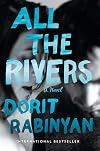
All the Rivers: A Novel by Dorit Rabinyan is a very powerful story, but also very hard to relate to or understand, and very eye-opening, if you are a Midwestern America, like me. Liat and Hilmi seem to be irresistibly drawn to each other, but at least in Liat’s case, very reluctantly. Is it all a physical attraction? Certainly Liat is attracted by his hair and his ears and his hands and the way he moves. She describes his body and his clothes over and over. He is charming and seems taken show more with her as well.
I saw this story referred to as a modern-day Romeo & Juliet, but it is not like that. These are not 14-year olds in wide-eyed young love, directly controlled by their parents. These are 30-year old adults, world travelers, with jobs and friends and previous experiences in life. The book description is also misleading. I don’t believe Liat ever considered having to make a decision, to choose, to “risk alienating her family, her community, and her sense of self for the love of one man.” This relationship was always temporary, on and off at that whenever they ventured into political discussions and arguments, and her sense of self was never at risk. They never came close to seeing the other’s point of view or entertaining the idea of looking for a way to remain together. They could have stayed in New York, but they never even considered that. The plan was always for Liat to return home, they were both close to family and homesick, and too molded by politics and history to consider change.
Rightly or wrongly, family and homeland came first. But Liat allowed herself to become angry and hurt when Hilmi did not stand up for her to his brother, while thinking nothing of wanting him to cease existing in her world when she was talking to her family. At times she was just a little too dramatic, and his absent-minded artist persona was hard to take at times.
The writing is strong and beautiful and the story is enticing. Descriptions of the food make you hungry, and descriptions of New York and Israel and Palestine are so vivid you feel like you are there.
Ultimately Liat and Hilmi’s relationship was not a doomed love story to me, but more a fling, an interlude, something that is never meant to be more than temporary: the summer love before you go back to work, the forbidden office affair, or perhaps more close to the royal and the commoner, where duty wins out. But as a story of how cultural rules and history can prevent love from ever really starting, about the pull of family and tradition and how politics and hatred shape lives and the future it was compelling and unforgettable. show less
I saw this story referred to as a modern-day Romeo & Juliet, but it is not like that. These are not 14-year olds in wide-eyed young love, directly controlled by their parents. These are 30-year old adults, world travelers, with jobs and friends and previous experiences in life. The book description is also misleading. I don’t believe Liat ever considered having to make a decision, to choose, to “risk alienating her family, her community, and her sense of self for the love of one man.” This relationship was always temporary, on and off at that whenever they ventured into political discussions and arguments, and her sense of self was never at risk. They never came close to seeing the other’s point of view or entertaining the idea of looking for a way to remain together. They could have stayed in New York, but they never even considered that. The plan was always for Liat to return home, they were both close to family and homesick, and too molded by politics and history to consider change.
Rightly or wrongly, family and homeland came first. But Liat allowed herself to become angry and hurt when Hilmi did not stand up for her to his brother, while thinking nothing of wanting him to cease existing in her world when she was talking to her family. At times she was just a little too dramatic, and his absent-minded artist persona was hard to take at times.
The writing is strong and beautiful and the story is enticing. Descriptions of the food make you hungry, and descriptions of New York and Israel and Palestine are so vivid you feel like you are there.
Ultimately Liat and Hilmi’s relationship was not a doomed love story to me, but more a fling, an interlude, something that is never meant to be more than temporary: the summer love before you go back to work, the forbidden office affair, or perhaps more close to the royal and the commoner, where duty wins out. But as a story of how cultural rules and history can prevent love from ever really starting, about the pull of family and tradition and how politics and hatred shape lives and the future it was compelling and unforgettable. show less
When I was looking for a book by an Israeli author for my Global Lit Challenge, I wound up on the Jewish Book Council's website, where they list several. I was initially interested in The Accidents by Yael Hedaya, and this line in the description struck me: "This is a novel with few explicit mentions of Jewishness... Nor is it an Israeli novel that focuses on what Israelis call the 'situation.'"
Ah, the situation... well, there's no use dancing around it, eh? Ultimately, I went for All the show more Rivers instead, because it's the exact opposite: a book that often mentions Jewishness and constantly focuses on "the situation"--the situation being, of course, the apartheid (now turned genocide) of Palestinians by Israeli settlers. It's not a geopolitical treatise, though; this is an intensely personal take on Israel-Palestine, as Israeli Liat and Palestinian Hilmi, both living in New York, fall in love over the course of the winter of 2003.
I should say upfront that I loathed our protagonist, Liat. She is rude, arrogant, selfish, judgmental, bigoted, uncommunicative... I could go on. Despite falling deeper in love with Hilmi as the weeks go by, she refuses to entertain the idea that their relationship could ever last because of their ethnic differences (and her fervent adherence to the Zionism she's grown up with). It wasn't even Liat's obstinacy about Israel's right to oppress that ultimately infuriated me, but her downright terrible treatment of Hilmi: dropping his hand in public, sending him into another room when she calls family, saying he looks "so Arab" when he's lost weight from stress and depression, agonizing over what other people in her life might think were they to find out she was dating a Muslim. This last one is especially irritating because she's thirty, so her obsession with her family's opinions feels juvenile and pathetic. I would be embarrassed to know this person in real life.
So... why the four stars? Well, protagonists don't need to be likeable. And, negative traits and all, Liat feels like a very three-dimensional character. I was annoyed by her inner conflict but I understood it. And the writing is gorgeous--Rabinyan writes beautifully about these two souls living their temporary love story in freezing New York, so far from the warmth of their hometowns. The homesickness, the sense of physical and emotional distance from family and friends, the easy affection and familiarity that draws Hilmi and Liat closer and closer together, it's all so wonderfully described. There's a real sense of place here, it feels grounded in memories of actual apartments and streets and subway rides.
"Israeli woman falls in love with Palestinian man" has the potential to be so hokey and mawkish as a premise, but I'm impressed with the level of realism and depth that Rabinyan was able to carry off here, possibly because this was inspired in part by her own life.
____________________
Global Challenge: Israel show less
Ah, the situation... well, there's no use dancing around it, eh? Ultimately, I went for All the show more Rivers instead, because it's the exact opposite: a book that often mentions Jewishness and constantly focuses on "the situation"--the situation being, of course, the apartheid (now turned genocide) of Palestinians by Israeli settlers. It's not a geopolitical treatise, though; this is an intensely personal take on Israel-Palestine, as Israeli Liat and Palestinian Hilmi, both living in New York, fall in love over the course of the winter of 2003.
I should say upfront that I loathed our protagonist, Liat. She is rude, arrogant, selfish, judgmental, bigoted, uncommunicative... I could go on. Despite falling deeper in love with Hilmi as the weeks go by, she refuses to entertain the idea that their relationship could ever last because of their ethnic differences (and her fervent adherence to the Zionism she's grown up with). It wasn't even Liat's obstinacy about Israel's right to oppress that ultimately infuriated me, but her downright terrible treatment of Hilmi: dropping his hand in public, sending him into another room when she calls family, saying he looks "so Arab" when he's lost weight from stress and depression, agonizing over what other people in her life might think were they to find out she was dating a Muslim. This last one is especially irritating because she's thirty, so her obsession with her family's opinions feels juvenile and pathetic. I would be embarrassed to know this person in real life.
So... why the four stars? Well, protagonists don't need to be likeable. And, negative traits and all, Liat feels like a very three-dimensional character. I was annoyed by her inner conflict but I understood it. And the writing is gorgeous--Rabinyan writes beautifully about these two souls living their temporary love story in freezing New York, so far from the warmth of their hometowns. The homesickness, the sense of physical and emotional distance from family and friends, the easy affection and familiarity that draws Hilmi and Liat closer and closer together, it's all so wonderfully described. There's a real sense of place here, it feels grounded in memories of actual apartments and streets and subway rides.
"Israeli woman falls in love with Palestinian man" has the potential to be so hokey and mawkish as a premise, but I'm impressed with the level of realism and depth that Rabinyan was able to carry off here, possibly because this was inspired in part by her own life.
____________________
Global Challenge: Israel show less

The new book by Israeli author Dorit Rabinyan, "Boderlife" (original Hebrew title "גדר חיה"), became a bestseller in Israel almost instantly. But not thanks to Rabinyan's reputation or to good reviews.
The novel catapulted to the top of the bestseller lists because the Ministry of Education banned the book from inclusion in high school curricula. The reason? It is a story of an intimate relationship between a Jewish Israeli woman and a Muslim Palestinian man. Such a relationship was show more deemed inappropriate for teenager consumption, lest it endanger the separate identities of the two peoples and encourage assimilation. Following the public outcry, the Ministry clarified that the book is not banned, just "not included" in the recommended reading list.
The plot in short. A young Israeli woman, Liat, meets a young Palestinian man, Hilmi, in New York. They are both there temporarily. They fall in love and have a relationship that lasts a few months, during the winter of 2003. In the spring, they both return home - she to Tel Aviv, he to his village in the West Bank - and the relationship ends. They don't meet in Israel/Palestine. Their short-lived relationship is a common love story, except of course in the background is the fact that they come from two sides of a bitter national conflict. Sometimes they argue, but mostly the book focuses on the woman's thoughts (it's written in the first female form) about this impossible love.
Rabinyan writes well, in beautiful Hebrew prose, just as she did in her previous two award-winning novels. But truth be told, the story itself is quite banal. I doubt whether this book would have been such a success had the authorities - in a typically short-sighted decision - not made it famous by declaring it "liber non grata".
In my opinion, the Jewish-Muslim love story is not the problem of this book. Besides the banality of the love story, what is much more annoying is the way Rabinyan depicts the Israeli-Palestinian conflict. This is not a political novel (maybe it is?), but Rabinyan manages to subtly convey her opinion about who's the good guy and who's the bad guy in this conflict.
A few examples:
- Hilmi comes from an educated family, who readily accepts his Jewish girlfriend. In contrast, Liat goes through painstaking efforts to hide her relationship, lest her family "hang her in public".
- Hilmi comes from a family that was deported from Israel in 1948, and when he was a teenager he was jailed for 4 months for writing graffiti. The soldiers in the military prison are described as minor sadists, who derive pleasure from making the Palestinian prisoners sing Israeli songs against their will.
- Liat constantly thinks about how her lover sees their relationship through the prism of the Israeli-Palestinian conflict. She is constantly on the defensive, imagining his pains. Hilmi, on the other hand, is carefree and a free spirit (he is a painter).
- The Israelis Liat and Hilmi bump into in New York are described as loud, rude and selfish. On the other hand, Hilmi's brothers and friends are described as beautiful, smart and gentle.
And so it goes, on and on. Frankly, this is tiring. It is so typical of the prevailing zeitgeist among certain Israeli left-wing writers that it borders on the pathetic. My views of the Israeli-Palestinian conflict are well known to the readers of this blog, and yet I find such one-sided depictions of "who's good and who's bad" in this conflict truly despicable. I couldn't enjoy this well-written book because of this annoyingly self-deprecating, perhaps even self-hating, subtext. Shame really.
So maybe, after all, the Ministry of Education's decision, although misguided in its intention, is a blessing in disguise. Israeli teenagers are blessed not to be exposed to such dribble about the conflict they grew up into. They deserve better. show less
The novel catapulted to the top of the bestseller lists because the Ministry of Education banned the book from inclusion in high school curricula. The reason? It is a story of an intimate relationship between a Jewish Israeli woman and a Muslim Palestinian man. Such a relationship was show more deemed inappropriate for teenager consumption, lest it endanger the separate identities of the two peoples and encourage assimilation. Following the public outcry, the Ministry clarified that the book is not banned, just "not included" in the recommended reading list.
The plot in short. A young Israeli woman, Liat, meets a young Palestinian man, Hilmi, in New York. They are both there temporarily. They fall in love and have a relationship that lasts a few months, during the winter of 2003. In the spring, they both return home - she to Tel Aviv, he to his village in the West Bank - and the relationship ends. They don't meet in Israel/Palestine. Their short-lived relationship is a common love story, except of course in the background is the fact that they come from two sides of a bitter national conflict. Sometimes they argue, but mostly the book focuses on the woman's thoughts (it's written in the first female form) about this impossible love.
Rabinyan writes well, in beautiful Hebrew prose, just as she did in her previous two award-winning novels. But truth be told, the story itself is quite banal. I doubt whether this book would have been such a success had the authorities - in a typically short-sighted decision - not made it famous by declaring it "liber non grata".
In my opinion, the Jewish-Muslim love story is not the problem of this book. Besides the banality of the love story, what is much more annoying is the way Rabinyan depicts the Israeli-Palestinian conflict. This is not a political novel (maybe it is?), but Rabinyan manages to subtly convey her opinion about who's the good guy and who's the bad guy in this conflict.
A few examples:
- Hilmi comes from an educated family, who readily accepts his Jewish girlfriend. In contrast, Liat goes through painstaking efforts to hide her relationship, lest her family "hang her in public".
- Hilmi comes from a family that was deported from Israel in 1948, and when he was a teenager he was jailed for 4 months for writing graffiti. The soldiers in the military prison are described as minor sadists, who derive pleasure from making the Palestinian prisoners sing Israeli songs against their will.
- Liat constantly thinks about how her lover sees their relationship through the prism of the Israeli-Palestinian conflict. She is constantly on the defensive, imagining his pains. Hilmi, on the other hand, is carefree and a free spirit (he is a painter).
- The Israelis Liat and Hilmi bump into in New York are described as loud, rude and selfish. On the other hand, Hilmi's brothers and friends are described as beautiful, smart and gentle.
And so it goes, on and on. Frankly, this is tiring. It is so typical of the prevailing zeitgeist among certain Israeli left-wing writers that it borders on the pathetic. My views of the Israeli-Palestinian conflict are well known to the readers of this blog, and yet I find such one-sided depictions of "who's good and who's bad" in this conflict truly despicable. I couldn't enjoy this well-written book because of this annoyingly self-deprecating, perhaps even self-hating, subtext. Shame really.
So maybe, after all, the Ministry of Education's decision, although misguided in its intention, is a blessing in disguise. Israeli teenagers are blessed not to be exposed to such dribble about the conflict they grew up into. They deserve better. show less

All the Rivers is the title given to the English translation of a novel by Israeli author Dorit Rabinyan which was banned from Israeli schools. It's the story of a relationship that forms between an Israeli translator working in New York on a temporary basis and a Palestinian artist. The story is interesting, but unremarkable except for their heritages. Liat reacts by hiding the relationship from her family and living under a fear of being seen by someone from back home whenever they are show more together in public, a fear that extends to being seen by anyone from Israel. Hilmi is unafraid of their relationship and his frustration comes from being sent out of the room when her parents call, even as his insistence in including Liat in an evening meal when his brother visits from Ramallah results in an uncomfortable evening for everyone.
This book did give me an insight into how intractable the division between the Israelis and the Palestinians is, even as Hilmi remains optimistic about the future. They both live with the damage the long conflict has done to them, creating areas where they can't communicate. This isn't a trite story of love conquering all, and even when they are together in New York, their relationship is a very real one. In the end, Rabinyan fails to stick the landing, writing an ending that carefully skirts around any hard decisions on the part of Hilmi and Liat, and one that also avoids making any sort of meaningful comment on Israeli-Palestinian relations. I'm left wondering if this careful circling around of the issues still resulted in All the Rivers being viewed as controversial, what would have happened had Rabinyan refused to allow her characters an easy way out? show less
This book did give me an insight into how intractable the division between the Israelis and the Palestinians is, even as Hilmi remains optimistic about the future. They both live with the damage the long conflict has done to them, creating areas where they can't communicate. This isn't a trite story of love conquering all, and even when they are together in New York, their relationship is a very real one. In the end, Rabinyan fails to stick the landing, writing an ending that carefully skirts around any hard decisions on the part of Hilmi and Liat, and one that also avoids making any sort of meaningful comment on Israeli-Palestinian relations. I'm left wondering if this careful circling around of the issues still resulted in All the Rivers being viewed as controversial, what would have happened had Rabinyan refused to allow her characters an easy way out? show less
Lists
Awards


You May Also Like


Statistics
- Works
- 5
- Members
- 428
- Popularity
- #57,055
- Rating
- 3.5
- Reviews
- 15
- ISBNs
- 53
- Languages
- 10