
Thomas Luckmann (1927–2016)
Author of The Social Construction of Reality: A Treatise in the Sociology of Knowledge
About the Author
Works by Thomas Luckmann
The Social Construction of Reality: A Treatise in the Sociology of Knowledge (1966) 1,894 copies, 13 reviews
El fenómeno religioso: Presencia de la religión y la religiosidad en las sociedades avanzadas (2008) 2 copies
La religión invisible 1 copy
Associated Works
Tagged
Common Knowledge
- Other names
- Luckmann, Tomaž (birth name)
- Birthdate
- 1927-10-14
- Date of death
- 2016-05-10
- Gender
- male
- Education
- University of Vienna
University of Innsbruck
New School for Social Research - Occupations
- sociologist
university professor - Organizations
- Universität Konstanz
Slovenian Academy of Sciences and Arts (Slovenska akademija znanosti in umetnosti, SAZU) - Relationships
- Schutz, Alfred (Lehrer)
- Nationality
- Austria
- Birthplace
- Jesenice, Yugoslavia
- Places of residence
- Jesenice, Slovenia
- Associated Place (for map)
- Jesenice, Yugoslavia
Members
Reviews

I made it about halfway before my eyeballs were twitching so badly I couldn't continue. I can summarize it best by saying it's the dated, obtuse ramblings of a couple of German post WWII academics on the primacy of society - I would characterize this more as Social Existentialism rather than sociology. A weird mash of Nietzsche and Camus with an overcoat of religion. Really it's the old nature/nurture debate, and in this instance nurture is everything, nature is nothing. Which is about half show more right...
Read it only if your eyeballs need the exercise. show less
Read it only if your eyeballs need the exercise. show less
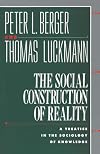
The purpose of this book is nothing short of attempting to explain how human thought and representation become material reality and how that material reality becomes the basis for individual consciousness and social identification. The argument moves astonishingly fast for the grandness of its scope.
The authors argue, convincingly, about how individual consciousness begins with one's own thoughts and awareness of surroundings. We then come to realize ways of sharing what is internal through show more objectivation. What becomes externalized as objects becomes incorporated into typified actions and interactions around which we (and others) develop roles. Multiply these relations and the result is institutions and beliefs that exist "in reality" apart from, but very much a product of our shared consciousness. As institutions take hold and persist across generations they take on independent legitimacy that is further supported through the development of tradition, mythology, ideology, religion, etc. These institutions and their associated roles are then internalized by future generations, becoming part of their identities and outlook on the world.
The argument is laid out quickly and at times in broad strokes. There are examples that help to envision the logic of the argument, but many of the details in the process of externalization and internalization are fuzzy and implied. Pairing this book with work from someone like John Searle makes for a satisfyingly rich view of the social construction of reality and the central function of language and discursive interaction in that process. show less
The authors argue, convincingly, about how individual consciousness begins with one's own thoughts and awareness of surroundings. We then come to realize ways of sharing what is internal through show more objectivation. What becomes externalized as objects becomes incorporated into typified actions and interactions around which we (and others) develop roles. Multiply these relations and the result is institutions and beliefs that exist "in reality" apart from, but very much a product of our shared consciousness. As institutions take hold and persist across generations they take on independent legitimacy that is further supported through the development of tradition, mythology, ideology, religion, etc. These institutions and their associated roles are then internalized by future generations, becoming part of their identities and outlook on the world.
The argument is laid out quickly and at times in broad strokes. There are examples that help to envision the logic of the argument, but many of the details in the process of externalization and internalization are fuzzy and implied. Pairing this book with work from someone like John Searle makes for a satisfyingly rich view of the social construction of reality and the central function of language and discursive interaction in that process. show less
This is quite an interesting book. Its main thesis is an attempt to tie together epistemology and sociology. TO SUMMARIZE: Thought is a social construct. Our ways of thinking are influenced by our ancestors and traditions. There's also Wittgenstein's baby - how language affects thought.
Of course, after watching both political conventions over the past two weeks, it is necessary to discuss the political role of this idea. One could see it being discussed by reformers/radicals, who want to show more change society and assist oppressed peoples by changing the long-held societal misconceptions which lead to their oppression. Another possibility involves a certain long-gone form of conservatism, which remarks on the fragility of society, and that any reform attempts must be undertaken with great care. This conservatism, of course, is not the naked imperial greed which calls itself 'conservative' today.
One example of social constructs is race. Compare America and Western Europe. In the former, 'white people' are a monolithic bloc, in the latter, there are still hazy distinctions drawn up between North and South European, Germanic and Slav. I know the feeling of race directly - I have been mistaken, at various times in my life, for being Russian, Mexican, and half-Chinese or half-Vietnamese. My mother is also mistaken for Chinese, despite being Filipino. Other possibilities about social construction include sexuality, political beliefs, professions, and others.
Such an idea has its charms, but also its detractors. I wonder how a biological approach to ideas, such as neuroscience or evolutionary psychology (as flawed as the latter is) might make an approach to such similar topics. For a book on sociology, it does raise the question of if we can truly attempt to understand the point of view of a person who's lived in a completely different society than we have. show less
Of course, after watching both political conventions over the past two weeks, it is necessary to discuss the political role of this idea. One could see it being discussed by reformers/radicals, who want to show more change society and assist oppressed peoples by changing the long-held societal misconceptions which lead to their oppression. Another possibility involves a certain long-gone form of conservatism, which remarks on the fragility of society, and that any reform attempts must be undertaken with great care. This conservatism, of course, is not the naked imperial greed which calls itself 'conservative' today.
One example of social constructs is race. Compare America and Western Europe. In the former, 'white people' are a monolithic bloc, in the latter, there are still hazy distinctions drawn up between North and South European, Germanic and Slav. I know the feeling of race directly - I have been mistaken, at various times in my life, for being Russian, Mexican, and half-Chinese or half-Vietnamese. My mother is also mistaken for Chinese, despite being Filipino. Other possibilities about social construction include sexuality, political beliefs, professions, and others.
Such an idea has its charms, but also its detractors. I wonder how a biological approach to ideas, such as neuroscience or evolutionary psychology (as flawed as the latter is) might make an approach to such similar topics. For a book on sociology, it does raise the question of if we can truly attempt to understand the point of view of a person who's lived in a completely different society than we have. show less
One of the deepest books I've ever read, but it's not without it's humorous moments (the examples Berger gives to illustrate his points are sometimes hilarious). This is incredibly meta and multi-layered. A must-read for anyone into world building.
Lists
culture (1)
Awards

You May Also Like


Associated Authors
Statistics
- Works
- 18
- Also by
- 2
- Members
- 2,003
- Popularity
- #12,854
- Rating
- 4.0
- Reviews
- 14
- ISBNs
- 61
- Languages
- 15


