
Hiroshige Andō (1797–1858)
Author of Hiroshige: One Hundred Famous Views of Edo
About the Author
Image credit: Posthumous memorial portrait of Hiroshige by Kunisada
Works by Hiroshige Andō
Hiroshige & Eisen. The Sixty-Nine Stations along the Kisokaido (2017) — Artist — 55 copies, 1 review
Utagawa Hiroshige - Paintings & Drawings Vol 1 (Zedign Art Series Book 90) (2018) 3 copies, 3 reviews
Ando Hiroshige: Tokaido-Landschaften 3 copies
Utagawa Hiroshige - Paintings & Drawings Vol 2 (Zedign Art Series Book 91) (2018) 3 copies, 3 reviews
The Fifty Three Stations of the Tokaido: Utagawa Hiroshige (English Edition): Master of Japanese Ukiyo-e prints(53 9) (2015) 2 copies, 1 review
Peonie 1 copy
Hiroshige: paesaggi — Artist — 1 copy
Japanese Woodblocks 2001 1 copy
D'EDO A KYOTO, SUR LA ROUTE DU KISOKAIDO.EISEN,HIROSHIGE,KUNIYOSHI: AU MUSEE CERNUSCHI (2020) — Artist — 1 copy
The fifty-three stages of the Tokaido: HoeidoÌ edition, Gyosho edition, Reisho edition (1984) 1 copy
Tokaido in prints and poetry 1 copy
Yoshiwara yuki no asa 1 copy
Views of Edo [Calendar 1992]: Woodblock prints from one hundred famous views of Edo 1 copy, 1 review
A Master of Woodblock Prints 1 copy
Tokaido Goju Santsugi 1 copy
Prints by Hiroshige 1 copy
Associated Works
The meeting of Eastern and Western art from the sixteenth century to the present day (1973) — Cover artist, some editions — 44 copies, 1 review
Tagged
Common Knowledge
- Legal name
- Hiroshige, Utagawa
- Other names
- Andō HIROSHIGE (安藤広重)
Ichiyūsai HIROSHIGE (一幽斎廣重 | 一幽斎廣重 | Art Name)
安藤徳太郎
HIROSHIGE, Andō
HIROSHIGE, Ando - Birthdate
- 1797
- Date of death
- 1858-10-12
- Gender
- male
- Occupations
- painter
printer
Buddhist monk - Nationality
- Japan
- Burial location
- Togaku-ji Temple Cemetery, Tokyo, Japan
- Associated Place (for map)
- Tokyo, Japan
Members
Reviews
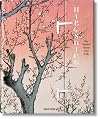
This is a beautifully put together art book. The design of the cover is captivating, and the traditional Japanese style binding a delight. The paper quality is excellent, with each page a double fold and the soft cover in what feels like a mulberry washi.
Melanie Trede's introduction puts Hiroshige's prints in their historical context of pictures of famous places (meishoe) that date back to the 10th century and the poetry collection "One Hundred Poets, One Poem Each". Trede explores the show more influence Hiroshige's work had on painters like Whistler, Pissarro and Van Gogh, but also the influence that Western art techniques had on Hiroshige. Of more interest, perhaps, is the discussion of Hiroshige's methodology and how his approach to recording Edo differed to that taken by Hokusai. The pictures weren't just a record of Edo life but a means of promoting the city and creating a cultural narrative that appealed to residents and potential visitors alike. I was interested to learn about the prohibition on depicting Edo castle and other official buildings of the Shogun and how Hiroshige sometimes got around that restriction, even getting views that contained hints of the castle past the censors. Also on the censors' hit list was anything that might place the shogunate in a bad light. Some ukiyo-e artists got into bother by depicting the devastation caused by the 1855 earthquake, but Hiroshige's views are focused on the positive, showing the glories of a newly reconstructed and vibrant Edo after the earthquake, but contain hidden political allusions designed to circumvent the censors' sensibilities. There is information on the publisher, Sakanaya, and a detailed description of the process from proof drawing to woodblock engraving to printing, in Trede's introduction as well.
The book reproduces one of only a few surviving complete sets of views from the first print run. The set is held by the Ota Memorial Museum of Art in Tokyo, a museum we haven't visited yet, but which I now hope to include on a future trip to Tokyo. The reproductions glow on the page, with the full depth of colour that must exist in the originals. Trede is joined by Lorenz Bichler in writing the commentaries for each view, discussing the content of the print, its meaning and the craftsmanship involved in bringing each element of the image together. show less
Melanie Trede's introduction puts Hiroshige's prints in their historical context of pictures of famous places (meishoe) that date back to the 10th century and the poetry collection "One Hundred Poets, One Poem Each". Trede explores the show more influence Hiroshige's work had on painters like Whistler, Pissarro and Van Gogh, but also the influence that Western art techniques had on Hiroshige. Of more interest, perhaps, is the discussion of Hiroshige's methodology and how his approach to recording Edo differed to that taken by Hokusai. The pictures weren't just a record of Edo life but a means of promoting the city and creating a cultural narrative that appealed to residents and potential visitors alike. I was interested to learn about the prohibition on depicting Edo castle and other official buildings of the Shogun and how Hiroshige sometimes got around that restriction, even getting views that contained hints of the castle past the censors. Also on the censors' hit list was anything that might place the shogunate in a bad light. Some ukiyo-e artists got into bother by depicting the devastation caused by the 1855 earthquake, but Hiroshige's views are focused on the positive, showing the glories of a newly reconstructed and vibrant Edo after the earthquake, but contain hidden political allusions designed to circumvent the censors' sensibilities. There is information on the publisher, Sakanaya, and a detailed description of the process from proof drawing to woodblock engraving to printing, in Trede's introduction as well.
The book reproduces one of only a few surviving complete sets of views from the first print run. The set is held by the Ota Memorial Museum of Art in Tokyo, a museum we haven't visited yet, but which I now hope to include on a future trip to Tokyo. The reproductions glow on the page, with the full depth of colour that must exist in the originals. Trede is joined by Lorenz Bichler in writing the commentaries for each view, discussing the content of the print, its meaning and the craftsmanship involved in bringing each element of the image together. show less
The Tokaido by Hiroshige- Twelve types of prints of each of 53 stations of the Tokaido Road. Japanese by Utagawa Hiroshige

I am fascinated by the idea of a road that has been around for at least 400 years with such a history as the Tokaido. The coastal route between Kyoto and Tokyo which noblemen were expected to traverse, each year to pay their respects and tolls to the Shogun in Tokyo. Some of the original route is still there today....some with what purport to be the original paving stones...and probably are. A section of it runs behind my mother-in-law's current residence and I have paced up and down on it show more absorbing some of its history ....well at least in spirit. Hiroshige, set out on a major publishing project to capture in drawings ..thence woodcuts and thence multicoloured prints...the 53 stations along the route where the travellers would find lodging and food for the night. It was a mammoth undertaking and this book not only captures in high quality prints....the original woodcuts but also includes enlarged sections and other woodcuts of the same area. I have entertained the rather romantic notion of walking a couple of the sections of the Tokaido...specifically from Hakone or Odawara to Mishima. (I have family who live in Mishima and have always loved the widespread adoption of Hiroshige's woodcut of the Shrine at Mishima as advertising and labelling. One thing has always puzzled me about Hiroshige's prints and that is the odd placement of the legs.....perpetually bent like they are doing some form of knee bend exercises. Maybe if you are walking in straw sandals you DO need to lift your feet high...or maybe he just liked drawing them this way......Or maybe he just had trouble with legs. But this doesn't detract from the dramatic distorted perspectives ...the artful design of his prints and the fascinating historical record that they preserve. Hiroshige was an inspiration to many of the impressionist painters and so his legacy lives on in the western art tradition. I do recall watching the process of the printing: the the colour is not applied evenly to the woodblocks. If they desire to have the blue sky fading away then the printer will wipe off some of the ink and then print. So even though the printing process may involve 4 colours and 4 separate woodblocks there is the possibility of almost infinite variation, depending upon the skill and intent of the printer. This book is all in Japanese and unfortunately I can't read the Japanese but as it is probably 95% pictures this is not a huge drawback. I must confess to a great admiration of Hiroshige and his work and I have thoroughly enjoyed this book. One thing that I really liked about it is the enlarged section of the main prints. These show in exquisite detail, the complexity of the drawings and the skill of the engravers and the printers. (I believe that most of these functions were undertaken by separate people...not Hiroshige himself. Alll in all, A great book and happy to recommend it. show less
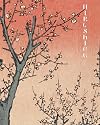
A book of art prints that is a work of art in its own right. It comes in a beautiful presentation box covered in printed silk. The book itself is a Japanese stab binding, with a silk cover. The images within it are wonderful, and are reproduced to the highest quality; and the commentary is fascinating and well read. Whether you are a fan of Hiroshige, Japanese art, Japanese culture or beautiful books, you should try to get your hands on a copy of this.
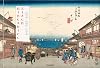
Fantastic edition from Taschen. This new TASCHEN XXL edition revives the series with due scale and splendor. Sourced from the only-known set of a near-complete run of the first edition of the series, this legendary publication is reproduced in optimum quality, bound in the Japanese tradition and with uncut paper. A perfect companion piece to TASCHENs One Hundred Famous Views of Edo, it is at once a visual delight and a major artifact from the bygone era of Imperial Japan.
Lists
Favourite Books (1)
You May Also Like


Associated Authors
Statistics
- Works
- 85
- Also by
- 4
- Members
- 1,270
- Popularity
- #20,200
- Rating
- 4.3
- Reviews
- 17
- ISBNs
- 72
- Languages
- 7
- Favorited
- 1