
Dorothy Day (1897–1980)
Author of The Long Loneliness: The Autobiography of the Legendary Catholic Social Activist
About the Author
Image credit: Portrait by Robert Shetterly, AmericansWhoTellTheTruth.org
Works by Dorothy Day
The Long Loneliness: The Autobiography of the Legendary Catholic Social Activist (1952) 1,438 copies, 17 reviews
The Reckless Way of Love: Notes on Following Jesus (Plough Spiritual Guides: Backpack Classics) (2017) 154 copies, 15 reviews
Associated Works
Watch for the Light: Readings for Advent and Christmas (2004) — Contributor — 903 copies, 10 reviews
Wise Women: Over Two Thousand Years of Spiritual Writing by Women (1996) — Contributor — 231 copies, 1 review
Writing Women's Lives: An Anthology of Autobiographical Narratives by Twentieth-Century American Women Writers (1994) — Contributor — 128 copies, 3 reviews
War No More: Three Centuries of American Antiwar and Peace Writing (2016) — Contributor — 110 copies, 2 reviews
St. Joan of Arc / A Right to Be Merry / Adventurer Saints: Junipero Serra / The Long Loneliness: Excerpts (1960) — Contributor — 4 copies
Tagged
Common Knowledge
- Birthdate
- 1897-11-08
- Date of death
- 1980-11-29
- Gender
- female
- Education
- University of Illinois, Urbana-Champaign
- Occupations
- social activist
journalist - Organizations
- The Catholic Worker
Catholic Worker Movement
Maryhouse
Roman Catholic Church - Awards and honors
- Pacem in Terris Peace and Freedom Award (1972)
at least sixteen honorary degrees
Servant of God (initiation of sainthood process)
Laetare Medal (1972) - Nationality
- USA
- Birthplace
- Brooklyn, New York, USA
- Places of residence
- Brooklyn, New York, USA
Chicago, Illinois, USA
Tivoli, New York, USA
Staten Island, New York, USA
New York, New York, USA
Easton, Pennsylvania, USA - Place of death
- New York, New York, USA
- Burial location
- Cemetery of the Resurrection, Staten Island, New York, USA
- Associated Place (for map)
- New York, USA
Members
Discussions
Dorothy Day could be a saint for a ‘polarised’ world in Catholic Tradition (February 2020)
Reviews
The Reckless Way of Love: Notes on Following Jesus (Plough Spiritual Guides: Backpack Classics) by Dorothy Day
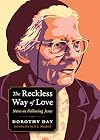
Summary: A collection of Dorothy Day's writings on following Jesus in the ways of faith, love, prayer, life, and community.
One thinks of Dorothy Day as an activist writer and advocate for the poor, running homes of hospitality, communes, and getting arrested even in her seventies. What is less apparent is the deep spirituality that sustained her activism. This book, one of Plough's Spiritual Guides, distills writings from her different books that cumulatively describe the ordinary life of show more following Jesus among the poor.
The excerpts are organized around five "ways" or themes: of faith, of love, of prayer, of life, and of community.
In the chapters on faith, we encounter both her implicit belief in the mysteries of the faith and the sacraments, and yet her struggle to trust and depend in the welter of daily interactions and work. She writes,
"I suppose it is a grace not to be able to have time to take or derive satisfaction in the work we are doing. In what time I have, my impulse is to self-criticism and examination of conscience, and I am constantly humiliated at my own imperfections and at my halting progress. Perhaps I deceive myself here, too, and excuse my lack of recollection. But I do know how small I am and how little I can do and I beg you, Lord, to help me, for I cannot help myself" (pp. 14-15).
Often, Day's reflections come with pithy challenges. We see the intensity of her love for God and the wonder that God sets his love on the likes of us and then observes, "It is a terrible thought--'we love God as much as the one we love the least' " (p.36). Or she surprises us with her breaks with convention such as when she writes on prayer: "I do not have to retire to my room to pray. It is enough to get out and walk in the wilderness of the streets" (p. 44).
"The way of life" reminds us "never to get discouraged at the slowness of people or results" (p. 63). She writes of deepening perceptions of unworldly justice that does not seek its own, that for a Christian social order, "we must first have Christians" (p.66), and how, apart from the light of Christ, we often do not know ourselves or our secret sins. She writes at length on the indispensable role of suffering in our lives.
The final portion focuses on life in community. Day writes of efforts in community with grittiness and realism. Disappointments. Betrayals. Plain hard work and long hours. Yet even so, she longs for bigger houses, more room for discussions, a library, "a Christ room." She recognizes desperately her need for the presence of God in all the ordinary places. In the end, it is community that addresses our desolation. She concludes, "We have all known the long loneliness and we have learned that the only solution is love and that love comes with community" (p. 120).
This is the second book in the Spiritual Guides series I've reviewed, the earlier being The Scandal of Redemption by Oscar Romero. These are small books only in size. Each is well-edited by Carolyn Kurtz. This, in particular, required culling passages from a number of Day's works along each of the themes into coherent chapters. Eye-catching cover art, end papers, and typography make these delightful books to hold and read.
I found myself often mulling over a single line, such as this one: "We have the greatest weapons in the world, greater than any hydrogen or atom bomb, and they are the weapons of poverty and prayer, fasting and alms, the reckless spending of ourselves in God's service and for his poor" (p.69). I mused again and again what a different face Christians would present to the world if we lived as Day did rather than jockeying for positions and influence and concealing our flawed character rather than exposing it to the grace of God. Reading Day gives me hope that ordinary Christians with all our flaws and struggles may yet walk the ways of faith, hope, and love, offering something beautiful for God and to the world.
____________________________
Disclosure of Material Connection: I received a complimentary review copy of this book from the publisher in exchange for an honest review. The opinions I have expressed are my own. show less
One thinks of Dorothy Day as an activist writer and advocate for the poor, running homes of hospitality, communes, and getting arrested even in her seventies. What is less apparent is the deep spirituality that sustained her activism. This book, one of Plough's Spiritual Guides, distills writings from her different books that cumulatively describe the ordinary life of show more following Jesus among the poor.
The excerpts are organized around five "ways" or themes: of faith, of love, of prayer, of life, and of community.
In the chapters on faith, we encounter both her implicit belief in the mysteries of the faith and the sacraments, and yet her struggle to trust and depend in the welter of daily interactions and work. She writes,
"I suppose it is a grace not to be able to have time to take or derive satisfaction in the work we are doing. In what time I have, my impulse is to self-criticism and examination of conscience, and I am constantly humiliated at my own imperfections and at my halting progress. Perhaps I deceive myself here, too, and excuse my lack of recollection. But I do know how small I am and how little I can do and I beg you, Lord, to help me, for I cannot help myself" (pp. 14-15).
Often, Day's reflections come with pithy challenges. We see the intensity of her love for God and the wonder that God sets his love on the likes of us and then observes, "It is a terrible thought--'we love God as much as the one we love the least' " (p.36). Or she surprises us with her breaks with convention such as when she writes on prayer: "I do not have to retire to my room to pray. It is enough to get out and walk in the wilderness of the streets" (p. 44).
"The way of life" reminds us "never to get discouraged at the slowness of people or results" (p. 63). She writes of deepening perceptions of unworldly justice that does not seek its own, that for a Christian social order, "we must first have Christians" (p.66), and how, apart from the light of Christ, we often do not know ourselves or our secret sins. She writes at length on the indispensable role of suffering in our lives.
The final portion focuses on life in community. Day writes of efforts in community with grittiness and realism. Disappointments. Betrayals. Plain hard work and long hours. Yet even so, she longs for bigger houses, more room for discussions, a library, "a Christ room." She recognizes desperately her need for the presence of God in all the ordinary places. In the end, it is community that addresses our desolation. She concludes, "We have all known the long loneliness and we have learned that the only solution is love and that love comes with community" (p. 120).
This is the second book in the Spiritual Guides series I've reviewed, the earlier being The Scandal of Redemption by Oscar Romero. These are small books only in size. Each is well-edited by Carolyn Kurtz. This, in particular, required culling passages from a number of Day's works along each of the themes into coherent chapters. Eye-catching cover art, end papers, and typography make these delightful books to hold and read.
I found myself often mulling over a single line, such as this one: "We have the greatest weapons in the world, greater than any hydrogen or atom bomb, and they are the weapons of poverty and prayer, fasting and alms, the reckless spending of ourselves in God's service and for his poor" (p.69). I mused again and again what a different face Christians would present to the world if we lived as Day did rather than jockeying for positions and influence and concealing our flawed character rather than exposing it to the grace of God. Reading Day gives me hope that ordinary Christians with all our flaws and struggles may yet walk the ways of faith, hope, and love, offering something beautiful for God and to the world.
____________________________
Disclosure of Material Connection: I received a complimentary review copy of this book from the publisher in exchange for an honest review. The opinions I have expressed are my own. show less
The Reckless Way of Love: Notes on Following Jesus (Plough Spiritual Guides: Backpack Classics) by Dorothy Day
This book wasn't so much a collection of uplifting thoughts as an almost diaristic collection of excerpts from Dorothy Day's writing and letters, I believe including actual diary excerpts in some instances. I knew going in that Dorothy Day was a Catholic social activist, possibly controversial in the church. What the book presents is a portrait of a woman who spent her life trying to do good, and the personal struggles she experienced within, including examination of her reasons for doing show more so. It was a portrait of how it isn't always easy to help others, and it certainly wouldn't be easy to make it your life's work. Some of the writings were about how you wish that people would react differently, more appreciative, making more of your efforts, and some were about how she recognized that as a flaw in herself. Sometimes, reading, I thought that she should have been more compassionate towards someone, or more humble, and yet she devoted her entire life to helping people, and I haven't, and it made me think of the internal struggles that might cause you, as you strove to live out that sort of life. It isn't an easy collection you can dip into when you need to be uplifted, but it is a thought-provoking book about what living a Christian life can really mean. show less
 This review was written for LibraryThing Early Reviewers.
These diary entries written by Dorothy Day in 1948 provide an intimate look into Day's personal life as well as essential background for understanding the Catholic Worker movement, which she founded. In this book, Day writes about all facets of her life. Yet whether describing her visits to her daughter's farm or the writings of the saints, a common theme emerges, namely, the gifts of God's love and our need to respond to them with personal and social transformation. The concerns of the show more Catholic Worker movement are no less vital in our day: the disenfranchised poor, the benefits of the meaningful work, the significance of family, the dangers of increasing commercialism and secularism, the decline of moral standards, and the importance of faith. show less
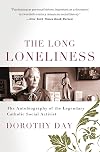
Summary: A memoir of the life of Dorothy Day up to 1952, describing her search for God and a meaningful life, her conversion to Catholicism, her catalytic friendship with Peter Maurin, and the early years of the Catholic Worker movement.
This is the memoir of a woman who grew up in a middle class family, the daughter of a sports writer, a teen who read Upton Sinclair and Doestoevsky, spent two years at the University of Illinois, then left to pursue life as a writer on the lower east side of show more Manhatten, working for several Socialist publications, getting arrested for the first time in 1917 (her last was as a 75 year old!). She went through several love affairs with the likes of Eugene O’Neill and Mike Gold. Along the way, she had an abortion, and lived what one would call a very “bohemian” lifestyle. An unlikely candidate for sainthood, you might say, and yet the Archdiocese of New York has opened the cause for her canonization, allowing her to be designated “A Servant of God.”
The memoir covers her early life and all these episodes although it devotes very little time to the period she spent in Europe. What we see is a woman haunted by a longing for God, struggling with “the long loneliness” of human existence, the sense of being alienated or apart from even those closest in life. She appears to find a happy existence in a Staten Island home she bought with proceeds from selling a screen play. She is in a kind of “common law” relationship with Forster Batterham, socially conscious but a principled atheist. They seem to enjoy an idyllic life until the birth of daughter Tamar, which intensifies Dorothy’s spiritual search as she reads Catholic literature and talks with several Catholic sisters and priests. First she brings Tamar to be baptized, and then at the end of 1927, enters the Catholic Church, and leaves Batterham, who loves her but utterly opposes this decision. She speaks of the struggle she has with the decision, which literally ended up making her ill. Yet in the end, when faced with a choice between Batterham and God, she chooses God. Nevertheless, they remained good friends for the remainder of their lives.
Dorothy struggled with reconciling her concerns for the poor and social activism with her Catholic faith. It wasn’t until the searching convert and a wandering social theologian, Peter Maurin meet up that these two strains are reconciled in her life. It is a catalytic relationship for both, resulting in the launching of the Catholic Worker movement. She chronicles the birth of this movement with its paper sold for a penny (to this day), its houses of hospitality (now 216 in the U.S. according to their website), and their farming experiments. The vision was of places where laborers could find food, welcome, and thoughtful conversation and retreats that addressed the spiritual side of their existence as well as sustained advocacy for workers’ rights. Maurin helped Day integrate Catholic social teaching with her faith, and I think Day helped Maurin translate his visionary ideals into actual communities.
The book concludes with Day’s beautiful account of Maurin’s death, and their acquisition of a new house in New York City, which she attributes to Maurin’s prayers. In her postscript she comes back to the theme of “the long loneliness.”
“We have all known the long loneliness and we have learned that the only solution is love and that love comes with community.
It all happened while we sat there talking, and it is still going on.”
This memoir suggested several things to me. It reminded me that the externals of how a person is living is not a reliable indicator of their spiritual hunger or the work of God in their lives. At several points Dorothy was exposed to very “other worldly” versions of Christianity that failed to capture her imagination because they did not address life in this world. And the book exposes the power of community, and the reality that even with all our human foibles and flaws, people drawn together in Christ might indeed find the “only solution” to our long loneliness. show less
This is the memoir of a woman who grew up in a middle class family, the daughter of a sports writer, a teen who read Upton Sinclair and Doestoevsky, spent two years at the University of Illinois, then left to pursue life as a writer on the lower east side of show more Manhatten, working for several Socialist publications, getting arrested for the first time in 1917 (her last was as a 75 year old!). She went through several love affairs with the likes of Eugene O’Neill and Mike Gold. Along the way, she had an abortion, and lived what one would call a very “bohemian” lifestyle. An unlikely candidate for sainthood, you might say, and yet the Archdiocese of New York has opened the cause for her canonization, allowing her to be designated “A Servant of God.”
The memoir covers her early life and all these episodes although it devotes very little time to the period she spent in Europe. What we see is a woman haunted by a longing for God, struggling with “the long loneliness” of human existence, the sense of being alienated or apart from even those closest in life. She appears to find a happy existence in a Staten Island home she bought with proceeds from selling a screen play. She is in a kind of “common law” relationship with Forster Batterham, socially conscious but a principled atheist. They seem to enjoy an idyllic life until the birth of daughter Tamar, which intensifies Dorothy’s spiritual search as she reads Catholic literature and talks with several Catholic sisters and priests. First she brings Tamar to be baptized, and then at the end of 1927, enters the Catholic Church, and leaves Batterham, who loves her but utterly opposes this decision. She speaks of the struggle she has with the decision, which literally ended up making her ill. Yet in the end, when faced with a choice between Batterham and God, she chooses God. Nevertheless, they remained good friends for the remainder of their lives.
Dorothy struggled with reconciling her concerns for the poor and social activism with her Catholic faith. It wasn’t until the searching convert and a wandering social theologian, Peter Maurin meet up that these two strains are reconciled in her life. It is a catalytic relationship for both, resulting in the launching of the Catholic Worker movement. She chronicles the birth of this movement with its paper sold for a penny (to this day), its houses of hospitality (now 216 in the U.S. according to their website), and their farming experiments. The vision was of places where laborers could find food, welcome, and thoughtful conversation and retreats that addressed the spiritual side of their existence as well as sustained advocacy for workers’ rights. Maurin helped Day integrate Catholic social teaching with her faith, and I think Day helped Maurin translate his visionary ideals into actual communities.
The book concludes with Day’s beautiful account of Maurin’s death, and their acquisition of a new house in New York City, which she attributes to Maurin’s prayers. In her postscript she comes back to the theme of “the long loneliness.”
“We have all known the long loneliness and we have learned that the only solution is love and that love comes with community.
It all happened while we sat there talking, and it is still going on.”
This memoir suggested several things to me. It reminded me that the externals of how a person is living is not a reliable indicator of their spiritual hunger or the work of God in their lives. At several points Dorothy was exposed to very “other worldly” versions of Christianity that failed to capture her imagination because they did not address life in this world. And the book exposes the power of community, and the reality that even with all our human foibles and flaws, people drawn together in Christ might indeed find the “only solution” to our long loneliness. show less
Lists
Check Library (1)
Awards


You May Also Like


Associated Authors
Statistics
- Works
- 33
- Also by
- 8
- Members
- 3,334
- Popularity
- #7,662
- Rating
- 4.0
- Reviews
- 60
- ISBNs
- 67
- Languages
- 4
- Favorited
- 7
