
Thierry de Duve
Author of Kant after Duchamp
About the Author
Thierry de Duve is Evelyn Kranes Kossak Professor at Hunter College, City University of New York, and professor emeritus at the University of Lille 3. He is the author of numerous books, including Clement Greenberg between the Lines and Sewn in the Sweatshops of Marx, both published by the show more University of Chicago Press. show less
Image credit: Thierry de Duve, Photo: Lisa Blas
Works by Thierry de Duve
Pictorial Nominalism: On Marcel Duchamp's Passage from Painting to the Readymade (Theory and History of Literature) (1984) 48 copies, 1 review
Au nom de l'art: Pour une archéologie de la modernité (Collection "Critique") (French Edition) (1989) 8 copies
Associated Works
Tagged
Common Knowledge
There is no Common Knowledge data for this author yet. You can help.
Members
Reviews
Love her work — “coolly” conceptual while being intriguing, sensorially stimulating and affectively provocative. The prints were of high quality, so a good, enjoyable read.
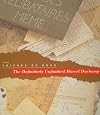
The Duchamp scholars represented here are the leading European and American critics of their generation - a number of whom have staked out opposing territories, making for a particularly animated critique of this fascinating artist and his provocative work.
Eric Cameron, Herbert Molderings, and Francis Naumann probe the philosophical implications of Duchamp's skepticism, eroticism, and paradoxical acceptance of contradiction.
William Camfield and Thierry de Duve investigate the events that led show more to the creation of Duchamp's infamous Fountain. Jean Suquet's rigorous yet poetic reading of the Large Glass appears here in English for the first time, as does Andre Gervais's exhilarating voyage through Duchamp's puns, aphorisms, and wordplays.
Carol James offers a fresh interpretation of Duchamp's late works as readymades. With an eye on today's art practices and theoretical debates, Craig Adcock and Rosalind Krauss examine to what extent scientific models explain Duchamp's art or are challenged by it. And Molly Nesbit uncovers important evidence of how the gender-based teaching of drawing in the Third Republic might have nurtured Duchamp's - or Rrose Selavy's - peculiar use of mechanical drawing.
Thierry de Duve is Director of Studies, Association de prefiguration de I'Ecole des Beaux-Arts de la Ville de Paris.
The Essays: Given, Eric Cameron. Marcel Duchamp: A Reconciliation of Opposites, Francis Naumann. Possible, Jean Suquet. Marcel Duchamp's Fountain: Aesthetic Object, Icon, or Anti-Art? William Camfield. Given the Richard Mutt Case, Thierry de Duve. Objects of Modern Skepticism, Herbert Molderings. An Original Revolutionary Messagerie Rrose, or What Became of Readymades, Carol James. Duchamp's Way: Twisting Our Memory of the Past "For the Fun of It," Craig Adcock. The Language of Industry, Molly Nesbit. Connections: Of Art and Arrhe, Andre Gervais. Where's Poppa? Rosalind Krauss.
Copublished with the Nova Scotia College of Art and Design. show less
Eric Cameron, Herbert Molderings, and Francis Naumann probe the philosophical implications of Duchamp's skepticism, eroticism, and paradoxical acceptance of contradiction.
William Camfield and Thierry de Duve investigate the events that led show more to the creation of Duchamp's infamous Fountain. Jean Suquet's rigorous yet poetic reading of the Large Glass appears here in English for the first time, as does Andre Gervais's exhilarating voyage through Duchamp's puns, aphorisms, and wordplays.
Carol James offers a fresh interpretation of Duchamp's late works as readymades. With an eye on today's art practices and theoretical debates, Craig Adcock and Rosalind Krauss examine to what extent scientific models explain Duchamp's art or are challenged by it. And Molly Nesbit uncovers important evidence of how the gender-based teaching of drawing in the Third Republic might have nurtured Duchamp's - or Rrose Selavy's - peculiar use of mechanical drawing.
Thierry de Duve is Director of Studies, Association de prefiguration de I'Ecole des Beaux-Arts de la Ville de Paris.
The Essays: Given, Eric Cameron. Marcel Duchamp: A Reconciliation of Opposites, Francis Naumann. Possible, Jean Suquet. Marcel Duchamp's Fountain: Aesthetic Object, Icon, or Anti-Art? William Camfield. Given the Richard Mutt Case, Thierry de Duve. Objects of Modern Skepticism, Herbert Molderings. An Original Revolutionary Messagerie Rrose, or What Became of Readymades, Carol James. Duchamp's Way: Twisting Our Memory of the Past "For the Fun of It," Craig Adcock. The Language of Industry, Molly Nesbit. Connections: Of Art and Arrhe, Andre Gervais. Where's Poppa? Rosalind Krauss.
Copublished with the Nova Scotia College of Art and Design. show less
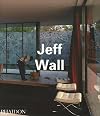
Jeff Wall is foremost among the artists who since the late 1960s have brought photography to the forefront of contemporary art. This revised and expanded edition of the definitive monograph on the Canadian artist, first published in 1996, includes a new fully illustrated essay on Wall's recent work by the French historian of art and photography Jean-François Chevrier, in addition to the artist's recent writings. Describing himself as 'a painter of modern life', Wall produces huge show more transparencies mounted onto light boxes which diffuse a brilliant glow through his photographs of contemporary urban scenes and 'constructed' social situations. These images employ the latest technology to create tableaux which are evocative of subjects ranging from Hollywood cinema to nineteenth-century history painting. When installed they evoke both the seduction of the cinema screen and the physical presence of minimalist sculptures. Wall engages at a sophisticated level with theories of representation both as an artist and as a theoretical writer on contemporary art and culture. Major surveys of his work have been presented at the Museum of Contemporary Art, Chicago (1995); the Galerie Nationale du Jeu de Paume, Paris (1995); the Whitechapel Art Gallery, London (1996), and the Musée d'Art Contemporain, Montreal (1999). show less
Returning to art theory,after thirty years, it struck me that that most writing about art remains at the level of the "introduction" or "key" texts, dominated by the OU course books. This collection of essays holds together as a whole, and the obvious conection between the work done on the Kantian sublime in the last twenty years in "other" fields is returned to not the question of beauty, but of art. That the ready made can stand such a reading is a tribute to DeDuve. It got me thinking show more about art again, rather than just aesthetics, cultural capital and the avant garde. and the show less
You May Also Like


Associated Authors
Statistics
- Works
- 37
- Also by
- 3
- Members
- 544
- Popularity
- #45,826
- Rating
- 3.7
- Reviews
- 7
- ISBNs
- 69
- Languages
- 7