
Philippe Coudray
Author of Benjamin Bear in Fuzzy Thinking
About the Author
Series
Works by Philippe Coudray
Le monde à l'envers 1 copy
Trucs et astuces — Author — 1 copy
Un pour tous, tous pour un — Author — 1 copy
Tagged
Common Knowledge
- Birthdate
- 1960
- Gender
- male
- Birthplace
- Bordeaux, France
- Associated Place (for map)
- Bordeaux, France
Members
Reviews
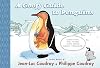
Have you ever wondered how to tell penguins apart? I mean, they all look the same after all don't they? Heck no! You tell them apart by the color of their snow gear of course! Hats, mittens, boots, what color do they wear? And what type? This book will teach you all of that, plus so many more questions that you probably never thought to ask!
So first question to answer, are these facts true? Of course not! Which is why the book is titled "A Goofy Guide" and "Everything you never, ever asked show more about penguins." Twin brothers Jean-Luc and Philippe Coudray, best known for their Benjamin Bear series, continue to use their delightful sense of humor to answer questions that many of us probably never thought of, much less ever really wanted to know.In this fun and charming book the brothers tell us everything from "How do penguins stay out of the wind" to "why do they carve bottles out of ice" (to serve drinks of course!) The writing is simple enough to engage young readers to look for the answers to the questions (told through illustrations) while making older readers laugh at the types of questions being answered.
The best part of this book for me is that the brothers never directly answer the question, instead allowing the reader to look for the answer within the illustrations. The illustrations are filled with bright colors and funny antics of penguins trying to stay warm or playing hide and go seek. The colors and actions of the penguins will draw the reader in to the illustrations, noticing the tiny details of the small fish swimming next to the big fish or the rain falling sideways. Oh and how can I forget the baby penguin! The baby penguin (which is as cute and adorable as it sounds) stands outside the frame of the story narrating and asking the reader questions that they want answered. The baby penguin rolls about, catches its feet as it giggles and laughs at us, giggling and laughing at the penguins.
If you're looking for a book to learn true facts about penguins never fear!...this book has a grand total of two pages at the end with real facts. Ermm...basically if you're looking for a book about real penguin facts, look elsewhere. If, however, you are looking for a book that will engage the reader and use critical thinking skills to answer questions (even if they are weird and off the wall) then this is the book for you. And oh yes, if you're just looking for a fun read this is a good book to pick up.
Review Copy provided by Toon Books show less
So first question to answer, are these facts true? Of course not! Which is why the book is titled "A Goofy Guide" and "Everything you never, ever asked show more about penguins." Twin brothers Jean-Luc and Philippe Coudray, best known for their Benjamin Bear series, continue to use their delightful sense of humor to answer questions that many of us probably never thought of, much less ever really wanted to know.In this fun and charming book the brothers tell us everything from "How do penguins stay out of the wind" to "why do they carve bottles out of ice" (to serve drinks of course!) The writing is simple enough to engage young readers to look for the answers to the questions (told through illustrations) while making older readers laugh at the types of questions being answered.
The best part of this book for me is that the brothers never directly answer the question, instead allowing the reader to look for the answer within the illustrations. The illustrations are filled with bright colors and funny antics of penguins trying to stay warm or playing hide and go seek. The colors and actions of the penguins will draw the reader in to the illustrations, noticing the tiny details of the small fish swimming next to the big fish or the rain falling sideways. Oh and how can I forget the baby penguin! The baby penguin (which is as cute and adorable as it sounds) stands outside the frame of the story narrating and asking the reader questions that they want answered. The baby penguin rolls about, catches its feet as it giggles and laughs at us, giggling and laughing at the penguins.
If you're looking for a book to learn true facts about penguins never fear!...this book has a grand total of two pages at the end with real facts. Ermm...basically if you're looking for a book about real penguin facts, look elsewhere. If, however, you are looking for a book that will engage the reader and use critical thinking skills to answer questions (even if they are weird and off the wall) then this is the book for you. And oh yes, if you're just looking for a fun read this is a good book to pick up.
Review Copy provided by Toon Books show less
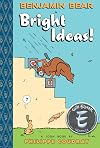
This is the second volume of comics about Benjamin Bear and his nameless rabbit friend. Each page is a different mini story, with a simple name "See-Saw", "Keep Going", or "Something out of nothing" for example.
The pages range from three rectangular panels to six smaller squares or a mixture. Each one has a deadpan sense of humor, with a silly twist at the very end. In "Can I get a ride?" Benjamin picks up more and more animals until in the final panel they are all carrying him. In "Hot and show more cold" a visibly sweating sheep complains of the heat and Benjamin helpfully shears it. Then it's too cold! In the final panel, a disgruntled Benjamin is knitting a sweater.
The simple art, with small touches of details, is perfectly suited to the dry humor of the stories. Benjamin, with his slightly fuzzy outline and almost always blank face, is the perfect vehicle for the situational humor that pops up in almost every story. The simple colors and outlines are decorated with details - a swimming fish, tiny flowers, etc.
The text is a little more complicated. This is supposed to be an easy reader, a level 2 for grades 1-2 in Toon's levels. However, each story has only a few speech bubbles, usually at the beginning, and some are wordless. Put another way, there are 56 panels with words (including those saying "ok", "thanks" or similar one word bubbles) and 66 wordless panels. Now, I agree that not every easy reader has to be crammed with new words, that there are different kind of literacy, and that Toon books do a good job of showing many different ways of reading. That's not the point. The point is, will the parents in my community (who are obsessed with lexiles, leveled readers, and making sure their kids in four year old kindergarten are "reading") want their kids to pick up this book, or will they flip it open, say "not enough words!" and put it back on the shelf? I decided not to add Fuzzy Thinking, the previous volume, so I don't have any circ stats to compare. The libraries who have it in my consortium have wildly differing numbers and have put it everywhere from picture books to beginning readers to graphic novels.
Verdict: While I originally decided to put all the Toon books in easy readers, I am going to break my rule and place Benjamin Bear in graphic novels. I think it will attract kids looking for cartoons more than kids (and parents) looking for easy readers. How this will circ depends a lot on your library and community!
ISBN: 9781935179221; Published 2013 by Toon Books/Candlewick; Review copy provided by publisher. show less
The pages range from three rectangular panels to six smaller squares or a mixture. Each one has a deadpan sense of humor, with a silly twist at the very end. In "Can I get a ride?" Benjamin picks up more and more animals until in the final panel they are all carrying him. In "Hot and show more cold" a visibly sweating sheep complains of the heat and Benjamin helpfully shears it. Then it's too cold! In the final panel, a disgruntled Benjamin is knitting a sweater.
The simple art, with small touches of details, is perfectly suited to the dry humor of the stories. Benjamin, with his slightly fuzzy outline and almost always blank face, is the perfect vehicle for the situational humor that pops up in almost every story. The simple colors and outlines are decorated with details - a swimming fish, tiny flowers, etc.
The text is a little more complicated. This is supposed to be an easy reader, a level 2 for grades 1-2 in Toon's levels. However, each story has only a few speech bubbles, usually at the beginning, and some are wordless. Put another way, there are 56 panels with words (including those saying "ok", "thanks" or similar one word bubbles) and 66 wordless panels. Now, I agree that not every easy reader has to be crammed with new words, that there are different kind of literacy, and that Toon books do a good job of showing many different ways of reading. That's not the point. The point is, will the parents in my community (who are obsessed with lexiles, leveled readers, and making sure their kids in four year old kindergarten are "reading") want their kids to pick up this book, or will they flip it open, say "not enough words!" and put it back on the shelf? I decided not to add Fuzzy Thinking, the previous volume, so I don't have any circ stats to compare. The libraries who have it in my consortium have wildly differing numbers and have put it everywhere from picture books to beginning readers to graphic novels.
Verdict: While I originally decided to put all the Toon books in easy readers, I am going to break my rule and place Benjamin Bear in graphic novels. I think it will attract kids looking for cartoons more than kids (and parents) looking for easy readers. How this will circ depends a lot on your library and community!
ISBN: 9781935179221; Published 2013 by Toon Books/Candlewick; Review copy provided by publisher. show less
Probably our favorite Toon Book so far: Not a story, but a series of vignettes giving you something to chuckle at on every page. The jokes on these pages however, despite being so basic and simple that a 4-5 year old should be able to get it most of the time (at least with a little hint from the parent), are all the while amazingly clever and inventive. This is not crude, mean or slapstick humor, in the style of maybe [b:The Stupids |404977|The Stupids Die (The Stupids, #3)|Harry show more Allard|http://d202m5krfqbpi5.cloudfront.net/books/1348033279s/404977.jpg|1295781], or even [b:George and Martha|408766|George and Martha The Complete Stories of Two Best Friends|James Marshall|http://d202m5krfqbpi5.cloudfront.net/books/1174504097s/408766.jpg|398070]. No, this is a gentle, thoughtful tale of friendship that both young and old will enjoy. Made me laugh out loud several times, and so did my son.
This could fall under "easy reader", it certainly is. It's not challenging though in any way, and does not in fact contain all that much text, as many of the gags are wordless. show less
This could fall under "easy reader", it certainly is. It's not challenging though in any way, and does not in fact contain all that much text, as many of the gags are wordless. show less
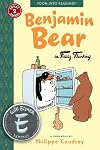
This was arguably the first book my son read all by himself, cover-to-cover. It's funny, clever and somehow still hits all the early-reader bases (simple words, simple structure, repetition, etc.).
I looked on LibraryThing, expecting to find this wildly popular, with a dozen sequels. It looks like Coudray is only just getting popular, especially in the United States. If he cranks out some more, we'll be first in line to buy 'em.
I looked on LibraryThing, expecting to find this wildly popular, with a dozen sequels. It looks like Coudray is only just getting popular, especially in the United States. If he cranks out some more, we'll be first in line to buy 'em.
Awards


You May Also Like


Statistics
- Works
- 34
- Members
- 411
- Popularity
- #59,240
- Rating
- 3.9
- Reviews
- 32
- ISBNs
- 58
- Languages
- 3
- Favorited
- 1