

Emily Esfahani Smith
Author of The Power of Meaning: Crafting a Life That Matters
Works by Emily Esfahani Smith
Tagged
Common Knowledge
- Gender
- female
- Education
- Dartmouth College (BA)
University of Pennsylvania (MA) - Occupations
- psychologist
essayist - Organizations
- Hoover Institution
Ben Franklin Circles project
New Criterion - Agent
- Lucas, Wade
- Birthplace
- Zurich, Zurich, Switzerland
- Places of residence
- Washington, D.C., USA
Members
Reviews
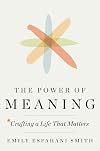
Emily Esfahani Smith has managed to compile and weave a large body of research studies and anecdotal stories into a fairly strong picture of what brings meaning to the lives of us humans as we pass our turns through this world.
She starts off by telling a few stories that exemplify the "crisis" of life without a sense of meaning, and then tours through four "pillars" that she sees as comprising meaning—Belonging, Purpose, Storytelling, and Transcendence—and illustrates each with some show more storytelling of her own crafted from various studies both clinical and informal. Finally, she ties off the lot with a look at how they collectively lead to personal and cultural growth.
The storytelling style throughout is very readable and mostly flows neatly from one illustrative example to the next. There are a very few points at which she seems to bog in the fallacy that study results "prove" anything (correlation is not causation and all that), but otherwise does a very nice job of telling a meaningful story about what basic themes (without depending on any specific religion or philosophy) fuel a sense of meaning in people's lives and the power that meaning can have to bring value, success, and happiness to those lives.
Note that this is not a how-to book that'll teach you the Ten Easy Steps to Bring Meaning to Your Life. Rather, its concepts and ideas shine some thoughtful light on what many of us may be missing as we stumble around lost among increasing billions in a universe that may not seem to care, and may even help inspire us toward seeking out some of those pillars on the way to meaning. At the very least, it's certainly an easy and enjoyable enough read. show less
She starts off by telling a few stories that exemplify the "crisis" of life without a sense of meaning, and then tours through four "pillars" that she sees as comprising meaning—Belonging, Purpose, Storytelling, and Transcendence—and illustrates each with some show more storytelling of her own crafted from various studies both clinical and informal. Finally, she ties off the lot with a look at how they collectively lead to personal and cultural growth.
The storytelling style throughout is very readable and mostly flows neatly from one illustrative example to the next. There are a very few points at which she seems to bog in the fallacy that study results "prove" anything (correlation is not causation and all that), but otherwise does a very nice job of telling a meaningful story about what basic themes (without depending on any specific religion or philosophy) fuel a sense of meaning in people's lives and the power that meaning can have to bring value, success, and happiness to those lives.
Note that this is not a how-to book that'll teach you the Ten Easy Steps to Bring Meaning to Your Life. Rather, its concepts and ideas shine some thoughtful light on what many of us may be missing as we stumble around lost among increasing billions in a universe that may not seem to care, and may even help inspire us toward seeking out some of those pillars on the way to meaning. At the very least, it's certainly an easy and enjoyable enough read. show less
 This review was written for LibraryThing Early Reviewers.
The Power of Meaning: Finding Fulfillment in a World Obsessed with Happiness by Emily Esfahani Smith
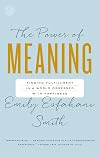
If you've ever found yourself questioning what truly makes life fulfilling, this book takes a deeper look beyond happiness-exploring meaning as the key to a richer, more satisfying life.
The author unpacks four pillars of meaning-belonging, purpose, storytelling, &
transcendence-blending psychology, philosophy, & real-life stories to
illustrate how we can craft lives that truly matter.
The book challenges the cultural obsession with happiness & instead focuses on the deeper, more sustainable show more pursuit of meaning.
The mix of research, personal stories, & philosophy was engaging, making it feel well-rounded & reflective rather than overly academic.
It made me think about how I personally define meaning & what really matters in life, which is always a good takeaway from a book! show less
The author unpacks four pillars of meaning-belonging, purpose, storytelling, &
transcendence-blending psychology, philosophy, & real-life stories to
illustrate how we can craft lives that truly matter.
The book challenges the cultural obsession with happiness & instead focuses on the deeper, more sustainable show more pursuit of meaning.
The mix of research, personal stories, & philosophy was engaging, making it feel well-rounded & reflective rather than overly academic.
It made me think about how I personally define meaning & what really matters in life, which is always a good takeaway from a book! show less
Addiction is separation, often one that is traumatic and sometimes even violent, from the values, feelings, loved ones, passions, dreams and aspirations that propel us to become who we hope to be. Emily Esfahani Smith’s The Power of Meaning: *Creating a Life That Matters is an incredible affirmation that a life of meaning can be formed from even the most shattered life, that in fact, meaning is what welds those broken pieces into something of incredible strength and value.
I’m show more embarrassed to admit that I’ve had this book since November when the folks at Crown Publishing were kind enough to send me a copy via librarything.com. The book was released in early January, but I haven’t been able to get around to writing a review because I’ve been lost in its stories, and collecting the tools they provide to offer to others seeking to build healing in their life.
The Power of Meaning is ripe with the current science of psychology, yet provides room for the role of faith and community. In the dogma of today’s “evidence-based” demand for the treatment of addiction and mental health in general, there is often a powerful undertow that claims science and anything resembling faith is mutually exclusive. Ms. Smith’s work is like the iceberg that punches holes in that Titanic of an idea. The work of Aaron Beck, Irvin Yalom, Jeffry Young, Marsha Linehan, and the many others who have contributed to the science and practice of treating mental health, is not only able to exist alongside the world’s faith communities, Bill W. and the Twelve Steps, but The Power of Meaning shows how each strengthens and affirms the role of the other. show less
I’m show more embarrassed to admit that I’ve had this book since November when the folks at Crown Publishing were kind enough to send me a copy via librarything.com. The book was released in early January, but I haven’t been able to get around to writing a review because I’ve been lost in its stories, and collecting the tools they provide to offer to others seeking to build healing in their life.
The Power of Meaning is ripe with the current science of psychology, yet provides room for the role of faith and community. In the dogma of today’s “evidence-based” demand for the treatment of addiction and mental health in general, there is often a powerful undertow that claims science and anything resembling faith is mutually exclusive. Ms. Smith’s work is like the iceberg that punches holes in that Titanic of an idea. The work of Aaron Beck, Irvin Yalom, Jeffry Young, Marsha Linehan, and the many others who have contributed to the science and practice of treating mental health, is not only able to exist alongside the world’s faith communities, Bill W. and the Twelve Steps, but The Power of Meaning shows how each strengthens and affirms the role of the other. show less
This review was written for LibraryThing Early Reviewers.Six-word review: Look for meaning rather than happiness.
Extended review:
Drawing upon sources as disparate as Ralph Waldo Emerson and Dr. Jack Kevorkian, author Smith addresses herself to the perennial questions "What is the meaning of existence? And how can I lead a meaningful life?"
She cites studies that show that a quest for happiness as an end in itself tends not to succeed. A quest for meaning is a much surer path to happiness, and meaning is characterized by its relative lack of show more self-serving motives. Meaning derives from four "pillars": belonging, purpose, storytelling, and transcendence. Through copious anecdotes of the sort that would be familiar to readers of Malcolm Gladwell, Smith illustrates these elements in real-world terms and shows how people find them.
In this way the book imparts easily understood wisdom and guidance, commodities especially needful in these disturbed and rudderless times. Philosopy lite, we might argue, is better than no philosophy at all.
There were few revelations for me in this work, not being a stranger to the subject matter; but the key points are capably supported by examples, many of which are strikingly apt. Smith also makes use of a number of literary works in a way that makes me realize how rare it is these days for an author to treat literature unapologetically as a point of common cultural reference. (However, I sharply disagree with her interpretation of Camus's "The Myth of Sisyphus," which seems to me to miss the point.) The writing itself is competent, even if not brilliant. I was a bit put off by the chapter called "Conclusion," which, despite being the final chapter, does not draw conclusions so much as introduce new material and then tack on a weak ending that we could have got to without passing through any of the foregoing discussion.
My rating doesn't signify that the book is bad in any way, and I don't regret my investment in reading it; but I don't consider it a standout either. It may not shed great light, but neither does it cast shadows.
Detailed and comprehensive notes in the back add considerable value. The index is not yet present in this ER copy, but if it's as well done as the notes, I would expect it to be a strong plus. show less
Extended review:
Drawing upon sources as disparate as Ralph Waldo Emerson and Dr. Jack Kevorkian, author Smith addresses herself to the perennial questions "What is the meaning of existence? And how can I lead a meaningful life?"
She cites studies that show that a quest for happiness as an end in itself tends not to succeed. A quest for meaning is a much surer path to happiness, and meaning is characterized by its relative lack of show more self-serving motives. Meaning derives from four "pillars": belonging, purpose, storytelling, and transcendence. Through copious anecdotes of the sort that would be familiar to readers of Malcolm Gladwell, Smith illustrates these elements in real-world terms and shows how people find them.
In this way the book imparts easily understood wisdom and guidance, commodities especially needful in these disturbed and rudderless times. Philosopy lite, we might argue, is better than no philosophy at all.
There were few revelations for me in this work, not being a stranger to the subject matter; but the key points are capably supported by examples, many of which are strikingly apt. Smith also makes use of a number of literary works in a way that makes me realize how rare it is these days for an author to treat literature unapologetically as a point of common cultural reference. (However, I sharply disagree with her interpretation of Camus's "The Myth of Sisyphus," which seems to me to miss the point.) The writing itself is competent, even if not brilliant. I was a bit put off by the chapter called "Conclusion," which, despite being the final chapter, does not draw conclusions so much as introduce new material and then tack on a weak ending that we could have got to without passing through any of the foregoing discussion.
My rating doesn't signify that the book is bad in any way, and I don't regret my investment in reading it; but I don't consider it a standout either. It may not shed great light, but neither does it cast shadows.
Detailed and comprehensive notes in the back add considerable value. The index is not yet present in this ER copy, but if it's as well done as the notes, I would expect it to be a strong plus. show less
This review was written for LibraryThing Early Reviewers.Lists
Awards

You May Also Like


Associated Authors
Statistics
- Works
- 6
- Members
- 432
- Popularity
- #56,590
- Rating
- 4.0
- Reviews
- 90
- ISBNs
- 23
- Languages
- 3
- Favorited
- 1
