
David Brooks (1) (1961–)
Author of The Road to Character
For other authors named David Brooks, see the disambiguation page.
About the Author
David Brooks was born in Toronto, Canada on August 11, 1961. He received a degree in history from the University of Chicago in 1983. After graduation, he worked as a police reporter for the City News Bureau. His other jobs include numerous posts at The Wall Street Journal, a senior editor at The show more Weekly Standard, and a contributing editor at Newsweek and The Atlantic Monthly. He currently is an op-ed columnist for The New York Times since 2003 and a weekly commentator on PBS NewsHour. He is the author of the several books including Bobos in Paradise: The New Upper Class and How They Got There, On Paradise Drive: How We Live Now (And Always Have) in the Future Tense, and The Social Animal: The Hidden Sources of Love, Character, and Achievement. He is also the editor of the anthology Backward and Upward: The New Conservative Writing. David Brooks made the New York Times Best Seller List with his title Social Animal: the Hidden Sources of Love, Character, and Achievement and The Road to Character. (Publisher Provided) show less
Image credit: David Brooks speaks with David Rubenstein on the National Book Festival Main Stage, August 31, 2019. Photo by Shawn Miller/Library of Congress By Library of Congress Life - 20190831SM0850.jpg, CC0, https://commons.wikimedia.org/w/index.php?curid=82899285
Works by David Brooks
The Social Animal: The Hidden Sources of Love, Character, and Achievement (2011) 1,837 copies, 41 reviews
How to Know a Person: The Art of Seeing Others Deeply and Being Deeply Seen (2023) 943 copies, 16 reviews
On Paradise Drive: How We Live Now [and Always Have] in the Future Tense (2004) 406 copies, 3 reviews
Associated Works
Fierce Pajamas: An Anthology of Humor Writing from The New Yorker (2001) — Contributor — 791 copies, 5 reviews
Understanding Anti-Americanism: Its Origins and Impact at Home and Abroad (2004) — Contributor — 35 copies
Beyond the Boom: New Voices on American Life, Culture, and Politics (1990) — Contributor — 16 copies
Tagged
Common Knowledge
- Canonical name
- Brooks, David
- Birthdate
- 1961-08-22
- Gender
- male
- Education
- University of Chicago (AB|History|1983)
- Occupations
- neoconservative
television broadcaster
journalist - Organizations
- Washington Times
Wall Street Journal
The Weekly Standard
National Review
Newsweek
The Atlantic Monthly (show all 8)
PBS Newshour
New York Times - Nationality
- Canada (birth)
USA (parents) - Birthplace
- Toronto, Ontario, Canada
- Places of residence
- Toronto, Ontario, Canada
Philadelphia, Pennsylvania, USA
New York, New York, USA - Associated Place (for map)
- USA
Members
Discussions
Another Conservative Criticizes Trump in Pro and Con (June 2016)
David Brooks and the end of philosophy in Philosophy and Theory (April 2009)
Reviews
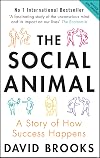
I could not make up my mind about this book while I read it - was it tiresome or did it have some hidden depth? A third of the way through, while amused on occasions, I decided that it was not something I would want to keep in my library.
It is a classic example of Gladwellism, a cultural enterprise whereby a jobbing journalist or 'public intellectual', well embedded in his liberal middle class market (actually a very conservative community), decides to make a turn by trying to explain show more science or social science to his fellows.
In general, these books are not very inspiring, a symptom of our time. You get gobbets of 'explanation' designed simultaneously to shock the bourgeoisie out of its complacency but only in such a way that complacency about its audience's right to rule is reaffirmed.
There are no lies in these books. The science is real enough. It is just that it is rarely contextualised fully or hedged about with all the doubts that good scientists themselves would have about such matters. Instead the readership must be given a 'narrative', told a 'story', be 'inspired'.
Such books are journalism at heart and journalism is designed to 'sell'. If you want the full truth of the matter, I am afraid you are just going to have do the hard work and read the original material after a full degree or more. What you get in these cases is generally a myth for our age.
This book is no exception. It leaps from some very entertaining and adroit social satire of the class it is flattering to a rather simplistic interpretation of psychological research and thence to boosting a communitarian ideology of inherent middle class superiority and then back again.
It was really no surprise at the end to find that our author is a New York Times journalist who relied on someone now at the American Enterprise Institute to help with research and fact-checking. It reeks of the complacency of a class that hates the idea of the lower classes having autonomy.
The ideology of the book is simple - we do not know our own minds, success is what the East Coast bourgeoisie thinks is success and the lower orders are failing because they are not listening to or emulating their betters, all theses proven by 'science'. Ho, hum!
If you want any of the cherry pie, you have to earn it by behaving as the educated urban middle class behave which just happens to mean (nowadays) adopting a conservative communitarian view of human nature, masked by liberal values, all, of course, also justified by 'science'. Ho, hum!
According to 'science', it seems none of us have much will or little choice over our lives unless we play by some rules pre-set by this class. A bit of paternalism to help the lower orders perhaps while those higher on the ladder of life must take more 'responsibility' so that stability can be assured.
No questioning of the educational mandarinate and its reliance on texts detached from reality, no need for any significant redistribution of resources, no essential respect for the instinctual calculations of those surviving at the bottom of society.
Deeper down we may see this as another text amongst many drawn from the naked panic of the scribbling bourgeoisie at their own future redundancy in what they clearly fear to be a general social collapse that can only be rectified with a commitment to reason's command of instinct.
We are, it would seem filled with cognitive flaws and 'unconscious bias', subjects who need to be taught and guided by wiser political Platonists who can earn their way to Davos and who are honoured as policy wonks and managers.
And to be fair to Brooks, his essential reading of reality is correct although the fashionable belief of the depressed bourgeoisie (yawn, Ernst Mach and the pre-first world war Viennese got there first) that the Self is slippery is only something the repressed middle classes truly believe.
The rest if us are quite secure in our selves, thank you very much, because we have instinct and reason nicely calibrated by not allowing either to rule and knowing that only material limitation stops us from being expressions of an admittedly temporary divine.
Yet sometimes Brooks made me laugh because a bitter cynicism about his own class would sometimes break through just as his subjects (two perfect examples of that aspirational breed) give us a tale of sweet success and personal niceness, a wet dream of bourgeois perfection.
Of course, I loved his two ordinary bourgeois, Erica and Harold, as much as he did, this literary textual God deciding their fates in print. But, being more Luciferian, I dearly wanted to pass on to them the apple of knowledge which, whatever it is, is not and never can be just 'science'.
Brooks writes well and smoothly. It is definitely not a 'bad book' but, although I finished it to the end, I wanted more than this. I wanted to know whether the 'science' actually mattered at all when it came to living our lives. I wanted to know if the science stood up as politics. I doubted it.
I also wanted to know whether the truth might be that much of what is presented as breathless revelation in books such as these may not come as a surprise only to people who have lived their lives by the text and the network, not to those others who do not.
This felt like the US East Coast once again looking down on the rest of humanity and demanding that it listen to their 'science', not so much to be a 'success' themselves but to respect the 'successful'. Live to serve your class, this book implicitly says, and your class will serve you.
Written in 2011, half a decade later the recalcitrant masses broke through and taught the 'New York Times' a lesson that it is still coming to terms with. Perhaps it has now given up on 'science' in favour of the brute political thuggery of 'impeachment'. Maybe. show less
It is a classic example of Gladwellism, a cultural enterprise whereby a jobbing journalist or 'public intellectual', well embedded in his liberal middle class market (actually a very conservative community), decides to make a turn by trying to explain show more science or social science to his fellows.
In general, these books are not very inspiring, a symptom of our time. You get gobbets of 'explanation' designed simultaneously to shock the bourgeoisie out of its complacency but only in such a way that complacency about its audience's right to rule is reaffirmed.
There are no lies in these books. The science is real enough. It is just that it is rarely contextualised fully or hedged about with all the doubts that good scientists themselves would have about such matters. Instead the readership must be given a 'narrative', told a 'story', be 'inspired'.
Such books are journalism at heart and journalism is designed to 'sell'. If you want the full truth of the matter, I am afraid you are just going to have do the hard work and read the original material after a full degree or more. What you get in these cases is generally a myth for our age.
This book is no exception. It leaps from some very entertaining and adroit social satire of the class it is flattering to a rather simplistic interpretation of psychological research and thence to boosting a communitarian ideology of inherent middle class superiority and then back again.
It was really no surprise at the end to find that our author is a New York Times journalist who relied on someone now at the American Enterprise Institute to help with research and fact-checking. It reeks of the complacency of a class that hates the idea of the lower classes having autonomy.
The ideology of the book is simple - we do not know our own minds, success is what the East Coast bourgeoisie thinks is success and the lower orders are failing because they are not listening to or emulating their betters, all theses proven by 'science'. Ho, hum!
If you want any of the cherry pie, you have to earn it by behaving as the educated urban middle class behave which just happens to mean (nowadays) adopting a conservative communitarian view of human nature, masked by liberal values, all, of course, also justified by 'science'. Ho, hum!
According to 'science', it seems none of us have much will or little choice over our lives unless we play by some rules pre-set by this class. A bit of paternalism to help the lower orders perhaps while those higher on the ladder of life must take more 'responsibility' so that stability can be assured.
No questioning of the educational mandarinate and its reliance on texts detached from reality, no need for any significant redistribution of resources, no essential respect for the instinctual calculations of those surviving at the bottom of society.
Deeper down we may see this as another text amongst many drawn from the naked panic of the scribbling bourgeoisie at their own future redundancy in what they clearly fear to be a general social collapse that can only be rectified with a commitment to reason's command of instinct.
We are, it would seem filled with cognitive flaws and 'unconscious bias', subjects who need to be taught and guided by wiser political Platonists who can earn their way to Davos and who are honoured as policy wonks and managers.
And to be fair to Brooks, his essential reading of reality is correct although the fashionable belief of the depressed bourgeoisie (yawn, Ernst Mach and the pre-first world war Viennese got there first) that the Self is slippery is only something the repressed middle classes truly believe.
The rest if us are quite secure in our selves, thank you very much, because we have instinct and reason nicely calibrated by not allowing either to rule and knowing that only material limitation stops us from being expressions of an admittedly temporary divine.
Yet sometimes Brooks made me laugh because a bitter cynicism about his own class would sometimes break through just as his subjects (two perfect examples of that aspirational breed) give us a tale of sweet success and personal niceness, a wet dream of bourgeois perfection.
Of course, I loved his two ordinary bourgeois, Erica and Harold, as much as he did, this literary textual God deciding their fates in print. But, being more Luciferian, I dearly wanted to pass on to them the apple of knowledge which, whatever it is, is not and never can be just 'science'.
Brooks writes well and smoothly. It is definitely not a 'bad book' but, although I finished it to the end, I wanted more than this. I wanted to know whether the 'science' actually mattered at all when it came to living our lives. I wanted to know if the science stood up as politics. I doubted it.
I also wanted to know whether the truth might be that much of what is presented as breathless revelation in books such as these may not come as a surprise only to people who have lived their lives by the text and the network, not to those others who do not.
This felt like the US East Coast once again looking down on the rest of humanity and demanding that it listen to their 'science', not so much to be a 'success' themselves but to respect the 'successful'. Live to serve your class, this book implicitly says, and your class will serve you.
Written in 2011, half a decade later the recalcitrant masses broke through and taught the 'New York Times' a lesson that it is still coming to terms with. Perhaps it has now given up on 'science' in favour of the brute political thuggery of 'impeachment'. Maybe. show less
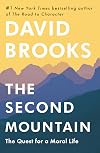
Brooks is a thoughtful intellectual who has been fearless about processing the evolution of his own thinking in front of a wide audience. This volume takes the lens he often turns on politics and governing and applies it to his own progress toward a meaningful life. He questions his own assumptions as often as he questions those of others, which is a quality I find super appealing, and which I wish there was more of in our public discourse.
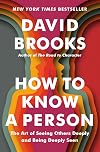
I read Bobos in Paradise years back when it first came out. This is better; or rather, it starts out similarly and a little detachedly, but improved as it went - especially as it got personal.
Brooks is a good writer and an astute observer. Everyone sees the world through their specific lens. Brooks sees the world through affluent, well-heeled eyes--this is what he knows, what he lives, and the social circles through which he travels. That's an observation, not a faulting. Sometimes it shows show more up in his writing - like when he makes a point about how a plumber has to be super-careful to be taken as credible among an educated, academic crowd. That's likely true from the POV of an educated, academic, coastal-dwelling, Ivy-leagueish type of crowd. But the plumber? If he's mixing with that crowd at all, he's not looking to impress them and he doesn't care what they think of him--he knows plenty about life and people that many elitists don't and never will.
This book is really a gentle way to tell elitists to get out of their ivory towers, burst the bubbles they live in, or step out from behind their screen and mix it up with real people. That there's joy in understanding and seeing a person - not an identify, not a stereotype, not a political party, but the complex, nuanced, and wonder-full person right in front of them. In my experience, many don't want to, some don't know how to, and Brooks points out what they're missing. Also, he offers advice on ways to do it.
The chapter where Brooks' writing got personal is when he tells about his childhood, lifelong friend who succumbed to suicide. That got real and vulnerable and was Brooks at his best.
Recommended primarily to those who denigrate people who think differently, hold fewer degrees, or work 'dirty' jobs, as somehow less than and/or those who've ever used the phrase "flyover country" unironically. show less
Brooks is a good writer and an astute observer. Everyone sees the world through their specific lens. Brooks sees the world through affluent, well-heeled eyes--this is what he knows, what he lives, and the social circles through which he travels. That's an observation, not a faulting. Sometimes it shows show more up in his writing - like when he makes a point about how a plumber has to be super-careful to be taken as credible among an educated, academic crowd. That's likely true from the POV of an educated, academic, coastal-dwelling, Ivy-leagueish type of crowd. But the plumber? If he's mixing with that crowd at all, he's not looking to impress them and he doesn't care what they think of him--he knows plenty about life and people that many elitists don't and never will.
This book is really a gentle way to tell elitists to get out of their ivory towers, burst the bubbles they live in, or step out from behind their screen and mix it up with real people. That there's joy in understanding and seeing a person - not an identify, not a stereotype, not a political party, but the complex, nuanced, and wonder-full person right in front of them. In my experience, many don't want to, some don't know how to, and Brooks points out what they're missing. Also, he offers advice on ways to do it.
The chapter where Brooks' writing got personal is when he tells about his childhood, lifelong friend who succumbed to suicide. That got real and vulnerable and was Brooks at his best.
Recommended primarily to those who denigrate people who think differently, hold fewer degrees, or work 'dirty' jobs, as somehow less than and/or those who've ever used the phrase "flyover country" unironically. show less
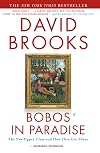
Brooks assumes that the Bobos at some point in their lives have shared counter cultural, radical, and creative ideas associated with bohemians. Is this the case, or are they merely tourists of the lifestyle? I am reminded of John Lennon's observation about "Day Trippers", the weekend bohemians of the 60s. B. would have us think that the bourgeois synthesized Bohemia into the Bobo, but the book does not provide the evidence for some such Hegelian process. Instead, he runs down a seemingly show more inexhaustible (and exhausting) list of their lifestyle choices, concentrating especially on their consumer habits, sometimes to humorous effect. Eventually, though, the act becomes tiresome, and he rather lamely attempts some serious analysis.
This is where the book falls flat, and the thud is deafening. If the Bobo had truly incorporated bohemian values into the upper class sensibility, we would not see them purchasing SUVs, for instance. These vehicles get terrible gas mileage, which is incompatible with the Bobos' supposed deep caring for the environment. Also, these expensive vehicles pose a danger to those less fortunate motorists who can only afford a small car. Such contradictions can be found elsewhere in the opening chapters (electricity-gobbling appliances, for instance); they should be kept in mind when the reader gets to the weak arguments of Bobo morality and spirituality in the later chapters.
B. claims that the Bobos are concerned with preservation of America's older neighborhoods, to save older structures and our heritage, yet the facts speak to an utter lack of concern of the Bobos when it comes to their own "needs." Witness the gentrification of the Mission District in San Francisco, which has forced the traditional Hispanic population out because of sky-high rents. There is a noticeable lack of mention of the lower classes in the book, in fact. The Bobo is depicted unintentionally as a classic elitist, with a narcissistic streak that would make the 70s "Me Decade" seem tame by comparison. Thus, the horrific reaction some readers might have when they discover that B. not only thinks the Bobos are a positive force of nature, but that he counts himself as one.
If B. were approaching the subject critically, he would undoubtedly have tackled the psychology of the Bobo, and why the fascination with bohemian culture. He never tackles this very key point; the possible issues of guilt and self-esteem, for instance. Or how about the Info Age obsession with research? Is this lifestyle optimized based on careful study of all the facts? Is the incorporation of the bohemian a sign of neurosis instead? Don't the descriptions of consumption sound like classic obsessive-compulsive disorder? How does the Bobo grapple with Bobo ethical questions, such as the dilemma posed by optimizing his lifestyle choice by buying the "best" coffee from a plantation that exploits its workers, against the "lesser" coffee that would be more politically correct? The more you ponder these contradictions, the more you are apt to recognize the absurdity of buying B.'s arguments.
B. later talks of the Bobo spiritual life, wherein they pick and choose freely from an ever-changing menu of religious beliefs. Again, the consumer approach to salvation. Yet the earlier chapters allow one to reach a different conclusion: that the real spiritual instinct has been supplanted by entertainment itself, in the form of food, gadgets, and popular culture that are considered superior and "hip". It is this obsessive approach to lifestyle that fills the void left by the decline of true religious commitment. Religion then becomes yet another item for research and eventual consumption.
As this is a conservative's project to convince us of the likability of the Bobo over previous elite classes, he distracts the reader from his true purpose: to celebrate the death of true bohemianism, by co-opting it and robbing it of its alternative world view, which stood in opposition to that of the global exploits of the bourgeois in the realms of commerce and politics. This is the core piece of bohemianism that the Bobo rejects, which makes the so-called synthesis impossible. A much, much better analysis of the Elites and their effect on the erosion of democracy worldwide is presented in Christopher Lasch's "The Revolt of the Elites," which is the work of a true intellectual, not the faux sort exemplified by David Brooks. show less
This is where the book falls flat, and the thud is deafening. If the Bobo had truly incorporated bohemian values into the upper class sensibility, we would not see them purchasing SUVs, for instance. These vehicles get terrible gas mileage, which is incompatible with the Bobos' supposed deep caring for the environment. Also, these expensive vehicles pose a danger to those less fortunate motorists who can only afford a small car. Such contradictions can be found elsewhere in the opening chapters (electricity-gobbling appliances, for instance); they should be kept in mind when the reader gets to the weak arguments of Bobo morality and spirituality in the later chapters.
B. claims that the Bobos are concerned with preservation of America's older neighborhoods, to save older structures and our heritage, yet the facts speak to an utter lack of concern of the Bobos when it comes to their own "needs." Witness the gentrification of the Mission District in San Francisco, which has forced the traditional Hispanic population out because of sky-high rents. There is a noticeable lack of mention of the lower classes in the book, in fact. The Bobo is depicted unintentionally as a classic elitist, with a narcissistic streak that would make the 70s "Me Decade" seem tame by comparison. Thus, the horrific reaction some readers might have when they discover that B. not only thinks the Bobos are a positive force of nature, but that he counts himself as one.
If B. were approaching the subject critically, he would undoubtedly have tackled the psychology of the Bobo, and why the fascination with bohemian culture. He never tackles this very key point; the possible issues of guilt and self-esteem, for instance. Or how about the Info Age obsession with research? Is this lifestyle optimized based on careful study of all the facts? Is the incorporation of the bohemian a sign of neurosis instead? Don't the descriptions of consumption sound like classic obsessive-compulsive disorder? How does the Bobo grapple with Bobo ethical questions, such as the dilemma posed by optimizing his lifestyle choice by buying the "best" coffee from a plantation that exploits its workers, against the "lesser" coffee that would be more politically correct? The more you ponder these contradictions, the more you are apt to recognize the absurdity of buying B.'s arguments.
B. later talks of the Bobo spiritual life, wherein they pick and choose freely from an ever-changing menu of religious beliefs. Again, the consumer approach to salvation. Yet the earlier chapters allow one to reach a different conclusion: that the real spiritual instinct has been supplanted by entertainment itself, in the form of food, gadgets, and popular culture that are considered superior and "hip". It is this obsessive approach to lifestyle that fills the void left by the decline of true religious commitment. Religion then becomes yet another item for research and eventual consumption.
As this is a conservative's project to convince us of the likability of the Bobo over previous elite classes, he distracts the reader from his true purpose: to celebrate the death of true bohemianism, by co-opting it and robbing it of its alternative world view, which stood in opposition to that of the global exploits of the bourgeois in the realms of commerce and politics. This is the core piece of bohemianism that the Bobo rejects, which makes the so-called synthesis impossible. A much, much better analysis of the Elites and their effect on the erosion of democracy worldwide is presented in Christopher Lasch's "The Revolt of the Elites," which is the work of a true intellectual, not the faux sort exemplified by David Brooks. show less
Lists
Awards


You May Also Like


Associated Authors
Statistics
- Works
- 11
- Also by
- 9
- Members
- 7,978
- Popularity
- #3,038
- Rating
- 3.8
- Reviews
- 129
- ISBNs
- 220
- Languages
- 17
- Favorited
- 8

