
Peter Millar (1)
Author of Bleak Midwinter
For other authors named Peter Millar, see the disambiguation page.
About the Author
Image credit: http://www.petermillar.eu/
Works by Peter Millar
Associated Works
Tagged
Common Knowledge
- Gender
- male
- Education
- University of Oxford (Magdalen College)
- Occupations
- journalist
critic
translator - Organizations
- Reuters
The Sunday Times - Nationality
- UK
- Birthplace
- Northern Ireland, UK
- Places of residence
- East Berlin, Germany
Warsaw, Poland
Moscow, Russia
Members
Reviews
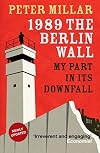
This is a fascinating account by a journalist of not only his reporting for the Sunday Times of the fall of the Berlin Wall itself and, to a lesser extent, of the fall of communist regimes in Czechoslovakia, Poland and Romania, but also his experiences as a reporter in East Germany from 1981, with the intervention of a period in Moscow in the mid-80s. His writing style is wry and informal, but without disrespecting the serious nature of the subject, covering the lives of citizens of a show more country subject to constant surveillance and oppression. He got to know some of these people well and made long term friendships with them, reporting on demonstrations against the authorities and celebrating with them at that amazing time in November 1989 when the Wall came tumbling down, almost literally overnight and to the surprise of everyone East and West, after a cock up by East German politburo member Gunter Schwabowski when announcing a liberalisation of the rules for leaving the country; as Millar writes, "I had committed the mistake of assuming that politics and logic would fuel the progress of history, instead of more potent factors: emotion and accident". He also recounts his early journalistic experiences in the late 70s, which being pre-technology and pre-Rupert Murdoch feels like a very different age, one with linotype and rigid demarcation lines between journalists and printers. The examples quoted of his journalistic style come across as evocative and colourful, without being sensationalist, which is a good combination for a serious journalist. A very good read. show less
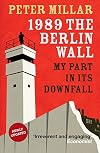
In 1989, the world watched as the Berlin Wall - a symbol of oppression at its most blatant - was brought down. The atmosphere was euphoric and everyone who saw those scenes knew that they were watching history being made.
Peter Millar is a British journalist, who had spent several years living in East Berlin, and who found himself literally caught in the middle of the celebrations, stuck at Checkpoint Charlie, trying to make sense of what was happening, while piecing together a story for The show more Sunday Times.
In this book, he describes the events that led to the wall being built, and what life was like for those on the Eastern side of it. People suddenly found themselves separated from family members, or forcibly ejected from their homes. Living conditions were poor, and the economy crumbled. Unlike most journalists who reported on the Wall and the division of a country, Millar has an on-the-ground view of events, as he lived through them personally. The book also talks about how he initially fell into journalism (almost by accident), and worked in Fleet Street in the 1970s, before he became a foreign correspondent, and found a local public house in East Berlin named Metzer Eck. There, he made some good friends and uncovered a lot of local opinion about life under the rule of the Soviet Union.
The political blunders and deliberate misunderstandings that led up to the demolition of the Berlin Wall are well explained and interesting. Millar discusses how life changed for people on both sides, when Berlin became one city again. He also relates how, some years later, he went to look at his own file kept by the Stasi Police (who spied on the citizens of East Berlin), and discovered who, if any, of his friends had fed information about him to the Stasi. This chapter was the most chilling for me. It was commonplace for microphones to be hidden in the walls of people's apartments, and for certain citizens to be kept under surveillance from dawn to dusk. A day out for Millar with his wife, when they did nothing more than go to a beach for a picnic, is described in minute-by-minute detail.
Millar is an engaging narrator, with a wry wit. However, his good natured sense of humour never lets the reader forget that this is a story of oppression and dictatorship; that the people described lived their lives under constant watch and distrust. It is written in a chatty tone, but it is about a very serious subject. Highly informative, well researched and extremely interesting. show less
Peter Millar is a British journalist, who had spent several years living in East Berlin, and who found himself literally caught in the middle of the celebrations, stuck at Checkpoint Charlie, trying to make sense of what was happening, while piecing together a story for The show more Sunday Times.
In this book, he describes the events that led to the wall being built, and what life was like for those on the Eastern side of it. People suddenly found themselves separated from family members, or forcibly ejected from their homes. Living conditions were poor, and the economy crumbled. Unlike most journalists who reported on the Wall and the division of a country, Millar has an on-the-ground view of events, as he lived through them personally. The book also talks about how he initially fell into journalism (almost by accident), and worked in Fleet Street in the 1970s, before he became a foreign correspondent, and found a local public house in East Berlin named Metzer Eck. There, he made some good friends and uncovered a lot of local opinion about life under the rule of the Soviet Union.
The political blunders and deliberate misunderstandings that led up to the demolition of the Berlin Wall are well explained and interesting. Millar discusses how life changed for people on both sides, when Berlin became one city again. He also relates how, some years later, he went to look at his own file kept by the Stasi Police (who spied on the citizens of East Berlin), and discovered who, if any, of his friends had fed information about him to the Stasi. This chapter was the most chilling for me. It was commonplace for microphones to be hidden in the walls of people's apartments, and for certain citizens to be kept under surveillance from dawn to dusk. A day out for Millar with his wife, when they did nothing more than go to a beach for a picnic, is described in minute-by-minute detail.
Millar is an engaging narrator, with a wry wit. However, his good natured sense of humour never lets the reader forget that this is a story of oppression and dictatorship; that the people described lived their lives under constant watch and distrust. It is written in a chatty tone, but it is about a very serious subject. Highly informative, well researched and extremely interesting. show less
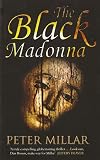
They say that you shouldn’t judge a book by its cover, but what if the book’s author puts himself up for judgement with a tagline that has created controversy on its own?
That is the case with The Black Madonna, a compelling thriller by UK journalist and author Peter Millar. The bold phrase 'A book to make Dan Brown turn green with envy' may give readers the impression that author Peter Millar is just another writer simply trying to create controversy with his rather overblown claims. show more Surprisingly, The Black Madonna turns out to be the complete opposite; it's a genuinely enjoyable read with a neatly constructed plot full of cultural and historical detail.
Nazareem is a young Muslim Palestinian archaeologist who discovers what might be the first image of the Virgin Mary drawn in her real time, displaying the Virgin Mary with black skin. Nazareem thinks that she is onto something that might turn the world upside down, but before her theory can be proven; the painting is stolen from the small Gaza museum.
From that moment on, Nazareem finds herself threatened by people who will not stop at killing someone to get what they want. Not sure of why she’s being followed, she flees to London seeking help form Marcus, an ex-lover who is also an archaeologist. Together, they realise that this chase has more to it than the stolen painting.
As the events begin to gradually unfold, The Black Madonna becomes one of the hardest books to put down. The build-up to the focal point of the plot could have evolved a little faster, but then again; it's a deep, well-constructed story with vivid descriptions that don't bore the reader.
It's obvious that Millar has conducted a significant amount of research for the book to turn into a profound debate about the essence of Islam and Christianity. He openly discusses the points of difference between the religions without tiptoeing around these sensitive subjects. Luckily for Millar, he doesn’t tackle the story through his personal bias, instead; he allows the debate to be carried by characters from both religions.
Maybe it was the element of combining mystery with religious history that suggests a parallel between The Black Madonna and Dan Brown’s Da Vinci Code.However, some will find that the comparison isn’t fair; through tackling scientific angles of history that could redefine religion, Brown created a lot of religious condemnation.
Millar probably won’t face the same allegations, as he’s been fair in portraying both sides of the story. Perhaps this may make Dan Brown jealous after all.
By Salma Tantawi - Writer for http://www.Cairo360.com show less
That is the case with The Black Madonna, a compelling thriller by UK journalist and author Peter Millar. The bold phrase 'A book to make Dan Brown turn green with envy' may give readers the impression that author Peter Millar is just another writer simply trying to create controversy with his rather overblown claims. show more Surprisingly, The Black Madonna turns out to be the complete opposite; it's a genuinely enjoyable read with a neatly constructed plot full of cultural and historical detail.
Nazareem is a young Muslim Palestinian archaeologist who discovers what might be the first image of the Virgin Mary drawn in her real time, displaying the Virgin Mary with black skin. Nazareem thinks that she is onto something that might turn the world upside down, but before her theory can be proven; the painting is stolen from the small Gaza museum.
From that moment on, Nazareem finds herself threatened by people who will not stop at killing someone to get what they want. Not sure of why she’s being followed, she flees to London seeking help form Marcus, an ex-lover who is also an archaeologist. Together, they realise that this chase has more to it than the stolen painting.
As the events begin to gradually unfold, The Black Madonna becomes one of the hardest books to put down. The build-up to the focal point of the plot could have evolved a little faster, but then again; it's a deep, well-constructed story with vivid descriptions that don't bore the reader.
It's obvious that Millar has conducted a significant amount of research for the book to turn into a profound debate about the essence of Islam and Christianity. He openly discusses the points of difference between the religions without tiptoeing around these sensitive subjects. Luckily for Millar, he doesn’t tackle the story through his personal bias, instead; he allows the debate to be carried by characters from both religions.
Maybe it was the element of combining mystery with religious history that suggests a parallel between The Black Madonna and Dan Brown’s Da Vinci Code.However, some will find that the comparison isn’t fair; through tackling scientific angles of history that could redefine religion, Brown created a lot of religious condemnation.
Millar probably won’t face the same allegations, as he’s been fair in portraying both sides of the story. Perhaps this may make Dan Brown jealous after all.
By Salma Tantawi - Writer for http://www.Cairo360.com show less
"...Look out, Dan Brown, make way for Millar." No way. Dan Brown doesn't have to worry. Dan Brown is a story-teller; a page-turner which only provided me with a good story and no belief in what Brown, perhaps, was trying to convince me of. Peter Millar, on the other hand, has a fascinating historical and cultural story to tell. It has, however, been thoroughly side-swiped by a boring "crime" motive. About a third of the way through, I gave up. Read the Epilogue and Author's Note. But the show more Black Madonna case has intrigued me, so I will look for other books about the same subject. show less
You May Also Like


Statistics
- Works
- 12
- Also by
- 2
- Members
- 281
- Popularity
- #82,781
- Rating
- 3.7
- Reviews
- 8
- ISBNs
- 46
- Languages
- 2
- Favorited
- 1