

Gene Kerrigan
Author of The Rage (World Noir)
About the Author
Works by Gene Kerrigan
Associated Works
Down These Green Streets: Irish Crime Writing in the 21st Century (2011) — Contributor — 25 copies, 1 review
Tagged
Common Knowledge
- Canonical name
- Kerrigan, Gene
- Birthdate
- 1949
- Gender
- male
- Occupations
- journalist
crime novelist - Awards and honors
- Journalist of the Year (1985, 1990)
- Short biography
- Gene Kerrigan is a Dublin born Irish journalist with the Sunday Independent newspaper and a crime fiction writer.
- Nationality
- Ireland
- Birthplace
- Cabra West, County Dublin, Ireland
- Places of residence
- Dublin, Ireland
- Associated Place (for map)
- Ireland
Members
Reviews
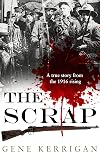
The blurb on this is misleading—the "desperate plan to save the collapsing rebellion" was never put into action and occupies maybe ten pages of this otherwise engaging popular history. Gene Kerrigan pieces together a patchwork overview the events of the 1916 Rising in Dublin from the various personal testimonies of those who were there.
While some of the big names feature—Pádraig Pearse, James Connolly—Kerrigan focuses his account mostly on a relatively small group, the F Company of show more the Irish Volunteers. It's no surprise, given his background in journalism, that Kerrigan has a keen eye for the vibrant detail: the hungry fighter pausing to consider whether it was permissible to eat a ham sandwich on a Friday; the loose horses careening down O'Connell Street; the men careful to shave before their executions. These help to make very human a moment in Irish history which is often mythologised and twisted for political purposes. We're taught about plaster saints in school, not that one of the signers of the Proclamation had to be coerced to do so because he found the idea of equal rights for women repugnant (my money's on Pearse), or that several of the leaders sat around on the first day of the Rising wondering what they would do if they actually won, and whether or not they should ask a Prussian prince to become king of Ireland.
This isn't an academic history; there are no footnotes, a fact which would normally irk me a great deal. Kerrigan's incisive humanity and insistence on democratic coverage made The Scrap a compelling read for me regardless. show less
While some of the big names feature—Pádraig Pearse, James Connolly—Kerrigan focuses his account mostly on a relatively small group, the F Company of show more the Irish Volunteers. It's no surprise, given his background in journalism, that Kerrigan has a keen eye for the vibrant detail: the hungry fighter pausing to consider whether it was permissible to eat a ham sandwich on a Friday; the loose horses careening down O'Connell Street; the men careful to shave before their executions. These help to make very human a moment in Irish history which is often mythologised and twisted for political purposes. We're taught about plaster saints in school, not that one of the signers of the Proclamation had to be coerced to do so because he found the idea of equal rights for women repugnant (my money's on Pearse), or that several of the leaders sat around on the first day of the Rising wondering what they would do if they actually won, and whether or not they should ask a Prussian prince to become king of Ireland.
This isn't an academic history; there are no footnotes, a fact which would normally irk me a great deal. Kerrigan's incisive humanity and insistence on democratic coverage made The Scrap a compelling read for me regardless. show less
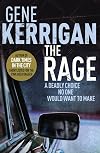
I am often out of step with Awards judging panels but in the case of those who selected THE RAGE to win the Gold Dagger for best crime novel in 2012 I am in complete agreement. It’s a cracking read.
Set in contemporary Dublin it is at its core the story of two men both battling internal demons. Vincent Naylor is newly out of jail and has begun planning a large-scale robbery. As a professional thief he is philosophical about his chances of returning to prison at some point, but seems quite show more determined to keep a lid on the behavioural excesses that led to his first sentence after severely beating a young man. Bob Tidy is a long-serving Garda struggling to maintain his integrity in a world in which the distinction between right and wrong is not nearly as obvious as it ought to be. He becomes involved in a current investigation into a murdered banker because, unlikely as it seems, the gun used in the crime was apparently used in the case of a low-grade hoodlum’s death that Tidy investigated but couldn’t close. He is also contacted by an old acquaintance who notices something odd in the street she lives on. Eventually the disparate elements of this novel collide but, probably, not in the ways you’d expect.
One of the delights of the novel was knowing very little about what was going to happen and watching it play out in all its complexity. You think having so many threads in play can only result in chaos but Kerrigan resolves everything with delightful precision. It’s like watching a beautifully choreographed ballet via those wide-angle overhead cameras they have in newer theatres: your heart’s in your throat the whole time but when everyone is taking their final bows you’re equal parts relieved and exhilarated.
The backdrop to these machinations is modern Ireland a place of economic collapse and enormous social upheaval. Many people in all walks of life are still dealing with the fallout of the Ryan Report which resulted from the Commission of Inquiry into child abuse and the days of the Celtic Tiger striding the world stage are well and truly over. According to one local philosopher
After all the bullshit about the fight for freedom, about throwing off the foreign yoke – they gave the country away. The politicians fell in love with the smart fellas – gave them any law they wanted. The smart fellas made speeches and gave interviews about how smart they were, and the journalists kissed their arses. And, in the end, it was the smart fellas broke the country in pieces, without any help at all from the red brigades.
It isn’t only the two main characters of the novel who live in the giant grey chasm that exists between black and white, right and wrong. Even someone as seemingly inoffensive as the elderly nun who contacts Bog Tidy about the strange thing she noticed in her street lives in a world of torment. For this reason the characters in THE RAGE are hard to like but they’re equally hard to forget. Some of Kerrigan’s observations made me personally uncomfortable as I reflected on my easy judgement of people who do the wrong thing but I won’t hold it against him.
THE RAGE has so many of the elements I think necessary for great crime fiction. A fast-paced, brilliantly complex story, characters that keep you awake at night and a glimpse into a distant, tension-filled world. It is, in its way, quite profound and I know it’s a book I’ll be thinking of for a long time to come. show less
Set in contemporary Dublin it is at its core the story of two men both battling internal demons. Vincent Naylor is newly out of jail and has begun planning a large-scale robbery. As a professional thief he is philosophical about his chances of returning to prison at some point, but seems quite show more determined to keep a lid on the behavioural excesses that led to his first sentence after severely beating a young man. Bob Tidy is a long-serving Garda struggling to maintain his integrity in a world in which the distinction between right and wrong is not nearly as obvious as it ought to be. He becomes involved in a current investigation into a murdered banker because, unlikely as it seems, the gun used in the crime was apparently used in the case of a low-grade hoodlum’s death that Tidy investigated but couldn’t close. He is also contacted by an old acquaintance who notices something odd in the street she lives on. Eventually the disparate elements of this novel collide but, probably, not in the ways you’d expect.
One of the delights of the novel was knowing very little about what was going to happen and watching it play out in all its complexity. You think having so many threads in play can only result in chaos but Kerrigan resolves everything with delightful precision. It’s like watching a beautifully choreographed ballet via those wide-angle overhead cameras they have in newer theatres: your heart’s in your throat the whole time but when everyone is taking their final bows you’re equal parts relieved and exhilarated.
The backdrop to these machinations is modern Ireland a place of economic collapse and enormous social upheaval. Many people in all walks of life are still dealing with the fallout of the Ryan Report which resulted from the Commission of Inquiry into child abuse and the days of the Celtic Tiger striding the world stage are well and truly over. According to one local philosopher
After all the bullshit about the fight for freedom, about throwing off the foreign yoke – they gave the country away. The politicians fell in love with the smart fellas – gave them any law they wanted. The smart fellas made speeches and gave interviews about how smart they were, and the journalists kissed their arses. And, in the end, it was the smart fellas broke the country in pieces, without any help at all from the red brigades.
It isn’t only the two main characters of the novel who live in the giant grey chasm that exists between black and white, right and wrong. Even someone as seemingly inoffensive as the elderly nun who contacts Bog Tidy about the strange thing she noticed in her street lives in a world of torment. For this reason the characters in THE RAGE are hard to like but they’re equally hard to forget. Some of Kerrigan’s observations made me personally uncomfortable as I reflected on my easy judgement of people who do the wrong thing but I won’t hold it against him.
THE RAGE has so many of the elements I think necessary for great crime fiction. A fast-paced, brilliantly complex story, characters that keep you awake at night and a glimpse into a distant, tension-filled world. It is, in its way, quite profound and I know it’s a book I’ll be thinking of for a long time to come. show less
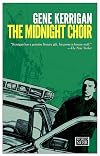
The Midnight Choir is a big novel. I don’t mean in terms of length (the nine and a half hours listening time flew by) but in terms of its subject. Rather than focusing on a particular incident, investigator or criminal this book depicts a myriad of crimes perpetrated by an assortment of criminals and paints a giant canvas showing how and why crime happens. There are crimes carried out due to desperation, corruption, greed and a fervent belief it is the right thing to do and they show more interconnect at the most unexpected points.
In Galway a man is prevented from jumping to his death by a young Garda who must then try to find out how the man came to be covered in blood that isn’t his own. Meanwhile in Dublin a young mother tries to mug an American tourist at a cash machine while a seasoned criminal plans a jewellery robbery, hard man Lar MacKendrick gets back into the swing of killing people after the death of his brother and a young woman reports a date rape to Police.
At the centre of all of this is Detective Inspector Harry Synott who proceeds through these investigations as well as experiencing a series of flashbacks of incidents in his career which help explain why he’s not everyone’s favourite copper. Harry is a brilliantly complex character: struggling continuously with the question of whether justice can be served by the law. His particular demons are not easily dealt with and there are no nice easy solutions to his problems even at the end of the book but, love him or hate him, I doubt many readers could help but be gripped by his story. But if that isn’t enough to keep you glued there are several other equally compelling personal stories that will, if you’re at all like me, have you shifting from anger to sadness and back again at a rapid pace.
The story dealt with some uniquely Irish themes as well as the broader issues that are shared in big cities the world over so having the book narrated in John Cormack’s gentle Irish accent was a definite treat as it helped me get absorbed in the world that Kerrigan had created even more completely.
I’m not surprised to learn that Gene Kerrigan is a journalist who has reported on politics and policing in Ireland because The Midnight Choir definitely has an air of realism and also the pacing and storytelling of the best investigative journalism. If you like the way Deon Meyer depicts South Africa or Peter Temple describes Australia then I think you’ll love the way Gene Kerrigan shows us Ireland, warts and all. show less
In Galway a man is prevented from jumping to his death by a young Garda who must then try to find out how the man came to be covered in blood that isn’t his own. Meanwhile in Dublin a young mother tries to mug an American tourist at a cash machine while a seasoned criminal plans a jewellery robbery, hard man Lar MacKendrick gets back into the swing of killing people after the death of his brother and a young woman reports a date rape to Police.
At the centre of all of this is Detective Inspector Harry Synott who proceeds through these investigations as well as experiencing a series of flashbacks of incidents in his career which help explain why he’s not everyone’s favourite copper. Harry is a brilliantly complex character: struggling continuously with the question of whether justice can be served by the law. His particular demons are not easily dealt with and there are no nice easy solutions to his problems even at the end of the book but, love him or hate him, I doubt many readers could help but be gripped by his story. But if that isn’t enough to keep you glued there are several other equally compelling personal stories that will, if you’re at all like me, have you shifting from anger to sadness and back again at a rapid pace.
The story dealt with some uniquely Irish themes as well as the broader issues that are shared in big cities the world over so having the book narrated in John Cormack’s gentle Irish accent was a definite treat as it helped me get absorbed in the world that Kerrigan had created even more completely.
I’m not surprised to learn that Gene Kerrigan is a journalist who has reported on politics and policing in Ireland because The Midnight Choir definitely has an air of realism and also the pacing and storytelling of the best investigative journalism. If you like the way Deon Meyer depicts South Africa or Peter Temple describes Australia then I think you’ll love the way Gene Kerrigan shows us Ireland, warts and all. show less
Just for the character of Harry Synnott the book is worth reading. His recognition at the end regarding his failings comes dramatically and brutally, and I was left to ponder whether he would be able to deal with his self-realization. And then something happened. The story stopped suddenly so that I felt like I'd gone hurtling over a cliff. I had to check to make sure there weren't any pages missing in my tablet!
But when I came to think about it, I think the way the story ended is much show more more effective, because I was left wondering possible life paths for the characters.
In this book even the most despicable characters can convince themselves they are somehow doing the right thing, even when we know that it isn't the case.
This story is a good case to demonstrate what I’ve always felt. One of the distinctive pleasures of reading Crime Fiction or Speculative Fiction (or SF if you prefer) lies in its awareness of its own traditions and conventions. That's the beauty of it in my view. Is the best genre fiction intrinsically inferior to the so-called "literary" fiction? Not so. There's crap on both sides. A lazy writer can simply follow the genre conventions by the letter. The exceptional genre writers (SF or Crime Fiction) must be looking to subvert my expectations,ie, using the established frameworks to explore new territories or themes. Those are the writers I always look for (eg, Jo Nesbo comes to mind with his ability to constantly undermine my assumptions about characters and their motivations: he kills off central characters in the middle of his stories, for christ's sake).
This is my 2nd Kerrigan. He dolled out just the right amount of information to keep me hooked, but wasn't so stingy that I got to the end thinking he hadn't played me fair, which I was...
Gene Kerrigan is on the verge of becoming one of my favourite genre writers." show less
Lists
Global Mysteries (1)
Awards


You May Also Like


Associated Authors
Statistics
- Works
- 17
- Also by
- 2
- Members
- 602
- Popularity
- #41,740
- Rating
- 3.6
- Reviews
- 20
- ISBNs
- 56
- Languages
- 4