
About the Author
The editor, Wm. Roger Louis, is Kerr Professor of English History and Culture and Distinguished Teaching Professor at the University of Texas at Austin, an Honorary Fellow of St. Antony's College, Oxford, and a past President of the American Historical Association. His books include Ends of British show more Imperialism (2006). He is the Editor-in-Chief of the Oxford History of the British Empire. In 2013, he was awarded the Benson Medal of the Royal Society of Literature, and in 2016 he delivered the Weizmann Memorial Lecture. show less
Works by Wm. Roger Louis
The Oxford History of the British Empire, Volume 1 : The Origins of Empire: British Overseas Enterprise to the Close of the Seventeenth Century (1998) — Foreword; Editor — 286 copies, 1 review
The Oxford history of the British Empire, Volume 4 : The twentieth century (1999) — Editor — 164 copies
The Oxford history of the British Empire, Volume 5 : Historiography (1999) — Editor — 146 copies, 1 review
Ends of British Imperialism: The Scramble for Empire, Suez, and Decolonization (2006) 36 copies, 1 review
Imperialism at Bay: The United States and the Decolonization of the British Empire 1941-1945 (1978) 35 copies
The British Empire in the Middle East, 1945-1951: Arab Nationalism, the United States, and Postwar Imperialism (1984) 25 copies
Yet more adventures with Britannia : personalities, politics, and culture in Britain (2005) 11 copies
Imperialism: The Robinson and Gallagher controversy (Modern scholarship on European history) (1976) — Editor — 10 copies
Still More Adventures With Britannia: Personalities, Politics and Culture in Britain (2003) 10 copies
Britannia 08: Irrepressible Adventures with Britannia: Personalities, Politics and Culture in Britain (2014) 7 copies
The "Special Relationship": Anglo-American Relations Since 1945 (Clarendon Paperbacks) (1986) 7 copies
Britannia 07: Resurgent Adventures with Britannia: Personalities, Politics and Culture in Britain (2011) 7 copies
Britannia 05: Penultimate Adventures with Britannia: Personalities, Politics and Culture in Britain (2007) 6 copies
Britannia 10: Effervescent Adventures with Britannia: Personalities, Politics and Culture in Britain (2017) 5 copies
Britannia 06: Ultimate Adventures with Britannia: Personalities, Politics and Culture in Britain (2009) 5 copies
Britannia 09: Resplendent Adventures with Britannia: Personalities, Politics and Culture in Britain (2016) 4 copies
Associated Works
The Oxford history of the British Empire, Volume 2 : The eighteenth century (1998) — Series editor — 251 copies
Tagged
Common Knowledge
- Birthdate
- 1936-05-08
- Gender
- male
- Education
- University of Oklahoma
Harvard University
University of Oxford (St Antony's College) - Occupations
- historian
- Organizations
- British Academy (Fellow)
American Historical Association (president | 2001) - Awards and honors
- Order of the British Empire (Commander, 1999)
Kluge Chair - Nationality
- USA
- Birthplace
- Detroit, Michigan, USA
- Places of residence
- Oklahoma City, Oklahoma, USA
- Associated Place (for map)
- USA
Members
Reviews
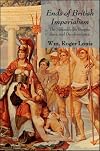
William Roger Louis is a giant among scholars of British imperialism. The editor of the Oxford History of the British Empire, for nearly half a century his scholarship has helped define the field. Now, on the fiftieth anniversary of the Suez crisis he has collected his essays related to that defining episode. These not only cover the incident itself but a number of related topics – for as he explains, “the Suez crisis can be studied as an episode in decolonization and that decolonization show more itself . . . can best be understood in the context of the long colonial era extending from the British occupation of Egypt in 1882 to the death of Nasser in 1970 and the withdrawal of all troops East of Suez in the following year.”
Louis groups these essays into ten categories. After an introductory overview of Suez and decolonization, he provides an essay on colonial empires in the late 19th and early 20th centuries and four on “the scramble for Africa”. These are followed by four which examine the First World War and the mandates system, two on the British possessions of Singapore and Hong Kong, and four on India, Palestine and Egypt, which are linked together by the theme of impending independence. After five essays on decolonization in general, he includes six on aspects of the Suez crisis itself and four more on Britain’s withdrawal from the rest of the Middle East in its aftermath before finishing with three essays on the historiography of his field.
Though all but one of these essays have been published before now, bringing them together allows Louis to draw out three main themes. The first is the one which occasioned the volume – the study of Suez in the broader context of decolonization. This last, failed effort to hold onto the empire through force led the British to attempt to maintain some vestige of their influence through more informal means, which is the second theme of his collection. Finally, as British control gradually slipped, new states emerged throughout Africa and Asia; it is the consequences of their emergence which forms the final theme Louis emphasizes.
Taken together, these essays represent a formidable body of work on one of the key developments of modern times. Though some of the essays have been reworked, the basic scholarship within them remains as informative and insightful as it was when they were first published. Delving into the pages of this book provides insight not only into the demise of the British Empire, but into how it shaped and defined the world in which we live today. No student of British imperial history should be without this volume, and anyone interested in understanding the twentieth century will profit from reading it. show less
Louis groups these essays into ten categories. After an introductory overview of Suez and decolonization, he provides an essay on colonial empires in the late 19th and early 20th centuries and four on “the scramble for Africa”. These are followed by four which examine the First World War and the mandates system, two on the British possessions of Singapore and Hong Kong, and four on India, Palestine and Egypt, which are linked together by the theme of impending independence. After five essays on decolonization in general, he includes six on aspects of the Suez crisis itself and four more on Britain’s withdrawal from the rest of the Middle East in its aftermath before finishing with three essays on the historiography of his field.
Though all but one of these essays have been published before now, bringing them together allows Louis to draw out three main themes. The first is the one which occasioned the volume – the study of Suez in the broader context of decolonization. This last, failed effort to hold onto the empire through force led the British to attempt to maintain some vestige of their influence through more informal means, which is the second theme of his collection. Finally, as British control gradually slipped, new states emerged throughout Africa and Asia; it is the consequences of their emergence which forms the final theme Louis emphasizes.
Taken together, these essays represent a formidable body of work on one of the key developments of modern times. Though some of the essays have been reworked, the basic scholarship within them remains as informative and insightful as it was when they were first published. Delving into the pages of this book provides insight not only into the demise of the British Empire, but into how it shaped and defined the world in which we live today. No student of British imperial history should be without this volume, and anyone interested in understanding the twentieth century will profit from reading it. show less
The Oxford History of the British Empire: Volume I: The Origins of Empire: British Overseas Enterprise to the Close by Nicholas P. Canny
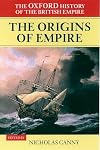
This book is an overview of the first period of the creation of the British Empire. It covers all parts of that empire from India to the New World. Each chapter was written by a different expert. Each chapter has its own bibliography.
The writing is even but a little unimaginative. As I said this is an overview so interesting and personal details are left out. This is a book of reference so would be valuable for the writing of papers on the subject but it does lack in reading pleasure. I will show more not be buying the other four books in the series (they are expensive). I can recommend it for reference purposes. show less
The writing is even but a little unimaginative. As I said this is an overview so interesting and personal details are left out. This is a book of reference so would be valuable for the writing of papers on the subject but it does lack in reading pleasure. I will show more not be buying the other four books in the series (they are expensive). I can recommend it for reference purposes. show less
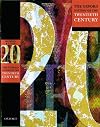
From Queen Victoria, the Manchu dynasty, and Romanov czars to the death of Princess Diana, the return of Hong Kong to China, and the peace treaty between Russia and Chechnya; from the launching of the first zeppelin, DNA "fingerprinting," NASA spaceships on Jupiter and Neptune, and the ascendancy of the Internet, the 20th century has been a dynamic and momentous time.
Edited by Michael Howard (from the University of Oxford) and William Roger Louis (of the University of Texas at Austin), with show more essays contributed by a fine collection of history scholars, the Oxford History of the Twentieth Century describes the economic, cultural, and political scene into which the 20th century was born, then proceeds with essays on topics such as "The Growth of a World Economy," by Robert Skidelsky; "The Growth of a Global Culture," by Alan Ryan; "The European Colonial Empires," by William Roger Louis; and "Europe in the Age of the Two World Wars," by Michael Howard. Alongside these are interesting essays on the Soviet Union, the emergence of Japan, and the cold war, as well as perceptive chapters on China, Africa, and Southeast Asia, the Middle East, Latin America, and International Law. The chronology appendix, informative and concise, covers politics and international relations, science, technology, medicine, and culture, from 1900 to 1997, and is a useful reference tool, while the main text of the book describes, discusses, and analyzes the century's major events, shifts of power, trends, evolutions, and transformations. Insightful, lucid, and engaging, it skillfully fills the 20th-century-reference-shelf niche.
Twenty-four leading historians look back at the most fascinating and tumultuous century to date, and speculate on what the future might bring. 60 illustrations, 12 in color. show less
Edited by Michael Howard (from the University of Oxford) and William Roger Louis (of the University of Texas at Austin), with show more essays contributed by a fine collection of history scholars, the Oxford History of the Twentieth Century describes the economic, cultural, and political scene into which the 20th century was born, then proceeds with essays on topics such as "The Growth of a World Economy," by Robert Skidelsky; "The Growth of a Global Culture," by Alan Ryan; "The European Colonial Empires," by William Roger Louis; and "Europe in the Age of the Two World Wars," by Michael Howard. Alongside these are interesting essays on the Soviet Union, the emergence of Japan, and the cold war, as well as perceptive chapters on China, Africa, and Southeast Asia, the Middle East, Latin America, and International Law. The chronology appendix, informative and concise, covers politics and international relations, science, technology, medicine, and culture, from 1900 to 1997, and is a useful reference tool, while the main text of the book describes, discusses, and analyzes the century's major events, shifts of power, trends, evolutions, and transformations. Insightful, lucid, and engaging, it skillfully fills the 20th-century-reference-shelf niche.
Twenty-four leading historians look back at the most fascinating and tumultuous century to date, and speculate on what the future might bring. 60 illustrations, 12 in color. show less
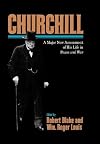
The low rating is due to the fact that I can't remember a thing about it. Either it is a collection of things said more vividly by other sources and therefore not traceable to this book...or....the critique was so devastating that I am suffering traumatic amnesia! I guess one might read it.
Lists
Awards


You May Also Like


Associated Authors
Statistics
- Works
- 38
- Also by
- 3
- Members
- 1,227
- Popularity
- #20,921
- Rating
- 3.9
- Reviews
- 6
- ISBNs
- 95
- Languages
- 3