
Peggy Frew
Author of Hope Farm
Works by Peggy Frew
Tagged
Common Knowledge
- Gender
- female
- Occupations
- novelist
short story writer
essayist
musician
Members
Reviews
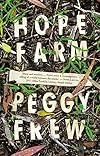
Hard subject matter in this coming of age tale -- made worse if you know anything about the "unwed mother" homes that stole women's babies and coerced them into adoption through shame and cruelty. This is very realistic, and Ishtar's reaction follows throughout her life. But this isn't her story; it's Silver's story, and what a childhood, marked by nomadism, communal living, and violence. This is a difficult read in some unusual ways. It's also beautifully rendered and Frew's writing style show more is highly effective. I would read more from this author. show less
 This review was written for LibraryThing Early Reviewers.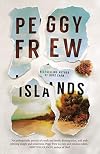
A softly beautiful read.
Frew's prose is meditative and nuanced, elegant but not extravagant. Structured around the disappearance of a teenage girl on Victoria's Philip Island, Islands veers forward and backward in time, from generation to generation and back again, exploring the relationships and interconnections of those left behind.
In a sense, Islands feels like a very tightly woven collection of short stories. The grandmother reflects on her own youth; various Christmases are contrasted show more with purely the facts of the gifts given and meals eaten; paintings by the surviving sister are catalogued; Anna's parents experience their courtship, their marriage, their separation, and their longer recriminations.
It's fair to say that the novel is a dense read, and a confusing one for the first hundred pages or so. This is the kind of book where the novelist herself would have required a detailed timeline, and been researching her own work as she moved toward its completion. For some, this will be a disincentive, and certainly I found myself floundering in the early chapters, primarily due to Frew's style, both sparse and poetic, that asks the reader to meet her more than halfway.
Yet as the piece goes on, and the connections between characters are clarified, Frew's vision of a family inhabiting the same physical location but separated by time or motivation becomes deeply poignant. She is a sensitive writer; her dialogue is underwritten but without the spiritual emptiness that can accompany the modern trend for strict realism in speech; her adjectives and verbs always feel specific but never forced; her moments of literary excesses (turning one chapter into an art catalogue, for example) fit naturally within the broader structure.
Islands is not a cheery read, but it's certainly a satisfying one. show less
Frew's prose is meditative and nuanced, elegant but not extravagant. Structured around the disappearance of a teenage girl on Victoria's Philip Island, Islands veers forward and backward in time, from generation to generation and back again, exploring the relationships and interconnections of those left behind.
In a sense, Islands feels like a very tightly woven collection of short stories. The grandmother reflects on her own youth; various Christmases are contrasted show more with purely the facts of the gifts given and meals eaten; paintings by the surviving sister are catalogued; Anna's parents experience their courtship, their marriage, their separation, and their longer recriminations.
It's fair to say that the novel is a dense read, and a confusing one for the first hundred pages or so. This is the kind of book where the novelist herself would have required a detailed timeline, and been researching her own work as she moved toward its completion. For some, this will be a disincentive, and certainly I found myself floundering in the early chapters, primarily due to Frew's style, both sparse and poetic, that asks the reader to meet her more than halfway.
Yet as the piece goes on, and the connections between characters are clarified, Frew's vision of a family inhabiting the same physical location but separated by time or motivation becomes deeply poignant. She is a sensitive writer; her dialogue is underwritten but without the spiritual emptiness that can accompany the modern trend for strict realism in speech; her adjectives and verbs always feel specific but never forced; her moments of literary excesses (turning one chapter into an art catalogue, for example) fit naturally within the broader structure.
Islands is not a cheery read, but it's certainly a satisfying one. show less
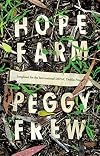
Silver is 13 when her mother disappoints her for the last time. The plan had been for the two of them to go abroad and see the world. Instead her mother is taken in by Miller, and the three of them relocate to Hope Farm, a failing commune. At Hope Farm Silver sees things no 13 year old should, but also finds a friend, and finally starts to feel for the first time she has a home.
This book kept me on the edge of my seat, hoping that Silver would be okay. Although this book has very little show more actual violence the threat and fear is always there, and this story spoke to the mother and daughter in me. show less
This book kept me on the edge of my seat, hoping that Silver would be okay. Although this book has very little show more actual violence the threat and fear is always there, and this story spoke to the mother and daughter in me. show less
This review was written for LibraryThing Early Reviewers.The novel ‘Hope Farm’ by Australian writer Peggy Frew was originally published in 2015 and it appeared on a number of book award lists. It’s being re-published in August 2019 and is certainly deserving of more attention.
This is a well-written story about a mother who gets pregnant as a young teen and is disowned when she decides to keep her baby daughter against her parent’s wishes. Renaming herself ‘Ishtar’ and naming her daughter ‘Silver’, she struggles to survive over the show more years in various share houses, alternative ‘enlightened’ groups, and eventually hippie communes.
The story is constructed as a coming-of-age journey narrated by Silver who has been subjected to her mother’s transient lifestyle that includes poverty, a string of unreliable men, drugs, and eventually a heart-breaking collapse of the parent-child bond between Ishtar and Silver. When they end up following a charismatic (but horrible man) named Miller to a hippie commune called “Hope Farm”, it seems like their life might improve and Silver even finds an interesting friend her own age. But over time, the center will not hold and everything devolves into a powerful, dramatic conclusion.
This is both a difficult and captivating story about alternative lifestyles and relationships in a communal group, perhaps a bit stereotyped but still interesting. But more importantly, it is a very intense story about a parent and a child and the critical impact that each decision can make in building or destroying a family. The author did a great job of creating Silver and Ishtar as real, memorable characters. show less
This is a well-written story about a mother who gets pregnant as a young teen and is disowned when she decides to keep her baby daughter against her parent’s wishes. Renaming herself ‘Ishtar’ and naming her daughter ‘Silver’, she struggles to survive over the show more years in various share houses, alternative ‘enlightened’ groups, and eventually hippie communes.
The story is constructed as a coming-of-age journey narrated by Silver who has been subjected to her mother’s transient lifestyle that includes poverty, a string of unreliable men, drugs, and eventually a heart-breaking collapse of the parent-child bond between Ishtar and Silver. When they end up following a charismatic (but horrible man) named Miller to a hippie commune called “Hope Farm”, it seems like their life might improve and Silver even finds an interesting friend her own age. But over time, the center will not hold and everything devolves into a powerful, dramatic conclusion.
This is both a difficult and captivating story about alternative lifestyles and relationships in a communal group, perhaps a bit stereotyped but still interesting. But more importantly, it is a very intense story about a parent and a child and the critical impact that each decision can make in building or destroying a family. The author did a great job of creating Silver and Ishtar as real, memorable characters. show less
This review was written for LibraryThing Early Reviewers.Lists
Awards


You May Also Like


Associated Authors
Statistics
- Works
- 4
- Members
- 187
- Popularity
- #116,276
- Rating
- 3.8
- Reviews
- 25
- ISBNs
- 33
