
Ofelia Dumas Lachtman
Author of Pepita Talks Twice/Pepita Habla DOS Veces
About the Author
Works by Ofelia Dumas Lachtman
Pepita Thinks Pink/Pepita Y El Color Rosado: Pepita Y El Color Rosado (Spanish Edition) (1998) 16 copies
Two-Promise Walk, The 1 copy
Las mariposas 1 copy
Tagged
Common Knowledge
- Gender
- female
Members
Reviews
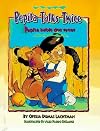
I really enjoyed this book as a bilingual reader. This story is written in both Spanish and English so it is appropriate and accessible to audiences of different language and culture backgrounds. The story follows the main character, Pepita, who speaks both Spanish and English. Because of her knowledge of both languages, her community uses her as a translator very often. As the plot develops, Pepita grows tired of having to "talk twice" as the title indicates and gives up her heritage show more language, Spanish, all together. Her breaking point is very relatable to children of young ages because Pepita is excited to get home to teach her dog a trick but gets held up translating so her brother gets to teach the dog a trick instead. Multilingual students in elementary school may be able to easily relate to this concept because they are often used as translators for their parents, family member and other people in the community because they are learning English in schools. Pepita sees speaking two languages as a burden but the message of this story is that being multilingual is actually a gift. One should embrace their heritage culture as well as their adopted culture rather than picking one or the other. When Pepita's dog, Lobo, is about to be hit by a car and does not respond to his English name, "Wolf", Pepita finally allows herself to speak Spanish again and realizes that her ability is a gift rather than a burden. This message is especially important for multilingual learners in the classroom who may be going through a similar issue as Pepita. This story can show them that while at times it can be frustrating, knowing two languages is a part of who they are and should be embraced rather than abandoned. show less
I loved this bilingual book. First, the book was written in Spanish and English which is great because it can reach and relate to an even wider audience. Second, the character Pepita is relatable for children that are bilingual and find themselves always translating and helping others. Pepita was fed up off always translating for others so she decided she would only speak English. The other characters in the story challenged her and encouraged her to be proud that she was bilingual, “That show more is really too bad,” her teacher said. “It’s such a wonderful thing to speak two languages.” Finally, I thought the illustrations were colorful and represented the text well. show less
This was a good picture book with a very realistic story line behind it. This book could be used in classrooms where there are multi-lingual learners, to encourage them to continue speaking their home/native languages and the importance of communicating with their non-English speaking family members. By reading this book to multi-lingual learners, they will feel a sense of unity in the classroom because they will see themselves being portrayed through the books read in class. This book was show more about a little girl who was bilingual in Spanish and English, but had parents that only spoke Spanish. The family lived in America, so the little girl, Pepita, often had to translate for her parents, so that they could understand what was being said to them or communicate with monolingual English speakers in a public setting. Having to repeat everything twice, once in Spanish and once in English, frustrated Pepita so much to the point where she decided that she was going to stop speaking Spanish all together. Once Pepita began to only talk in English, she realized how difficult it was to communicate with her family and dog, who had only been named and trained in Spanish. Slowly Pepita started to realize that her decision may have not been realistic. One day, Pepitas dog, Lobo, ran out into the street and was about to get hit by a car. Since Lobo is Spanish for "wolf" and Pepita was still refusing to speak Spanish, the dog did not listen to her when she screamed, "WOLF!" trying to get him to come back to her. Quickly, Pepita's stubbornness disappeared and she called her dog by his Spanish name, Lobo. He immediately listened to her and dodged the car. At this moment, Pepita realized that she needed to speak Spanish in order to communicate with her loved ones. Pepita went back to speaking both English and Spanish, and no longer minded having to talk twice. show less
This book is special because it includes English and Spanish translations to support children who do or don't speak English as their first language. This book is good because it introduces the hispanic culture into the mainstream classroom. It's a great opportunity to introduce this culture and some vocabulary from another language to other ethnic groups in the classroom and make hispanic students feel included and welcomed. This story is about Pepita, who is fluent in English and Spanish, show more often translates between these languages for the people in her neighborhood. The reader sees how her behavior changes from eagerly translating to becoming stubborn and resistant. By the end, she realizes the value of being bilingual and appreciates her culture. This character development allows the reader to analyze Pepita's internal conflict and brainstorm why she is rebelling. Multilingual students may also be able to identify with Pepita. They can learn that we often take for granted or don't appreciate our abilities/talents when they are actually great qualities and make us special. show less
Awards


You May Also Like


Statistics
- Works
- 23
- Members
- 367
- Popularity
- #65,578
- Rating
- 4.5
- Reviews
- 24
- ISBNs
- 64
- Languages
- 1