
Janet Holmes (1) (1947–)
Author of An Introduction to Sociolinguistics
For other authors named Janet Holmes, see the disambiguation page.
About the Author
Janet Holmes is Professor of Linguistics at Victoria University of Wellington. She teaches sociolinguistics courses from first year to postgraduate level. Her books include Gendered Talk at Work and the Blackwell Handbook of Language and Gender (co-edited with Miriam Meyerhoff). Most recently she show more has published Leadership, Discourse and Ethnicity (co-authored with Meredith Marra and Bernadette Vine) reflecting her most recent research interests which focus on leadership discourse and the relevance of gender and ethnicity in the workplace. show less
Image credit: http://www.victoria.ac.nz/lals/staff/janet-holmes.aspx
Series
Works by Janet Holmes
Associated Works
Tagged
Common Knowledge
- Legal name
- Holmes, Janet
- Birthdate
- 1947-05-17
- Gender
- female
- Occupations
- professor of linguistics
- Organizations
- Victoria University of Wellington
- Nationality
- New Zealand
- Associated Place (for map)
- New Zealand
Members
Reviews
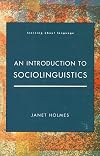
Janet Holmes is Professor of Linguistics at the University of Victoria in Wellington (New Zealand). Sociolinguistics is the study of the relationships between language and society.
The book is structured like a school manual for students on the topic, but targeted to laid readers. Such a formal approach could have been a good academic overview, be a great way to introduce the subject to beginners while missing nothing of the field's key notions. Well, as far as I am concerned, it fails!
Of show more course, concepts are defined, explained, and illustrated through exercices allowing thus to better assimilate the relevance of the arguments put forward. The thing is, these exercises are too many, and even if you fly over them all the fact they can't be separated from the rest of the text render such read quite boring. Plus, it's all very confused: problems specific to multilingual societies are coming right into the middle of a discussion on societal factors affecting speech; and from diglossia we suddenly jump to the issue of the death of certain languages before coming back again to the differences between pidgin and creole! Unfocused, it goes randomly in all directions without a logical structure, and so turns quickly annoying.
The only positive is that she introduces, rigorously, the works of some eminent researchers when it comes to the core of the topic -genderlect, bilingualism/multilingualism, language use in the medias… Good on that! But would you buy a book solely for its bibliography? show less
The book is structured like a school manual for students on the topic, but targeted to laid readers. Such a formal approach could have been a good academic overview, be a great way to introduce the subject to beginners while missing nothing of the field's key notions. Well, as far as I am concerned, it fails!
Of show more course, concepts are defined, explained, and illustrated through exercices allowing thus to better assimilate the relevance of the arguments put forward. The thing is, these exercises are too many, and even if you fly over them all the fact they can't be separated from the rest of the text render such read quite boring. Plus, it's all very confused: problems specific to multilingual societies are coming right into the middle of a discussion on societal factors affecting speech; and from diglossia we suddenly jump to the issue of the death of certain languages before coming back again to the differences between pidgin and creole! Unfocused, it goes randomly in all directions without a logical structure, and so turns quickly annoying.
The only positive is that she introduces, rigorously, the works of some eminent researchers when it comes to the core of the topic -genderlect, bilingualism/multilingualism, language use in the medias… Good on that! But would you buy a book solely for its bibliography? show less
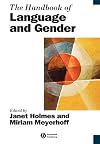
What the hell happened to my review? I has a sad. Anyway, this challenges the reductive view of social class linguists all seem to unproblematically swallow (and, implicitly, the simplistic view of language variation held by many non-linguists) by investigating the way sex/gender and class-based approaches to variation are intrinsically incomplete and exclusionary, and then proposes as an alternative to class, a notion of "network" - who do you spend time with? In what relationship? How show more frequently? How many other people? - that updates the sociological language of class based on money and ill-conceived notions of prestige, and makes class/network a functioning 21st-century concept in ways that go far beyond linguistics. And that's just the Romaine article, which,
NB, I USED FOR READING GROUP. DID NOT READ THE WHOLE BOOK. show less
NB, I USED FOR READING GROUP. DID NOT READ THE WHOLE BOOK. show less

You May Also Like


Associated Authors
Statistics
- Works
- 21
- Also by
- 1
- Members
- 314
- Popularity
- #75,176
- Rating
- 3.3
- Reviews
- 3
- ISBNs
- 84