
Andrew D. Kaufman
Author of Russian For Dummies
About the Author
Andrew D. Kaufman, internationally recognized Russian literature scholar at the University of Virginia, is the author of Understanding Tolstoy and coauthor of Russian for Dummies. An award-winning teacher of Russian language, literature, and culture, he is a featured Tolstoy expert on Oprah.com and show more is frequently invited to discuss Russian literature and culture on national and international television and radio programs. show less
Works by Andrew D. Kaufman
The Gambler Wife: A True Story of Love, Risk, and the Woman Who Saved Dostoyevsky (2021) 55 copies, 3 reviews
Tagged
Common Knowledge
Members
Reviews
The Gambler Wife: A True Story of Love, Risk, and the Woman Who Saved Dostoyevsky by Andrew D. Kaufman
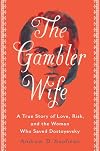
Ambitious Anna Snitkina (1846-1918) started as the stenographer to the then-struggling author Fyodor Dostoevsky when she was a mere 19 years old. Their professional relationship soon turned to love, and they married. Through the years, they coped with jealousies, illness, the loss of children, and, perhaps most frustrating of all, Dostoevsky's self-destructive fixation with gambling. Despite all this, Anna remained staunchly by his side, and even remade herself into a steely businesswoman to show more protect her husband from unscrupulous publishers. During the long years after Dostoevsky's death in 1881, Anna devoted herself to burnishing his literary reputation.
Despite a few pacing problems and the occasional jarring use of modern expressions, author Andrew Kaufman does a good job of telling the story of this seemingly mismatched, but devoted couple. He made me want to attempt The Brothers Karamazov again, and that's saying something. show less
Despite a few pacing problems and the occasional jarring use of modern expressions, author Andrew Kaufman does a good job of telling the story of this seemingly mismatched, but devoted couple. He made me want to attempt The Brothers Karamazov again, and that's saying something. show less
“To love life is to love God. Harder and more blessed than all else is to love this life in one’s
sufferings, in undeserved sufferings.” (from Pierre Bezukhov’s dream in War and Peace)
Something must be in the air. In the past two years, three journalists and scholars have written books with the intention of convincing readers to tackle what are perhaps the three most formidable novels of the nineteenth century: Moby Dick(1), Middlemarch(2), and War and Peace(3). The common thread in show more this approach to criticism is that reading great works of literature is not an exercise in self-abnegation, but a journey of discovery, and an enjoyable one at that.
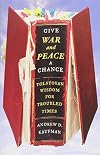
The most recent of these worthy efforts is Give War and Peace a Chance: Tolstoyan Wisdom for Troubled Times, by Andrew Kaufman. Kaufman is Lecturer in Slavic Languages and Literatures at the University of Virginia. In 2009, he served as a sort of “scholar in residence” for Regent’s Big Read, conducting workshops and delivering the culminating lecture of the Library’s Tolstoy festival.
Give War and Peace a Chance comes three years after Kaufman’s scholarly monograph Understanding Tolstoy and is the fruit of the author’s desire to reach a wider readership. The book is quite a hybrid work, weaving elements of biography, critical analysis, philosophy, and memoir. In twelve chapters, Kaufman takes us on an excursion through the fundamental elements that form our lives, such as happiness, love, family, and death. He explains how these themes operated in Tolstoy’s life and how he gave expression to them in War and Peace.
Along the way, Kaufman also shares episodes from his own life to illustrate how works like War and Peace help us make sense of lives. Some readers might object to the author including his personal story into a book on Tolstoy, but for my part, Kaufman’s accounts of falling in love as a student with Natasha Rostova, or his grief as an adult at the death of a beloved kitten, illustrate the dual refraction that takes place when we read literature. Our temperament and past experiences combine to form our interpretation of a work, but books like War and Peace ultimately change us by enhancing our understanding of ourselves and compassion for others.
At the end of the introduction, Kaufman quotes Tolstoy’s explanation, written during the composition of War and Peace, of his philosophy of art: “The goal of the artist is not to solve a question irrefutably, but to force people to love life in all its countless, inexhaustible manifestations.” These words also appear movingly in Kaufman’s dedication of the book to his wife and son and encapsulate what he considers to be the ultimate reward awaiting readers who give War and Peace a chance.
___________________________________
(1)Nathaniel Philbrick, Why Read Moby-Dick? (New York: Penguin, 2013).
(2)Rebecca Mead, My Life in Middlemarch (New York: Crown, 2014).
(3)Andrew D. Kaufman, Give War and Peace a Chance: Tolstoyan Wisdom for Troubled Times (New York: Simon & Schuster, 2014).
Published in Regent University Library Link, October 20, 2014
http://librarylink.regent.edu/?p=2473 show less
sufferings, in undeserved sufferings.” (from Pierre Bezukhov’s dream in War and Peace)
Something must be in the air. In the past two years, three journalists and scholars have written books with the intention of convincing readers to tackle what are perhaps the three most formidable novels of the nineteenth century: Moby Dick(1), Middlemarch(2), and War and Peace(3). The common thread in show more this approach to criticism is that reading great works of literature is not an exercise in self-abnegation, but a journey of discovery, and an enjoyable one at that.
The most recent of these worthy efforts is Give War and Peace a Chance: Tolstoyan Wisdom for Troubled Times, by Andrew Kaufman. Kaufman is Lecturer in Slavic Languages and Literatures at the University of Virginia. In 2009, he served as a sort of “scholar in residence” for Regent’s Big Read, conducting workshops and delivering the culminating lecture of the Library’s Tolstoy festival.
Give War and Peace a Chance comes three years after Kaufman’s scholarly monograph Understanding Tolstoy and is the fruit of the author’s desire to reach a wider readership. The book is quite a hybrid work, weaving elements of biography, critical analysis, philosophy, and memoir. In twelve chapters, Kaufman takes us on an excursion through the fundamental elements that form our lives, such as happiness, love, family, and death. He explains how these themes operated in Tolstoy’s life and how he gave expression to them in War and Peace.
Along the way, Kaufman also shares episodes from his own life to illustrate how works like War and Peace help us make sense of lives. Some readers might object to the author including his personal story into a book on Tolstoy, but for my part, Kaufman’s accounts of falling in love as a student with Natasha Rostova, or his grief as an adult at the death of a beloved kitten, illustrate the dual refraction that takes place when we read literature. Our temperament and past experiences combine to form our interpretation of a work, but books like War and Peace ultimately change us by enhancing our understanding of ourselves and compassion for others.
At the end of the introduction, Kaufman quotes Tolstoy’s explanation, written during the composition of War and Peace, of his philosophy of art: “The goal of the artist is not to solve a question irrefutably, but to force people to love life in all its countless, inexhaustible manifestations.” These words also appear movingly in Kaufman’s dedication of the book to his wife and son and encapsulate what he considers to be the ultimate reward awaiting readers who give War and Peace a chance.
___________________________________
(1)Nathaniel Philbrick, Why Read Moby-Dick? (New York: Penguin, 2013).
(2)Rebecca Mead, My Life in Middlemarch (New York: Crown, 2014).
(3)Andrew D. Kaufman, Give War and Peace a Chance: Tolstoyan Wisdom for Troubled Times (New York: Simon & Schuster, 2014).
Published in Regent University Library Link, October 20, 2014
http://librarylink.regent.edu/?p=2473 show less
Sometimes, this became a little too "what Tolstoy is saying here," but overall it held good reflections from someone who obviously has integrated this book into his life. Also, reminded me of some of my favorite parts, as many of the same scenes stood out for me.
Andrew Kaufman is a Tolstoy scholar an admirer of his work, including the long and daunting War and Peace. In this book, he not only discusses the main characters and plotlines of the book but also examines how he has used parts of the book in relation to his own life. There are also facts about Tolstoy, his relationships, careers and philosophy. It is divided into sections about subjects such as love, family, happiness, and death and uses excerpts from the book as well as episodes in show more Tolstoy’s life. What I enjoyed most about this book is the idea that some books are timeless and while the situation changes the characters and ideals can be used throughout time. Kaufman writes clearly and passionately on the subject and I felt as if I had a good understanding of Tolstoy’s epic by the time I finished. I received this book from NetGalley in exchange for an honest review. show less
Lists
Awards


You May Also Like


Associated Authors
Statistics
- Works
- 7
- Members
- 398
- Popularity
- #60,945
- Rating
- 3.6
- Reviews
- 7
- ISBNs
- 37
- Languages
- 4