
Viv Groskop
Author of The Anna Karenina Fix: Life Lessons from Russian Literature
About the Author
Viv Groskop is an award-winning comedian, writer, and broadcaster, and the author of The Anna Karenina Fix: Life Lessons from Russian Literature. She lives in London.
Works by Viv Groskop
Associated Works
Tagged
Common Knowledge
- Birthdate
- 1973-07-08
- Gender
- female
- Occupations
- writer
critic
broadcaster
comedian
Members
Reviews
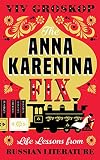
By personalizing her reading experiences with Russian literature Viv Groskop has made bearable, even pleasurable, what could have been too deep, too immense, too much the hard core Russian reader. She has successfully brought these writers and their lives down to human size without undercutting the greatness of their contributions. It is amazing that writers when under the Soviet state were able to produce at all as many of their colleagues were liquidated. One gains a respect for these show more writers with all their faults and tribulations which farther magnifies the great gifts they have bestowed on mankind.
Quotes: (page 4) “Its no surprise that Tolstoy himself didn't use fiction as a basis for the advice in his self-help book. We can't expect Tolstoy to admit the usefulness of novels. In the later part of his life, he had a huge spiritual crisis and all but renounced Anna Karenia and War and Peace as writings of a sinful, frivolous fool. No wonder he turned to the bible. But I want to argue the opposite of what Tolstoy came to believe. Philosophy and religious writings may have their place. And self-help aphorisms from the Greeks always bring solace. But it is in literature – whether novels, plays, or poetry – that we really see who we are – and perhaps even more importantly, who we don't want to be.”
(page 114) “Nietzche was only eleven when Dostoevsky was creating Raskolnikov, but the character embodies many of the philosopher's later ideas about the Ubermench (the man who believes he is above the common herd and not subject to normal ideas of morality). Dostoevsky also uses Raskolnikov to demonstrate how selfish and sick people become when they turn away from God. They begin to believe they can achieve anything and that its all in their hands; no need to wait for any guidance from God. Weirdly, this is not dissimilar to some of the ideas expressed by the self-actualization movement so popular today. (Not that I'm suggesting self-help books encourage you to kill anyone, but they do encourage you to believe that you are capable of great things, which is not such a long way from Raskolnikov's position.) I think Dostoevsky would not have enjoyed the current godless vogue for self-help books, and he would have absolutely hated R. Kelly's hit single 'I Believe I Can Fly'. Believing he could touch the sky, believing that he could soar and go running through that open door...all that was Raskolnikov's problem. And it does not work out well for him.”
(page 168) “The interactions with Stalin became progressively worse. Bulgakov first came to Stalin's attention as a result of his play The Day of the Turbins, a theatrical adaption of his novel The White Guard. The play was savaged by the Soviet critics, who were horrified that it sympathized with White officers. But Stalin saw this ultimately as a compliment (or at least he pretended to – possibly, he was toying with Bulgakov), claiming to show the White officers as decent people and still depict them as defeated losers was in fact a great tribute to Soviet power. It was 'a demonstration of the crushing power of Bolshevism'. (Hmm. Sounds like a play you'd really like to go and see, right?) Stalin was very weird about the things he liked (surprise!) and the things he liked to pronounce on. He went to see the play fifteen times.” show less
Quotes: (page 4) “Its no surprise that Tolstoy himself didn't use fiction as a basis for the advice in his self-help book. We can't expect Tolstoy to admit the usefulness of novels. In the later part of his life, he had a huge spiritual crisis and all but renounced Anna Karenia and War and Peace as writings of a sinful, frivolous fool. No wonder he turned to the bible. But I want to argue the opposite of what Tolstoy came to believe. Philosophy and religious writings may have their place. And self-help aphorisms from the Greeks always bring solace. But it is in literature – whether novels, plays, or poetry – that we really see who we are – and perhaps even more importantly, who we don't want to be.”
(page 114) “Nietzche was only eleven when Dostoevsky was creating Raskolnikov, but the character embodies many of the philosopher's later ideas about the Ubermench (the man who believes he is above the common herd and not subject to normal ideas of morality). Dostoevsky also uses Raskolnikov to demonstrate how selfish and sick people become when they turn away from God. They begin to believe they can achieve anything and that its all in their hands; no need to wait for any guidance from God. Weirdly, this is not dissimilar to some of the ideas expressed by the self-actualization movement so popular today. (Not that I'm suggesting self-help books encourage you to kill anyone, but they do encourage you to believe that you are capable of great things, which is not such a long way from Raskolnikov's position.) I think Dostoevsky would not have enjoyed the current godless vogue for self-help books, and he would have absolutely hated R. Kelly's hit single 'I Believe I Can Fly'. Believing he could touch the sky, believing that he could soar and go running through that open door...all that was Raskolnikov's problem. And it does not work out well for him.”
(page 168) “The interactions with Stalin became progressively worse. Bulgakov first came to Stalin's attention as a result of his play The Day of the Turbins, a theatrical adaption of his novel The White Guard. The play was savaged by the Soviet critics, who were horrified that it sympathized with White officers. But Stalin saw this ultimately as a compliment (or at least he pretended to – possibly, he was toying with Bulgakov), claiming to show the White officers as decent people and still depict them as defeated losers was in fact a great tribute to Soviet power. It was 'a demonstration of the crushing power of Bolshevism'. (Hmm. Sounds like a play you'd really like to go and see, right?) Stalin was very weird about the things he liked (surprise!) and the things he liked to pronounce on. He went to see the play fifteen times.” show less
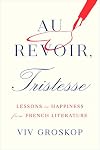
Viv Groskop follows up an earlier book, The Anna Karenina Fix, about her love of Russian literature, with a look at some 19th and 20th century French classics. She discusses 12 writers (9 men and 3 women), focusing on a favourite work by each, starting with the short novel referenced in her title, Bonjour Tristesse by Francoise Sagan. Groskop writes that she chose these books because they represented her introduction to French literature.
I found this interesting and enjoyable, though I have show more only read three of the novels discussed here, plus other work(s) by three of the writers, and I don't really share the breezy optimism expressed in the title, that reading these books is a source of happiness. I didn't enjoy the only Balzac novel I've read (a set A level text), and there is no mention of Emile Zola or Francois Mauriac.
Still, this is a good read for anyone interested in reading French novels, whether in the original language or in translation, and might well inspire some follow up reading. show less
I found this interesting and enjoyable, though I have show more only read three of the novels discussed here, plus other work(s) by three of the writers, and I don't really share the breezy optimism expressed in the title, that reading these books is a source of happiness. I didn't enjoy the only Balzac novel I've read (a set A level text), and there is no mention of Emile Zola or Francois Mauriac.
Still, this is a good read for anyone interested in reading French novels, whether in the original language or in translation, and might well inspire some follow up reading. show less
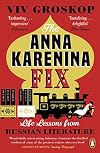
This is a great little book about the Russian classics. It is not only a fantastic introduction for anyone not familiar with the great Russian writers, but a nice recap for those already familiar with Russian literature and who have read many of the novels and plays referenced in the book.
This is NOT a stuffy, scholarly work. It is a funny (at times), witty, and scratching at the surface introduction to these literature pieces. The book is written in conversational style and it reads as if show more the author was having a conversation with you the reader. You will definitely come away with more information about these novels and a greater appreciation for them. The author’s own journey to Russian literature was interesting as well. Each chapter also has a subtitle with a witty comment about the book which was appreciated.
For those interested, the following works are discussed in the book:
• Anna Karenina by Lev Tolstoy
• Doctor Zhivago by Boris Pasternak
• Requiem by Anna Akhmatova
• A Month in the Country by Ivan Turgenev
• Eugene Onegin by Alexander Pushkin
• Crime and Punishment by Fyodor Dostoevsky
• Three Sisters by Anton Chekhov
• One Day in the Life of Ivan Denisovich by Alexander Solzhenitsyn
• The Master and Margarita by Mikhail Bulgakov
• Dead Souls by Nikolai Gogol
• War and Peace by Lev Tolstoy
At the conclusion of the book, the author has written a Recommended Reading guide to the editions of the above books she used when writing this book as well as some additional resources to explore.
I really enjoyed this book, not just because I already am a fan of Russian literature and own many of these books, but also because it was easy to read and digest her take on these books. You do not need to be a fan of Russian literature to enjoy this book, just a little curious to take a peek under the hood. Highly recommended. show less
This is NOT a stuffy, scholarly work. It is a funny (at times), witty, and scratching at the surface introduction to these literature pieces. The book is written in conversational style and it reads as if show more the author was having a conversation with you the reader. You will definitely come away with more information about these novels and a greater appreciation for them. The author’s own journey to Russian literature was interesting as well. Each chapter also has a subtitle with a witty comment about the book which was appreciated.
For those interested, the following works are discussed in the book:
• Anna Karenina by Lev Tolstoy
• Doctor Zhivago by Boris Pasternak
• Requiem by Anna Akhmatova
• A Month in the Country by Ivan Turgenev
• Eugene Onegin by Alexander Pushkin
• Crime and Punishment by Fyodor Dostoevsky
• Three Sisters by Anton Chekhov
• One Day in the Life of Ivan Denisovich by Alexander Solzhenitsyn
• The Master and Margarita by Mikhail Bulgakov
• Dead Souls by Nikolai Gogol
• War and Peace by Lev Tolstoy
At the conclusion of the book, the author has written a Recommended Reading guide to the editions of the above books she used when writing this book as well as some additional resources to explore.
I really enjoyed this book, not just because I already am a fan of Russian literature and own many of these books, but also because it was easy to read and digest her take on these books. You do not need to be a fan of Russian literature to enjoy this book, just a little curious to take a peek under the hood. Highly recommended. show less
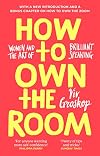
really enjoyed this & will take a lot away from it. As someone who regularly leads meetings with consultants, surgeons, & senior managers in my role as Cancer Improvement Manager, I often have to speak with authority in rooms where confidence can't just be assumed-it has to be felt
This book doesn't focus on becoming loud or performative-it's about owning your space in a way that's authentic. Groskop shares examples from a range of women with different styles of presence, showing that there's show more no one-size-fits-all approach to public speaking or confidence.
Whether you're stepping into leadership, running meetings, or just want to feel more in control when you speak up-this is one to keep close! show less
This book doesn't focus on becoming loud or performative-it's about owning your space in a way that's authentic. Groskop shares examples from a range of women with different styles of presence, showing that there's show more no one-size-fits-all approach to public speaking or confidence.
Whether you're stepping into leadership, running meetings, or just want to feel more in control when you speak up-this is one to keep close! show less
Lists
Awards

You May Also Like


Associated Authors
Statistics
- Works
- 8
- Also by
- 1
- Members
- 346
- Popularity
- #69,042
- Rating
- 3.8
- Reviews
- 10
- ISBNs
- 37
- Languages
- 2