

Pajtim Statovci
Author of My Cat Yugoslavia: A Novel
About the Author
Image credit: via Penguin Random House
Works by Pajtim Statovci
L'heure de la vache 1 copy
Macskám, Jugoszlávia 1 copy
Associated Works
Tagged
Common Knowledge
- Birthdate
- 1990
- Gender
- male
- Education
- Helsingin yliopisto
Aalto-yliopiston taiteiden ja suunnittelun korkeakoulu - Nationality
- Suomi
- Birthplace
- Podujevo, Kosovo, Jugoslavia
- Map Location
- Finland
Members
Reviews
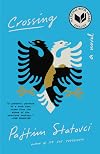
The title 'Crossing' can refer to a crossing of gender or a crossing of countries. The author explores what it means to assume a certain gender or be an immigrant. In both cases, there is the struggle to be accepted and valued. In Bujar's case, he changes gender depending on what gets him acceptance. He even capitalizes on it in the singing program, thinking that it would get him to the final round. But he fails, which goes to show that substance matters. He cruelly borrows the identity of show more his girlfriend, Tanja, when participating in the singing program and abandons her when he fails to make the final. In doing so, he caused her suicide. We find out at the end of the book that this is not the first death he caused. Readers must have been wondering where Ajim is and we find out towards the end that Bujar accidentally pushed him into the waters (spoiler!). Bujar is not a very likable character but this is still an immensely readable book, providing rare insights into Albania and a sensitive topic. show less

Growing up in the eighties in Albania is hard enough, but with the death of his father, Bujar's family spins apart. Bujar's best friend, Amir, has always known what he wanted and now he proposes that the two of them set out for Italy, where they will surely prosper and live their dreams. But reaching Italy isn't the solution it first seemed, and as he moves from country to country, he finds that being an Albanian migrant is a hinderance. He tries living as a man in Spain and as a woman in show more Germany, each time with disastrous results. New York is difficult, but maybe Finland will be more welcoming?
This is a novel that explores what being an outsider feels like, whether that of being a foreigner from an undesirable country or someone whose gender and sexuality fall outside of what is accepted, and is even criminalized in some places. The protagonist has to constantly reinvent himself, hoping with each move that he will finally find the acceptance he longs for. I found this novel to be thought-provoking and challenging. show less
This is a novel that explores what being an outsider feels like, whether that of being a foreigner from an undesirable country or someone whose gender and sexuality fall outside of what is accepted, and is even criminalized in some places. The protagonist has to constantly reinvent himself, hoping with each move that he will finally find the acceptance he longs for. I found this novel to be thought-provoking and challenging. show less
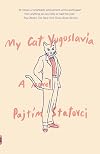
A gorgeous, powerful, and utterly unique book about isolation, the ties that bind (or don't bind) us to family and homeland, and the ways we so often find ourselves recreating familiar emotional dynamics—even if that manifests in an abusive relationship with a talking cat.
Statovci not only perfectly captures the immigrant experience, but smartly uses symbolism to dive deep into the fear, guilt, and self-loathing of his protagonist, Bekim. I was captivated by Bekim, a chronically lonely, show more anxious, neurotically neat university student who feels so isolated from other people he starts to seek fellowship in animals. He's an enigma that slowly unfolds as the story progresses, and I think Statovci does a wonderful job at gradually showing us all the faces of this character, moulded as he is by the experiences of his Kosovar parents.
It's rare that a book this layered is also this readable—and a debut to boot? Pajtim Statovci is the real deal.
____________________
Global Challenge: Finland show less
Statovci not only perfectly captures the immigrant experience, but smartly uses symbolism to dive deep into the fear, guilt, and self-loathing of his protagonist, Bekim. I was captivated by Bekim, a chronically lonely, show more anxious, neurotically neat university student who feels so isolated from other people he starts to seek fellowship in animals. He's an enigma that slowly unfolds as the story progresses, and I think Statovci does a wonderful job at gradually showing us all the faces of this character, moulded as he is by the experiences of his Kosovar parents.
It's rare that a book this layered is also this readable—and a debut to boot? Pajtim Statovci is the real deal.
____________________
Global Challenge: Finland show less
Bujar is so intelligent, so aware, so adept at understanding motives, yet he continually sabotages himself, unable to align his self-knowledge with his actions on a consistent basis. How does one move into adulthood if tragedy has them trapped in emotional adolescence?
Bujar's personal journey mirrors in many ways what happens in Albania, at least as Statovci tells it in this novel. One (Bujar or Albania) holds tightly to a mythology of self, acting as though that mythology is the truth, but show more each day is a fight against the little signs of the reality beneath the myth that bubble to the surface. What happens if we tear away the myth? Can we excavate through the reality and improve it from the foundations up, or can we only hope to patch the little breaks in the facade as they appear? Is there a point at which the myth itself becomes all that's holding the entire structure together? show less
Bujar's personal journey mirrors in many ways what happens in Albania, at least as Statovci tells it in this novel. One (Bujar or Albania) holds tightly to a mythology of self, acting as though that mythology is the truth, but show more each day is a fight against the little signs of the reality beneath the myth that bubble to the surface. What happens if we tear away the myth? Can we excavate through the reality and improve it from the foundations up, or can we only hope to patch the little breaks in the facade as they appear? Is there a point at which the myth itself becomes all that's holding the entire structure together? show less
Lists
Awards


You May Also Like


Associated Authors
Statistics
- Works
- 7
- Also by
- 1
- Members
- 804
- Popularity
- #31,725
- Rating
- 3.6
- Reviews
- 26
- ISBNs
- 78
- Languages
- 10
- Favorited
- 1