
Kevin Birmingham
Author of The Most Dangerous Book: The Battle for James Joyce's Ulysses
Works by Kevin Birmingham
The Sinner and the Saint: Dostoevsky and the Gentleman Murderer Who Inspired a Masterpiece (2021) 176 copies, 3 reviews
Tagged
Common Knowledge
- Birthdate
- 1970
- Gender
- male
- Education
- Harvard University (Ph.D | 2009)
- Occupations
- professor
- Organizations
- Harvard University
- Awards and honors
- Truman Capote Award (2016)
Members
Reviews
The Sinner and the Saint: Dostoevsky and the Gentleman Murderer Who Inspired a Masterpiece by Kevin Birmingham
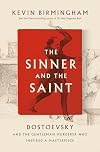
I was really intrigued by the premise of this book, and I feel Birmingham did a great job of bringing Dostoevsky's Russia to life. My one quibble knocking off a star? There is actually very very little about the "Gentleman Murderer" in here. I would say 75-80% of the book follows Dostoevsky, which makes the chapters that do look at Lacenaire feel a bit out of place. I think I would have preferred a straight biography of Dostoevsky.
The Sinner and the Saint: Dostoevsky and the Gentleman Murderer Who Inspired a Masterpiece by Kevin Birmingham
Crime and Punishment is a murder mystery, though the mystery isn’t who killed the pawnbroker and her sister. The mystery is why. from The Sinner and the Saint by Kevin Birmingham
I was intrigued by the idea of The Sinner and the Saint, this biography/literary criticism/history/true crime book, and found it enjoyable and rewarding reading.
As a biography of Dostoyevsky, I was astonished by his life. He was plagued by poverty and ill health and epilepsy, and cheated by his publishers. He show more became involved with radical thinkers. He was arrested by the tsar for treason, nearly executed, and sent to Siberia where he studied criminals up close, eliciting them to share their grisly stories. The description of life in Siberia is very affecting. Russia had no prisons, and convict labor in Siberian mines fueled massive wealth.
After four years in prison, Dostoyevsky was required to serve in the Army. He and his brother then tried to run magazines, which failed. He tried gambling in a desperate bid for solvency. The tsar kept tight control with censorship of newspapers, magazines, and books, and yet Dostoyevsky wrote some of the greatest novels ever written.
Russia was in turmoil, reform movements and radicalism spurring the tsar to authoritarianism. One philosophy was to believe in nothing–nilhism. When a man who tried to assassinate the tsar was asked by the tsar what he wanted, he replied “nothing.”
The French murderer Lacenaire, unapologetic and enjoying his notoriety, inspired Dostoyevsky’s character of Raskolnikov. Lacenaire’s wealthy family lost their fortune. He was expelled from schools and hated his jobs, and took up gambling while trying to write. He adopted a philosophy of egoism and decided to become an outlaw. He had no remorse for the murders he committed and met his execution with impersonal interest.
The murderer fascinated Dostoyevsky. He decided to write a murder story from the viewpoint of the murderer. A man who kills for no reason, for nothing. He would not be a monster, he would be someone we could understand.
I enjoyed the book on many levels: learning about Russia under the tsar and the philosophical and political ideas that arose in 19th c Russia; as a biography of Dostoyevsky; for its discussion of Russian literature; and as a vehicle to understand Dostoyevsky’s masterpiece, Crime and Punishment.
I received a free egalley from the publisher though NetGalley. My review is fair and unbiased. show less
I was intrigued by the idea of The Sinner and the Saint, this biography/literary criticism/history/true crime book, and found it enjoyable and rewarding reading.
As a biography of Dostoyevsky, I was astonished by his life. He was plagued by poverty and ill health and epilepsy, and cheated by his publishers. He show more became involved with radical thinkers. He was arrested by the tsar for treason, nearly executed, and sent to Siberia where he studied criminals up close, eliciting them to share their grisly stories. The description of life in Siberia is very affecting. Russia had no prisons, and convict labor in Siberian mines fueled massive wealth.
After four years in prison, Dostoyevsky was required to serve in the Army. He and his brother then tried to run magazines, which failed. He tried gambling in a desperate bid for solvency. The tsar kept tight control with censorship of newspapers, magazines, and books, and yet Dostoyevsky wrote some of the greatest novels ever written.
Russia was in turmoil, reform movements and radicalism spurring the tsar to authoritarianism. One philosophy was to believe in nothing–nilhism. When a man who tried to assassinate the tsar was asked by the tsar what he wanted, he replied “nothing.”
The French murderer Lacenaire, unapologetic and enjoying his notoriety, inspired Dostoyevsky’s character of Raskolnikov. Lacenaire’s wealthy family lost their fortune. He was expelled from schools and hated his jobs, and took up gambling while trying to write. He adopted a philosophy of egoism and decided to become an outlaw. He had no remorse for the murders he committed and met his execution with impersonal interest.
The murderer fascinated Dostoyevsky. He decided to write a murder story from the viewpoint of the murderer. A man who kills for no reason, for nothing. He would not be a monster, he would be someone we could understand.
I enjoyed the book on many levels: learning about Russia under the tsar and the philosophical and political ideas that arose in 19th c Russia; as a biography of Dostoyevsky; for its discussion of Russian literature; and as a vehicle to understand Dostoyevsky’s masterpiece, Crime and Punishment.
I received a free egalley from the publisher though NetGalley. My review is fair and unbiased. show less
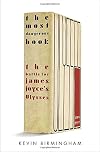
"Ulysses" is regarded as genius, smut, babble, brilliance, and blasphemy. The ramblings of a sick mind, and the redefining of what a novel can be.
"The Most Dangerous Book" is much more than the story of the controversies that surrounded Joyce's seminal novel. Aside from the attempts to censor the book in America and Europe, Birmingham also does a remarkable job of capturing the story of Joyce's personal and writing life from his youngest days in Dublin to his adult life abroad. For me, the show more most intriguing aspects of the book were how The Comstock Law affected "Ulysses" here in the States, the polarizing reaction Joyce's writing received from other popular writers of his era, the unlikely allies who fiercely supported Joyce (artistically and financially), and Joyce's horrific vision issues, which led to medieval attempts to ease his suffering and stave off blindness. Birmingham also does a fine job explaining Joyce's earlier works in context to the culture and the times.
I'm just now starting "Ulysses". I'm a chapter or two in, and from what I'm told, I'll hit some roadblocks that rival the Great Wall of China. However, now I have a greater appreciation for Joyce's journey to write and publish his novel, and am better prepared for the surreal, profane ride ahead of me.
This is the story of a book, the audacious man who wrote it, and the decades of furor it created. Well-researched, filled with humor, and a solid, accessible bridge to the world of Joyce. show less
"The Most Dangerous Book" is much more than the story of the controversies that surrounded Joyce's seminal novel. Aside from the attempts to censor the book in America and Europe, Birmingham also does a remarkable job of capturing the story of Joyce's personal and writing life from his youngest days in Dublin to his adult life abroad. For me, the show more most intriguing aspects of the book were how The Comstock Law affected "Ulysses" here in the States, the polarizing reaction Joyce's writing received from other popular writers of his era, the unlikely allies who fiercely supported Joyce (artistically and financially), and Joyce's horrific vision issues, which led to medieval attempts to ease his suffering and stave off blindness. Birmingham also does a fine job explaining Joyce's earlier works in context to the culture and the times.
I'm just now starting "Ulysses". I'm a chapter or two in, and from what I'm told, I'll hit some roadblocks that rival the Great Wall of China. However, now I have a greater appreciation for Joyce's journey to write and publish his novel, and am better prepared for the surreal, profane ride ahead of me.
This is the story of a book, the audacious man who wrote it, and the decades of furor it created. Well-researched, filled with humor, and a solid, accessible bridge to the world of Joyce. show less
The Most Dangerous Book attempts something big, and to a large extent pulls it off. To tell not only the story of how James Joyce came to write Ulysses, his struggle to get it published in the face of critical and legal adversitities, and through that lens the story of how Victorian moralities and censorship laws were forced to make way for the modern(ist) world, never to be heard of again... uh, maybe.
Joyce's novel represented not a finished monument of high culture but an ongoing fight show more for freedom.
And as a pure biography of Ulysses and the soil it sprang from - Joyce's youth, the early modernist writers and the surrounding world of new political and literary ideas that weren't always always all that pleasant or peaceful, Joyce's love for Nora Barnacle, and the various unlikely characters who midwifed the novel (strikingly many of them women) - it's both well-researched and well written; at times thrilling, funny, heartbreaking. There are certainly more in-depth works on Ulysses as a work of literature, but that's not what Birmingham is going for here.
What's uncanny about censorship in a liberal society is that sooner or later the government's goal is not just to ban objectionable books. It is to act as if they don't exist. The bans themselves should, whenever possible, remain secret.
Because then you get to the big issue here - the one that gave the book its title. The actual question of just what feathers Ulysses ruffled, and how it could take more than 10 years for it to be legally published in most English-speaking countries. (Birmingham being American, the world is pretty much limited to the US, the UK, and Paris.) And I'm not saying these parts of the book aren't just as good; between the historical background on censorship laws and the ideas and methods that went into them back when postal workers were essentially Big Brother, the various attempts to get att what the hell "obscene" even means, and the minutiae of everything surrounding the troubled road to legality... It makes for a hell of a literary thriller, coupled with what is obviously a love for Ulysses itself, and I can't wait to re-read the damn tome again.
The legalization of Ulysses announced the transformation of a culture. A book that the American and British governments had burned en masse a few years earlier was now a modern classic, part of the heritage of Western civilization. Official approval of Ulysses, in prominent federal decisions and behind closed doors, indicated that the culture of the 1910s and 1920s - a culture of experimentation and radicalism, Dada and warfare, little magazines and birth control - was not an aberration. It had taken root. Or, more accurately, it indicated that rootedness itself was a fiction.(...) By sanctioning Ulysses, British and American authorities had, to some small but important degree, become philosophical anarchists. (...) There was no absolute authority, no singular vision for our society, no monolithic ideas towering over us.
Obviously the book could have done more - said more about modernism as a whole, continued to draw parallels to political developments past the publication of Ulysses, etc, but that's not the focus here, so that's fine. The main thing that irks me somewhat is that I feel like Birmingham tends to treat the central concept here, that of freedom of speech (well, print) just a tiny little bit too simplified; as if it was something you either have or don't have, and that it was entirely the work of Joyce and his cheerleaders that shepherded the world from one side to the other. Almost as if "Freedom" was a simple commodity, a word that means something in itself.
But eh, you can't have everything. Except of course by reading Ulysses.
...and the word that shakes it all down is YES. show less
Joyce's novel represented not a finished monument of high culture but an ongoing fight show more for freedom.
And as a pure biography of Ulysses and the soil it sprang from - Joyce's youth, the early modernist writers and the surrounding world of new political and literary ideas that weren't always always all that pleasant or peaceful, Joyce's love for Nora Barnacle, and the various unlikely characters who midwifed the novel (strikingly many of them women) - it's both well-researched and well written; at times thrilling, funny, heartbreaking. There are certainly more in-depth works on Ulysses as a work of literature, but that's not what Birmingham is going for here.
What's uncanny about censorship in a liberal society is that sooner or later the government's goal is not just to ban objectionable books. It is to act as if they don't exist. The bans themselves should, whenever possible, remain secret.
Because then you get to the big issue here - the one that gave the book its title. The actual question of just what feathers Ulysses ruffled, and how it could take more than 10 years for it to be legally published in most English-speaking countries. (Birmingham being American, the world is pretty much limited to the US, the UK, and Paris.) And I'm not saying these parts of the book aren't just as good; between the historical background on censorship laws and the ideas and methods that went into them back when postal workers were essentially Big Brother, the various attempts to get att what the hell "obscene" even means, and the minutiae of everything surrounding the troubled road to legality... It makes for a hell of a literary thriller, coupled with what is obviously a love for Ulysses itself, and I can't wait to re-read the damn tome again.
The legalization of Ulysses announced the transformation of a culture. A book that the American and British governments had burned en masse a few years earlier was now a modern classic, part of the heritage of Western civilization. Official approval of Ulysses, in prominent federal decisions and behind closed doors, indicated that the culture of the 1910s and 1920s - a culture of experimentation and radicalism, Dada and warfare, little magazines and birth control - was not an aberration. It had taken root. Or, more accurately, it indicated that rootedness itself was a fiction.(...) By sanctioning Ulysses, British and American authorities had, to some small but important degree, become philosophical anarchists. (...) There was no absolute authority, no singular vision for our society, no monolithic ideas towering over us.
Obviously the book could have done more - said more about modernism as a whole, continued to draw parallels to political developments past the publication of Ulysses, etc, but that's not the focus here, so that's fine. The main thing that irks me somewhat is that I feel like Birmingham tends to treat the central concept here, that of freedom of speech (well, print) just a tiny little bit too simplified; as if it was something you either have or don't have, and that it was entirely the work of Joyce and his cheerleaders that shepherded the world from one side to the other. Almost as if "Freedom" was a simple commodity, a word that means something in itself.
But eh, you can't have everything. Except of course by reading Ulysses.
...and the word that shakes it all down is YES. show less
Lists
Awards


You May Also Like


Statistics
- Works
- 4
- Members
- 642
- Popularity
- #39,292
- Rating
- 4.2
- Reviews
- 17
- ISBNs
- 16
- Languages
- 1