
Declan Kiberd
Author of Ulysses and Us: The Art of Everyday Living
About the Author
Declan Kiberd is the author of Inventing Ireland: The Literature of the Modern Nation, which won the Irish Times Prize. He lives in Dublin.
Works by Declan Kiberd
An Crann Faoi Blath the Flowering Tree: Contemporary Irish Poetry With Verse Translations (1991) 43 copies
Handbook of the Irish Revival: An Anthology of Irish Cultural and Political Writings 1891-1922 (2015) 26 copies
The Book About Everything: Eighteen Artists, Writers and Thinkers on James Joyce's Ulysses (2022) 18 copies
Idir dhá chultúr 3 copies
Associated Works
The Oxford Illustrated History of Ireland (1989) — Contributor, some editions — 398 copies, 1 review
Amid Our Troubles: Irish Versions of Greek Tragedy (Plays and Playwrights) (2002) — Introduction — 4 copies
Tagged
Common Knowledge
- Birthdate
- 1951-05-24
- Gender
- male
- Nationality
- Ireland
- Associated Place (for map)
- Ireland
Members
Reviews

Kiberd’s thesis is that Ulysses is about the exaltation of the humble; the everyday; the way the most banal aspects of life can yield wisdom if we cease to insist on a separation of the sacred from the quotidian.
He bemoans the usurpation of Ulysses by specialists and pedants, claiming that Joyce meant for his work to be accessible to the common man. Ulysses is a book, Kiberd asserts, “with much to teach us about the world…” but too many readers are scared off of it by “the legend show more of its forbidding difficulty…” Joyce, Kiberd maintains, rejected the idea that education should be walled off from the masses, or that the common man could not be self-educated or appreciative of “higher” culture. Indeed, Shakespeare, Homer, and Dante wrote for the masses, and as Kiberd argues, “The popular reading can not only be enriched over time by the learned one, but it can also enrich the learned interpretation.”
Much of this very readable book consists of a chapter-by-chapter exegesis of Ulysses, explaining the themes of the chapters, and also noting the references/similarities to Homer, Dante, and Shakespeare (Hamlet). Kiberd’s focus (as he maintains is Joyce’s) is showing in what way the text points to the “sacrament of everyday life” and the repercussions of failing to appreciate this in one’s own life.
Evaluation: Kiberd makes very perceptive and thought-provoking observations not only about Ulysses but about other great works and about their place in society. I haven’t read Ulysses in many years, but I found this book quite illuminating even without specific memories about the events in the book to which he referred. show less
He bemoans the usurpation of Ulysses by specialists and pedants, claiming that Joyce meant for his work to be accessible to the common man. Ulysses is a book, Kiberd asserts, “with much to teach us about the world…” but too many readers are scared off of it by “the legend show more of its forbidding difficulty…” Joyce, Kiberd maintains, rejected the idea that education should be walled off from the masses, or that the common man could not be self-educated or appreciative of “higher” culture. Indeed, Shakespeare, Homer, and Dante wrote for the masses, and as Kiberd argues, “The popular reading can not only be enriched over time by the learned one, but it can also enrich the learned interpretation.”
Much of this very readable book consists of a chapter-by-chapter exegesis of Ulysses, explaining the themes of the chapters, and also noting the references/similarities to Homer, Dante, and Shakespeare (Hamlet). Kiberd’s focus (as he maintains is Joyce’s) is showing in what way the text points to the “sacrament of everyday life” and the repercussions of failing to appreciate this in one’s own life.
Evaluation: Kiberd makes very perceptive and thought-provoking observations not only about Ulysses but about other great works and about their place in society. I haven’t read Ulysses in many years, but I found this book quite illuminating even without specific memories about the events in the book to which he referred. show less
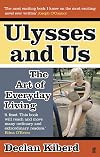
This book adds significantly to the pleasure of reading Ulysses. Avoid standard works like Blamires, and read this instead.
If you would like to (or have to) read James Joyce's Ulysses, you must get this book. It will make it a lot easier. And by that, I mean vaguely possible.
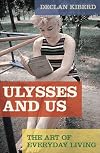
I thought I was going to hate this book, but it was pretty alright.
Awards


You May Also Like


Associated Authors
Statistics
- Works
- 15
- Also by
- 9
- Members
- 787
- Popularity
- #32,340
- Rating
- 4.1
- Reviews
- 4
- ISBNs
- 56
- Languages
- 3