
Derek Attridge
Author of The Cambridge Companion to James Joyce
About the Author
Derek Attridge provides a rich new vocabulary for literature, rethinking such terms as "invention," "singularity," "otherness," "alterity," "performance" and "form." He returns literature to the realm of ethics, and argues for the ethical importance of literature, demonstrating how a new show more understanding of the literary might be put to work in a "responsible," creative mode of reading. The Singularity of Literature is not only a major contribution to the theory of literature, but also a celebration of the extraordinary pleasure of the literary, for reader, writer, student or critic. This Routledge Classics edition includes a new preface by the author. show less
Works by Derek Attridge
Forms of modernist fiction: reading the novel from James Joyce to Tom McCarthy (2023) 1 copy, 1 review
Associated Works
Tagged
Common Knowledge
- Birthdate
- 1945-05-06
- Gender
- male
- Education
- Natal University, South Africa (BA)
University of Cambridge (MA)
University of Cambridge (PhD) - Occupations
- literary critic
professor - Organizations
- University of York
University of Strathclyde
University of Southampton - Awards and honors
- Fellow, British Academy (2007)
- Nationality
- England
UK - Birthplace
- South Africa
- Places of residence
- York, Yorkshire, England, UK
- Associated Place (for map)
- York, Yorkshire, England, UK
Members
Reviews
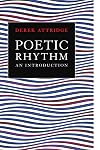
Poetic Rhythm is written by someone who knows what he is writing about: Attridge has analysed a lot of poetry in his time. I have read other books that attempt to explain poetic rhythm, metre, stresses, feet and the whole shebang, and they all look quite ridiculous after one has read Attridge. The basic point that makes the difference is the distinguishing of ‘stress’ from ‘beat’, where the former is the property of the vocabulary and phrasing, and the latter is a musical pulse that show more imposes itself when the stresses begin to line up. Poetic Rhythm has plenty of examples, and has exercises at the end of each chapter. In spite of this, it does not feel like a workbook or textbook, and I found myself drawn into the exercises to see if I could make them work. Reading Poetic Rhythm also encouraged me test out my new-learned skills in scansion on a stack of poems, enabling me to see more detail behind the rhythmic structure of poems.
Attridge's approach is that traditional ways of scanning and describing poems (iambic pentameter etc.) are only useful up to a point, so that it is about halfway through the book before he starts raising this terminology. His point is that we do not actually experience iambs and trochees and spondees when we read poetry, that these are artificial groupings of rhythmic patterns. In stead, Attridge teaches that we have to understand the history of what works in the poetic rhythm of the English language rather than trying to impose a faux-classicism on it. This approach is particularly rich when it comes to explaining all the metrical variations that might be used in syllable-stress metre (e.g. iambic pentameter) that allow greater freedom of expression without undermining the overall rhythm. Other books might just say that the odd iamb can be swapped for a trochee here and there to keep things interesting.
The book covers Anglo-Saxon alliterative verse (and some more recent attempts at it) and other less-strict stress metres; there is even a brief foray into rap. The chapter on free verse is perhaps understandably, yet also woefully, short. Basically, the book presents two rough rhythmical styles of free verse: using bits of traditional metre as building blocks, or not. It would have been good to have more of a survey of how different free-verse poets write the rhythm of their lines. This is the only blind spot, and Poetic Rhythm does, in fact, equip one with a more detailed approach to analysing free verse.
This book is a must for any poet, reader or critic of poetry. show less
Attridge's approach is that traditional ways of scanning and describing poems (iambic pentameter etc.) are only useful up to a point, so that it is about halfway through the book before he starts raising this terminology. His point is that we do not actually experience iambs and trochees and spondees when we read poetry, that these are artificial groupings of rhythmic patterns. In stead, Attridge teaches that we have to understand the history of what works in the poetic rhythm of the English language rather than trying to impose a faux-classicism on it. This approach is particularly rich when it comes to explaining all the metrical variations that might be used in syllable-stress metre (e.g. iambic pentameter) that allow greater freedom of expression without undermining the overall rhythm. Other books might just say that the odd iamb can be swapped for a trochee here and there to keep things interesting.
The book covers Anglo-Saxon alliterative verse (and some more recent attempts at it) and other less-strict stress metres; there is even a brief foray into rap. The chapter on free verse is perhaps understandably, yet also woefully, short. Basically, the book presents two rough rhythmical styles of free verse: using bits of traditional metre as building blocks, or not. It would have been good to have more of a survey of how different free-verse poets write the rhythm of their lines. This is the only blind spot, and Poetic Rhythm does, in fact, equip one with a more detailed approach to analysing free verse.
This book is a must for any poet, reader or critic of poetry. show less
This is the most straightforward and practical introduction to metrical verse I've read, chiefly because it starts with the importance of beats in the poetic line and distinguishes them clearly from stresses. I wish I'd started with this book ten years ago.
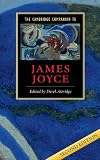
The Cambridge Companion to James Joyce (Cambridge Companions to Literature) by Derek Attridge (2004)

You May Also Like


Associated Authors
Statistics
- Works
- 25
- Also by
- 3
- Members
- 610
- Popularity
- #41,202
- Rating
- 3.9
- Reviews
- 4
- ISBNs
- 89
- Languages
- 2