
Roland McHugh
Author of Annotations to Finnegans Wake
About the Author
Works by Roland McHugh
Tagged
Common Knowledge
- Birthdate
- 1945-10-13
- Gender
- male
- Education
- Imperial College of Science and Technology, University of London (BSc|1967)
Institute of Acoustic Physiology, France (1968)
City of London Polytechnic (PhD|1971) - Occupations
- entomologist
Joyce scholar
curator of the James Joyce Museum, Sandycove (1976-77) - Organizations
- University of Dundee, Dundee, Scotland
Lilmar Pharmaceuticals, Dublin, Ireland
James Joyce Institute of Ireland
School of Food Science and Environmental Health - Nationality
- UK
- Birthplace
- Brighton, Sussex, England, UK
- Associated Place (for map)
- England, UK
Members
Reviews

This book was written by Wake expert and esteemed author of [b:Annotations to Finnegans Wake|27293390|Annotations to Finnegans Wake|Roland McHugh|https://images.gr-assets.com/books/1450039744s/27293390.jpg|57902], [a:Roland McHugh|33594|Roland McHugh|https://s.gr-assets.com/assets/nophoto/user/m_50x66-82093808bca726cb3249a493fbd3bd0f.png], and was first published shortly after the completion of Annotations in 1981. It's an amusing depiction of McHugh's obsession with deciphering Finnegans show more Wake, and although I'm a bit obsessed myself about its elucidation, I probably (read definitely) won't use the McHugh method. One has to admire his resolve to figure it out on his own, so to speak, by using Joyce's own manuscripts and notebooks to name but a few sources, and painstakingly analyzing and re-analyzing the text over the course of a 25 year period to come to an interpretation of its meaning. He even went as far as tying a string around the remaining pages when he had read the first episode (p. 29) to prevent himself looking ahead. Bravo, Mr. HcHugh!
The first chapter picks one short passage (about 15 lines) from each of the four parts of the book and spends 23 pages explaining them. This gives the reader an idea of the complexity of trying to figure out what the remaining lines (totaling roughly 626 pages) might mean. This might kill a reader's interest in Finnegans Wake right there, but, as was my case, it also encourages the interested reader to find out more.
Another chapter of the book gives McHugh's opinion on additional Wakean criticisms and books, many of them famous and widely used today, others a little more obscure. It's interesting that his opinion of some of the more popular sources used today was not very high. Other notable chapters outline his exploration of The British Museum Manuscripts and The Buffalo Notebooks.
All in all, this is a short interesting read and I would recommend it to anyone planning to read Finnegans Wake.
As a final note, who knows what might have materialized had Joyce not died only two years following publication of Finnegans Wake? We might have eventually had one of Joyce's confidants like Budgen or Beckett do for Finnegans Wake what Stuart Gilbert did for Ulysses. Alas, it wasn't to be, but I take comfort in the fact that there is now enough Joyce scholarship out there today to give the enthusiast a good starting point to begin the journey of deciphering Finnegans Wake, maybe with the chance of getting some comprehension within a few readings and in under 25 years! I've been through episode 1 (p.29), and I'm not planning to tie a string around the remaining pages! show less
The first chapter picks one short passage (about 15 lines) from each of the four parts of the book and spends 23 pages explaining them. This gives the reader an idea of the complexity of trying to figure out what the remaining lines (totaling roughly 626 pages) might mean. This might kill a reader's interest in Finnegans Wake right there, but, as was my case, it also encourages the interested reader to find out more.
Another chapter of the book gives McHugh's opinion on additional Wakean criticisms and books, many of them famous and widely used today, others a little more obscure. It's interesting that his opinion of some of the more popular sources used today was not very high. Other notable chapters outline his exploration of The British Museum Manuscripts and The Buffalo Notebooks.
All in all, this is a short interesting read and I would recommend it to anyone planning to read Finnegans Wake.
As a final note, who knows what might have materialized had Joyce not died only two years following publication of Finnegans Wake? We might have eventually had one of Joyce's confidants like Budgen or Beckett do for Finnegans Wake what Stuart Gilbert did for Ulysses. Alas, it wasn't to be, but I take comfort in the fact that there is now enough Joyce scholarship out there today to give the enthusiast a good starting point to begin the journey of deciphering Finnegans Wake, maybe with the chance of getting some comprehension within a few readings and in under 25 years! I've been through episode 1 (p.29), and I'm not planning to tie a string around the remaining pages! show less
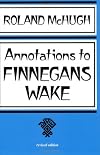
-occasionally helpful, but like most annotations it answers questions I don't care about and mostly fails to explain, or even mention, much that confuses me
You May Also Like


Statistics
- Works
- 3
- Members
- 341
- Popularity
- #69,902
- Rating
- 4.0
- Reviews
- 2
- ISBNs
- 15